Short answer: for couples, shoulder seasons (spring and autumn) usually give the best balance of milder weather, thinner crowds, and more flexible pricing — but whether a package or separate bookings save you money depends on what’s included and how flexible you need to be. Before judging a bundle, compare the same dates, number of travelers, exact inclusions (flights, transfers, hotel room type, breakfast, attraction tickets), and cancellation or change policies. Pay special attention to arrival times, connection buffers, and whether the hotel room is refundable or pre-paid. Use the comparison to avoid false savings by matching conditions one-to-one. This guide explains what to check, how shoulder-season timing affects availability and value for couples, and four practical booking approaches so you can pick the one that fits your priorities — romance, spontaneity, or strict budget control.
Test package value fairly
| Booking approach | Best for | Tradeoff to check |
|---|---|---|
| All-in-one package (flight + hotel + transfers + select tickets) | Couples who want minimal planning and predictable logistics. | Less flexible: changes often trigger penalties and inclusions may not match preference for room type or timing. |
| Flight + hotel booked separately, add transfers or tours a la carte | Couples who want control over core components but appreciate some convenience add-ons. | Requires comparison work to ensure the same fare class and room standards; can be slightly more expensive for transfer convenience. |
| Independent bookings for flights, hotels, and activities | Experienced travelers or couples wanting maximum flexibility and ability to customize daily plans. | More time-consuming to manage and coordinate arrival logistics and timed attraction entries. |
| Hotel-plus-experiences bundle (no flights) for in-region travelers | Couples already in Europe or taking independent train travel who want curated local experiences without flight constraints. | Savings depend on experience selection; you must still coordinate arrival transport and train fares separately. |
Check current package and separate options
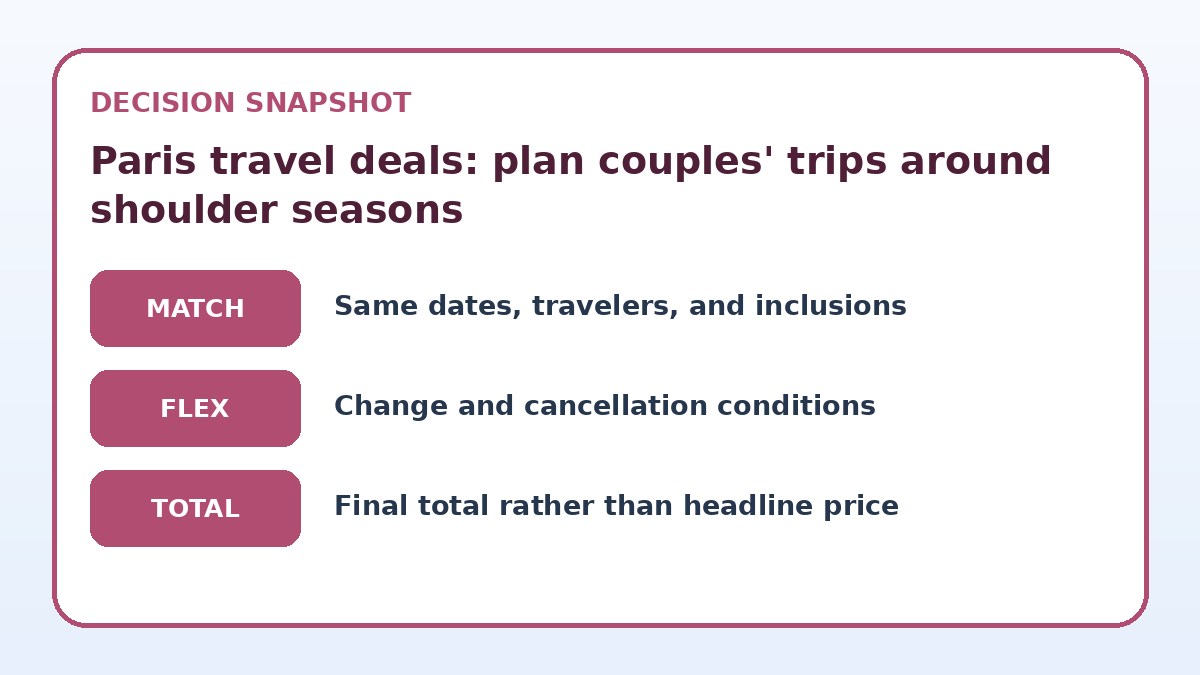
Use identical dates, travelers, room needs, baggage, and flexibility so the comparison stays meaningful.
What to compare before judging a Paris package
Start by listing exactly what the package includes and match each item against the cost of buying it separately. For flights, note whether the fare is economy or basic economy, baggage allowances, and the number of connections; for hotels, confirm the room category, board basis (breakfast included or not), and cancellation terms. Transfers and timed tickets should state whether they are private, shared, or independent vouchers. Only by lining up the same dates, travelers, and service levels can you see if a bundled price represents a real value versus a coincidental mix of lower-quality inclusions.
Next, treat flexibility and timing as line items. Packages that lock in non-refundable flights or pre-paid hotel rooms can look cheaper on paper but cost more if plans change. For couples, timing is also practical: arrival hour affects whether you need a transfer or a late-night taxi. Examine provider cancellation windows and the penalties for name changes or rebooking. Finally, confirm which party you will deal with for any problem — the consolidator, the airline, or the hotel — because time to resolution and customer service standards differ and impact the traveler's peace of mind.
How shoulder seasons change the equation for couples
Shoulder seasons — roughly late March through mid-June and September through October — typically mean fewer tourists than peak summer, which can improve hotel availability for particular room types and neighborhoods couples may prefer for romance, such as Île Saint-Louis, Saint-Germain, or Montmartre. Reduced crowding also makes timed attractions easier to schedule and can let you prioritize experiences like leisurely canal walks or long museum afternoons. For couples who value relaxed pacing and the chance to book a special room or river-view table, shoulder seasons can turn separate bookings into a controllable, more satisfying option.
However, shoulder-season pricing and availability are uneven: early spring may still have limited outdoor service or hours for some venues, while late autumn can bring short-notice events that spike demand. That unpredictability makes flexibility valuable. If you want fixed arrival logistics, a package with a reliable transfer and pre-booked tickets might reduce planning friction. Conversely, if you prize spontaneity, separate bookings for accommodation and a la carte activities let you change plans day by day without cancelling an entire bundle.
Look past the headline total
Compare inclusions and change conditions before deciding whether a package is genuinely useful for this trip.
Deal comparison checklist
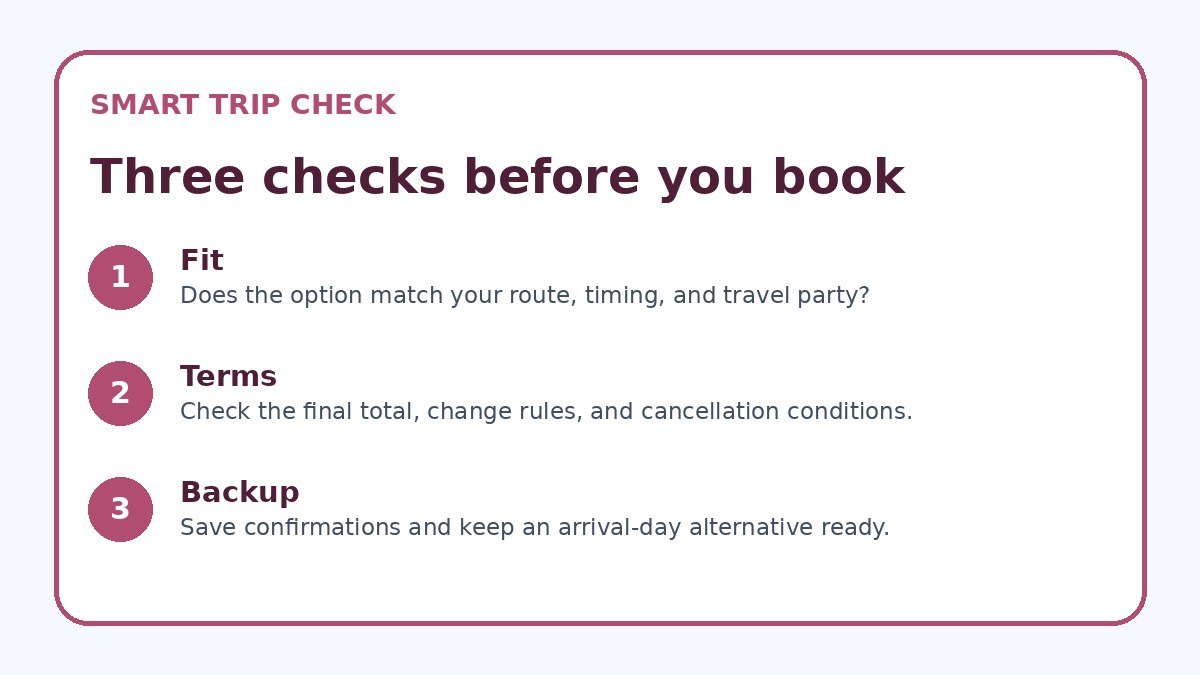
- Line up the same travel dates and number of travelers when comparing package and separate prices to ensure an apples-to-apples comparison.
- Confirm the exact hotel room category, bedding configuration, and whether breakfast is included on the supplier’s final booking page.
- Check flight fare conditions for baggage, seat selection, and change or cancellation penalties before assuming a bundled fare is flexible.
- Verify whether transfers are private or shared, the pick-up window, and who to contact if your flight is delayed.
- Request written confirmation of timed inclusions (museum entries, cruises) and note redemption instructions and time-slot rules.
- Compare the cancellation and refund timelines for each supplier listed on the booking page and calculate potential rebooking costs.
Inclusions and traveler-specific value for couples
Decide what matters most for your relationship time: private transfers, a room upgrade, breakfast in bed, or skipping queues at major museums. For couples celebrating milestones, inclusions that reduce friction — like airport transfer and a confirmed dinner reservation — can be worth paying extra for. Single inclusions might be marginal value when considered alone, but the cumulative convenience can transform the trip into a smoother, more intimate experience. When evaluating packages, translate inclusions into minutes saved and stress avoided rather than applying a flat monetary value.
Traveler-specific needs also affect the choice: mobility concerns favor ground transfers and centrally located hotels; food restrictions make flexible meal options or self-catering useful; and if one partner wants a long museum day while the other prefers cafés, separate bookings allow different daily plans without renegotiating package terms. Always confirm on the booking page whether an included item is a voucher you redeem or a guaranteed, reserved service, because vouchers often mean you still have to queue or schedule.
Final terms, cancellation rules, and what to verify before checkout
Read the fine print on the provider’s final booking page before you commit. Verify which supplier is responsible for each element: the airline for flights, the hotel for accommodation, and the local operator for transfers or tours. Confirm change and cancellation windows, refund timelines, and whether name or date changes incur fees. If a bundle mixes suppliers, check whether a single cancellation triggers the whole booking to be cancelled or whether elements can be modified independently. These details determine whether a seemingly cheap rate exposes you to outsized change fees.
Also verify arrival logistics: if a package includes a timed transfer, note the allowed arrival window and whether late flights are covered. For couples traveling with different surnames, ensure all traveler details match passports to avoid check-in friction. If an experience is included — a river cruise or museum entry — check the provider’s instruction page for redemption steps and whether you must select a time slot. When in doubt, ask the supplier to confirm inclusions and reversal policies in writing before paying.
Travel Deals & Booking Strategy questions travelers ask
Are shoulder-season Paris travel deals actually cheaper for couples than summer packages?
Not always. Shoulder seasons often reduce crowding and increase room availability, but prices can still vary depending on local events, school holidays, or specific hotel promotions. For couples, the value often comes from easier room upgrades and quieter neighborhood options rather than blanket lower fares. Always compare identical dates, room types, and cancellation rules; check whether a package’s lower cost comes from restricted flight times or non-refundable terms that could cost more if plans change.
If I value flexibility, should I avoid packages entirely when planning a Paris trip as a couple?
Not necessarily. Some packages offer refundable hotels and open-date transfers that provide convenience with flexibility, but you must verify the exact terms on the booking page. If flexibility is paramount, booking refundable hotel rates and changeable flights separately gives the most control. Alternatively, a hybrid approach — curating your own flights and choosing a hotel-plus-experiences bundle — can deliver conveniences while keeping the parts you may need to change under your control.
How do we avoid false savings when comparing bundled Paris travel deals with separate bookings?
Avoid false savings by creating a checklist of identical criteria: same travel dates, passenger count, fare class, baggage allowance, hotel room type, board basis, transfer type, and cancellation rules. Price out every line item separately and add expected taxes and service fees to match the package’s breakdown. Factor in non-monetary value such as time saved and stress avoided. If the package includes vouchers rather than reserved seats or entries, treat them as lower value because you may still need to queue or schedule.
Final decision note
For couples planning a Paris trip around shoulder seasons, the right booking approach hinges on three things: which conveniences matter most, how much schedule flexibility you need, and how carefully you match inclusions when comparing offers. Shoulder seasons give couples quieter streets and more choice of romantic neighborhoods, making separate bookings attractive if you want specific room features or day-by-day freedom. Packages can simplify arrival and anchor logistics, which is valuable for low-stress travel, but always verify final supplier terms on the booking page. Compare like with like, prioritize the inclusions that save you time together, and choose the approach that protects your plans without costing your peace of mind.
Continue planning
Check current options and final conditions
Use the provider page to confirm live availability, the final total, cancellation terms, and every condition that matters to your trip.
This evergreen planning guide was created with AI-assisted drafting and a structured quality review. It does not display live prices, schedules, availability, visa guidance, or provider rankings. Verify current details before booking. Some links are affiliate links; we may earn a commission at no additional cost to you.