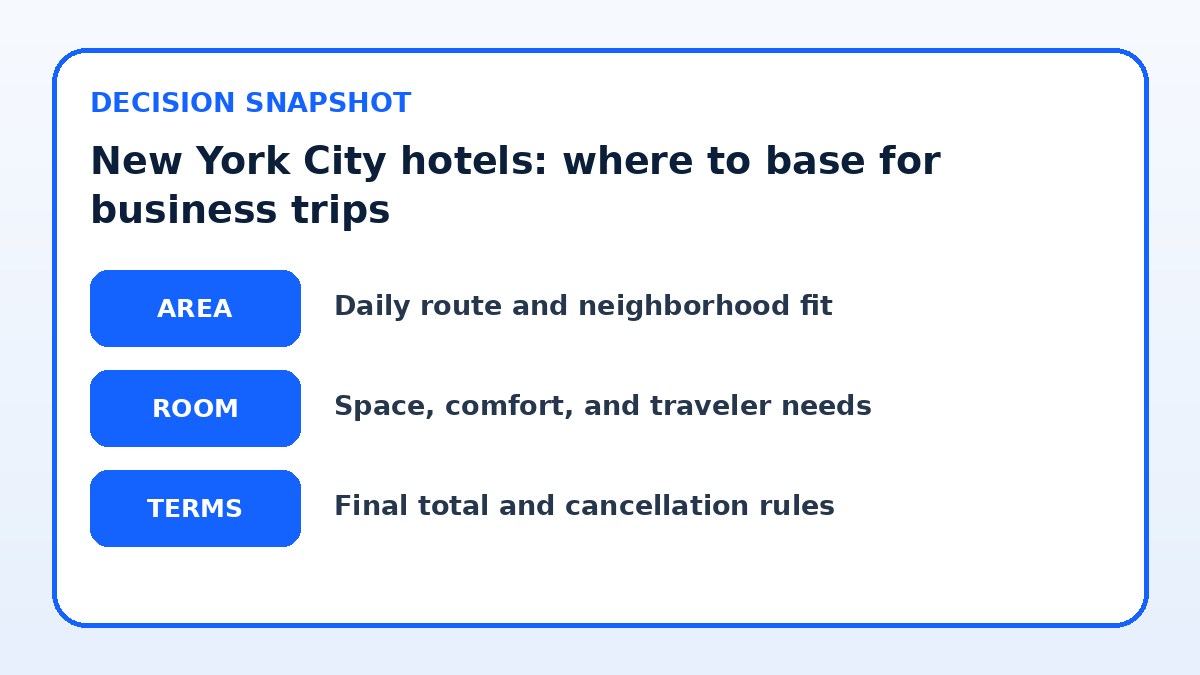
Practical answer first: pick the neighborhood that puts your most frequent daily stops within a short transit hop and then choose a room that minimizes friction—quiet, reliable workspace, and easy in/out logistics. For many business travelers in New York City, that means prioritizing Midtown East/West if meetings are spread across Midtown, the Financial District for downtown-heavy schedules, or Chelsea/Flatiron and Hudson Yards when clients and co-working spaces cluster on the west side. If your itinerary is mixed—meetings uptown and downtown—consider staying near a major transit hub (Penn Station, Grand Central, or a well-connected subway transfer) to trade a slightly longer walk for consistent transfer options. This guide walks you through neighborhood fit, daily-route friction, room and party needs, and the booking terms to check so you can confidently shortlist areas before opening live inventory on a booking site.

Check live stays in the areas that fit
Use your dates and party size to compare current rooms after you narrow the neighborhood fit.
Neighborhood fit: match area to your daily pattern
Decide where to base yourself by plotting the addresses you’ll visit most often. If your meetings are concentrated in Midtown between 34th and 59th Streets, Midtown East or West minimizes cab or subway time and keeps hotel-to-meeting walking commutes short. For finance-focused trips clustered in Lower Manhattan, the Financial District places you close to Wall Street firms, courts, and lower Manhattan offices. If clients or partners are scattered across Manhattan and Brooklyn, target neighborhoods with strong transfer options like Chelsea, Herald Square, or near Grand Central so you can reach both uptown and downtown without major detours.
Think in terms of repeat friction rather than a single convenience. A 10–15 minute transfer you make once is manageable; a 10–15 minute transfer repeated five times a day compounds fatigue. Also factor in evening plans: if you’ll host dinners near certain restaurants or have networking events in specific neighborhoods, a hotel nearby keeps late-night returns simple. Lastly, consider safety, 24-hour food options, and basic services (pharmacies, coffee shops) outside business hours when choosing your stay area.
Choose an area-selection strategy
| Area approach | Best for | Tradeoff to check |
|---|---|---|
| Stay in Midtown (center of meetings) | Concentrated Midtown schedules and short walking commutes | Higher daytime foot traffic and potentially higher rates; less restful evenings if near busy avenues. |
| Base in the Financial District | Downtown-focused finance, legal, and government appointments | Longer trips to Midtown and west-side locations; fewer late-night transit options for some lines. |
| Pick Chelsea/Flatiron or Hudson Yards | West-side clients, tech and creative firms, and co-working hubs | Can be slightly farther from Lower Manhattan; some areas feel busier on event days and weekends. |
| Stay near a major transit hub (Grand Central/Penn Station) | Mixed itineraries needing reliable transfer options across the city | More noise and foot traffic near hubs; walking to final destinations may still require short transfers. |
Daily-route friction: transit, walking, and timing
New York City’s transit network is dense but can be slow during peak hours and inconsistent at night. Evaluate routes between your hotel and key stops by checking typical transfer counts and whether paths are mostly walking or subway. Favor areas with express subway service or multiple lines at a single station; fewer transfers means less risk of delays affecting a tight schedule. If you rely on taxis or ride-hailing, staying slightly off the busiest blocks can yield faster curb pickups and easier vehicle access without sacrificing proximity.
Account for walking time and terrain—bridges, steep stairs, or long station corridors add minutes and friction, especially when carrying briefcases or rolling luggage. If mornings are critical, simulate an AM trip the same day of the week and hour you’d travel to spot pinch points. For late-night returns after events, check neighborhood lighting and whether transit runs frequently; some lines reduce frequency late, making short rides into long waits.
Now compare like with like
Keep the same dates, guests, room needs, and cancellation preferences while you compare the final choices.
Room and party needs: workspace, rest, and guest logistics
Prioritize room qualities that support work: a stable desk with power outlets, reliable high-speed Wi‑Fi, good lighting, and minimal background noise. If you’ll be on video calls, request a room facing away from noisy streets or ask about soundproofing; many hotels can note this on your reservation but confirm on the booking page. If you travel with a colleague or a spouse occasionally, look for rooms with a sofa and separate workspace or book an accessible suite that balances meeting functionality with rest space.
Consider logistical needs beyond the bed: an express or flexible check-in/out policy, luggage storage for early arrivals or late departures, and on-site printing or meeting rooms for last-minute prep. If you’ll host small in-room meetings, verify whether the hotel allows visitors in rooms and whether the layout supports privacy. When multiple people share a room, check mattress types and room size—balancing a larger room for comfort against the convenience of a superior neighborhood may matter more for longer trips.
Hotel booking check before payment
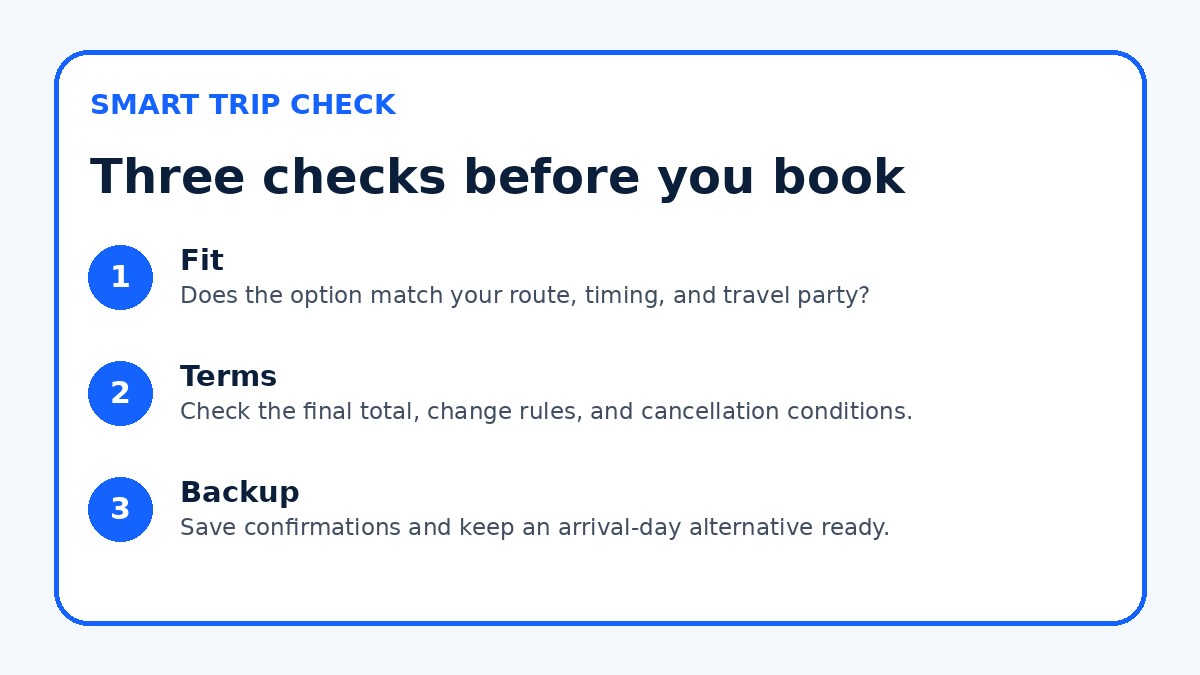
- Map your first two meeting locations and note subway lines serving each to shortlist 2–3 neighborhoods within one transfer.
- Confirm on the hotel booking page: check-in/out times, cancellation terms, and whether early check-in or late checkout is available.
- Request or verify a room with a dedicated desk, accessible power outlets, and confirmed Wi‑Fi details before finalizing the reservation.
- Ask the hotel to note quiet-room preferences and whether rooms face a courtyard or a main street to reduce noise risk.
- Check whether the hotel offers luggage storage and business services (printing, meeting rooms) that you might need between appointments.
- If you rely on rideshares, check typical curb pickup spots and whether hotel staff manage ride requests or have designated loading zones.
Final booking terms: what to verify on the hotel page
On the hotel’s final booking page confirm cancellation policies, check-in and check-out windows, and any required deposits or incidental holds; policies differ widely and can change. Verify the Wi‑Fi type (complimentary vs. paid, business-speed guarantees if listed), availability of meeting rooms or printing services, and whether breakfast or in-room dining options match your schedule. If the property advertises late or early check-in, read the terms carefully to see if those options are guaranteed or subject to availability.
Also check whether the room category includes a desk or workspace, whether windows face a quiet courtyard or a busy avenue, and the hotel’s policy for guests or visitors. If parking, valet, or vehicle pick-up matters—confirm the process and where vehicles wait. For current availability and up-to-date conditions, you can compare listings on Trip.com as one option, but always confirm provider-specific facts on the hotel’s own booking page before finalizing.
Hotel Guide questions travelers ask
How close should my hotel be to subway lines for efficient business travel?
Aim to be within a 5–12 minute walk of a station that offers direct routes or single-transfer connections to your most frequent meeting locations. The difference between a single-transfer commute and a two-transfer commute can add 15–30 minutes and significantly increase stress during peak hours. If your schedule is tight, prefer stations served by express trains or ones where multiple lines intersect so you have fallback options when service disruptions occur. Always check walking route quality between hotel and station—stairs, long corridors, or poor lighting add practical friction.
When is it worth sacrificing neighborhood proximity for a better room?
Sacrificing a few blocks of proximity is sensible when room features materially affect performance—for example, if the alternative offers a guaranteed quiet room, a proper desk, reliable high-speed Wi‑Fi, or flexible check-in when you arrive early. If you have frequent video calls, soundproofing and good lighting can reduce stress and presentation issues more than saving ten minutes of travel time. For multi-day stays where rest and in-room productivity matter, choose comfort and workspace over marginal neighborhood convenience.
How can I verify noise and Wi‑Fi quality before booking?
Ask the hotel directly for information about room soundproofing and whether specific room categories face quiet courtyards. Read recent guest comments focusing on noise and internet reliability, and look for property responses. For Wi‑Fi, confirm the type (complimentary or paid) and whether the hotel can guarantee business-speed connectivity or wired access for critical calls; if the property offers a business center, ask about reserved access. Finally, verify any claims on the hotel’s booking page rather than third-party summaries.
Final decision note
Shortlisting an area before you search live inventory saves time and improves decision quality: plot your most frequent stops, select 1–2 neighborhoods that reduce transfers, then focus on room features that keep you productive—quiet, workspace, and dependable Wi‑Fi. Balance tradeoffs: proximity shortens walks but can mean more street noise and busier neighborhoods; transit hubs offer flexibility at the cost of foot-traffic and occasional delays. Use the checklist to confirm the non-negotiables on the hotel’s booking page and request notes about quiet rooms or business amenities. With a neighborhood selected and a clear list of room priorities, you’ll be able to quickly compare available properties and finalize a booking that supports both your schedule and your ability to work effectively in New York City.
Continue planning
Check current options and final conditions
Use the provider page to confirm live availability, the final total, cancellation terms, and every condition that matters to your trip.
This evergreen planning guide was created with AI-assisted drafting and a structured quality review. It does not display live prices, schedules, availability, visa guidance, or provider rankings. Verify current details before booking. Some links are affiliate links; we may earn a commission at no additional cost to you.