Short answer: for most solo travelers, renting a car in Ho Chi Minh City is only worth it if you plan day trips outside the metro area or need flexible access to rural destinations. City traffic, limited parking, and heavy use of motorcycles make inner‑city driving stressful and time consuming. This article helps you decide whether to drive, explains the value of typical routes from the city, walks through insurance wording to watch for, and highlights the common pickup and return frictions solo travelers face. If you choose not to drive, I outline practical fallback options—rideshares, taxis, motorbike taxis, and private drivers—so you can compare mobility strategies and book the right option for your itinerary.
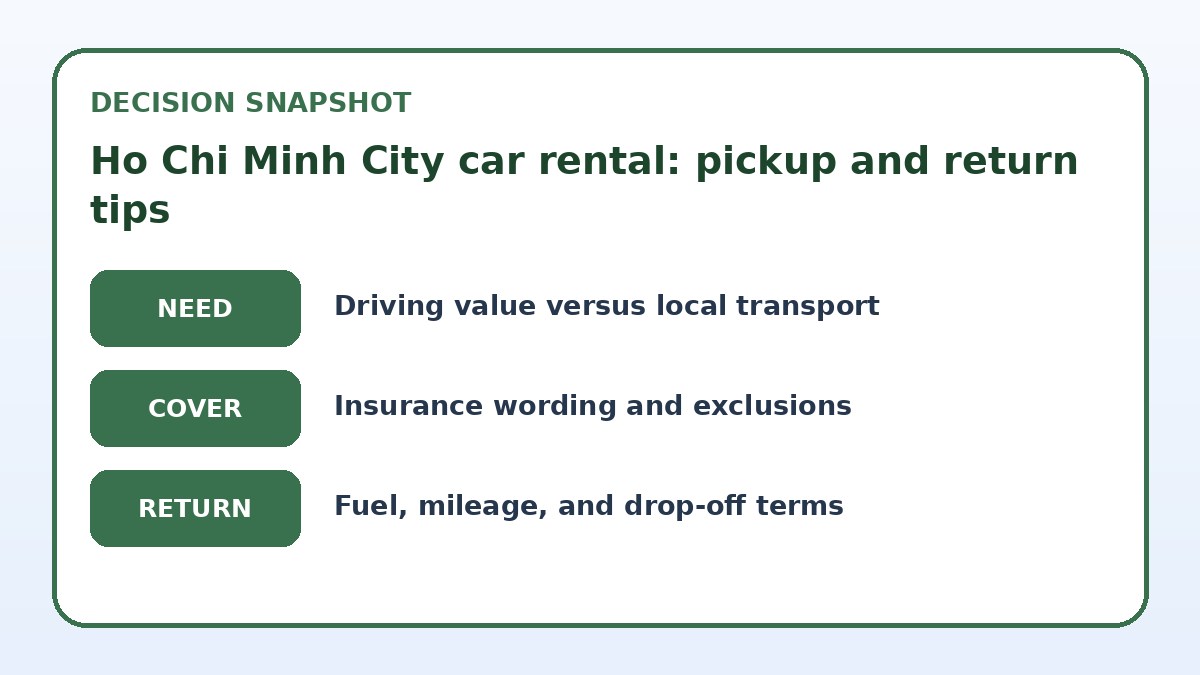
Does driving add value to your Ho Chi Minh City plans?
Decide by matching route value to your trip priorities. If your plan centers on inner‑city sightseeing—museums, markets, and coffee spots—driving usually reduces flexibility because traffic and parking consume time and energy. However, if you want to reach destinations outside the urban core on a flexible schedule—coastal beaches, the Mekong delta islands, national parks or remote temples—having a car gives you control over timing, luggage, and stops that public transport may not offer. Consider the comfort of air‑conditioned transport and secure luggage storage versus the hassle of navigating unfamiliar lanes and local driving norms.
Also weigh solo traveler concerns: if you prefer not to negotiate on the move and want independence, driving can be attractive. But lone drivers must manage fatigue, navigation, and vehicle security alone. Factor in fuel stops, tolls, and potential police checkpoints when planning distances. For multi‑day excursions where public bus schedules would force long waits or complicated transfers, a car can reclaim hours and simplify logistics, making it worth the extra planning and cost for the right route.
Decide whether driving earns its place
| Mobility strategy | Best for | Cost or friction to check |
|---|---|---|
| Self‑drive rental | Travelers needing full routing freedom for multi‑stop day trips outside the city | Responsibility for navigation, insurance gaps, parking hassles, and longer pickup/return processes |
| Private driver/driver‑for‑hire | Solo travelers who want convenience and local knowledge without managing a vehicle | Higher daily cost than public transport and less control over vehicle choice or exact schedule |
| Rideshare and metered taxis | Quick city transfers, airport runs, and short point‑to‑point trips with minimal planning | Costs can rise on long distances or peak times; less predictable for multi‑stop day trips |
| Public transport and guided day tours | Budget‑minded travelers who prefer structured itineraries and minimal on‑the‑ground logistics | Less flexibility and potential time lost to schedules or crowded services |
Check live rental choices only after the route test
Use the exact driver, dates, pickup point, and return plan to compare current conditions.
Insurance wording and what to verify at booking
Insurance language is decisive—read the rental contract rather than relying on gloss or agent summaries. Confirm who is the insured driver, whether third‑party liability is included, the level of collision damage waiver (CDW) or loss damage waiver (LDW), and what the deductible or excess amount will be. Check whether theft protection is separate and whether cover excludes certain road types or provinces. If you plan to drive across provincial lines, verify that the policy remains valid; some policies restrict cross‑border or long‑distance use and will note excluded regions in plain text.
Also ask about documentation requirements: international driving permits (IDP), your home license translation, and whether the rental company will accept digital copies. Note the exact conditions for damage assessment—who inspects the car at pickup and return, how damage is recorded, and how long after return you can be billed for unseen damage. If a credit card hold is required, ask the amount and release timing. Keep screenshots or scanned copies of the full insurance and fee wording from the booking page to avoid disputes.
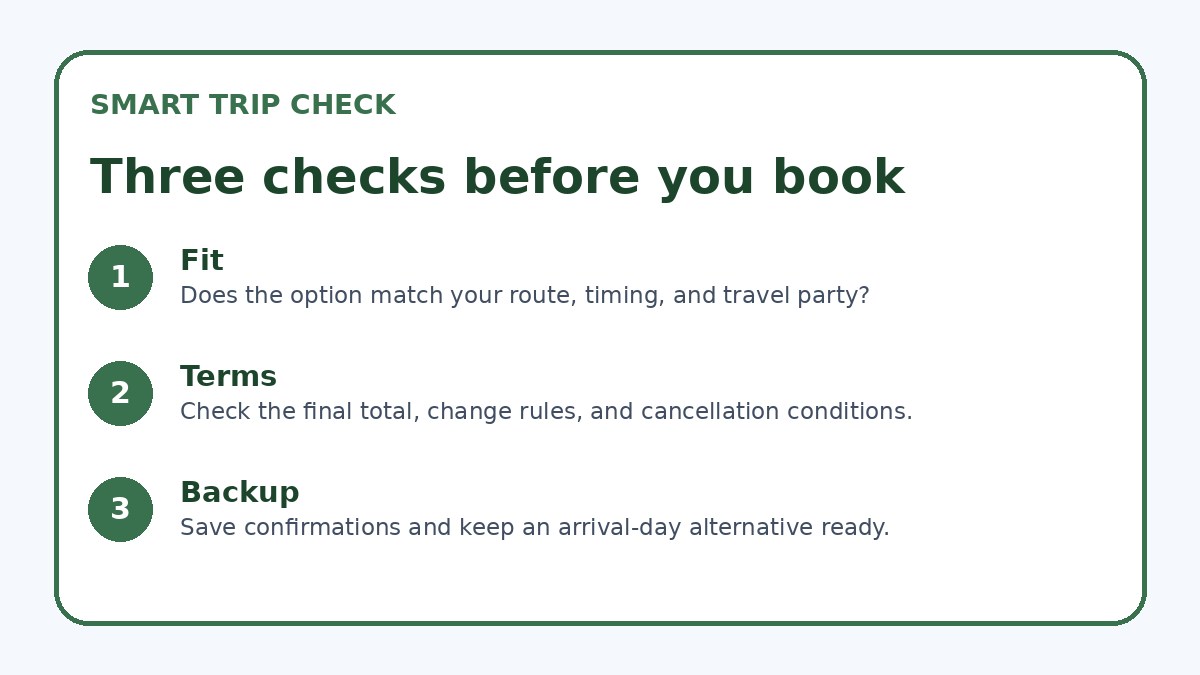
Compare the full rental conditions
Confirm insurance wording, exclusions, deposit, fuel, mileage, and return terms on the final page.
Pickup and return friction solo travelers commonly meet
Pickup commonly takes longer than advertised: staff may inspect the vehicle with a checklist, photograph damage, and request additional ID or proof of onward travel. Solo travelers should budget extra time to complete the handover, and bring printed copies or screenshots of the booking confirmation, the card used for payment, and passport pages. Check whether the pickup location is at an airport terminal curb, an offsite desk, or a garage—offsite shuttles add time and possible language friction. Ask whether the vehicle comes with a local SIM‑enabled GPS device or if a phone mount and offline maps are acceptable.
Returning a car can be more stressful than pickup, especially after long days. Clarify fuel policy—full‑to‑full is common—and inspect the vehicle together with staff, recording mileage and any new scratches. Get a stamped or emailed return receipt showing time, odometer reading, and fuel level. If you must return outside business hours, confirm the procedure for after‑hours keys and how the company documents condition to prevent arbitrary charges. Retain contact details for the local branch so you can quickly resolve disputes by phone or email.
Car rental terms to verify
- Photograph the car thoroughly at pickup, including odometer, fuel level, and all sides; keep copies on your phone and in the cloud.
- Confirm and screenshot full insurance wording, deductible amounts, theft cover, and any territorial restrictions from the final booking page.
- Ask the agent to note existing damage on the rental agreement and obtain a stamped pickup receipt before driving away.
- Verify fuel policy and note whether a refill receipt is required; plan return timing to avoid fuel penalties during off‑hours.
- Confirm the exact return process for after‑hours drop‑offs, including where to leave keys and how condition will be recorded.
- Save local branch contact details and your booking reference; check how long the company can apply post‑rental charges.
Non‑driving fallback: how to move efficiently without a car
For many solo travelers, a mix of alternatives matches convenience without the risks of driving. Rideshare apps and metered taxis handle city transfers quickly and eliminate parking concerns; for longer day trips a private driver or guided day tour can offer local navigation and insulated scheduling without the responsibility of driving. Motorbike taxis and rented scooters are common for single riders comfortable with quick trips, but carry a higher accident risk and limited luggage capacity. Use a combination that suits distance: rideshares for airport runs, private drivers for all‑day excursions, and public buses or trains for cheap, predictable transfers.
When comparing options, consider door‑to‑door time, luggage needs, and your tolerance for negotiating prices or routes. If security and language ease are priorities, prebooked private transfers or company‑organized day tours reduce interaction required on the ground. For flexible days when you might explore multiple informal stops, hiring a driver by the day or arranging a local car with driver can replicate the benefits of renting without solo navigation and insurance responsibility. Trip.com can be a place to compare current availability and booking terms, but always verify provider cancellation and pickup terms on the final booking page.
Car Rental & Road Trip questions travelers ask
Do I need an international driving permit to rent a car in Ho Chi Minh City?
Requirements vary by rental company and your home license. Many providers ask for an International Driving Permit (IDP) alongside your national license, while others accept specific foreign licenses or translations. Always check the rental firm’s stated document list on the final booking page before departure. If an IDP is required, obtain it in your home country and carry both the IDP and the original license. Bring your passport and the card used for payment, since agents commonly request these during pickup.
What should I do if I find damage after returning the car?
First, obtain and save any written or emailed return confirmation showing the car’s condition, odometer, and fuel level. If damage is reported later, ask the company for dated photos and an itemized repair invoice. Use your rental agreement and pickup photographs as evidence to contest charges if they appear inconsistent. Contact your insurer or credit card company if you purchased damage protection through them and follow their claim procedures. Keep all correspondence and receipts until any disputed charges are fully resolved.
How can I reduce pickup and return time as a solo traveler?
To speed up handover, complete pre‑rental forms online if the company offers them and arrive with required documentation and a charged phone. Choose an airport desk or central branch known for quick service where possible, and schedule an appointment time rather than walking in. Use credit cards that autopay or preauthorize deposits to cut paperwork, and ask for a rapid inspection walk‑through so both parties sign the condition checklist promptly. For returns, refill fuel to the agreed level and photograph the car immediately with a timestamped image to avoid disputes.
Final decision note
For most solo travelers staying inside Ho Chi Minh City, driving brings more friction than benefit. The real advantages appear when your itinerary requires flexible, off‑schedule access to destinations beyond the metropolitan area. If you choose to rent, prioritize clear insurance wording, thorough documentation at pickup, and a detailed return procedure to avoid post‑rental disputes. If you prefer to avoid the responsibilities of a rented car, mix rideshares, private drivers, and organized day tours to preserve flexibility without solo navigation. Before completing any booking, verify the insurer’s coverage details, identification requirements, fuel and late‑return fees, and exact pickup and drop‑off instructions on the provider’s final booking page.
Continue planning
Check current options and final conditions
Use the provider page to confirm live availability, the final total, cancellation terms, and every condition that matters to your trip.
This evergreen planning guide was created with AI-assisted drafting and a structured quality review. It does not display live prices, schedules, availability, visa guidance, or provider rankings. Verify current details before booking. Some links are affiliate links; we may earn a commission at no additional cost to you.