For first-time visitors deciding how to travel from Melbourne to Adelaide, the practical question is not only which train or coach to take, but how you will get between your door, the departure terminal or station, and your final door in Adelaide. Start by comparing rail, coach, and combined options for how they fit with where you start and where you need to end up. Consider terminal locations, luggage handling, and how much time you can afford for connections or delays. This article gives a plain-language decision path: when a rail-first plan makes sense, when buses or mixed modes are more practical, how to manage transfers at Melbourne and Adelaide terminals, and what to prepare if your connection is disrupted. Where provider specifics matter—schedules, baggage rules, station facilities—verify on the operator’s booking pages; Trip.com can be used as one place to compare current availability and conditions.
How to pick rail, coach, or mixed routes based on terminal fit
When deciding between rail, coach, or a mixed approach, map the exact departure and arrival points rather than relying on city names. Melbourne’s major train or coach terminals are clustered in different parts of the metropolitan area; Adelaide’s intercity terminals and coach stops sit near the CBD but may be positioned differently relative to your hotel or connecting transport. If your accommodation is near a suburban train line that connects easily to the intercity station, a train-first plan likely reduces overall door-to-door hassle. Conversely, if a coach depot is closer to your pickup neighbourhood or drops you nearer your Adelaide destination, the coach can be the most practical single-step option.
Mixed-mode trips—such as a short coach or shuttle to an intercity train station, or a train into Melbourne CBD followed by a suburban bus to a long-distance coach—work best when one mode significantly shortens walking or heavy luggage transfers. When mapping options, include local transit stops, typical taxi ranks, and major pedestrian routes between platforms or terminals. Factor in luggage handling at each transfer point: some services provide assistance or luggage compartments, while others expect you to manage bags on foot and up stairs.
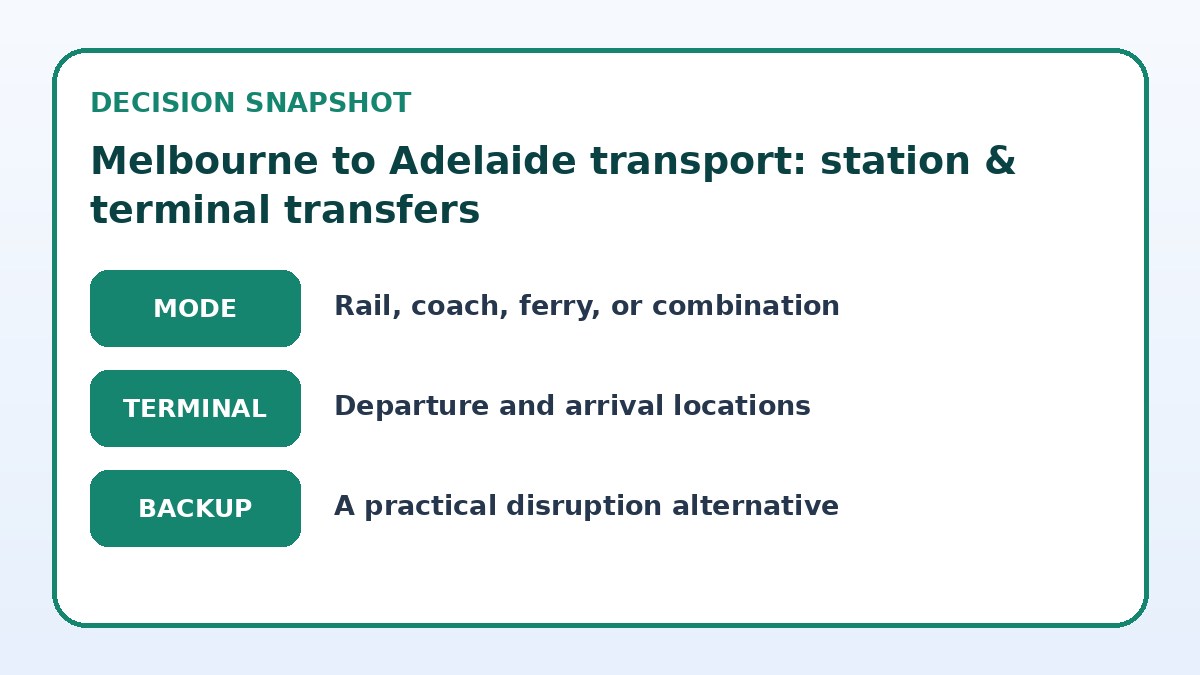
Choose the end-to-end journey plan
| Journey approach | Best for | Friction to check |
|---|---|---|
| Train-first (rail to rail with public-transit links) | Travelers staying near city-centre or suburban train lines with light luggage | Often more comfortable ride but may require more walking or local transfers at terminals |
| Coach-first (direct coach or express bus) | Passengers prioritising fewer transfers and drop-off near neighbourhoods without central stations | May involve longer on-road travel and variable arrival points for last-mile access |
| Mixed-mode (shuttle or taxi to main intercity service) | Those needing a short door-to-terminal connection to reach an otherwise convenient long-distance service | Extra booking steps and potential baggage handling at two different operators |
| Flexible buffer plan (allow extra time, refundable segments) | Visitors who prefer low stress and ready alternatives for delays or missed connections | Requires more time and potentially more upfront cost or less tightly scheduled travel |
Check live intercity options
Look beyond the ride itself and compare terminals, transfers, luggage, and arrival fit.
Minimising luggage and transfer friction at terminals
Luggage is often the largest practical friction when transferring between terminals. Before you book, check each operator’s published baggage allowances and whether there is staff assistance, luggage storage, or trolleys at the departure and arrival terminals. If you must change modes in Melbourne or Adelaide, plan a route that avoids long underground passages or multiple staircases when you have heavy suitcases. Where possible, choose services that load luggage into a single baggage compartment to avoid carrying bags across platforms or between buildings.
If you expect to arrive late or depart early, verify terminal access hours and whether waiting areas remain open. Some intercity coach depots and train stations have sheltered waiting zones, lockers, or staffed counters; others are more exposed. When transfers are unavoidable, consider breaking the journey into two booked segments with extra time between them to reduce stress. Bring a lightweight bag for essentials so you can keep items with you when handling larger suitcases.
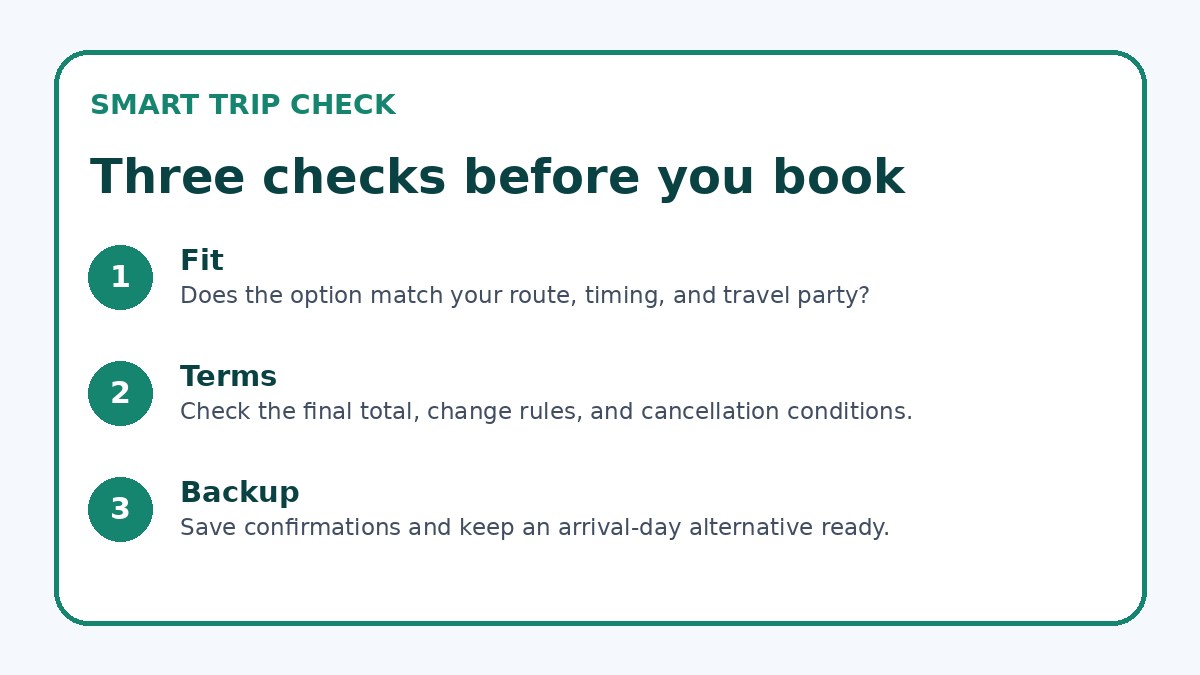
Timing flexibility: scheduling connections and buffer time
When planning your schedule, the tradeoff is straightforward: tighter connections save time but raise the risk of a missed onward leg. Allow at least extra buffer time for ticketing, security checks if present, finding platforms or bays, and walking between terminals. If you travel during peak hours or on public-holiday weekends, expect station congestion and possibly longer boarding times. Conversely, if you have flexible arrival or departure times, choose off-peak services to reduce transfer stress and increase the number of alternative options if something goes wrong.
If you must make a same-day connection, pick a primary service with a practical secondary option that departs later from the same terminal or a nearby terminal you can reach without complex transfers. Where ticketing rules allow, it’s helpful to book refundable or changeable segments for at least one leg so you can adjust without losing all value. Always confirm the exact arrival platform or bay on the day, since allocations can change; this is especially important at busy city terminals where boarding zones shift.
Compare the practical alternatives
Use the final page to confirm what is actually offered on your dates and save a workable fallback.
Intercity travel checklist
- Map exact terminal and station addresses in both Melbourne and Adelaide and plan the first and last-mile routes from your accommodation.
- Check baggage rules and whether luggage assistance or storage is available at each terminal on the operator’s booking page.
- Reserve at least one alternative departure later the same day and note its terminal to use as a disruption backup.
- Allow extra buffer time for ticketing, platform changes, and walking between zones—add 30–60 minutes for unfamiliar terminals.
- Confirm terminal access hours and waiting-area availability if you will arrive early or late at night.
- Save local taxi, shuttle, and rideshare contact details and the exact drop-off address for your arrival point.
Preparing a disruption backup and door-to-door practicality
A disruption backup is essential. Identify at least two realistic alternatives before booking: a later train or coach from the same terminal, a different terminal reachable by a short taxi or public-transit ride, and a local taxi or rideshare option for the final mile. Keep local contact numbers and the addresses of nearby stations or depots in your phone. If your plan depends on a single tight connection, have contingency money and a flexible accommodation option in mind in case you need to overnight unexpectedly.
Think door-to-door rather than only the main ride. That means planning how you will cover the first and last legs—walking, tram, suburban train, taxi, or rideshare—and estimating time and effort for each. Consider mobility needs, the comfort of waiting areas, and whether you want to avoid carrying luggage through busy transit hubs. When comparing options on provider pages, verify baggage allowances, terminal addresses, and arrival bay details before you finalize the booking; Trip.com can be used to compare current availability but always confirm specifics on the operator’s own page.
Rail & Intercity Transport questions travelers ask
How do I decide whether to take a train or coach from Melbourne to Adelaide?
Decide by matching the departure and arrival terminal locations to where you actually start and finish your day. If a train station is within easy reach of your accommodation and Adelaide’s arrival station puts you close to your final address or onward public transport, a train-first route may be more convenient. If a coach depot provides a closer pickup or a drop-off nearer your Adelaide neighbourhood, a coach could save you extra transfers. Also factor in luggage handling and whether you prefer fewer changes even if the road journey is longer.
What is the best way to handle luggage during transfers in Melbourne or Adelaide?
Plan transfers that minimise the distance and steps you must carry heavy bags. Check whether operators provide bulk luggage loading, station trolleys, or storage; verify these details on the operator’s page before booking. If you expect stairs, long walks, or platform changes, pack a small daypack with essentials and keep heavier bags wheeled and protected. When changing modes, position yourself near lifts, ramps, or staffed counters if assistance is available.
If my connection is delayed, what practical backup steps should I prepare?
Identify at least one later direct departure from the same or a nearby terminal, plus a realistic taxi or rideshare route to your destination if public options disappear. Keep flexible contactable options—operator customer service, nearby station addresses, and an accommodation alternative in case you must stay overnight. If your tickets allow changes, know the refund or change window and what evidence you need for service disruptions. Having local currency or a payment method ready for a taxi reduces stress in last-minute choices.
Final decision note
Planning Melbourne to Adelaide transport becomes straightforward when you prioritise door-to-door practicality over only the headline mode. Start by mapping exact terminal locations and how they fit with your accommodation, luggage needs, and mobility. Compare train, coach, and mixed options not just on ride comfort but on where they leave you in Melbourne and Adelaide, how much walking and baggage handling they involve, and the realistic alternatives if something goes wrong. Build buffers into your schedule, verify baggage and terminal details on the operator’s booking pages, and keep a disruption backup ready. With those steps, your transfer plan will be resilient and much less stressful.
Continue planning
Check current options and final conditions
Use the provider page to confirm live availability, the final total, cancellation terms, and every condition that matters to your trip.
This evergreen planning guide was created with AI-assisted drafting and a structured quality review. It does not display live prices, schedules, availability, visa guidance, or provider rankings. Verify current details before booking. Some links are affiliate links; we may earn a commission at no additional cost to you.