For a solo traveler, the core choice on Paris to Rome flights is a time-versus-fare tradeoff: direct flights save time and simplify connections but sometimes cost more, while connecting itineraries can lower fares or open flexible routing at the expense of extra legs and potential transfer risk. Start your decision by fixing travel dates, one-way or round-trip, and baggage needs — these details change the fare and reliability math. If you value simplicity and fewer touchpoints, a direct flight is often the straightforward pick. If you’re flexible on time or searching for a specific airport pairing, a connecting option might deliver a better fare or a preferred schedule. Below I’ll walk through routing, baggage and connection risk, schedule fit, and fare conditions so you can choose the best approach for your trip.
See live routes for your exact travel day
Compare direct and connecting choices with the same baggage and traveler details.
Routing: how direct and connecting options differ
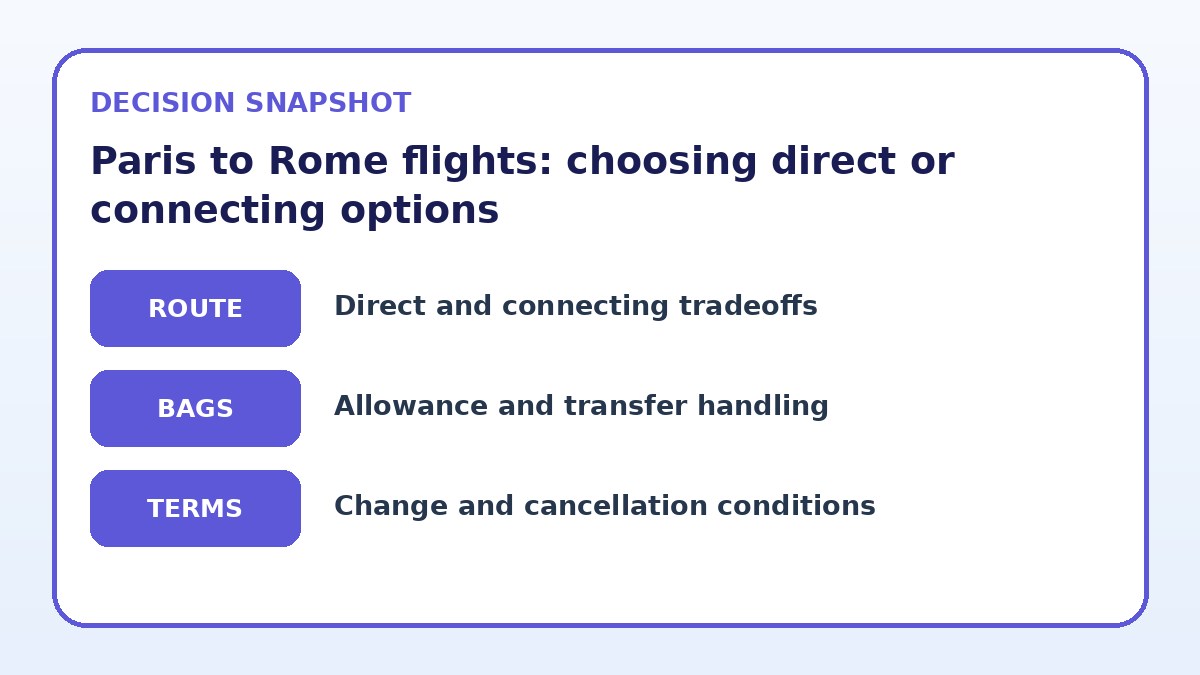
Direct flights typically mean a single takeoff and landing between Paris and Rome and the simplest airport logistics: one departure airport, one arrival airport, and no scheduled transfer. For many solo travelers that reduces stress and keeps ground transport planning minimal. When comparing routes, confirm whether the listing labeled 'direct' is non-stop or simply a single marketed flight number that may include a technical stop. Likewise, connecting itineraries can offer more airport combos — for example leaving from a different Paris airport or arriving at an alternate Rome airport — which can be useful if one airport is closer to your accommodation.
Connecting options usually involve a change of aircraft at an intermediate airport, and that change can be on the same ticket or two separate tickets. On a single-ticket connection, the airline typically protects you if your inbound leg is delayed; on separate tickets, you assume the transfer risk and must recheck baggage if necessary. Use filters in a search tool to see true non-stop options versus one-stop alternatives, then map the connection airport and typical transfer times to decide if the route aligns with your comfort level and onward plans in Rome.
Baggage and connection risk for solo travelers
Baggage rules often make the price gap between direct and connecting options wider than it first appears. Low-cost carriers or cheaper connecting fares can exclude checked baggage, seat selection, or carry-on privileges that traditional carriers include in a direct flight price. Before selecting a cheaper connecting route, run the numbers including any checked-bag and priority boarding fees; a slightly higher direct fare that includes your luggage may be the better value and far less hassle when traveling alone.
Connection risk is a key factor when you’re the only person responsible for making a tight transfer. On single-ticket itineraries, airlines generally transfer baggage automatically and rebook you if missed connections are their responsibility. With separate tickets, build significant cushion time for rechecking bags, clearing security, and possible terminal transfers. Verify whether the connection requires customs or immigration clearance at the transfer airport, because that can add unpredictable time and complexity even for intra-Schengen routings when carriers or terminals vary.
Compare flight-selection strategies
| Flight strategy | Best for | Risk to check |
|---|---|---|
| Non-stop direct flight | Solo travelers prioritizing shortest travel time and simplest logistics. | Usually costs more and may have fewer daily departures to match specific arrival windows. |
| One-stop connection on a single ticket | Those seeking lower fares while retaining baggage protection and rebooking support. | Longer total travel time and added transfer complexity compared with non-stop flights. |
| Separate tickets with a planned self-transfer | Flexible solo travelers chasing lower fares or specific airport combos. | Higher risk: you’re responsible for missed connections, rechecking baggage, and additional airport transfers. |
| Connection with extended layover | Travelers who want lower fares or a stopover city visit during a longer journey. | Significantly longer trip duration and more planning for luggage, visas, or overnight stays if required. |
Recheck the complete itinerary
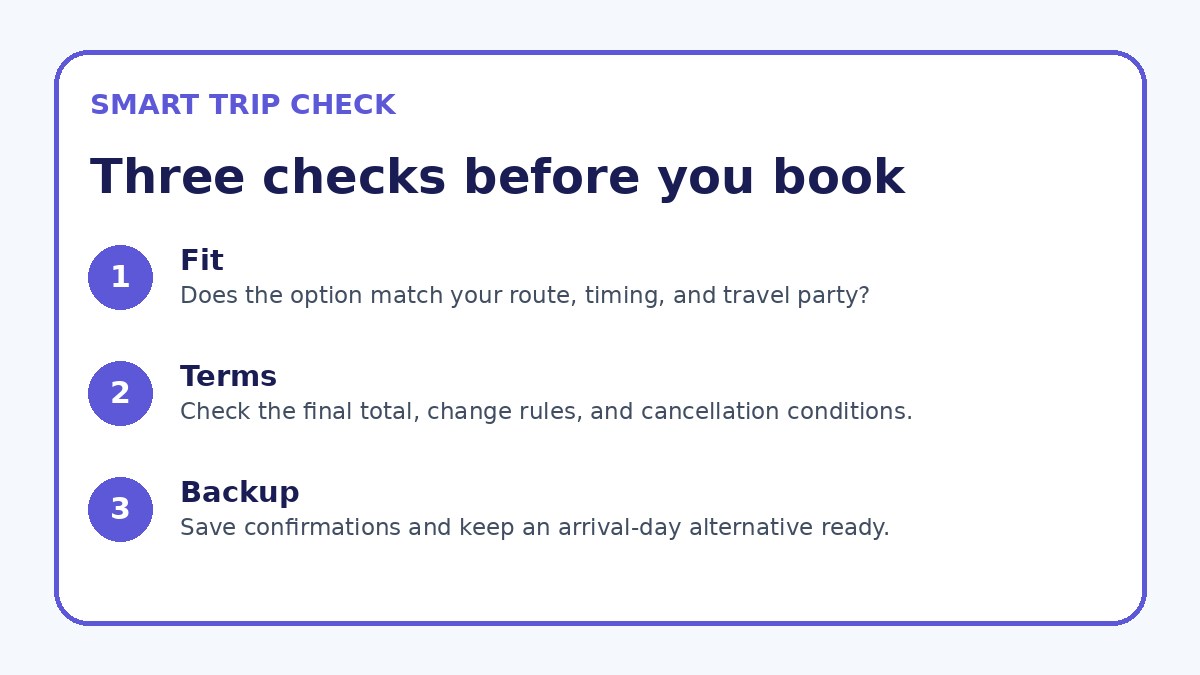
Confirm airports, connection handling, baggage, and change conditions before deciding.
Schedule fit: timing, arrival windows and daily plans
Think about when you want to arrive in Rome and how that shapes whether you should prioritize direct flights. Arriving early in the day increases usable sightseeing time; direct morning flights may be limited and come at a premium. Conversely, a late-afternoon connecting option might land you in Rome at a similar time but with a longer total journey. For solo travelers who prefer to rest on arrival or who have evening commitments, prioritizing specific arrival windows is more important than shaving total travel duration.
Also consider reliability of schedules across seasons and weekdays. During peak periods, direct flights can sell out, pushing you toward connections that open additional timing choices. Compare total door-to-door time rather than flight time alone: include transport to and from each airport, expected security waits, and the possibility of overnight layovers if you choose connections with long stopovers. If your Rome plans require a precise arrival time, select itineraries with buffer margins to absorb common delays.
Flight details to verify
- Lock exact travel dates and whether your trip is one-way or round-trip before searching fares.
- Confirm checked baggage or carry-on allowances for each fare and add fees to your price comparison.
- Decide acceptable minimum connection time and filter search results to match that window.
- Check the final carrier booking page for change, cancellation, and refund rules before purchase.
- Note departure and arrival terminals for each option and plan ground transfers accordingly.
- If using separate tickets, schedule at least three hours between flights to allow recheck and transfer.
Fare conditions and what to verify before booking
Fare conditions determine whether a lower upfront price remains the better choice after changes, cancellations, or added baggage. Look for the change fee, the refund policy, and whether the fare allows name changes or open-date adjustments — especially important if your travel dates are not fully fixed. Confirm whether the airfare includes carry-on and checked baggage allowance; many platform displays exclude ancillary fees that are added later in checkout. Always read the fare rules on the carrier’s final booking page before paying.
If you plan to mix carriers or buy separate tickets for each leg, check whether the airlines will accept through-checked baggage and whether connections are protected. For solo travelers who need flexibility, consider fares that permit free or low-cost date changes. Finally, verify the airport terminals for each leg and whether a transfer requires switching between terminals or airports; that affects minimum connection times and may require additional local transport planning before you commit.
Flight Guide questions travelers ask
Are direct Paris to Rome flights always faster and worth the price?
Direct flights are normally faster in elapsed flight time and reduce the number of airport touchpoints, which many solo travelers value for simplicity and lower stress. Whether they’re 'worth it' depends on your priorities: if time on the ground in Rome matters more than saving money, a direct flight often justifies a higher fare. If you are highly flexible with dates and budget, a connecting itinerary may offer a lower net cost even after ancillary fees. Before booking, compare total door-to-door times and include baggage fees in the total cost to make a practical decision.
How much connection time should a solo traveler allow between flights?
Allow more cushion than the minimum posted transfer time when you’re traveling alone, because you’re solely responsible for baggage, security lines, and terminal transfers. A safe practical guideline is at least 90–120 minutes for domestic-style intra-Europe connections on a single ticket, and at least three hours if you must recheck baggage on separate tickets, or if the transfer requires changing airports. Always verify whether immigration or customs checks are involved at the transfer point, and factor in the time of day, as morning or late-afternoon peaks can lengthen queues.
What should I verify on the airline’s booking page before completing a purchase?
On the airline’s final booking page, confirm the fare’s baggage allowance, seat selection policy, and any ancillary fees that are not shown in search summaries. Check the exact change and cancellation conditions, whether the ticket qualifies for voluntary rebooking credit, and whether the carrier protects connections on a single ticket. Also verify the departure and arrival terminals and whether the itinerary uses code-share flights, because the operating carrier’s rules may differ. If you want to compare live options, you can check Trip.com as one of several aggregators, but always confirm details on the airline’s official page.
Final decision note
Solo travelers choosing between Paris to Rome flights should start by deciding whether the priority is time or cost. Direct flights reduce complexity and travel time, which is valuable if you want to maximize sightseeing or minimize stress. Connecting itineraries can save money or provide more schedule options but introduce extra legs, baggage complexity, and higher transfer risk—especially when tickets are booked separately. Before you book, lock your dates and baggage needs, compare total door-to-door times, and read the carrier’s fare rules on the final booking page. With those checks done, pick the option that aligns with your tolerance for transfer risk and how much of your trip you want to spend en route versus in Rome.
Continue planning
Check current options and final conditions
Use the provider page to confirm live availability, the final total, cancellation terms, and every condition that matters to your trip.
This evergreen planning guide was created with AI-assisted drafting and a structured quality review. It does not display live prices, schedules, availability, visa guidance, or provider rankings. Verify current details before booking. Some links are affiliate links; we may earn a commission at no additional cost to you.