Practical answer: if your main priority is meeting-heavy days and quick airport or client access, favor hotels in the city center (Hai Chau) or near the airport; if you need quiet focus time, reliable in-room workspaces, or a better sleep environment after late work hours, pick a beachside or riverside hotel with larger rooms and blackout options. In Da Nang many businesses cluster along the Han River and around Hai Chau district; the international airport and industrial zones sit a short drive away. Before booking, decide whether daily friction (taxi availability, rush-hour travel) or overnight comfort (room size, noise control, workspace) will have the bigger impact on your productivity. Use the shortlist you form here to compare actual rooms, bed types, and booking terms on the provider’s page; verify cancellation policy, exact room layout, and whether a desk or reliable Wi‑Fi is guaranteed.
Check live stays in the areas that fit
Use your dates and party size to compare current rooms after you narrow the neighborhood fit.
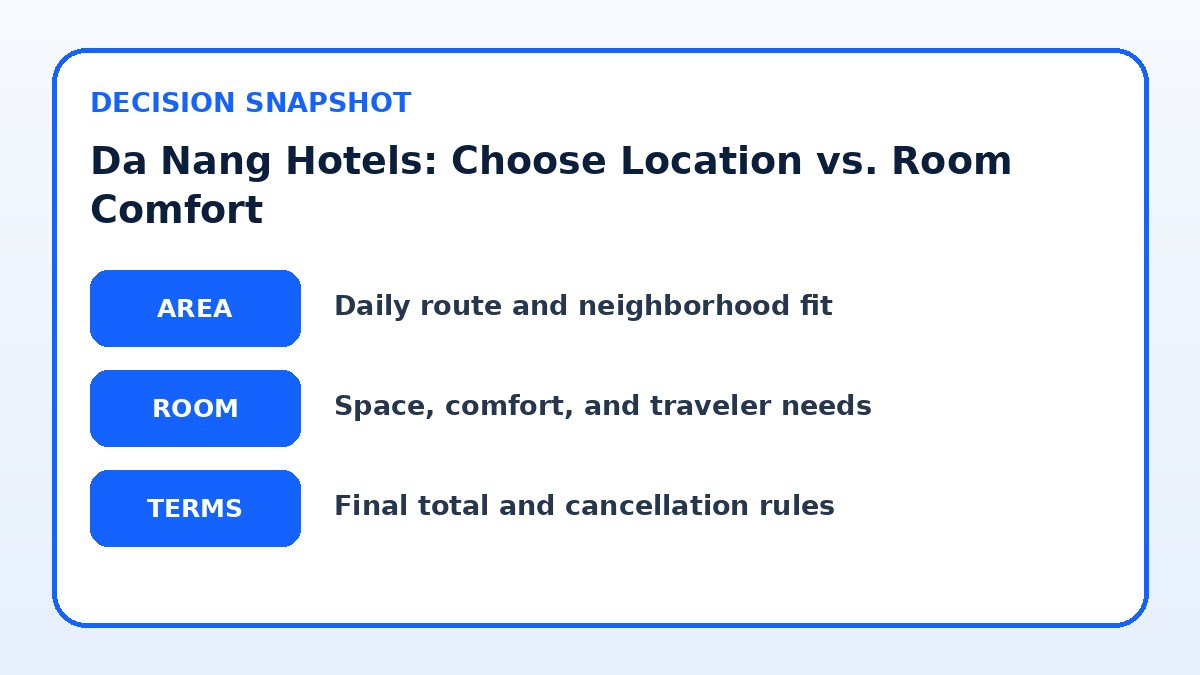
Neighborhood fit: pick the area that matches your day
Start by mapping the locations tied to your trip: the airport, client offices, conference venues, and dining options for entertaining colleagues. Hai Chau (city center) clusters corporate offices, banks, and the Han River waterfront — ideal for quick taxi rides and an after-hours dinner within a short walk. If you need fastest airport access or are visiting industrial zones, choose a hotel closer to Da Nang International Airport or along the western corridors that lead to business parks. For short-term trips with intensive meetings, fewer minutes on the road means less unpredictability and more time for prep and rest.
If your agenda mixes client visits across different parts of the city, look for areas that reduce your average trip time rather than minimizing the maximum trip. A hotel on the river or near major roads can be a smarter compromise than a single-purpose location. Also weigh evening plans: being near reliable dining and quiet post-meeting spots cuts the risk of long rides home after late work. Use the neighborhood fit decision to shortlist two areas — one optimized for commute and one for room comfort — before checking specific hotel rooms.
Choose an area-selection strategy
| Area approach | Best for | Tradeoff to check |
|---|---|---|
| City center (Hai Chau) | Minimizing travel time to meetings and evening dining options | Smaller rooms and more street noise in some buildings; check room soundproofing and desk space. |
| Airport-adjacent | Early flights or visits to industrial zones and quick departures | Fewer dining and entertainment choices within short walking distance. |
| Riverside/Bridgefront | Short transfers plus pleasant views and mid-range room sizes | Can be busier during events; verify quiet room placement and window insulation. |
| An Thuong/Beach fringe | Better rooms and quieter nights when you need focus or rest | Longer rides to central business addresses; check transport options for late returns. |
Daily-route friction: transfers, taxis, and rush hours
Da Nang’s traffic is manageable compared with bigger regional cities, but morning and late-afternoon peaks still add minutes to rides that pile up over a multi-day trip. If you’re scheduling back-to-back meetings or early departures, calculate door-to-door times using your meeting addresses at typical commute hours. Factor in the time to hail a taxi or arrange a hotel car; some hotels provide prompt shuttle or car services, but you should verify this on the hotel’s booking page. Also consider mobile ride apps available locally — they ease short transfers and can reduce waiting time compared with walking to main roads.
Think about arrival and departure logistics: proximity to the airport matters when flights are early or when you plan same-day returns. If you anticipate frequent trips around town, a centrally located hotel will keep average transfers shorter and predictable. Conversely, if your schedule is mostly remote (virtual meetings) with one or two in-person events, accepting slightly longer daily rides for a quieter, room-focused property can pay dividends in concentration and rest. Compare commute tradeoffs against the value of uninterrupted in-room time.
Now compare like with like
Keep the same dates, guests, room needs, and cancellation preferences while you compare the final choices.
Room and party needs: what the room must deliver
List the in-room features you cannot compromise on: a comfortable desk and chair, reliable and fast Wi‑Fi, electrical outlets positioned for laptop and phone charging, good lighting for video calls, and strong blackout or soundproofing for sleep and focus. If you travel with a colleague, client, or partner, decide if you need two separate beds, a suite with a separate sitting area, or an extra room for confidential calls. Always check the room type description and photos against your list, and confirm with the hotel whether the advertised workspace is a dedicated desk or merely a table.
Beyond the room itself, inspect common-area amenities that affect productivity: on-site meeting rooms, business centers, breakfast hours that match your schedule, and late-night dining options if you’ll be working into the evening. If your role requires secure printing or scanning, verify whether the hotel provides these services and whether they are free or paid. For prolonged stays, consider laundry turnaround and housekeeping schedules — the timing of these services can interfere with work calls or early flights, so ask for flexibility if needed.
Hotel booking check before payment
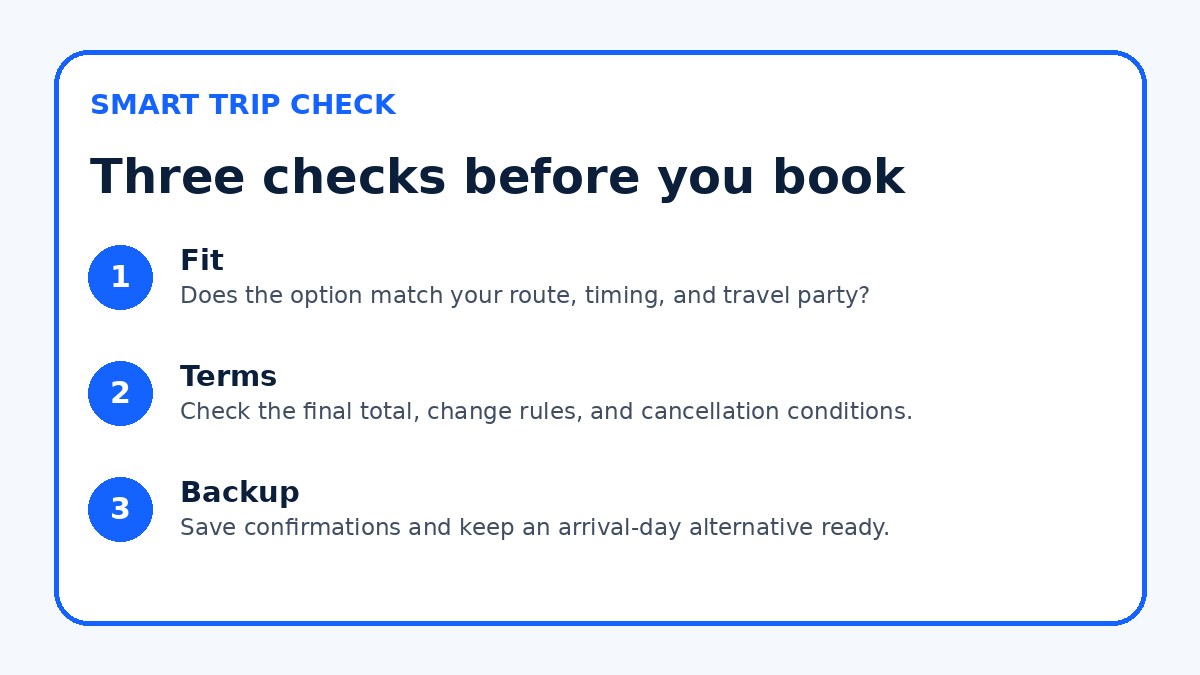
- Map your top three daily destinations and pick two hotel areas that minimize average travel time.
- Confirm the specific room type’s workspace, bed configuration, and window/soundproofing on the booking page.
- Verify cancellation and change terms, noting exact cut-off times for refundable rates.
- Ask the hotel to confirm Wi‑Fi speed or provide a written guarantee if you have high-bandwidth needs.
- Check whether the hotel can issue corporate invoices and whether any taxes or extras will appear at checkout.
- Arrange or confirm airport transfer options and typical taxi or ride-app availability for evening returns.
Final booking terms: what to verify before you commit
When you move from shortlist to booking, verify four specific items on the hotel’s final page: cancellation and change policy, exact room specifications (bed type, size, workspace), confirmed amenities (Wi‑Fi speed or guarantee, meeting rooms), and any required deposits or extra guest fees. Don’t assume photos reflect the exact room you’ll receive; check whether the rate indicates a specific room code or a general category. For business travel, prefer flexible or refundable rules if your schedule can change, but read the full policy to understand cut-off times and any non‑refundable components.
Also confirm practical arrival details: whether the hotel will hold late check-ins, provide early check-in (if needed), or offer airport transfers and their costs. If you need invoices for corporate expense reports, check billing and VAT invoicing options and how the hotel issues receipts. Finally, if you use a corporate travel platform or travel manager, cross-check rates and policies there and optionally compare live availability on a comparison site such as Trip.com before finalizing to confirm room type and terms.
Hotel Guide questions travelers ask
Should I always choose the city center for business trips to Da Nang?
Not necessarily. City center hotels cut down on travel time when meetings cluster downtown, but they can have smaller rooms and more street activity. If your trip requires long hours of focused work, or if you value quiet overnight rest, a riverside or beach-fringe property with larger rooms may be better. Compare the time cost of daily transfers against the productivity gained from a quieter room; short trips with dense meeting schedules favor the center, while blended remote/meeting trips can justify a more comfortable room farther out.
What room features are most important for virtual presentations and video calls?
For reliable virtual work you need a stable internet connection, a dedicated desk and comfortable chair, uninterfered lighting, and a quiet backdrop. Look for hotels that explicitly list business-friendly amenities, test Wi‑Fi speed options when possible, and request a room away from street noise or housekeeping routes. If lighting is poor, check whether the hotel supplies additional lamps or choose a room with good natural light; confirm the hotel’s policy on moving furniture if you need to arrange a temporary background.
How can I balance cost control with the need for comfortable rooms during a company-backed trip?
Start by identifying non-negotiable needs (workspace, bed type, invoicing) then compare rooms that meet those criteria across two shortlist areas. Use corporate booking channels or negotiate directly with hotels to clarify included services and invoicing — but always read cancellation and change terms before confirming. If cost is a constraint, prioritize room comfort for overnight rest on longer trips and accept a central, smaller room for short, meeting-heavy stays. Finally, verify the exact room specs on the booking page to avoid surprises that lead to costly same-day changes.
Final decision note
For business travelers in Da Nang, the right hotel balances the commute you can tolerate with the in-room environment you need to perform. Decide first whether minimizing daily transfer time or preserving quiet, productive room hours will most affect your trip. Shortlist two areas — one optimized for access (city center or airport edge) and one optimized for comfort (riverside or beach fringe) — then compare specific room types, workspace details, and cancellation rules on the hotel’s booking page. Confirm Wi‑Fi guarantees, desk configurations, and invoicing options before booking. Use this shortlist approach to narrow choices quickly and only open live inventory when you know which tradeoffs you’re willing to accept.
Continue planning
Check current options and final conditions
Use the provider page to confirm live availability, the final total, cancellation terms, and every condition that matters to your trip.
This evergreen planning guide was created with AI-assisted drafting and a structured quality review. It does not display live prices, schedules, availability, visa guidance, or provider rankings. Verify current details before booking. Some links are affiliate links; we may earn a commission at no additional cost to you.