
Practical answer first: for most couples planning a trip to Osaka, start monitoring deals three to five months before travel and book confirmed flights and your preferred hotel two to four months out. That window balances inventory for midrange and boutique properties with time to adjust dates if better flight options appear. If you travel in high-season windows like cherry blossom or major holidays, widen that to four to six months and prioritize accommodation early. Use the window as a tool, not a rule: how flexible you are on dates, which neighborhood you want to stay in, and whether you must travel on specific weekend days will shift the optimal booking moment. Below I explain the tradeoffs: flexibility vs certainty, seats vs rooms, and where to verify final terms before you click purchase.
See current options before you compare the details
Availability and final conditions change. Open Trip.com now or keep reading for the practical comparison.
When to start monitoring and why it matters
Begin watching Osaka travel deals as soon as you have broad date ideas; three to five months is a practical baseline because it gives time to compare flight patterns, hotel availability, and any seasonal surges. Monitoring early reveals typical price ranges and highlights whether a desired hotel or flight sells out quickly on weekends. Set fare alerts or calendar reminders and track two to three hotels and one or two flight routes. This pattern helps couples see whether prices are trending up, stable, or occasionally dipping, which informs whether to commit or wait a little longer.
Monitoring matters because it reduces stress and gives you negotiation space within your plans. When you know the normal availability curve for the dates and neighborhoods you prefer, you can choose to prioritize price, location, or convenience. For example, if a particular boutique hotel in Namba often fills early, you may decide to secure accommodation first and adjust flight times. Conversely, if flights on your route are limited or have long connections, locking the flight early avoids awkward itineraries later. The goal is to trade uncertainty for intentional choices while leaving room to respond to better offers.
Flights: balancing lead time and flexibility
For international flights into the Kansai region, aim to compare options well ahead and consider booking once you see a pattern of stable fares in your preferred time window. Two to four months before travel often yields reasonable seats and connection options for many couples. If you need specific departure times or minimal layovers, secure seats earlier. If you have flexible dates and airports, you can wait longer, but accept the risk that the best schedules or seat selections may be gone.
When deciding, compare direct versus connecting itineraries by checking total door-to-door travel time, connection reliability, and ticket change or cancellation terms on the carrier’s final booking page. Don’t assume a listed itinerary is nonstop unless the provider states it clearly; verify stopovers and transfer airports. If a fare looks attractive, note the fare class or restrictions so you know how easy it is to change or cancel. Consider seat selection, baggage rules, and whether purchasing a flexible fare or travel insurance makes sense for your tolerance for schedule changes.
| Approach | Best for | Tradeoff to check |
|---|---|---|
| Book early (4–6 months) | Couples traveling on fixed holiday dates or wanting a specific hotel/room | Less ability to take last-minute price dips; more certainty on preferred choices |
| Moderate window (2–4 months) | Most couples balancing price, selection, and flexibility | May miss peak weekend inventory or the absolute best flight times |
| Short notice (under 2 months) | Flexible couples who prioritize spontaneity and can compromise on specifics | Higher risk of limited room types, inconvenient flight schedules, or sold-out experiences |
| Last-minute splurge | Couples ready to pay a premium for upgrade or premium rooms on short notice | Costs can be higher and preferred neighborhoods or time slots may be unavailable |
Ready to check the option that fits your plan?
Use your exact dates and traveler details so the provider page can show the current total and conditions.
Hotels and neighborhoods: reserving the right base
Couples should decide which neighborhood matters most—proximity to nightlife, quieter streets, or easy transit links—and then treat accommodation as a higher-booking-priority if that neighborhood has limited supply. Namba and Umeda are convenient for first-time visitors and can have fewer midrange rooms on peak weekends, so reserve sooner within your window. If you prioritize a specific room type, view, or boutique property, lock it as inventory can be thin; if you’re content with options across several neighborhoods, you can wait longer to compare rates.
When evaluating hotel offers, read the cancellation and modification terms carefully before you commit and verify them on the provider’s final booking page. Check whether the rate includes breakfast, local occupancy taxes, and whether the room is refundable or nonrefundable. Couples should weigh the price savings of prepaid, nonrefundable rates against the peace of mind of free cancellation—especially if your plans might change. For multi-night stays, consider splitting nights across neighborhoods to balance experience and availability.
Before you book
- Set fare and hotel alerts for your preferred travel window and check them weekly to spot meaningful trends.
- Decide which matters most—specific dates, neighborhood, or flight times—and prioritize booking that element first.
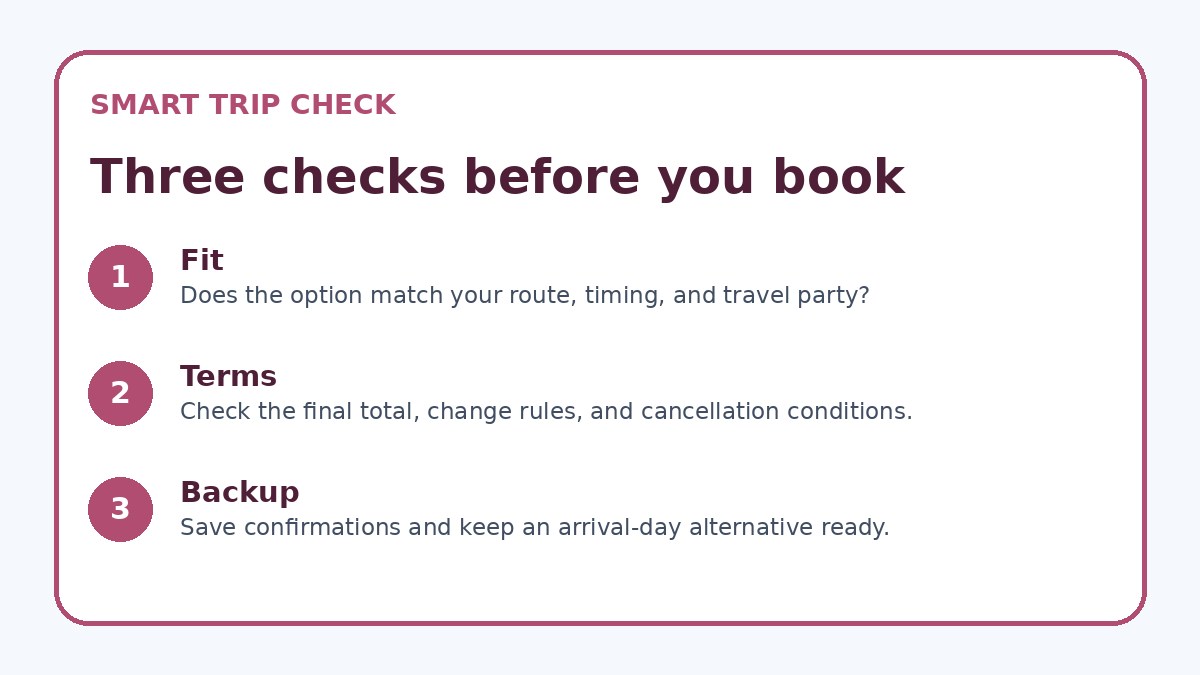
- Compare cancellation and change rules on the provider’s final booking page before confirming any nonrefundable purchase.
- List two acceptable hotels and two fallback neighborhoods to avoid last-minute pressure if your first choice sells out.
- Verify airport transfer options and their schedules before booking flights with tight arrival or departure connections.
- If booking attraction tickets or guided tours, reserve timed entries early and save confirmation details in one accessible folder.
Attractions, transport passes, and last-mile logistics
Book high-demand attractions and experiences earlier if attendance is limited or if you have a fixed itinerary—popular food tours, certain museum slots, and guided day trips can sell out. For flexible sightseeing, many tickets are available closer to the date, but if the attraction requires a timed entry or a guided component, treat those like hotel rooms and reserve sooner. Also plan how you’ll travel from the airport: check current options for trains, buses, or transfers and confirm schedules on the operator’s page before booking flights that leave narrow connection windows.
Consider transport passes for couples only after you outline the number of travel days and major trips; often a pass pays off if you plan several regional day trips, but not if you’ll stay mostly in central Osaka. Compare the convenience of rechargeable transit cards versus day passes, and verify activation and refund policies. If a private transfer or specific arrival time is important to either partner, factor that into the booking sequence—locking the arrival logistics first can constrain flight choices, so decide which matters more to your overall comfort.
Frequently asked questions
How far ahead should couples book Osaka flights to avoid poor connections?
Aim to book flights two to four months ahead for a balance of schedule choice and reasonable fares. If you need very specific departure times or minimal layovers, consider booking earlier. Always review the carrier’s itinerary details to confirm whether a flight listed as a single booking involves a plane change or a separate connection, and check baggage transfer rules. If a connection is important to you, prioritize flights with generous layover margins and verify change and cancellation policies on the airline’s final checkout page before purchasing.
When should couples lock accommodation in popular Osaka neighborhoods?
If you want a specific property type or room in areas like Namba or Umeda, reserve within three to five months, and consider four to six months for major holiday periods. For weekend stays or boutique hotels with limited rooms, earlier booking reduces the chance of disappointment. Always confirm the exact cancellation terms, breakfast inclusion, and any local taxes at the provider’s booking page. If you’re flexible on neighborhood, monitor multiple options and be prepared to move quickly when availability aligns with your dates and cancellation comfort level.
Can couples rely on last-minute deals for Osaka, and when is that sensible?
Last-minute deals can work if you’re flexible on dates, neighborhood, and flight times, and if you accept fewer choices in room type or schedule. This approach suits couples who prioritize spontaneity and can adapt their itinerary. However, for travel during peak periods or if you require timed attractions or specific airline connections, waiting increases risk. When considering a last-minute booking, check the full terms on the provider’s checkout page, including change, cancellation, and baggage policies, so you’re not surprised by restrictions after purchase.
Final planning note
Choosing when to book Osaka travel deals as a couple comes down to three clarifying decisions: how fixed your dates are, which neighborhoods or flight times you value most, and how much risk of change you’re willing to accept. Use a monitoring period of roughly three to five months as your default, tighten that to four to six months for festival or holiday travel, and allow shorter windows only if you prioritize flexibility over choice. Always verify the final fare class, cancellation rules, and any extras like baggage or breakfast on the provider’s checkout page before confirming. If you want one place to compare live availability while planning, consider checking platforms such as Trip.com, but rely on the carrier or hotel’s final page for binding terms.
Continue planning
Check current options and final conditions
Use the provider page to confirm live availability, the final total, cancellation terms, and every condition that matters to your trip.
This evergreen planning guide was created with AI-assisted drafting and a structured quality review. It does not display live prices, schedules, availability, visa guidance, or provider rankings. Verify current details before booking. Some links are affiliate links; we may earn a commission at no additional cost to you.