
If you’re traveling solo to Osaka, the practical answer is to pick a booking window that balances flexibility with certainty: secure flights 8–12 weeks before longer-haul international travel and 3–6 weeks for regional trips; reserve accommodation at the earlier end of your comfort range if you need a specific neighborhood or room type. Those rules are starting points—your priorities (budget, fixed dates, and willingness to accept transfers or shared rooms) should nudge the timing. Solo travelers often benefit from slightly earlier bookings than group travelers because individual reservations can be harder to rebook and you may rely on single-occupancy rooms or small capsules. This guide explains tradeoffs, how to compare direct versus connecting journey options, what to verify on provider pages before finalizing, and a short checklist you can use right now to make a confident booking decision for Osaka travel deals.
See current options before you compare the details
Availability and final conditions change. Open Trip.com now or keep reading for the practical comparison.
Why a booking window matters for solo travelers in Osaka
A booking window matters because it shapes three things that affect nearly every solo trip: price options, availability of the rooms and seats you want, and your ability to change plans without steep penalties. Solo travelers often book single rooms or one seat, which suppliers may inventory differently than double or group bookings. That means rooms in compact hotels, hostels with private singles, and low-cost seats can disappear earlier than general inventory suggests.
Beyond inventory, your tolerance for risk and need for flexibility should guide timing. If you have strict dates—events, work windows, or festival attendance—you should prioritize securing travel and lodging sooner. If your schedule is flexible, waiting for flash sales or last-minute deals can pay off, but understand that last-minute availability in popular Osaka neighborhoods can be uneven and might force compromises in comfort or commute time.
How to choose timing based on your priorities
Start by listing what matters most: lowest possible fare, a specific neighborhood, quiet single rooms, or refundable tickets. If minimizing cost is primary and you can travel on weekdays or shoulder-season dates, wait for sales and use fare alerts; however, accept that you may need to change hotels or take a multi-leg route. If comfort, safety, or arriving at a certain time matter more, secure those elements earlier in the suggested windows to lock in options.
Next, factor in seasonality and events. Peak travel periods and local events reduce inventory and push prices up; solo travelers who need specific room types should move bookings earlier during such times. If you’re traveling off-peak, you can lean on flexibility and check prices closer in: compare refundable versus non-refundable fares and weigh the extra cost of flexible options against stress and potential rebooking fees.
| Approach | Best for | Tradeoff to check |
|---|---|---|
| Book early (10–16+ weeks) | Travelers needing specific rooms, fixed dates, or festival attendance | Less ability to capitalize on late discounts; you may lock in nonrefundable fares |
| Medium window (4–10 weeks) | Balancing price and selection for regional and international trips | Some popular options may already be booked; still time to switch if prices fall slightly |
| Last-minute (0–3 weeks) | Flexible solo travelers willing to adjust neighborhoods or travel times | Higher risk of limited single rooms or unsuitable arrival times; unpredictable prices |
| Staggered approach (book flight early, wait on lodging) | Those who need fixed arrival but want lodging flexibility in Osaka | You may face poorer hotel selection or higher rates close to arrival if key areas fill |
Ready to check the option that fits your plan?
Use your exact dates and traveler details so the provider page can show the current total and conditions.
Comparing direct and connecting travel options
Direct flights and trains reduce uncertainty: less chance of missed connections and easier single-carrier remedies if something goes wrong. For solo travelers, that reliability can be worth a modest premium because a missed connection affects only you and recovery logistics can be simpler. But direct services may not run at convenient times or could be significantly more expensive; weigh the value of a shorter, simpler journey against that potential price difference.
Connecting options can expand your choices, opening lower fares or better schedules but require careful comparison. When looking at connections, check minimum connection times, the risk of separate tickets, and whether luggage transfers are guaranteed. On provider pages verify whether the itinerary is protected by a single booking reference or requires separate claims, and if so, plan extra buffer time and account for possible rebooking costs.
Before you book
- Set a clear priority order (dates, budget, neighborhood, bed type) before searching to guide timing decisions.
- Use fare and availability alerts for flights and hotels, then commit within your chosen window when your must-haves appear.
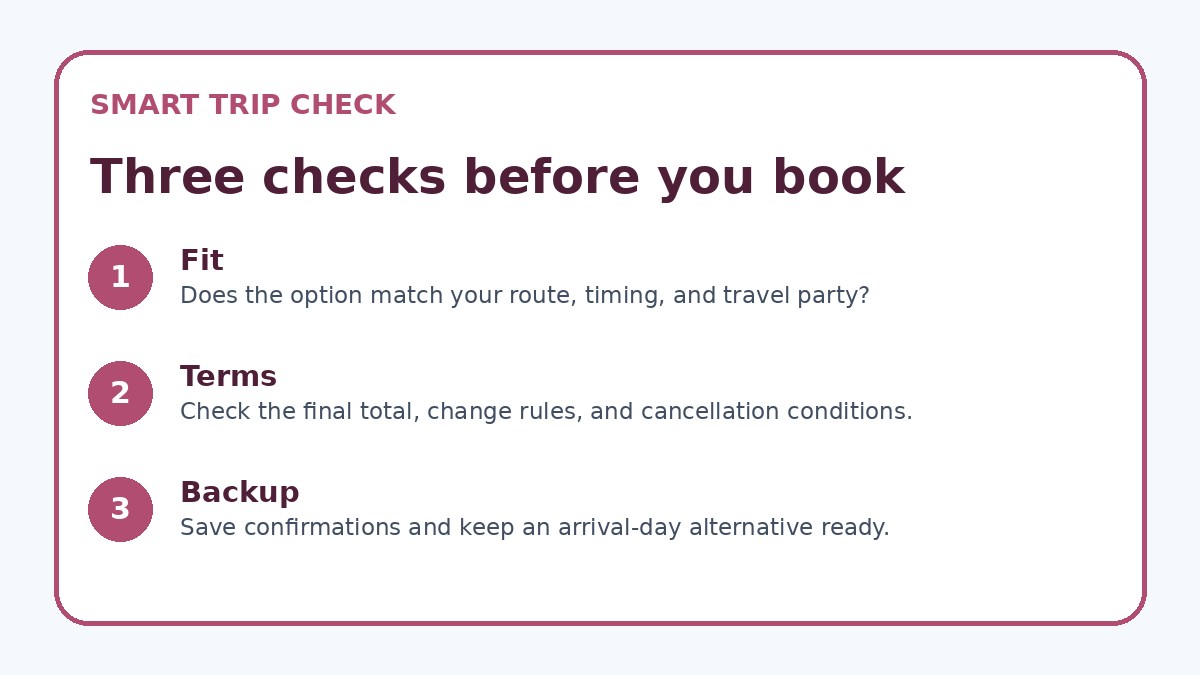
- On the provider’s final booking page verify total price, baggage rules, change/cancellation fees, and exact travel or stay dates.
- Compare direct and connecting itineraries, checking whether connections are on a single ticket or separate bookings.
- Confirm neighborhood transit links and estimated travel time from the airport or key stations before selecting accommodation.
- Keep copies of booking references and supplier contact details, and note the procedure for refunds or rebooking emergencies.
Practical verification checklist before you hit book
Before finalizing any Osaka travel deal, verify the specifics that change frequently on the provider’s final booking page: exact flight times and terminals, baggage allowances and fees, cancellation or change penalties, and the number of included nights or rooms. For hotels, confirm bed type, check-in and check-out times, whether breakfast is included, and whether the room is private or shared. If a listing or agent mentions perks or add-ons, make sure they appear in the confirmation before paying.
Also validate logistical details that matter to solo travelers: transfer options from the airport or station, walk or transit time to your planned neighborhood, and whether the property has 24-hour reception if you arrive late. If you’re using fare alerts or a third-party site like Trip.com to compare availability, cross-check the final price and conditions with the supplier’s booking page and examine the refund path in case you need to change plans.
Frequently asked questions
How far in advance should a solo traveler book Osaka accommodation for peak seasons?
For peak seasons or local events, solo travelers who need specific room types or neighborhoods should generally book earlier than off-peak: aim for 10–16 weeks or more if dates are fixed. This helps secure single rooms, compact hotel layouts, and capsule pods that can sell out faster than standard twin rooms. If you prefer refundable rates, check the exact cancellation policy on the hotel’s booking page because flexible rates are often limited during busy times and can carry a price premium.
Can waiting for last-minute deals work for solo travelers heading to Osaka?
Waiting for last-minute deals can work if you’re flexible on dates, times, and neighborhoods; it can net lower fares or hotel rates, especially in shoulder seasons. But solo travelers should be ready to accept compromises—less choice in single rooms, late arrival check-in constraints, or longer commutes from cheaper hotels. If you try last-minute booking, have backup neighborhoods and a simple plan B for accommodation, and confirm refund or change rules before committing.
What should I verify when comparing direct and connecting flights to Osaka?
When comparing routes, verify whether your connection is protected under one booking reference or made of separate tickets, as this affects responsibility for missed connections. Check layover lengths, terminal changes, and whether checked baggage transfers automatically. Also review the provider’s rebooking and cancellation rules on the final booking page, and weigh the value of shorter travel time and reduced stress against potential savings from connecting itineraries.
Final planning note
Choosing a realistic booking window for Osaka travel deals as a solo traveler comes down to balancing priorities: secure fixed essentials early if you need a specific neighborhood, bed type, or schedule, and use flexibility to hunt for savings when your dates allow. Adopt a clear priority list, compare direct and connecting options with care, and always confirm critical details on the final booking page—baggage, change fees, and refund rules—before paying. With these steps you’ll reduce surprises, keep options open where it matters, and arrive in Osaka ready to enjoy the city rather than solve logistics.
Continue planning
Check current options and final conditions
Use the provider page to confirm live availability, the final total, cancellation terms, and every condition that matters to your trip.
This evergreen planning guide was created with AI-assisted drafting and a structured quality review. It does not display live prices, schedules, availability, visa guidance, or provider rankings. Verify current details before booking. Some links are affiliate links; we may earn a commission at no additional cost to you.