
If you and your partner are organizing a family-style road trip around Jeju—bringing kids or traveling with relatives—the most practical first decision is the car. Start by choosing a vehicle size that fits passengers, luggage and strollers comfortably, then confirm child-seat options and driver requirements before booking. Next, pick a home base: staying near the city for convenience or on the quieter east or south coast for scenic driving affects daily distances and the kind of child-friendly activities within easy reach. Finally, compare insurance coverage, pickup/drop-off logistics, and fuel policy so you’re not surprised at collection. This article gives clear, actionable choices, tradeoffs for each decision, and a checklist to use before you finalize a reservation.
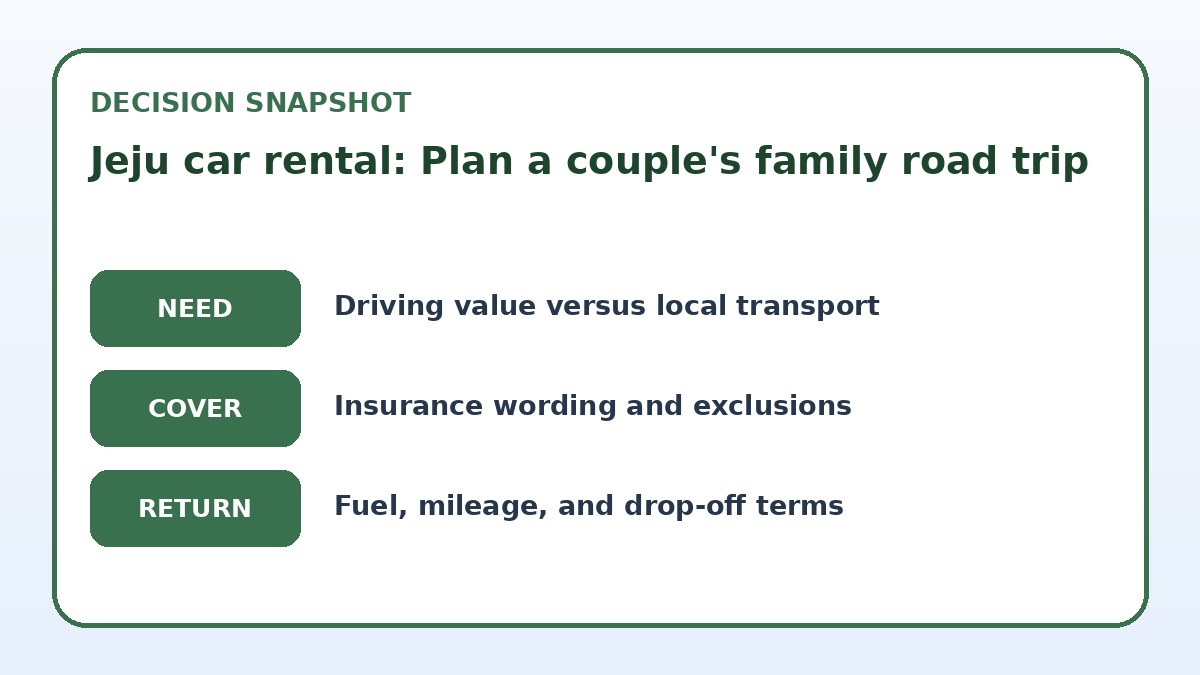
See current options before you compare the details
Availability and final conditions change. Open Trip.com now or keep reading for the practical comparison.
Choosing the right vehicle for couples traveling with family
Start with a realistic assessment of who will travel and what you’ll carry. Two adults with one baby or toddler usually fit comfortably in a compact SUV or larger hatchback, while two adults with two children and luggage will benefit from a mid-size SUV or minivan. Think about car-seat anchorage points, trunk space for a stroller, and legroom on longer drives. Rolling suitcases and a portable crib can quickly eat trunk volume; a roof box is an option but adds wind noise and changes handling, so weigh convenience against the driving comfort you want on coastal or mountain roads.
Another important factor is drivetrain and transmission. On Jeju, most main roads are paved and accessible, but some scenic side roads and Hallasan approaches can be steeper—automatic transmission is easier with children aboard, and a higher ride height improves visibility and comfort when passing other vehicles. If you expect heavy luggage or multiple passengers, prioritize torque and cooling capacity rather than the smallest possible engine. Finally, compare fuel type and economy vs. the initial hire cost: for a multi-day loop, slightly higher fuel efficiency can reduce stops and make the trip smoother for little ones.
Where to stay: balancing convenience with atmosphere
Pick a home base that minimizes daily driving when traveling with children. Staying in or near Jeju City gives easy access to ferry terminals, city services, and quick runs back to your accommodation if you forget something. Couples who prefer quieter mornings and direct access to coastal walks might choose the southern or eastern seaboard; these locations often reduce ferry and transfer times for certain attractions but can add driving time between distant sites. Think about evening routines: if your kids need an early bedtime, staying near family-friendly restaurants and pharmacies is valuable.
Also consider accommodation layout: a self-catering apartment or family suite with a kitchenette and separate sleeping areas can make evenings and early mornings easier than a single hotel room. Availability of parking—off-street or on-site—is crucial when you have luggage and child seats; ask whether the property has reserved or free parking and whether there are steps to climb from the parking area. Finally, check proximity to a convenience store or small grocery to handle unexpected needs without a long drive.
| Approach | Best for | Tradeoff to check |
|---|---|---|
| Rent a compact car | Couples with one small child and light luggage | Lower rental cost but less space for strollers and comfort on long days. |
| Rent a mid-size SUV | Couples with two children or more gear | More comfort and storage but higher fuel use and sometimes higher rental charges. |
| Rent a minivan | Larger families or couples traveling with extended family | Maximum space and flexibility but bigger vehicle handling and potentially tighter parking. |
| Rent plus roof box | Couples needing extra luggage capacity without a larger car | Increased storage and flexibility but added wind noise, fuel use, and altered handling. |
Ready to check the option that fits your plan?
Use your exact dates and traveler details so the provider page can show the current total and conditions.
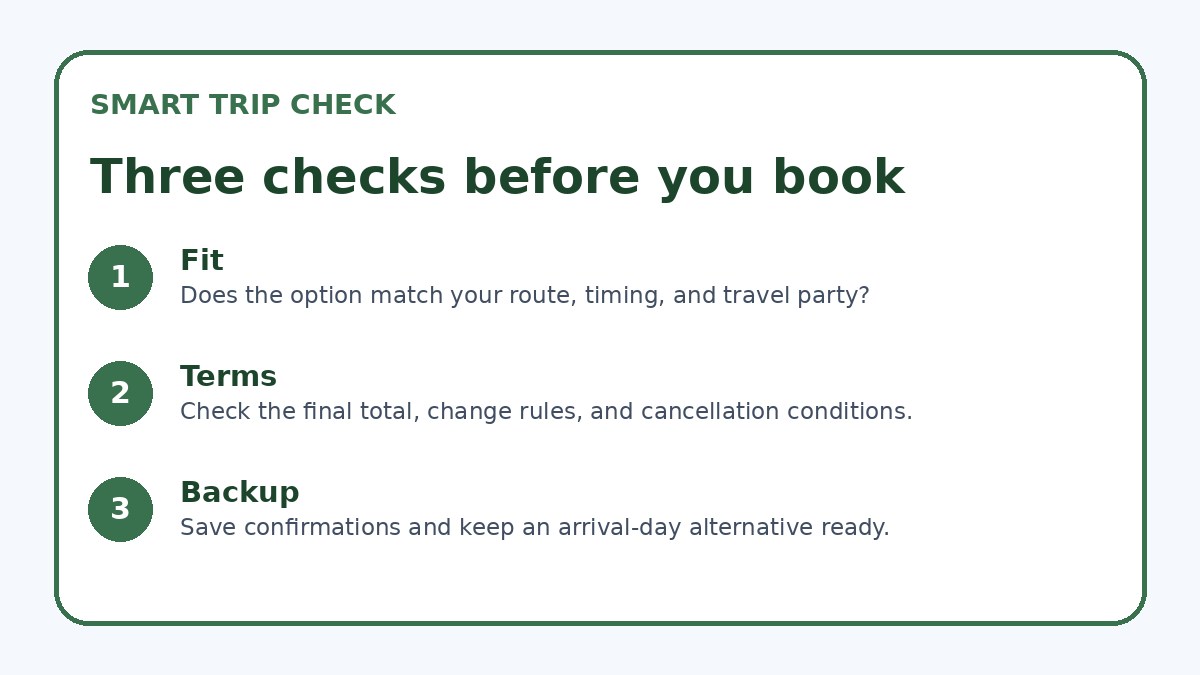
Planning your daily route and child-friendly stops
Plan drives that keep single-day distances manageable: aim for no more than two to three hours total driving per day if you’re traveling with young children or older relatives. Break up longer transfers with easy, low-stress stops such as scenic parks, cafés, or beach access where kids can run and adults can rotate driving. Build a flexible itinerary with fallback options in case of weather or fatigue—choose one or two ‘anchor’ activities each day and leave space for spontaneous breaks. Using navigation apps for live traffic helps, but always factor in time for restroom and snack breaks.
Prioritize attractions that allow short, rewarding visits over those requiring long guided activities or strict time windows. For example, aim for outdoor spots where children can expend energy and parents can relax; museums or botanical gardens with shaded rest areas work well mid-day. Consider timing longer drives for naptime or early evening when traffic is lighter. Finally, always have a small kit in the car with snacks, a first-aid supply, a change of clothes, wet wipes, and sun protection—preparing for common hiccups prevents a short delay from turning into a stressful afternoon.
Before you book
- Confirm the exact vehicle model, transmission type, and number of ISOFIX/anchor points before booking.
- Verify child-seat options, installation policy, and whether seats meet your home-country certification standards.
- Check pickup and drop-off locations, office hours, after-hours return instructions, and any shuttle requirements.
- Read the rental agreement for fuel policy, mileage limits, insurance coverage details, and security deposit hold amounts.
- Plan daily driving segments with realistic break points and identify nearby medical facilities and pharmacies for emergencies.
- Take photos of the vehicle at pickup showing any existing damage and record the fuel level to avoid disputes at drop-off.
Booking logistics, insurance and what to verify before payment
When narrowing providers, focus less on small rate differences and more on clear policies: fuel policy (full-to-full is simplest), mileage limits, cross-island or ferry restrictions, and airport pickup procedures. Verify exactly what the rental quote includes—insurance types, deductibles, taxes, and extras like child seats, GPS, or additional driver fees. If your reservation platform shows optional coverage, read the provider’s terms and the final booking page carefully to know whether you’re buying primary or supplementary protection, and whether a security deposit will be held on your card.
Confirm driver requirements and identification rules, including any requirements for an international driving permit or specific translations of your license if applicable. Ask the provider whether they will install child seats for you or if you must do it yourself, and verify the model and certification of supplied seats. Before you complete payment, check collection and return windows, any after-hours procedures, and roadside assistance options; these operational details matter more than the headline rate when you’re traveling with family.
Frequently asked questions
Do I need an international driving permit to rent a car in Jeju?
Whether you need an international driving permit (IDP) depends on your home country’s license and the local rental company’s rules. Some countries’ licenses are accepted as-is for short stays, while others require an IDP or an official translation. Always check the rental provider’s driver requirements on their final booking page and compare that with your embassy or licensing authority’s guidance. Bring your passport, physical driver’s license, and any additional documents listed by the company to avoid problems when collecting the vehicle.
What kind of insurance should couples take for a family road trip?
Look for a combination that minimizes your financial exposure and suits your comfort level. Basic collision damage waiver may reduce liability for damage to the rental car, but it often comes with an excess; supplemental coverage can lower or eliminate that excess. Also confirm third-party liability coverage and whether roadside assistance is included. Don’t rely solely on summary boxes—read the insurance terms on the provider’s final booking page to see what’s covered, exclusions, and any conditions that would void coverage, such as off-road driving or driving under certain weather limits.
How should couples plan driving days with young children to avoid long stretches in the car?
Structure each day around short driving windows and frequent activity breaks. Aim to keep total in-car time under two to three hours per day for young children, splitting longer transfers into two segments with a park, beach, or café stop. Time longer drives to coincide with typical nap periods when possible. Pack an organized car kit with snacks, entertainment, and comfort items, and choose accommodations centrally located to the next day’s main activity so you can return quickly for naps or early bedtimes. Flexibility beats a rigid schedule when children are involved.
Final planning note
For couples planning a family road trip in Jeju, the right car and a well-chosen base are the booking-stage decisions that shape your days. Focus first on vehicle size, child-seat availability, and pickup logistics rather than chasing the lowest headline rate. Choose a base that shortens daily drives for younger passengers and build flexible routes with frequent, low-effort stops. Before you pay, verify insurance details, driver ID requirements, fuel policy, and any extras on the provider’s final booking page—these operational points affect your comfort and peace of mind more than small price differences. Use the checklist to tick off essentials and you’ll reduce surprises once you reach the island.
Continue planning
Check current options and final conditions
Use the provider page to confirm live availability, the final total, cancellation terms, and every condition that matters to your trip.
This evergreen planning guide was created with AI-assisted drafting and a structured quality review. It does not display live prices, schedules, availability, visa guidance, or provider rankings. Verify current details before booking. Some links are affiliate links; we may earn a commission at no additional cost to you.