Practical answer first: for most business travelers to Osaka, pick a booking window that balances price signals against flexibility—generally book flights and hotel together only after you’ve fixed meeting dates and confirmed cancellation terms. That approach keeps your outlays aligned with the trip’s timing risk and the employer’s expense rules. Before you evaluate a bundle’s advertised headline, check four essentials: exact inclusions (fares, transfers, taxes), change and refund policies for each component, how traveler names and dates can be changed, and the final contract terms shown on the supplier’s booking page. This article focuses on how to compare packages and separate bookings so you can judge real value for your specific business needs, not just a tempting headline rate.
Test package value fairly
| Booking approach | Best for | Tradeoff to check |
|---|---|---|
| Buy a bundled flight+hotel package | Travelers with fixed meeting dates seeking a single booking workflow | May limit refund/change options and complicate loyalty accrual or corporate invoicing |
| Book flights and hotel separately now | Those who need maximum vendor flexibility or specific loyalty benefits | Requires extra time to manage separate bookings and may lose bundle savings |
| Book refundable flights, hold nonrefundable hotel | Trips with uncertain timing where flight flexibility is higher priority | Higher upfront cost for refundable fares; hotel may still incur loss if canceled |
| Purchase basic nonrefundable bundle and add change insurance | Cost-conscious travelers comfortable with an insurance buffer for date changes | Insurance adds cost and may not cover all scenarios or documentation needs |
Check current package and separate options
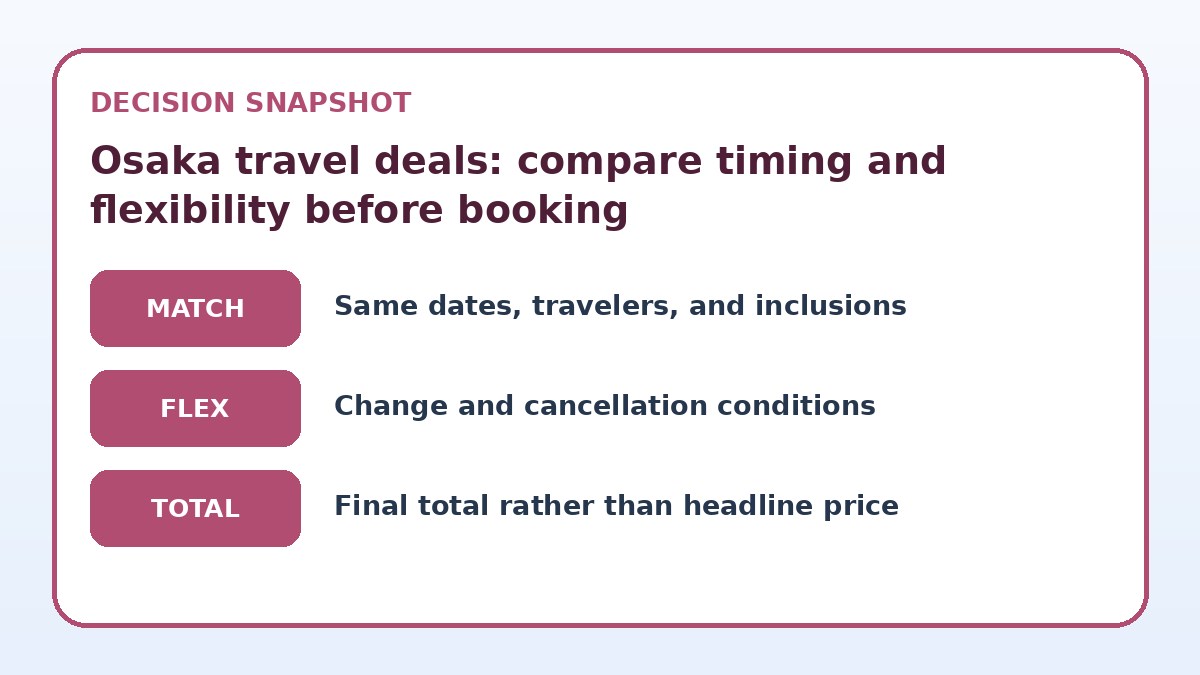
Use identical dates, travelers, room needs, baggage, and flexibility so the comparison stays meaningful.
What to compare before judging a package
Start by lining up the same baseline: identical travel dates, number of travelers, room type, baggage allowances, seat classes, and any ground transfers. Only with those matched can you fairly measure total cost, change fees, and refundability. Some bundles list a headline price but exclude taxes, or assume basic economy fares that don’t allow changes. For business trips you often need flexibility, so confirm whether the package uses exchangeable or restricted fare classes and whether the hotel rate includes breakfast, internet, or corporate invoicing.
Next examine the contract-level details. Many questions matter: who issues each voucher or ticket, which supplier’s terms govern refunds, and whether a third-party booking agent acts as intermediary for changes. Don’t trust summary blurbs alone—open the fare rules, hotel cancellation policy, and any transfer or meet-and-greet terms the package references. If you can, reproduce the same itinerary by pricing flights, hotel nights, and transfers separately to compare true total cost and conditional exposure.
Inclusions and hidden conditions that change value
A package can look cheaper because it bundles an unwanted component, like a transfer you won’t use or a nonrefundable sightseeing voucher. For a business traveler, inclusions that matter are refundable ticket types, checked baggage, seat selection, early check-in or late check-out, and reliable Wi-Fi. Confirm whether the hotel rate is refundable and whether the package ties refunds to the most restrictive supplier policy. If a flight segment is nonrefundable but the hotel is refundable, the overall rescue options may still be limited.
Also watch for operational conditions: some packages assume travellers arrive at a specific airport or terminal, or they require a fixed arrival window to qualify for included transfers. Those operational constraints can force extra costs if meetings change. Before committing, verify on the final booking page what happens when components are changed or canceled separately: will the supplier impose penalties, or will the agent reprice components at current market rates?
Look past the headline total
Compare inclusions and change conditions before deciding whether a package is genuinely useful for this trip.
Deal comparison checklist
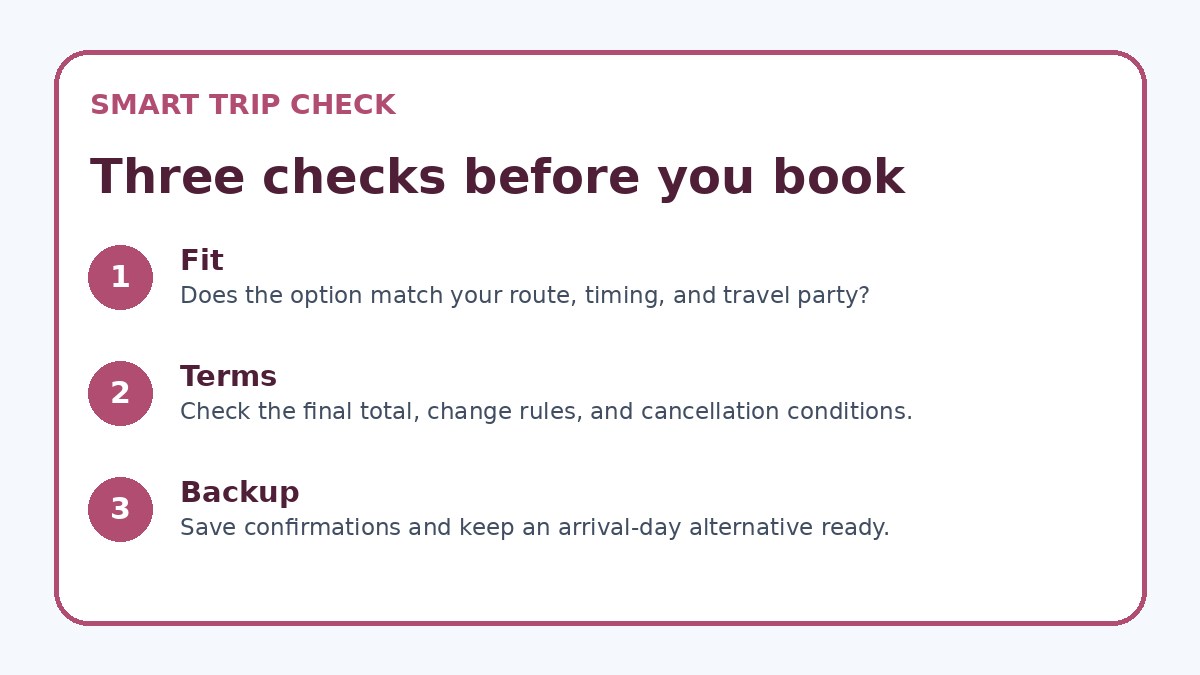
- Match the exact travel dates, passengers, room type, and seat class when comparing a bundle versus separate bookings
- Open and read the airline fare rules, including change fees, refundability, and baggage allowances before purchasing
- Confirm the hotel’s cancellation window, whether payment is refundable, and whether loyalty benefits apply on the final booking page
- Ask your finance or travel policy team whether bundled invoices are acceptable for company expense and VAT recovery
- Verify who issues vouchers or tickets and whether changes must go through the agent or directly with the supplier
- If considering travel insurance, check policy exclusions and whether it covers supplier-enforced change fees or only trip interruption
Flexibility vs. immediate savings: tradeoffs for business trips
Immediate savings on a bundled fare may be attractive, but ask whether that saving persists if your dates shift. For business travel, the ability to change travel plans with minimal cost is often worth a higher upfront fare. Weigh the employer’s tolerance for change fees and the personal cost of disrupted arrangements. If your schedule is firm, locking in a reasonably priced package can reduce booking work; if there’s any doubt, favor refundable tickets or flexible hotel rates even if the initial outlay is higher.
Consider administrative friction too: some companies need separate invoices per supplier for expense reports or VAT reclamation. Bundles sometimes produce a single invoice from an intermediary that complicates reimbursement or tax recovery. Before booking, confirm your company’s requirements and whether the package provider supplies the documentation you’ll need—payment receipts, supplier invoices, and fare breakdowns—on the final booking confirmation page.
Traveler-specific value and final contract checks
Different business travelers value different things: road warriors may prioritize loyalty-program accrual and seat choice, while occasional travelers may prize refundable rates and straightforward change terms. If you rely on airline status, verify whether a bundled fare accrues points or qualifies for upgrades; if you need hotel loyalty benefits, ensure the hotel rate allows points and elite benefits. If any of these details are critical, confirm them on the carrier’s and hotel’s final booking pages because promotional listings can omit loyalty restrictions.
Finally, always read the exact cancellation and change language shown at purchase. That includes any per-person change fees, name-change restrictions, blackout periods, and whether refunds are issued as cash or travel credit. If the bundle involves a third-party intermediary, check whether they impose additional service fees for changes. Trip.com can be one place to compare current availability and rule summaries, but always verify the governing terms on the issuing supplier’s or agent’s final confirmation page.
Travel Deals & Booking Strategy questions travelers ask
How far in advance should a business traveler to Osaka book flights and hotels?
There’s no one-size-fits-all interval. If your meeting dates are confirmed and inflexible, book as soon as you can find a fare class with acceptable change terms and a hotel with the cancellation policy you need. If dates are provisional, prioritize refundable or changeable fares and flexible hotel rates even if the headlines look costlier. Always compare identical itineraries when testing bundles versus separate bookings and verify the precise change and cancellation language on the supplier’s final booking page before paying.
Will a bundled package usually include everything my company needs for reimbursement?
Not necessarily. Bundles often consolidate components under a single invoice or an intermediary’s voucher, which some corporate finance departments disallow for VAT recovery or expense reporting. Before buying, confirm your employer’s invoice documentation requirements and ask the seller whether they can supply separate supplier invoices, fare breakdowns, and receipts. If the bundle can’t produce the paperwork your company needs, separate bookings may be the better administrative choice.
How can I avoid being misled by apparent savings on an Osaka travel deal?
Avoid misleading comparisons by ensuring you’re comparing the same dates, traveler count, baggage and seat allowances, room type, and cancellation rules. Recreate the trip by pricing flights, hotel nights, and transfers separately, then factor in likely change fees. Read the supplier’s final terms for name changes, blackout rules, and refund methods. If a bundle looks unusually cheap, verify whether it uses restrictive fare classes or nonrefundable components that would erase the apparent savings if plans change.
Final decision note
For business travel to Osaka, the right booking window balances schedule certainty, employer rules, and your tolerance for change fees. If meeting dates are locked, a bundle can simplify logistics—provided you verify inclusions, loyalty treatment, and final change policies. If dates are uncertain or you need clean supplier invoices, separate refundable or flexible bookings often reduce administrative friction and financial risk. Always reproduce the same itinerary when comparing options and read the actual fare and hotel terms on the provider’s booking page before paying. Use that disciplined comparison to choose the path that protects your time, corporate compliance, and budget.
Continue planning
Check current options and final conditions
Use the provider page to confirm live availability, the final total, cancellation terms, and every condition that matters to your trip.
This evergreen planning guide was created with AI-assisted drafting and a structured quality review. It does not display live prices, schedules, availability, visa guidance, or provider rankings. Verify current details before booking. Some links are affiliate links; we may earn a commission at no additional cost to you.