Practical answer up front: for most couples the Shinkansen (bullet train) is the simplest and most practical option—fast, frequent departures, luggage-friendly seating and no complicated transfers. If you prioritize saving money over time, intercity buses and local trains can work well, especially with flexible schedules or if you split overnight travel. Driving offers privacy and scenic detours but adds navigation, parking, and toll complexities that can eat into a short trip. Before booking, compare total door-to-door time, how much walking or transfers you’ll accept, luggage needs, and whether you want a guaranteed seat together. Later sections explain tradeoffs, how to compare fares and schedules, and a compact checklist so you and your partner can decide with confidence.
See current options before you compare the details
Availability and final conditions change. Open Trip.com now or keep reading for the practical comparison.
Why the Shinkansen often wins for couples
The Shinkansen’s main advantage for couples is simplicity: stations are centrally located, trains depart frequently, and reservations make it easy to sit next to each other without complicated connections. Boarding is straightforward—no luggage check-in counters or long security queues—and high-capacity seating layouts often allow a comfortable row for two. For short city-to-city trips, the predictability of schedules reduces travel stress, which matters more when both partners want to relax and start exploring immediately upon arrival.
You’ll still want to compare platform access and station walking distances at each end, especially if one of you is carrying heavy luggage or mobility is a concern. If you need guaranteed adjacent seats, look at reservation options when you book; some ticketing channels and seat classes make it explicit whether seats are together. Finally, think about your arrival timing: arriving at a central station in Hiroshima gives you immediate access to trams and taxis that can deliver you to your hotel or sights with minimal fuss.
When buses and local trains are the practical choice
Intercity buses and conventional trains can be markedly cheaper than the fastest high-speed options, and they’re a smart pick if you’re traveling on a tight budget or if you don’t mind a slower pace. Buses may offer express lanes, overnight departures that save a hotel night, and sometimes onboard amenities that make longer trips bearable. Local trains, with transfers via conventional railways, can be scenic and flexible if you want to stop at small towns along the way.
Tradeoffs here include longer travel times, potential transfer stress, and less predictable seating together unless you reserve specific seats. If you choose buses or local trains, compare total travel time, number of connections, luggage allowances, and whether you need to book seats in advance to sit together. Also check whether a night bus’s arrival time aligns with hotel check-in hours or public transport schedules at your destination.
| Approach | Best for | Tradeoff to check |
|---|---|---|
| Shinkansen (bullet train) | Couples prioritizing speed, convenience, and predictable schedules | Higher cost than buses and some local trains; may require early booking for adjacent seats |
| Intercity bus | Budget-conscious couples willing to trade time for lower fares | Longer travel time and potential discomfort; seat together only if reserved or during off-peak demand |
| Conventional train combinations | Couples who want scenic detours or stopovers between cities | Multiple transfers can be tiring and complicate luggage and timing |
| Driving (rental car) | Couples valuing privacy, flexible pacing, and roadside exploration | Adds toll, parking and navigation hassles; may be slower than the Shinkansen for direct travel |
Ready to check the option that fits your plan?
Use your exact dates and traveler details so the provider page can show the current total and conditions.
Driving and the couple who wants freedom
Renting a car gives couples the freedom to stop where you please, detour to less-visited coastal or rural spots, and travel on your own schedule. For two travelers with flexible timing, this can turn a transfer into part of the trip: explore seaside viewpoints, hidden shrines, or food stops that are hard to reach by train. A car is also useful if you’re carrying bulky gear or want door-to-door privacy without managing a succession of transfers.
However, practical complications matter: tolls, unfamiliar road rules, parking costs and city driving can offset the appeal. If you don’t drive on the left or are unfamiliar with local signage, stress levels can rise quickly in dense urban areas. Before choosing this option, compare the total projected driving hours, likely parking locations near your hotel, and whether your driving license and rental insurer cover the region. For short visits, the time lost to driving and parking can make high-speed rail the better tradeoff.
Before you book
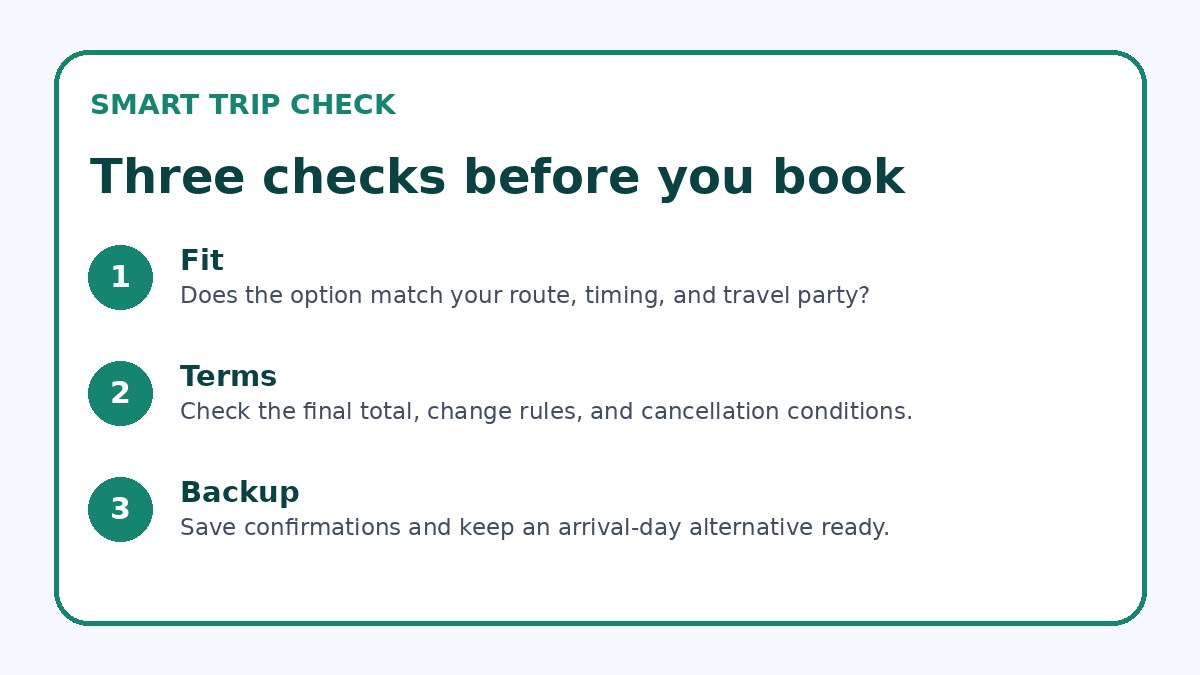
- Agree on your top two travel priorities (speed, cost, comfort, or sightseeing) and write them down to guide comparisons.
- Estimate door-to-door time for each option including local transfers, then pick options within your acceptable total travel window.
- If sitting together matters, check seat reservation policies and reserve seats at booking for trains or buses that allow assignments.
- Compare luggage rules for each option—carry-on limits, checked baggage, and whether you’ll need to store large items en route.
- If renting a car, verify driver license rules, insurance coverage, and likely parking options near your Hiroshima accommodation.
- Before final payment, view the provider’s cancellation and change policies on their booking page and note any fees or deadlines.
How to choose: a decision checklist for couples
Start by listing what matters most to both of you: speed, comfort, cost, scenic stops, luggage, and flexibility. Convert those priorities into measurable comparisons—estimated door-to-door time, number of transfers, seat reservation options to sit together, and luggage policy for each transport mode. Use a single spreadsheet or note to compare the Shinkansen, bus, conventional train combinations, and driving on those specific criteria; seeing numbers and constraints side-by-side makes tradeoffs visible and less emotional.
Next, verify operational details on the provider’s booking page before you commit: seat reservation windows, baggage allowances, cancellation and change policies, and precise station-to-station or pickup/dropoff locations. If using a rail pass or discount ticket, confirm whether it covers reserved seats or requires additional fees. Trip.com can be used as one place to compare availability, but always check the operator’s final booking page for the most authoritative conditions and any seat selection specifics.
Frequently asked questions
Is the Shinkansen the fastest way to get from Osaka to Hiroshima and should couples always pick it?
The Shinkansen is typically the fastest scheduled rail option and is often the simplest choice for couples who want to minimize travel stress. However, “always” isn’t accurate—if you’re traveling on a very tight budget, willing to travel overnight, or planning multiple stops for sightseeing, buses or conventional train routes may suit you better. Also, if you need maximum privacy or want a flexible road trip, renting a car could be preferable. Weigh total door-to-door time, how much you value sitting together, and luggage needs when deciding.
How can couples make sure they sit together on trains or buses between Osaka and Hiroshima?
To secure adjacent seats, check whether the service allows seat reservations and whether seat selection is offered at booking. For Shinkansen and many intercity trains and buses, paid reservations or assigned seating are possible—book as soon as reservations open to increase the chance of adjacent seats. If seat selection isn’t possible online, inquire at the ticket counter or through the provider’s customer service. When using passes or discount tickets that don’t reserve seats, plan to board early together to find two seats next to each other.
What practical checks should couples do on booking pages before confirming transport?
Look for precise station names and platform access, seat reservation options and costs, baggage allowances and dimensions, and the provider’s cancellation or change policy. Verify pickup or dropoff points, last-mile connections (trams, buses, taxis) at your departure and arrival stations, and whether seat selection is guaranteed. If booking through an aggregator like Trip.com, use it to compare availability, but open the operator’s own booking or information pages to confirm final terms, accurate schedules, and any seat-assignment details before completing payment.
Final planning note
Choosing the most practical Osaka-to-Hiroshima transport for couples comes down to honest priorities and careful comparison. If you want minimal hassle and the best balance of speed and comfort, the Shinkansen is a compelling default; it reduces transfer complexity and makes seating together straightforward when you reserve. If cost savings, scenic stops, or flexibility are your priorities, buses, conventional trains, or driving can be better fits—each brings specific tradeoffs around travel time, transfers, and logistics. Use the checklist to compare door-to-door time, seating and luggage rules, and cancellation terms, then verify crucial details on the operator’s booking page before paying. With those checks done, you’ll pick the option that fits your rhythm as a couple and lets you enjoy Hiroshima from the moment you arrive.
Continue planning
Check current options and final conditions
Use the provider page to confirm live availability, the final total, cancellation terms, and every condition that matters to your trip.
This evergreen planning guide was created with AI-assisted drafting and a structured quality review. It does not display live prices, schedules, availability, visa guidance, or provider rankings. Verify current details before booking. Some links are affiliate links; we may earn a commission at no additional cost to you.