If you’re traveling solo to Osaka, flexible booking terms can make the difference between a relaxed trip and a stressful scramble when plans change. Practically, prioritize refundable or free-cancellation options when your itinerary is uncertain, and consider nonrefundable rates only after you’ve locked down key travel details. Check exactly what the property’s flexibility covers—full refund, partial credit, or date change—and note the deadlines and any administrative fees. Also check whether the rate includes breakfast, key deposit rules, or other obligations that might limit swaps or refunds. Below you’ll find direct decision criteria, typical tradeoffs solo travelers face, and a short checklist to use when you reach a hotel’s final booking page. These steps focus on minimizing risk without blindly paying more for flexibility you won’t need.
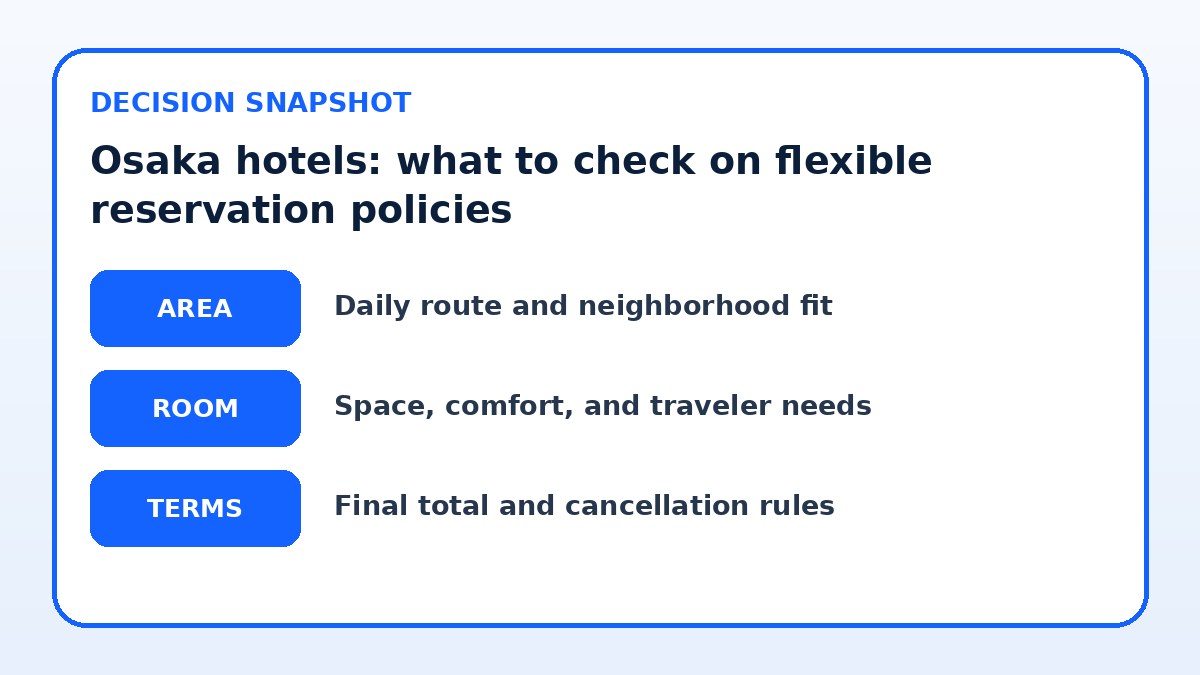
See current options before you compare the details
Availability and final conditions change. Open Trip.com now or keep reading for the practical comparison.
Understand the types of flexible terms
Hotels typically offer a few standard price-policy combinations: fully refundable with free cancellation up to a date, partially refundable with penalties, and strictly nonrefundable. For solo travelers, the most relevant distinction is whether you can cancel for any reason before the stated deadline. Some refundable bookings return money to your original card; others issue property credit or vouchers. Also watch for ‘flexible with fees’ options where a fixed charge applies if you change or cancel. These variations affect how easily you can alter plans, and they change the effective cost of flexibility.
Another common nuance is how a hotel interprets the cancellation deadline: it may be a local time at the hotel rather than your home timezone, and the deadline could fall at midnight or a few days before arrival. Some rules allow free date changes but not full refunds, while others let you transfer the booking name with limitations. Read the exact wording: what it allows, what it forbids, and whether special circumstances—like flight cancellations—are considered. If you see vague language, contact the hotel directly and request a written clarification to save headaches later.
Tradeoffs solo travelers should weigh
Price versus flexibility is the classic tradeoff but not the only one. Flexible rates typically cost more, so ask whether that premium is worth it based on your real uncertainty. For instance, if your flight is already booked with a strict no-change fare, paying extra for hotel flexibility might be sensible; if your transport is equally flexible, the extra hotel cost may be unnecessary. Also consider length of stay: the more nights at risk, the more a refundable option can protect your budget when plans shift.
Beyond cost, consider convenience and administrative hassle. A refundable reservation might require you to submit a cancellation online or by phone and wait for a reversal of the charge, which can take time. Some hotels impose administrative fees or demand written proof for certain exceptions. If you are prone to last-minute changes, a slightly higher flexible rate that permits same-day changes without paperwork may be worth the premium. Conversely, if you value lower nightly rates and accept the risk, set reminders for deadlines and buy travel insurance if appropriate.
| Approach | Best for | Tradeoff to check |
|---|---|---|
| Refundable rate with free cancellation | Solo travelers with uncertain arrival dates or flexible plans | Higher nightly cost but straightforward refunds and fewer hassles changing reservations |
| Partially refundable or change-with-fee rate | Travelers who want some protection at a lower premium | Lower cost than fully refundable but penalties or fees can apply when you modify or cancel |
| Strict nonrefundable rate | Visitors with fixed schedules and high certainty of travel dates | Lowest cost but no refund; requires confidence or external insurance to mitigate risk |
| Short free-cancellation window (e.g., until a few days before) | Solo travelers balancing flexibility and price for short stays | Some protection while keeping rates closer to nonrefundable prices; requires deadline tracking |
Ready to check the option that fits your plan?
Use your exact dates and traveler details so the provider page can show the current total and conditions.
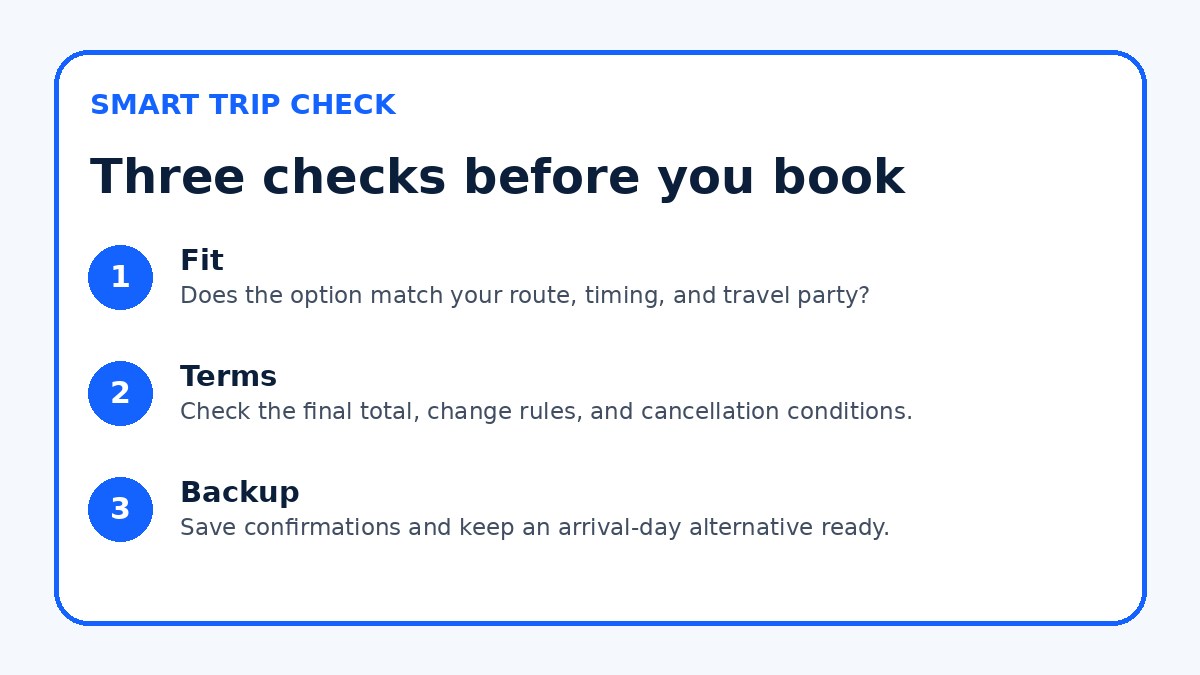
What to verify on the booking page
When you reach a hotel’s final booking page, verify five exact items: cancellation deadline (date and local time), refund method (card return, voucher, or credit), any listed penalties or administrative fees, whether changes to dates are permitted and under what conditions, and whether the policy is set by the hotel or the booking platform. Do not rely on a property’s advertisement line like “flexible” without reading the full cancellation policy text. If any term is ambiguous, contact the property or the booking platform and request the precise policy in writing before you pay.
Also confirm what happens with incidental deposits and preauthorization holds on your card—some flexible rates still require a security deposit on arrival, which is released only after checkout and can take days to show as available again. Check whether the rate includes extras you need (breakfast, Wi‑Fi, luggage storage) because swapping dates or canceling may change your included benefits. If you found the room via an aggregator, compare the final page with the hotel’s direct offer to spot differences, and verify the cancellation policy on the provider’s final booking page before confirming.
Before you book
- Open the full cancellation policy on the final booking page and note the exact deadline in the hotel’s local time.
- Confirm how refunds are issued (card refund, property credit, or voucher) and the estimated processing time listed by the provider.
- Check whether modifications (date changes, name swaps) are allowed and whether any fees or blackout dates apply.
- Compare the policy shown by the booking platform with the hotel’s direct site; if they differ, ask the hotel to confirm in writing.
- Note any preauthorization holds or deposits required at check-in and how long the hold typically remains on your card.
- Set calendar reminders for each booking’s cancellation deadline and the last date to change without penalty.
Practical booking strategies for Osaka solo trips
If your Osaka plans revolve around a fixed event—conference dates, a concert, or a guided tour—book a refundable room until your event ticket is confirmed; then switch to a cheaper nonrefundable rate if available. For exploratory trips without fixed plans, favor moderate flexibility: a short free-cancellation window close to check-in gives breathing room without doubling your nightly rate. Consider splitting your stay between a refundable booking for the uncertain early nights and a cheaper nonrefundable block later, especially when staying at multiple neighborhoods in Osaka like Namba or Umeda.
Use alerts and calendar reminders tied to each booking’s cancellation deadline. If you prefer not to pay more for flexibility, make contingency plans: identify alternate nearby properties, review refund windows on transport, and consider travel insurance that covers accommodation cancellations for specific reasons. When comparing offers, factor in ease of changing dates—some properties process modifications quickly and sympathetically for repeat guests or direct-book customers, whereas third-party bookings sometimes route you through slower change processes.
Frequently asked questions
Should I always choose a refundable rate when traveling alone in Osaka?
Not always. Refundable rates are useful if your travel dates or flights are not locked, but they cost more. If your transport and schedule are firm, a nonrefundable rate can save money. Think about how likely you are to change plans and multiply that probability by the cost difference to estimate expected value. Also consider alternatives such as splitting stays or using travel insurance for specific risks. Always read the provider’s final booking page to confirm exactly what the refundable rate covers and how refunds are processed.
How do I handle a booking change if I used a third-party platform?
Start by checking the platform’s change-and-cancellation instructions and the hotel’s policy as shown on the final booking page. Some platforms require you to request changes through them, which can add processing time. If the platform and the hotel policies conflict, contact both and keep records of the communication. For urgent changes, call the hotel directly to ask for temporary accommodation of the request, then follow up through the platform. If you care about speed and clarity, booking directly with the hotel may sometimes simplify modifications, but verify that their public policy matches what you were shown.
Can travel insurance replace hotel flexibility for a solo Osaka trip?
Travel insurance can cover specific unforeseen cancellations — illness, certain travel disruptions, or other insured reasons — but policies vary widely in what they cover. Insurance might protect you financially if you must cancel for covered reasons, but many policies exclude voluntary changes or disinclination to travel. Read the insurance policy’s cancellation section carefully and compare that coverage to the hotel’s own refund terms. If you rely on insurance, confirm the documentation you would need to claim and whether the insurer requires you to first try to obtain a refund from the hotel.
Final planning note
Solo travelers in Osaka can manage risk without overspending by matching booking flexibility to how certain their travel plans are. Refundable rates reduce stress when your schedule is fluid, while nonrefundable options save money for fixed itineraries. The practical path is simple: read the hotel’s final booking page for exact deadlines and refund methods, set reminders, and decide whether the premium for flexibility is worth your personal tolerance for change. Use the checklist above before you confirm any reservation, and consider contacting the property directly if wording is unclear. If you want a quick place to compare current availability and policies, you can check listing sites like Trip.com, but always verify the policy on the provider’s own final booking page before completing payment.
Continue planning
Check current options and final conditions
Use the provider page to confirm live availability, the final total, cancellation terms, and every condition that matters to your trip.
This evergreen planning guide was created with AI-assisted drafting and a structured quality review. It does not display live prices, schedules, availability, visa guidance, or provider rankings. Verify current details before booking. Some links are affiliate links; we may earn a commission at no additional cost to you.