
If you need to travel from Toronto to Montreal for work, focus your prep on three things: reliable timing, seamless connectivity, and a clear plan for the first hour after arrival. Decide whether train, plane, or driving best fits your meeting schedule, luggage needs, and tolerance for transit variables. Then run a quick checklist the evening before and again the morning of travel so nothing essential is last-minute. This article walks through the decisions that matter on the travel day itself—how to compare direct versus connecting options, what digital and physical documents to have ready, how to slot meetings around likely transfer windows, and which contingency moves reduce stress. Follow these practical steps to protect your time and energy on the day you travel between Toronto and Montreal.
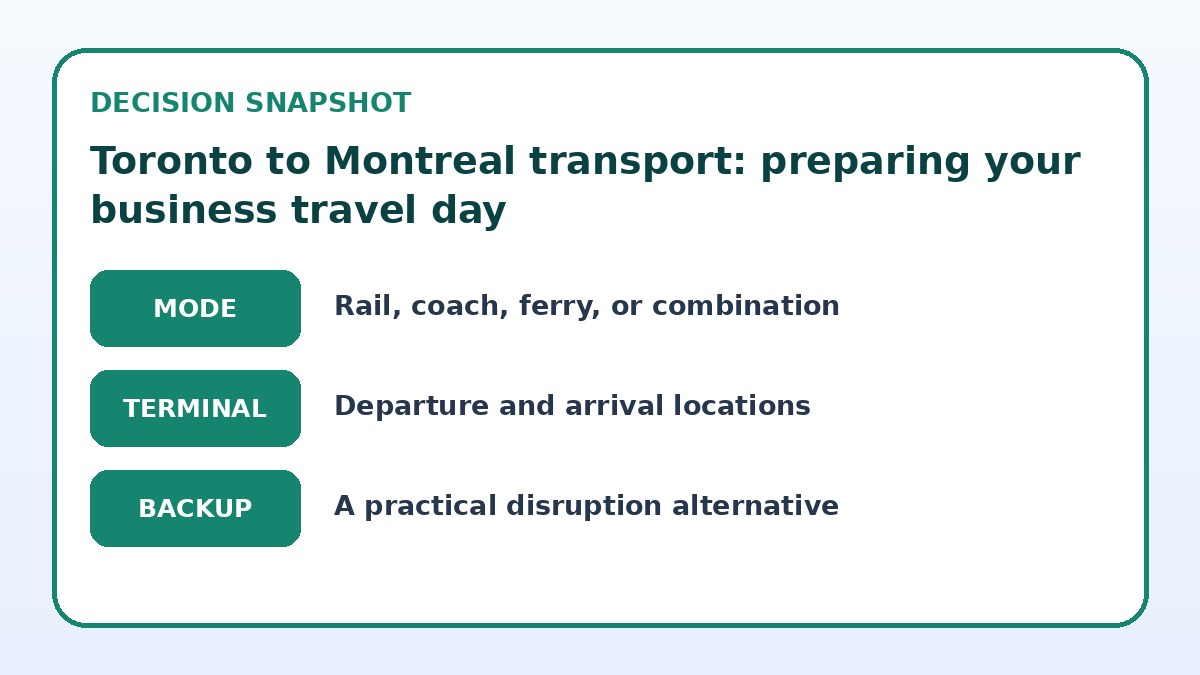
See current options before you compare the details
Availability and final conditions change. Open Trip.com now or keep reading for the practical comparison.
Choosing the transport mode for the day
On the travel day, choose the transport mode that reliably aligns with your top constraint—meeting time, ability to work en route, or minimizing stress. Trains often place you in city-centre stations that reduce local transfer time and let you work in a seat; flights may be faster in actual travel but add airport security, terminal transfers, and potential delays that are harder to predict. Driving gives flexibility for door-to-door scheduling and luggage control, but you must weigh fatigue, parking, and traffic risk on the day.
To decide the right mode that morning, compare total door-to-door travel times rather than just moving-time estimates. Factor in commute to the departure point, check-in or boarding windows, expected customs or security processes, and the journey from arrival to your final meeting location. If direct options exist, weigh them against connections: direct trips reduce handoffs but may leave fewer schedule alternatives if disrupted.
Day-of packing and tech checks
For business travel, split essentials between a carry item and checked baggage (if any). Place your laptop, chargers, presentation materials, a compact charger block, and a wired or known-working headset in your carry bag so you can work immediately if plans shift. Keep a lightweight, wrinkle-resistant outfit or at least a blazer in your carry if you anticipate last-minute meetings. Include printed copies of critical documents only if your meetings might involve venues with poor connectivity.
Before you leave the hotel or home, complete a short tech routine: charge devices to at least 80 percent, test your portable battery, confirm virtual meeting links and dial-in numbers, and download any boarding passes or tickets to an offline folder. If you need reliable internet en route, verify the transport provider’s connectivity claims on the provider’s booking or service page and have a cellular hotspot as backup. Remember to confirm power availability at your seat type if working on a train or bus is important.
| Approach | Best for | Tradeoff to check |
|---|---|---|
| Direct train to city-centre station | Working en route and minimizing local transfers | May be slower than air for pure transit time but often reduces door-to-door variability |
| Flight between airports | When on-the-ground time must be minimized over long distances | Adds airport procedures and transfers that can increase unpredictability on the travel day |
| Driving or ride service door-to-door | Maximum schedule control and handling bulky equipment | Exposure to traffic and parking issues that can add stress and time variability |
| Connecting multimodal itinerary | Balancing speed and location convenience when no direct option fits | More handoffs raise the chance of missed connections; allow larger buffers |
Ready to check the option that fits your plan?
Use your exact dates and traveler details so the provider page can show the current total and conditions.

Timing strategies and buffer planning
Set a target arrival window at your destination that gives you breathing room before the first commitment—typically 60 to 120 minutes, depending on whether you need time to change clothes, review documents, or commute across town. Use calendar blocks that show travel as busy time; share an estimated arrival and an alternate contact method with colleagues and clients so last-minute changes are understood. If your schedule includes back-to-back meetings, aim for a later transport option that leaves margin for minor delays rather than the absolute earliest service.
If you book a connecting option, allow extra transfer time than the minimum transfer requirement; the travel day can bring unexpected delays from city traffic, longer security lines, or platform changes. On the morning of travel, reconfirm departure status and terminal or platform assignments directly with the provider. If you must be at a meeting immediately after arrival, prefer services that end closer to your meeting location even if they take a bit longer in transit.
Before you book
- Confirm departure point (station platform or airport terminal) and save it to your calendar with precise travel directions.
- Charge all devices to 80% or more, test a portable battery, and pack necessary chargers in your carry item.
- Download boarding pass, tickets, and offline copies of meeting files to your device before leaving for the travel day.
- Share an updated ETA and alternate contact number with meeting hosts and your travel coordinator.
- Verify seat power and Wi-Fi availability on the provider’s booking page and pack a cellular hotspot as backup.
- Pre-identify a quiet arrival spot (hotel lobby, coworking space, or café) and map the local transfer options from arrival.
Contingencies and communication plans
Prepare simple contingency options for common day-of disruptions: a later departure you can jump to, an alternate transport mode, or a colleague who can cover or postpone a meeting. Save local taxi or ride-share apps on your phone and preload payment methods, and identify a quiet nearby workspace near arrival for last-minute prep. If possible, book flexible tickets or choose fares that allow same-day changes; when you consider flexibility, verify change policies on the provider’s final booking page before purchase.
Communicate proactively when issues occur: message key contacts with new estimated arrival times and whether you’ll join remotely. Keep critical files accessible offline and make a short, clear update template you can paste into messages: who you are, new ETA, and whether you can join remotely. Finally, consider travel insurance or corporate travel support lines if your company offers them—note the provider contact details and claim procedures before the trip so the travel day doesn’t become a frantic paperwork scramble.
Frequently asked questions
Should I pick the earliest train or flight to be safe for morning meetings in Montreal?
Picking the earliest service reduces risk from major delays but can increase personal fatigue and leaves less flexibility. Instead, weigh the earliest option against its total door-to-door time: include transit to the departure point, check-in or boarding time, and transfer time after arrival. If the earliest option arrives very close to your meeting start, choose one with a wider margin or a later departure with a solid transfer plan. Always confirm exact terminal or platform assignments and any provider-day policies on their booking page.
Can I realistically work during the Toronto–Montreal trip and join meetings on arrival?
Yes, many business travelers work on trains or flights, but your ability to do so depends on seat comfort, power and connectivity, and how critical a focused environment is. Trains often offer more stable workspace and fewer abrupt interruptions than airports or cars. Before relying on this, verify power outlets and Wi-Fi availability on the provider’s service page, carry a battery backup, and download meeting files for offline use. If you need to present immediately on arrival, plan a 30–60 minute buffer to refresh and connect to local networks.
What immediate steps should I take if my scheduled transport is delayed on the travel day?
First, update meeting hosts and your travel contact with a concise new ETA and whether you can join remotely. Check alternative departures and evaluate whether switching modes (for example, next train versus an available flight or driving) shortens your new arrival time. If switching, confirm change or cancellation rules on the provider’s booking page before making modifications. Finally, secure a quiet place to work while you wait—hotel lobby, business lounge, or a nearby café—and keep essential materials accessible so you can switch quickly to remote participation if required.
Final planning note
A well-managed travel day between Toronto and Montreal reduces stress and protects your performance at work. Focus on a single priority—reliable arrival time, productive time en route, or maximum control over your schedule—and organize decisions around that priority. Prepare a compact work kit, confirm departure and arrival logistics, and slot generous buffers into your schedule to absorb small delays without losing composure. Use the morning-of checks described here and keep contingency options within reach so you can adapt calmly. For current availability and conditions, you may compare options on booking sites like Trip.com, but always verify timing, baggage, and change policies on the provider’s official page before finalizing plans.
Continue planning
Check current options and final conditions
Use the provider page to confirm live availability, the final total, cancellation terms, and every condition that matters to your trip.
This evergreen planning guide was created with AI-assisted drafting and a structured quality review. It does not display live prices, schedules, availability, visa guidance, or provider rankings. Verify current details before booking. Some links are affiliate links; we may earn a commission at no additional cost to you.