First-hour-after-landing decision: if you arrive in Osaka with extra luggage, your immediate priority is whether to head straight to your accommodation or clear customs and proceed directly to the airport for departure preparations. This guide assumes you are planning the return trip to the airport from somewhere in Osaka (city center, Umeda, Namba, or nearby neighborhoods) and have more or bulkier bags than usual: checked suitcases, sports gear, or bulky shopping. The practical answer: choose the transfer type that handles your baggage count and timing with the least walking and waiting — private airport transfer or dedicated airport limousine/taxi for late flights; shared shuttle or public transport if you can consolidate luggage and accept some handling. Below you’ll find how to weigh luggage/party size, late or disrupted arrivals, meeting-point clarity, and whether your accommodation’s drop-off location fits the vehicle you plan to use.
Check options for your arrival details
Use your flight, luggage, party size, and accommodation address to compare current choices.
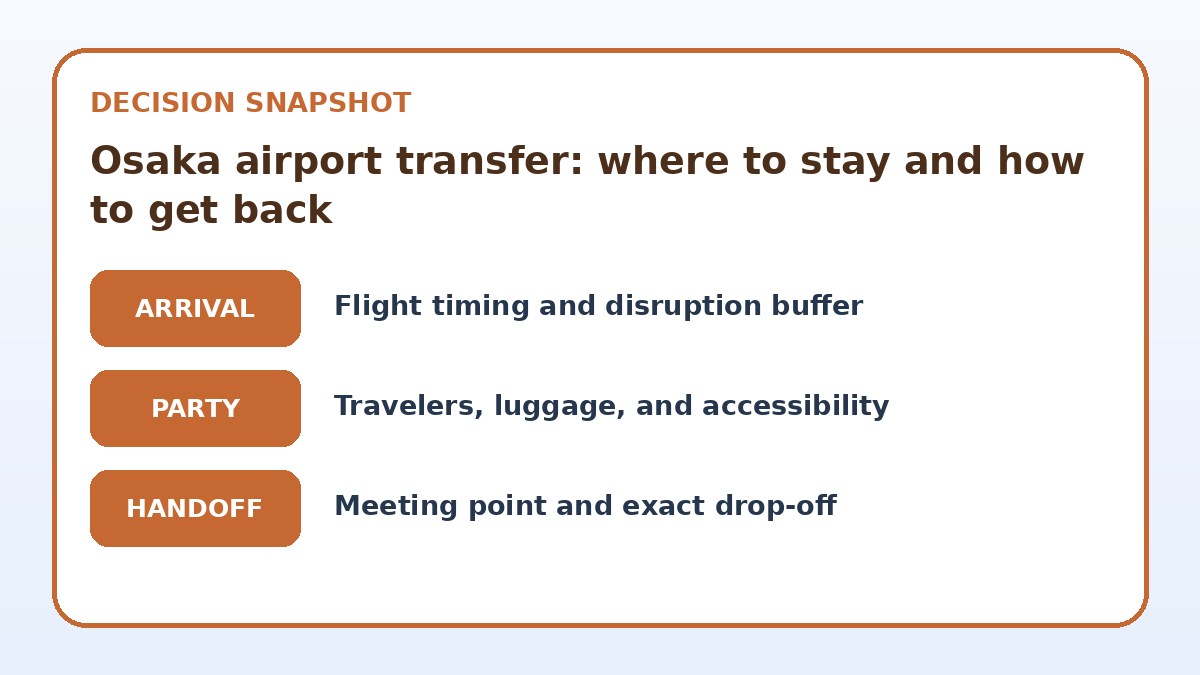
Luggage and party-size: match capacity to your baggage
Start by counting every carry-on and checked bag, plus special items such as golf clubs or musical instruments. If you travel as a party, add up total pieces and consider piece size and weight distribution. A single roomy SUV or minivan can carry multiple large suitcases and a few carry-ons comfortably; however, such vehicles are limited by legal passenger seats. If your group exceeds vehicle seating or has oversized items, you’ll need a larger transfer vehicle or two cars. When booking, confirm the vehicle’s trunk dimensions or stated luggage allowance with the provider; booking platforms may list vehicle categories rather than exact luggage specs, so ask the operator if in doubt.
Think about handling at both ends: can your accommodation staff help with stairs and elevator logistics, and does your building have a ramp or narrow corridors that prevent large trolleys? If you expect to use hotel porters, confirm whether there’s an additional fee and how much time they typically need. For self-carry situations, prefer fewer transfers and curbside pick-ups to avoid moving luggage through busy station concourses or multiple platform steps. Each manual transfer increases the chance of delay or damage, so factor that into your choice of transport.
Arrival details to have ready
- Count total bags and measure any oversized items; write down sizes and whether they fit in a car trunk or require a larger vehicle.
- Confirm your accommodation’s accessible drop-off point, curb access, and porter availability, and request written instructions to share with your driver.
- When booking, ask the operator for vehicle luggage capacity, the exact meeting point, driver contact details, and their policy for delays or no-shows.
- Prepare backup options: a local taxi number, the nearest major station name and exit, and the shuttle provider’s contingency procedure.
- Keep your phone charged, enable roaming or get a local SIM, and save screenshots or PDFs of booking confirmations and directions for offline access.
- Pack a small, easily reachable bag with essentials (travel documents, medication, chargers) to avoid opening large suitcases during transfers.
Late or disrupted arrivals: build flexibility into your plan
When your return flight is late at night or you’re worried about delays, choose options that allow same-day changes or flexible pick-up times. Private transfers and taxis are inherently adaptable because drivers can meet you at a revised time, provided you share real-time contact details. For prebooked shuttle services and meet-and-greet pickup points, verify the provider’s grace period for delayed departures and how they handle missed pick-ups. Always retain the company’s local phone number, and ask for specific instructions about who to call and what information to give in case your flight or plans change.
If major disruption is possible, have a fallback: the nearest reputable taxi stand, an alternative pickup location, or a public transit route you can use if private options fail. When relying on public transport for a late departure, check the last service times with the operator before you book; public services may be limited at night. For peace of mind, note the building or station names in Japanese and English to show to drivers, station staff, or app-based ride services, which reduces confusion if you need to make a last-minute change.
Match the transfer to your arrival
| Arrival approach | Best for | Detail to verify |
|---|---|---|
| Private car or minivan | Groups with several large suitcases who want door-to-door service | Higher cost than public options but minimal handling and schedule control |
| Taxi | Solo or small groups needing flexible, immediate pick-up | Can be metered and variable; limited space for many oversized items |
| Shared shuttle or airport coach | Medium baggage amounts and travelers on a fixed timetable wanting lower per-person cost | Potential extra stops and handling of luggage; less flexible with delays |
| Public transit (train + local bus) | Budget-conscious travelers with manageable luggage and time to transfer | Multiple transfers and stairs can be difficult with bulky or heavy bags |
Make the meeting plan clear
Check the final pickup instructions, waiting conditions, and exact drop-off coverage.
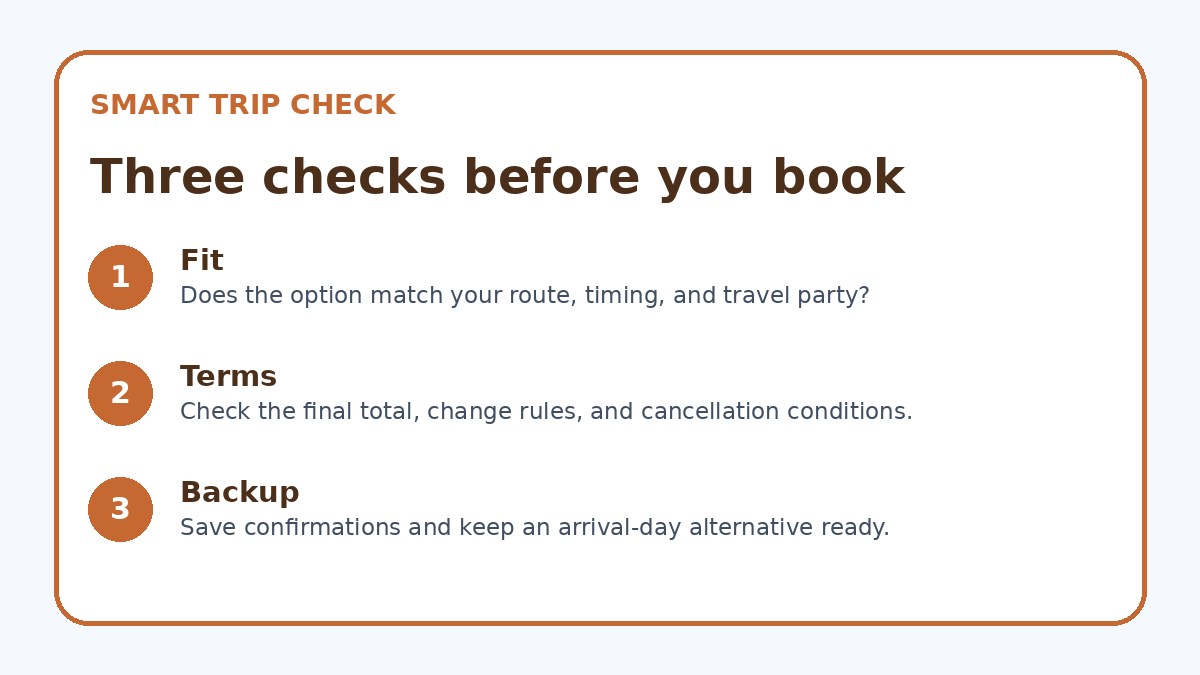
Meeting-point clarity: avoid wasted minutes and missed pickups
Clear, mutual meeting points are the simplest way to avoid confusion when you have a lot of luggage. For hotel pickups, agree on a specific curbside entrance, the time window, and the driver’s phone number. If your accommodation has multiple exits, specify one landmark (a café, statue, or gate) and describe whether the driver should enter a driveway or wait on the street. For station pickups, name the exact ticket gate or exit number and the floor or nearby shop that is easiest to find. A single poorly worded pickup point can mean dragging heavy bags across long walkways or up multiple flights of stairs.
When booking app-based or operator services, ask whether drivers will call or message when they arrive, and request the vehicle make and color if possible. If you’re using an arranged meet-and-greet at the airport, reconfirm whether the driver waits inside customs, at the arrivals hall, or outside the terminal — providers vary in policy. Keep your phone charged and accessible; if you plan to use a local SIM or roaming, ensure you can receive texts and calls so both sides can coordinate any last-minute adjustments.
Destination-side drop-off fit: curbs, elevators and local rules
Not every vehicle can pull up at every hotel or apartment entrance. Large shuttle buses sometimes must stop on the nearest main road while passengers walk further with luggage; conversely, taxis and private cars often have direct curb access. Before committing to a transfer, ask your accommodation what type of vehicle can access the property and whether there are loading zones, height restrictions, or security gates. If you have mobility limitations or very heavy bags, prioritize a service that offers curb-to-door assistance and confirm whether porters or bell staff will meet you.
Also consider local regulations and building rules: some neighborhoods have narrow streets, pedestrian-only zones, or resident-only access that restricts vehicle size. If your drop-off point is an apartment without a staffed desk, arrange a delivery-friendly meeting point nearby and allow extra time for moving luggage from curb to room. When in doubt, get exact directions from your accommodation and pass them to the driver so there’s no surprise on arrival; this avoids time-consuming detours or refused access at the last minute.
Airport Transfer & Local Mobility questions travelers ask
How should I choose between a private transfer and a taxi for an early morning departure?
If you have many large items or a group, a prebooked private transfer reduces the risk of limited trunk space and gives you a guaranteed vehicle that can wait if your schedule shifts. Taxis are more flexible for solo travelers or small parties and can be hailed last minute, but if a large trunk or vehicle size is required, availability isn’t certain. For early departures, confirm whether the private operator accepts changes and how they communicate; for taxis, note that fare structures and local surcharges may apply—check the provider’s booking page or your accommodation’s advice for the most current guidance.
What should I verify with my accommodation when planning a luggage-heavy airport pickup?
Ask whether the property has a designated curb or loading zone, whether vehicles are allowed to stop outside the entrance, and if there are any height or vehicle restrictions. Confirm whether porters can help with stairs and elevators, whether there’s a fee for porter service, and how much time they typically need. If the property is an apartment without staff, request a recommended nearby pickup spot and explicit directions for drivers, including gate codes or phone numbers. These details help the transfer provider plan the best drop-off and avoid unexpected carry distances.
How do I handle a delayed return-to-airport plan if my driver won’t wait?
First, contact the operator immediately to advise of the delay and ask about their grace period or rebooking options. If the driver cannot wait, ask to reschedule an alternative pickup time or request the nearest taxi rank or station where you can switch to a different service. Keep the driver’s contact details handy and confirm whether cancellation or rebooking fees apply on the provider’s booking page. As a backup, note local taxi numbers and public transit alternatives, and prepare to consolidate luggage into fewer pieces if switching to a smaller vehicle becomes necessary.
Final decision note
Planning your Osaka airport transfer when you have extra luggage is about matching capacity, timing and pickup clarity to minimize handling and stress. Count and describe your bags, confirm your hotel’s curb access and porter availability, and choose a transfer type that aligns with your tolerance for cost versus convenience. For late or disrupted schedules, prioritize options with clear rebooking or contact procedures and always keep a simple fallback plan. Before you finalize any booking, verify vehicle luggage allowances, meeting-point rules, and delay policies directly on the provider’s booking page; Trip.com or similar comparison sites can help you see current availability but always confirm details with the operator.
Continue planning
Check current options and final conditions
Use the provider page to confirm live availability, the final total, cancellation terms, and every condition that matters to your trip.
This evergreen planning guide was created with AI-assisted drafting and a structured quality review. It does not display live prices, schedules, availability, visa guidance, or provider rankings. Verify current details before booking. Some links are affiliate links; we may earn a commission at no additional cost to you.