If you and your partner want to travel from Seoul to Gyeongju by ground, the practical choice is to pick a primary mode—rail, coach, or car—and design the whole door-to-door chain around it. For most couples this means balancing comfort, luggage handling, and the kinds of stops you want along the way. Start by deciding whether you prefer a faster rail trunk with simple transfers or the flexibility of driving with scenic detours. Then map terminals to accommodations and late-night arrival limits so transfers are predictable. Build at least one disruption backup (an alternate train/coach or a station-to-station taxi plan) and verify the final booking pages for schedules, seat selection rules, luggage limits, and station transfer details before you pay.
How to choose rail, coach, drive, or a mixed plan
Begin by listing what matters most for your couple: fastest transit time between city centers, the ability to carry and access luggage easily, scenic stops and privacy, or minimal transfer steps. Rail often gives reliable, seat-reserved travel between major terminals; coaches may deliver simpler point-to-point boarding and baggage handling; driving offers door-to-door freedom and detours. Mixed plans let you combine a fast rail trunk with a rental car for local exploration. Score each option against your priorities, then eliminate the modes that consistently underperform for the trip type you want.
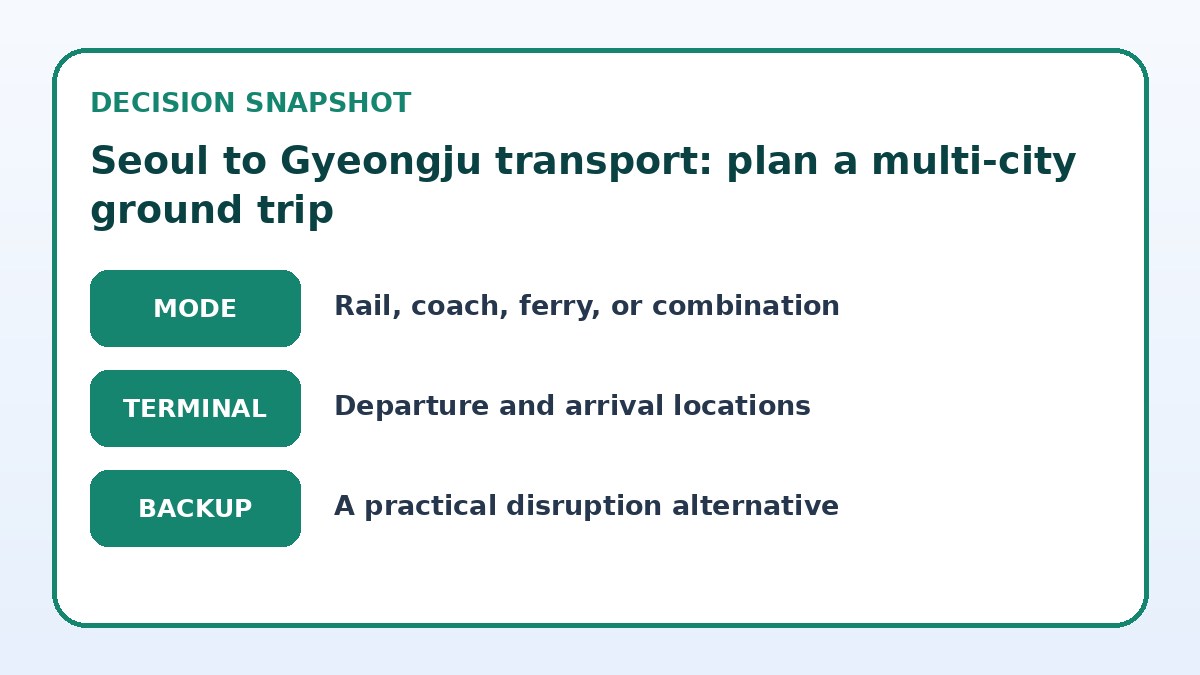
Once a mode is preferred, translate that into the end-to-end chain: how you will get from your Seoul accommodation to the departure terminal, what you need to do on arrival in Gyeongju to reach your lodging, and what backup route you will use if the primary leg is disrupted. Couples often overlook the first- and last-mile legs—those short taxi rides, subway trips, or shuttle hops that determine whether an itinerary feels smooth or stressful.
Choose the end-to-end journey plan
| Journey approach | Best for | Friction to check |
|---|---|---|
| Rail trunk + local taxi/subway | Couples wanting a fast, low-stress main leg with simple last-mile transfers | Less door-to-door flexibility and possible longer walks at stations than driving |
| Direct coach point-to-point | Pairs who prefer straightforward boarding and consolidated baggage handling | Longer on-road time and fewer spontaneous scenic stops than driving or mixed plans |
| Self-drive (rental car) with planned stops | Couples prioritizing privacy, scenic detours, and flexible timing | Driver fatigue, parking logistics, and potential unfamiliar road rules to manage |
| Mixed: train for trunk, rental for local exploration | Those who want speed between cities and freedom once in Gyeongju | Requires an extra transfer to pick up the car and careful timing to avoid tight connections |
Check live intercity options
Look beyond the ride itself and compare terminals, transfers, luggage, and arrival fit.
Terminal fit, luggage friction, and transfers explained
A terminal’s layout and services determine how easy transfers feel when you’re traveling as a pair with luggage. Train stations typically have platform access, luggage storage, and taxis nearby; coach terminals may consolidate ticket counters and baggage handlers but can be farther from urban centers. For driving, think about drop-off and parking at both ends: does your Gyeongju hotel offer parking? Could street parking or a paid lot add extra walking with bags? For every candidate terminal, note the distance, typical transfer modes, and whether those modes accept luggage easily.
Plan transfers visually: look at station maps and street-level exits, check whether elevators or escalators are available for strollers or large suitcases, and identify the most reliable taxi ranks or app-based pickup points. Confirm whether seat reservations or coach baggage tags are required during booking; if you must collect luggage between legs, factor in additional time and a clear route for doing that without rushing.
Timing flexibility and scheduling choices for couples
Decide how much schedule rigidity you and your partner can tolerate. If your goal is to maximize sightseeing in Gyeongju, favor earlier departures from Seoul and a flexible last-mile transfer that lets you check into accommodation mid-afternoon. If you prefer a relaxed morning and scenic driving, choose later train or coach connections or schedule a rental pick-up after a leisurely breakfast. Build itineraries that include buffer time for ticketing, bathroom breaks, and a relaxed coffee stop—these little margins matter more than shaving minutes off a timetable.
When comparing options, look for connections that avoid tight back-to-back transfers, especially when one or both of you might be managing checked baggage or are unfamiliar with the terminal layout. For mixed-mode plans, allow extra time to park, return a rental car, or find the correct platform. Always map contingency windows—30 to 90 minutes depending on complexity—so a delayed coach or slower traffic won’t derail the rest of your day.
Compare the practical alternatives
Use the final page to confirm what is actually offered on your dates and save a workable fallback.
Intercity travel checklist
- Map door-to-door legs: accommodation to departure terminal and arrival terminal to hotel, noting exact streets and exit numbers.
- Confirm luggage policies on the carrier’s final booking page and ensure your bag dimensions meet carrier or terminal limits.
- Book seats or reservation-required tickets early enough to secure adjacent seats for both travelers when possible.
- Identify a reliable taxi app or rank at both terminals and save driver contact details or pickup landmarks for late arrivals.
- Plan a disruption backup: alternate public transport options, a timed taxi contingency, or an overnight option if transfers fail.
- Keep digital and printed copies of reservations, station maps, and a short translation of key phrases (pickup points, hotel name, address) for local drivers.
Simple disruption backups and verification steps
Create at least one realistic backup for each critical transfer: an alternate train or coach departing within a few hours, an app-based taxi route from the arrival platform to your hotel, or a local guesthouse with flexible check-in in case you arrive late. For driving plans, identify a nearby train or coach terminal where you could return a rental and continue by public transport if road conditions or fatigue become a problem. Couples should agree beforehand on the threshold for switching plans—how late a delay triggers the backup.
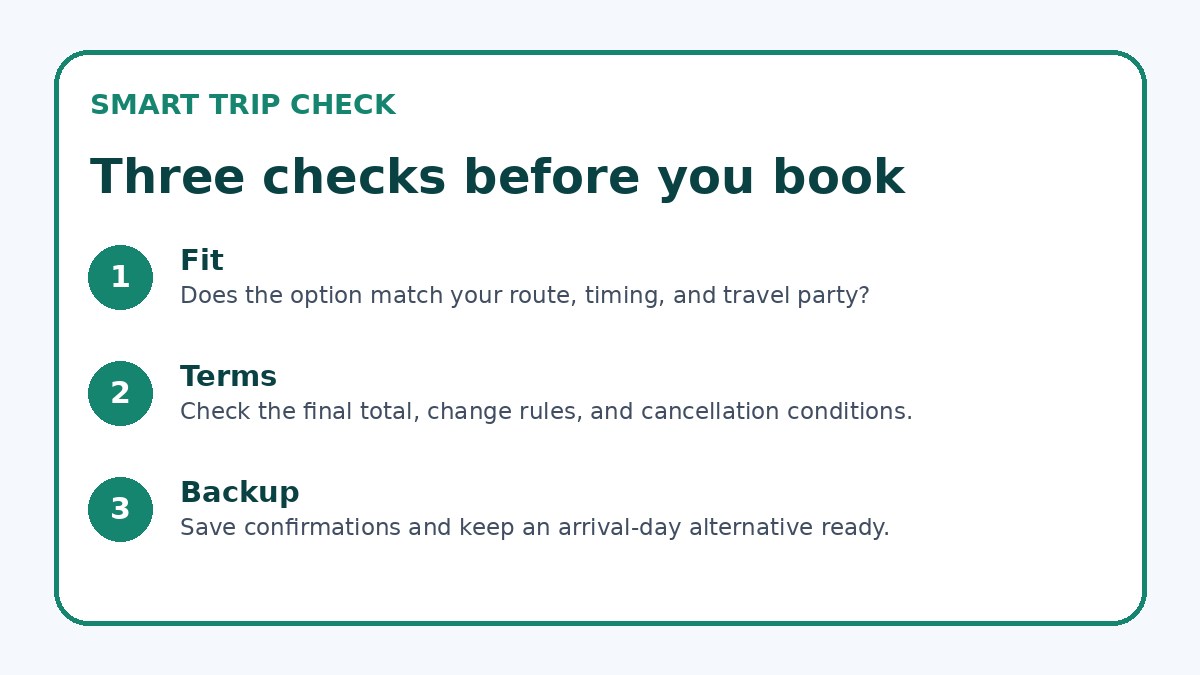
Before you finalize bookings, verify three things on the provider’s final booking page: seat reservation rules and cancellation terms, luggage size/weight policies, and the exact terminal names and platform pickup points. If you use a comparison site like Trip.com to check current availability, also open the operator’s own page to confirm boarding instructions and any last-minute requirements. Save screenshots or confirmation emails that show terminal codes, reservation numbers, and contact details for quick reference during travel.
Rail & Intercity Transport questions travelers ask
Which ground mode is usually most comfortable for couples traveling Seoul to Gyeongju?
Comfort depends on priorities: trains typically provide roomy seats and stable travel for relaxed conversations, while a rental car offers private space and the freedom to stop wherever you like. Coaches can be comfortable but vary by operator and may involve longer continuous sitting. Consider whether you prefer fewer transfers (favor trains or coaches) or door-to-door privacy and detours (favor driving). Whichever mode you choose, check seat assignment rules and luggage handling on the provider’s final booking page to avoid surprises.
How much transfer time should we allow between legs when switching modes?
Allow large buffers when switching modes: short platform-to-taxi transfers may need only 20–30 minutes, but switching from a train to a rental car or a coach to a different terminal can require 45–90 minutes depending on station layout and peak-hour crowds. If you must collect checked luggage or queue for a shuttle, add more time. Build a contingency window that fits your risk tolerance—larger for unfamiliar terminals—and agree with your partner on whether you’ll use the backup option if connections look risky.
What should couples verify on booking pages before paying for transport?
On the provider’s final booking page verify terminal names and exact pickup points, seat reservation and change/cancellation policies, luggage allowances and any baggage fees, and whether you must print or display an e-ticket. Also check boarding procedures for late arrivals and contact details for customer support. If a transfer requires a separate taxi or shuttle, confirm pickup landmarks and whether drivers use navigation apps, and save screenshots of confirmations for quick access while traveling.
Final decision note
Planning a Seoul to Gyeongju ground trip as a couple is about more than choosing the fastest vehicle: it’s about stitching the whole door-to-door chain so transfers, luggage and timing feel effortless. Start by ranking your priorities—speed, privacy, sightseeing flexibility, or minimal transfers—then pick a primary mode and sketch the first- and last-mile legs. Add a realistic disruption backup and verify all critical details on the final booking pages: terminal names, luggage rules, seat policies, and pickup points. With those checks done and shared contingency thresholds agreed, you and your partner can travel confidently and focus on enjoying Gyeongju’s historic sights rather than worrying about how you’ll get there.
Continue planning
Check current options and final conditions
Use the provider page to confirm live availability, the final total, cancellation terms, and every condition that matters to your trip.
This evergreen planning guide was created with AI-assisted drafting and a structured quality review. It does not display live prices, schedules, availability, visa guidance, or provider rankings. Verify current details before booking. Some links are affiliate links; we may earn a commission at no additional cost to you.