If you need to move between New York City and Washington, DC on your own, the most practical choice depends on how you value station location, luggage handling, schedule flexibility, and how much disruption you can tolerate. For many solo travelers prioritizing end-to-end simplicity, an express intercity rail service that departs from Manhattan and delivers you close to DC’s central neighborhoods often wins on convenience, especially when you can walk or take a single short ride to your accommodations. However, a coach that uses curbside pickup near subway lines can be cheaper for light packers, and combining modes — for instance, a short regional train to a major hub then an express coach — can reduce transfers or align with specific arrival times. Read on to weigh terminal fit, luggage friction, timing flexibility, and a practical disruption backup so you can decide which approach matches your priorities and confirm details before booking.
Terminal fit: where you start and finish matters more than the vehicle
A truly practical journey begins with the terminals. In New York City, some services leave from Midtown hubs within walking distance of many hotels, while others use curbside stops that require a short subway or bus ride. In Washington, DC, arrival points vary between central stations close to business and tourist neighborhoods and peripheral stops that need an extra transfer. For solo travelers, the fewer transfers to your lodging the better, so map the terminal locations against your accommodation before picking a provider. Look at walking routes, local transit lines, and late-night safety of streets along those final legs.
Do a quick door-to-door simulation: time a realistic walk with luggage from your New York lodging to the departure spot and from arrival to your DC destination. Note elevator and escalator availability at stations if you have heavy bags or mobility needs. If a terminal requires changing subway lines or buses, add a buffer for buying tickets and navigating crowds. These practical details often tip the balance: a slightly longer ride that drops you closer to your destination can save time and stress compared with a shorter, less conveniently sited alternative.
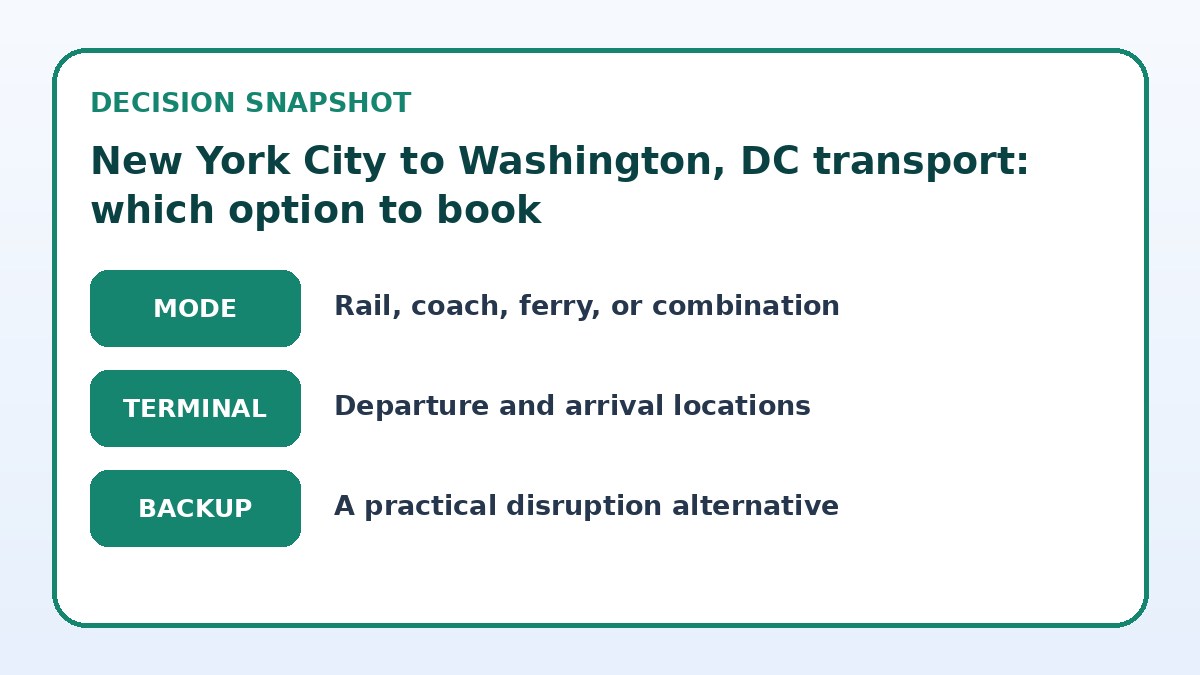
Choose the end-to-end journey plan
| Journey approach | Best for | Friction to check |
|---|---|---|
| Direct intercity train from central Manhattan to central DC | Travelers wanting the fewest transfers and a central arrival within walking or one short ride of many hotels. | Potentially higher fare options and need to verify luggage policies and station access before booking. |
| Curbside coach departing from a Manhattan pickup point | Solo travelers with light luggage who prefer a simpler boarding process and generally lower friction at departure. | Curbside stops may be farther from your lodging or arrival point, requiring extra local transit or a rideshare. |
| Mixed plan: regional transit to a major hub then a long-haul express | People needing specific timing or cheaper availability who can handle one planned transfer. | Adds a transfer and luggage handling; must build realistic connection time and check missed-connection policies. |
| Flexible, multi-option plan with confirmed backups | Travelers prioritizing reliability who keep alternative departures and rideshare options pre-booked or available. | Requires more upfront research and possibly higher combined costs for refundable or changeable tickets. |
Check live intercity options
Look beyond the ride itself and compare terminals, transfers, luggage, and arrival fit.
Luggage and transfer friction: how much handling are you willing to accept?
Different modes handle luggage differently. Trains often have dedicated racks and aisles wide enough to maneuver, and station staff can sometimes help with bulky items; coaches may have checked baggage bays but require curbside loading and unloading that’s less private. Ferry options are rare for this corridor but could involve extra transfers and tight storage. As a solo traveler, consider how comfortable you are lifting bags up stairs, carrying them on short subway hops, or leaving them in an overhead coach compartment.
Factor in transfer friction when evaluating door-to-door time. A plan with one long, comfortable ride but two easy transfers might be faster and less tiring than a plan with multiple short legs and frequent luggage handling. If you plan to work en route, prioritize seating and onboard power availability in your checks. Before booking, read the provider’s baggage policy on their official booking page and confirm what counts as carry-on versus checked, any size limits, and whether staff assistance is offered at either end.
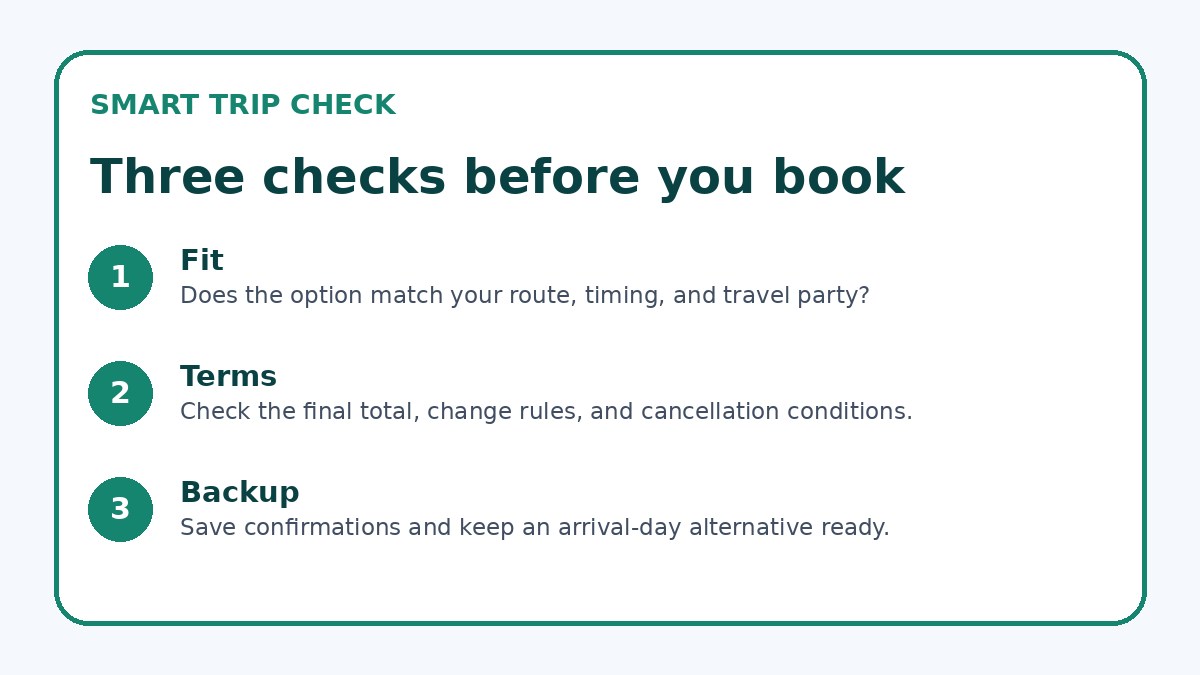
Timing flexibility: pick an option that matches how fixed your schedule is
If your arrival or departure times are tight, prioritize services that run frequently and have multiple daily departures. Trains on main corridors often have more frequent schedules and can offer both express and regional options; coaches may concentrate departures at popular travel times. When you need to be somewhere at a specific hour, look for services with short intervals and generous reliability records. For leisure trips with flexible plans, a cheaper, less frequent coach could be acceptable if you can adjust your schedule.
Always compare direct versus connecting routings. A direct service that matches your timing is usually simpler, but a connecting journey can provide more departure times or lower door-to-door hassle if the connection reduces a final-city transfer. Before you book, confirm total expected travel time including transfers, the minimum recommended connection time, and the booking provider’s policy on missed connections. If timing is crucial, select fares that allow free or low-cost changes and verify change/cancellation terms on the provider’s official page.
Compare the practical alternatives
Use the final page to confirm what is actually offered on your dates and save a workable fallback.
Intercity travel checklist
- Map door-to-door routes from your lodging in NYC to the departure terminal and from the arrival terminal in DC to your accommodation.
- Check the provider’s official booking page for baggage size limits, carry-on rules, and staff assistance options before you purchase.
- Compare total travel time including transfers and realistic transfer buffers rather than just advertised ride times.
- Identify at least two alternate departures and confirm change/cancellation rules on the booking page in case of disruption.
- Download or screenshot your itinerary, key maps, and the provider’s contact info for offline access during travel.
- Plan a last-mile contingency: local transit route, rideshare app credit, or nearby 24-hour transport option for late arrivals.
Disruption backup: practical contingency planning for solo travelers
No matter which mode you choose, plan at least one realistic backup. Identify the next two departures on any provider, check how to change or cancel a booking, and note local transit alternatives near each terminal for a last-mile rescue. Keep a rideshare app installed and a payment method ready for short hops if public transit is delayed or not running. For overnight travel, also note safe, well-lit areas around terminals and any 24-hour transport options in case of late arrivals.
Verify cancellation and change policies on the provider’s booking page before you buy, and screenshot confirmation emails and key timetables so you have offline copies. If you depend on a single tight connection in your itinerary, add padding equal to at least one typical delay metric (e.g., 30–60 minutes) and prepare a plan B that minimizes further transfers. Finally, save emergency contact numbers for the provider and a local contact in both cities, and store the addresses of nearby hotels if you might need an overnight fallback.
Rail & Intercity Transport questions travelers ask
Should I choose a train or coach for comfort and safety as a solo traveler?
Comfort and safety depend on the specific service and time of day. Trains typically offer more space to move, larger seats, and quieter environments conducive to work or rest; stations often have indoor waiting areas and clearer platform access. Coaches can be perfectly safe and comfortable but usually have narrower aisles and rely on curbside boarding, which may expose you to street conditions. Evaluate the terminal environment, onboard seating, and whether the boarding location requires crossing busy streets; verify staffing and accessibility on the provider’s booking page before booking.
How much extra time should I allow for transfers between services?
Allow at least 30–60 minutes for planned transfers in the same city to account for walking with luggage, ticketing, and platform changes; add more time during peak hours or if a subway transfer is required. If your connection involves exiting one terminal and entering another or using surface transit, add additional padding for traffic and waiting times. Check station layouts and platform locations ahead of time, and choose connections with explicit minimum transfer times indicated by providers when available. Always confirm change policies so you can adjust without undue penalty if a delay occurs.
What verification steps should I take on the booking page before finalizing?
On the provider’s booking page, verify departure and arrival addresses (not just station names), exact terminal or curbside stop identifiers, baggage allowances and fees, and the provider’s change and cancellation policy. Look for notes about boarding procedures, required ID, and whether seat reservations are included. If you need accessibility services or assistance with heavy luggage, check how to request them and any deadlines to do so. You can optionally compare current options on Trip.com, but always confirm the final operational details on the provider’s official site before you pay.
Final decision note
For most solo travelers prioritizing end-to-end practicality between New York City and Washington, DC, the right option balances terminal location, transfer count, luggage handling, and schedule flexibility. A direct train that drops you near central DC will often be the simplest door-to-door choice, but curbside coaches and mixed itineraries remain valid if they reduce transfers or match specific timing and budget concerns. Whatever you choose, run a door-to-door test, confirm baggage and change rules on the provider’s booking page, and pick at least one disruption backup. That planning will save stress and keep your trip focused on the parts you planned to enjoy.
Continue planning
Check current options and final conditions
Use the provider page to confirm live availability, the final total, cancellation terms, and every condition that matters to your trip.
This evergreen planning guide was created with AI-assisted drafting and a structured quality review. It does not display live prices, schedules, availability, visa guidance, or provider rankings. Verify current details before booking. Some links are affiliate links; we may earn a commission at no additional cost to you.