Practical answer first: before you hit buy on any San Francisco travel deal, compare the exact inclusions and final terms for the same dates, same travelers, and the same refund or change rules. That means lining up the total landed cost—airfare or rail, hotel room rate plus taxes and fees, local transfers, incidental allowances, and the cost of changing or cancelling. For business travelers, the real value is flexibility, predictable invoicing, and ease of expense reporting, not just a lower headline price. Use the package-versus-separate checklist below to avoid false savings and make sure the bundle actually reduces your time and administrative burden. If you want to cross-check availability and current terms, tools like Trip.com can show options, but always verify final terms on the provider’s booking page before confirming.

Test package value fairly
| Booking approach | Best for | Tradeoff to check |
|---|---|---|
| All-in-one package (flight + hotel + transfers) | Travelers wanting single-point service and simplified invoicing. | May lock you into combined change rules and conceal supplier fees that reduce flexibility. |
| Book flight separately, bundle hotel and transfers | Travelers who need control over flight choice and loyalty accrual. | Splitting components can complicate refunds and requires tracking multiple bookings. |
| Book all components separately | Experienced arrangers who want maximum control and cherry-pick policies. | Takes more time, increases chances of mismatched timings, and may miss package conveniences. |
| Use corporate travel management with negotiated rates | Employees under company travel policy needing policy compliance and consolidated billing. | Corporate rates can limit supplier choices and sometimes require pre-approved changes. |
Check current package and separate options
Use identical dates, travelers, room needs, baggage, and flexibility so the comparison stays meaningful.
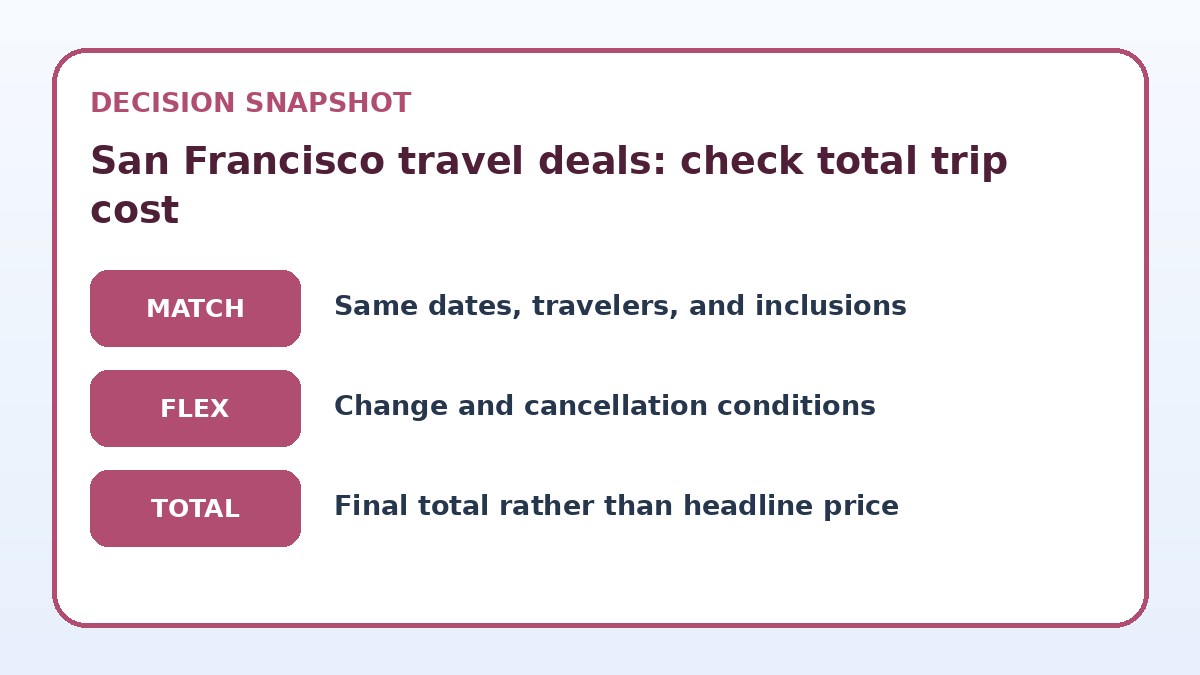
Compare inclusions line by line
Start by building a single comparison table for the package and for separately booked components. Include airfare class (or train fare type), checked-baggage allowance, specific hotel room category and nightly taxes, airport transfers, mileage or ride credits, and any meeting-room or workspace access needed for work. Don’t forget items often omitted from summaries: local taxes, city fees, resort or facility charges, and any fees for extra guests or rollaway beds if colleagues join.
For each inclusion, write down the cancellation or change rule shown on the provider’s final booking page. Note blackout dates, advance-purchase windows, and when non-refundable conditions take effect. If a bundle lists ‘airport transfer’ as included, check whether that is private car, shared shuttle, or voucher credit—and whether it applies for both arrival and departure. That same diligence applied to hotels and ground transport prevents unpleasant last-minute expenses.
Assess flexibility and operational control
Business travel often needs last-minute changes. Determine who you must contact to change flights or hotels: the bundler, the airline, or the hotel. Bundles sometimes centralize service, which can simplify one-call changes, but they may also impose stricter combined policies. Verify whether the tour operator or booking platform will issue reimbursements or must act as intermediary; read where credit issuance or refunds are processed and how long administrative holds take.
Also check how add-ons are handled: can you add an extra night, upgrade seats, or swap transfer times without losing the bundle’s benefits? Sometimes separately booking a refundable hotel or flexible flight provides better control even if the initial price is higher. Make a quick decision matrix: speed of change (how fast you can rebook), likelihood of change (your meeting risk), and cost of rebooking—this will guide whether to pick a bundle or separate bookings.
Look past the headline total
Compare inclusions and change conditions before deciding whether a package is genuinely useful for this trip.
Deal comparison checklist
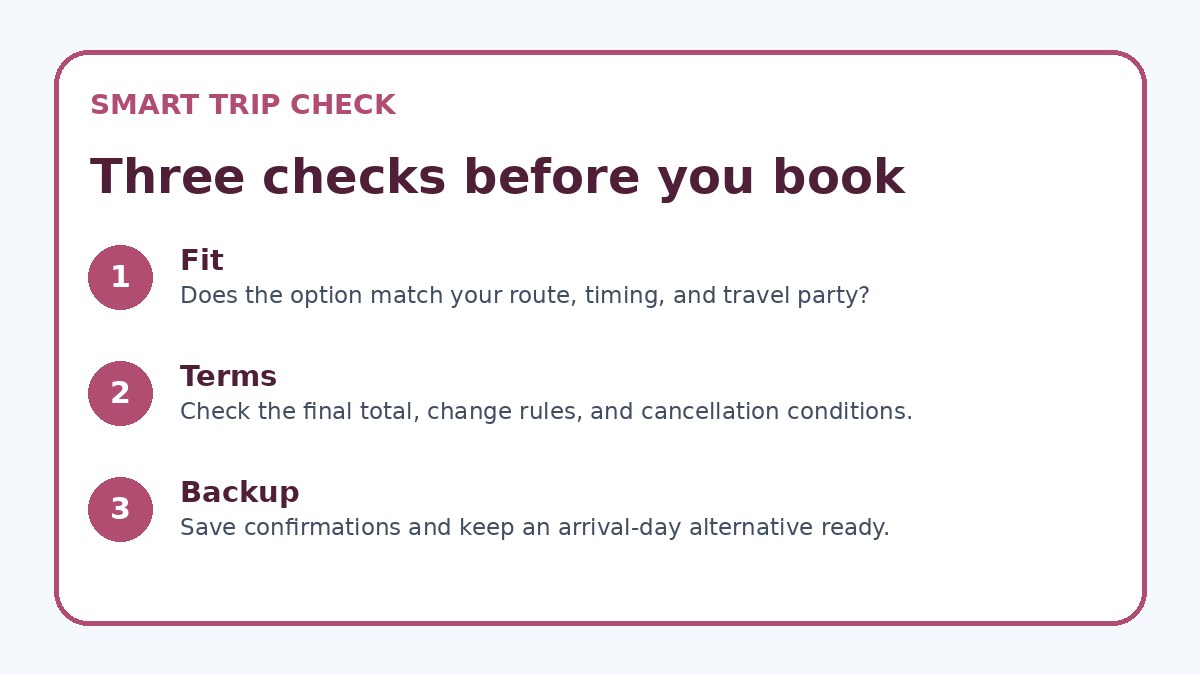
- Match dates and traveler names exactly for each quote you compare and save screenshots of both package and separate offers.
- Request and record the full cancellation/change policy for each component from the final booking page before purchase.
- Confirm which entity issues refunds and the expected refund timeline in writing for bundled and separate bookings.
- Verify baggage, seat, and loyalty accrual rules for flights and whether bundled fares affect point earnings.
- Ask for an itemized invoice that breaks down taxes, local fees, and any third-party surcharges before approving payment.
- Test transfer timing against your meeting schedule and confirm how the provider handles missed connections or delays.
Evaluate traveler-specific value
Different business travelers value different things. Executives may prioritize refundable fares, lounge access, and private transfers, while junior staff might accept tighter change policies to save on headline cost. Consider company reimbursement rules: if your employer requires itemized hotel receipts, ensure the bundle provides them in the correct format. If loyalty program accrual matters, verify whether bundled flights and stays still earn miles or points and whether the vendor reports those earnings correctly.
Also look at incidental conveniences that matter for productivity: early check-in or guaranteed workspace, in-room Wi‑Fi bandwidth and fees, and proximity to client offices or conference venues. A cheaper room in a peripheral neighborhood can cost you time and rideshare bills. For day-of-meeting reliability, a modestly more expensive hotel that reduces transit uncertainty may be the better business decision.
Final terms and avoiding false savings
Read the fine print on refunds, transfers, and dispute resolution before committing. Confirm which regulations govern the booking—state, national, or the provider’s jurisdiction—and how to escalate a claim if charges appear after cancellation. If the bundle requires you to cancel components through the provider rather than directly with suppliers, note the provider’s promised turnaround for refunds and ask for confirmation in writing when you cancel.
To avoid false savings, always compare the same dates, passenger names, and cancellation windows. Price-check a separate booking of the same flight and hotel to see whether the bundle simply repackaged the same suppliers with added fees. When in doubt, request a full cost breakdown from the vendor and save copies of the booking pages and receipts; those documents will speed expense reporting and any later dispute resolution.
Travel Deals & Booking Strategy questions travelers ask
How can I tell whether a package actually saves money versus booking components separately?
Create a side-by-side with identical dates, traveler details, and inclusions. Include taxes, resort or city fees, transfers, baggage, and seat selection. Compare final refundable or nonrefundable rules and calculate the expected cost of a likely change scenario. If the package price looks lower, confirm the same-seat class and room type are offered when you’d have booked separately, and verify the provider’s cancellation and refund processing times on the final booking page.
If my meeting schedule may change, should I prioritize flexible fares or bundled convenience?
If schedule changes are likely, flexibility typically outweighs small savings. Flexible fares and refundable hotel nights reduce the risk of rebooking costs and lost time. Bundles can be useful if the provider offers easy, quick change handling and one-call support; otherwise, mixed bookings that keep flight and hotel flexibility separate often give better control. Check the change fees, the ease of modifying reservations, and the vendor’s stated refund timeline before deciding.
What specific contract terms should I verify on the provider’s booking page before finalizing a business trip?
Look for explicit change and cancellation rules, who is responsible for refunds, the exact room category and included amenities, baggage allowances for flights, and tax or fee breakdowns. Verify the governing law and dispute process if available. If transfers or meeting facilities are included, confirm service timing windows and no-show penalties. Save or print the provider’s final booking terms and the payment receipt for expense reporting and any future disputes.
Final decision note
For business travelers heading to San Francisco, the right decision is the one that balances cost, control, and reliability. Always start by comparing the same dates, traveler types, and exact inclusions, and then layer in the practical considerations: who handles changes, how refunds are issued, and whether loyalty or invoicing rules are met. Bundles can simplify logistics and paperwork, but they sometimes hide fees or lock you into inflexible terms. If you value last-minute changes or specific loyalty accruals, separate bookings can be smarter despite extra administrative steps. Verify every final term on the provider’s booking page, request itemized receipts, and keep records to protect your budget and schedule.
Continue planning
Check current options and final conditions
Use the provider page to confirm live availability, the final total, cancellation terms, and every condition that matters to your trip.
This evergreen planning guide was created with AI-assisted drafting and a structured quality review. It does not display live prices, schedules, availability, visa guidance, or provider rankings. Verify current details before booking. Some links are affiliate links; we may earn a commission at no additional cost to you.