Short answer: driving in and around Lisbon can add flexibility for day trips to Sintra, Cascais, or the Alentejo, but only if you understand the insurance wording that affects both drivers and passengers. For many couples, the choice hinges on liability exposure, who is named on the policy, and what excess (deductible) or exclusions apply—especially for young drivers, secondary drivers, and credit-card cover. Read the policy definitions for Collision Damage Waiver (CDW), Loss Damage Waiver (LDW), Third-Party Liability, and supplemental cover before you book. This article helps couples decide whether driving genuinely improves their itinerary, what specific insurance phrases to watch for, how pickup and return logistics can affect your risk, and sensible non-driving alternatives if the insurance picture makes driving unattractive.
Does driving improve your Lisbon itinerary?
Start by listing what you want to do and where. If your plan centers on the historic neighborhoods of central Lisbon—Alfama, Bairro Alto, Chiado—parking shortages, narrow streets, and low-speed zones make driving more hassle than help. A car shines if you plan multiple day trips to places where public transit is limited or infrequent, such as rural Alentejo wineries or dispersed beaches along the western coast. Weigh travel time, cost of parking, and whether both partners will need to drive versus staying put and taking single-driver day trips.
Think about arrival logistics too. If you arrive late or want to visit multiple regions without returning to Lisbon each night, a car can be a practical base. But if one partner is unfamiliar with Portuguese driving environments—tight roundabouts, tram tracks, or one-way streets—the stress and added insurance complexity may erode enjoyment. Couples should balance scenic route value against the tension of driving responsibilities and check whether the insurer requires all regular drivers to be named and meet age or license-length requirements.
Decide whether driving earns its place
| Mobility strategy | Best for | Cost or friction to check |
|---|---|---|
| Rent a car and name both partners as drivers | Couples who plan multiple day trips and share driving evenly | Higher base cost and stricter eligibility rules, but reduced disputes over responsibility |
| Rent with one named driver, partner rides as passenger | Couples where one prefers not to drive or has limited license history | Cheaper but increases the named driver’s liability; partner may be excluded from cover |
| Rent only for single long excursions or day trips | Couples wanting car flexibility without long-term rental obligations | More packing and planning per trip; still requires careful insurance checks for each hire |
| Skip driving: trains, ferries, tours, and taxis | Couples prioritizing low friction and minimal claim risk | Less flexibility for remote destinations and rigid timing compared with a personal car |
Check live rental choices only after the route test
Use the exact driver, dates, pickup point, and return plan to compare current conditions.
Decode the insurance wording couples must understand
Policies use many overlapping terms. Collision Damage Waiver (CDW) or Loss Damage Waiver (LDW) reduces your financial liability for damage to the rental car, but usually does not remove it entirely: an excess (deductible) often remains. Third-Party Liability covers damage or injury to others. Crucially for couples, named-driver rules can restrict who is covered: some contracts include one driver only, others allow free additional drivers if they are spouses or domestic partners, while some charge per additional driver. Always confirm whether the named drivers must be present at pickup and have held a full license for a minimum period.
Look for explicit exclusions in the wording: driving off-road, on unpaved roads, under the influence, or using the vehicle for commercial purposes typically voids cover. Pay attention to how claims are handled: some insurers require you to notify local police and the rental firm immediately and to complete a company damage report—failure to follow these steps can lead to denied claims. When comparing offers, check the final booking page for exact excess amounts, whether the policy includes theft protection, and whether personal belongings are covered.
Compare the full rental conditions
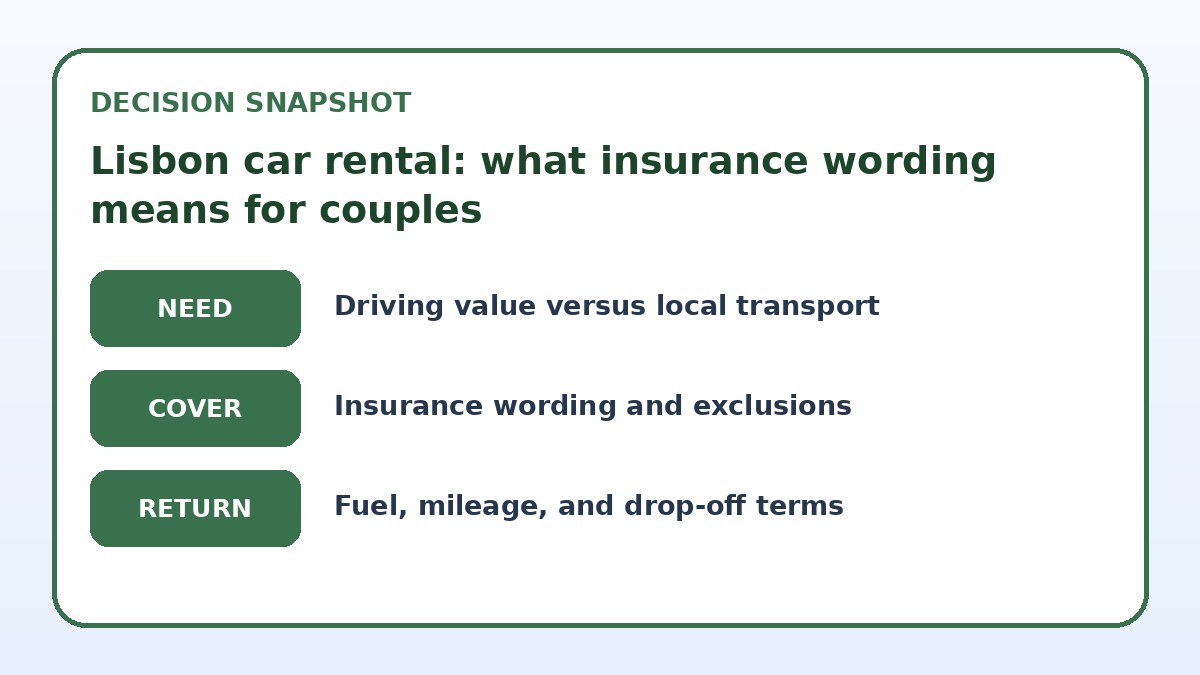
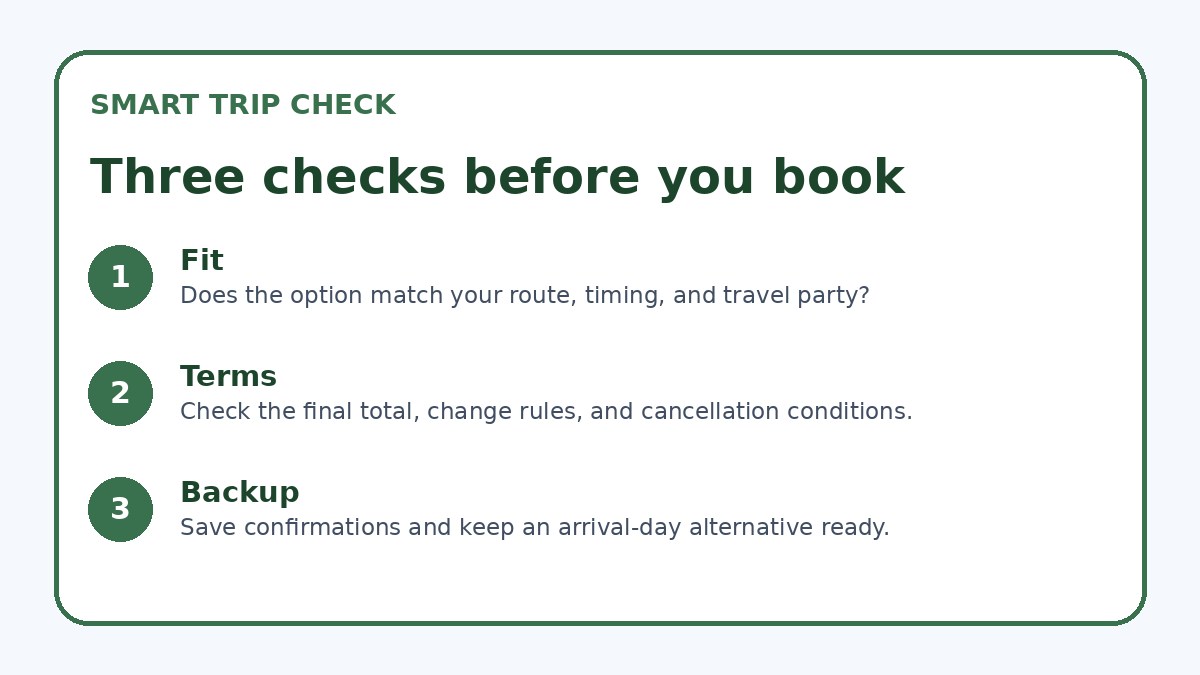
Confirm insurance wording, exclusions, deposit, fuel, mileage, and return terms on the final page.
Pickup and return friction: what increases risk and cost
The pickup and return process is where many couples first encounter ambiguous wording. Inspect the car in daylight with your partner before driving away and take time-stamped photos or video of every angle and the interior. Ask the agent to note pre-existing damage on the rental agreement; vague language like “minor scratches not recorded” creates disputes later. Fuel policy wording matters too: full-to-full is clearest, but other terms may lead to refueling fees. Confirm office hours for returns to avoid after-hours charges—some contracts levy fixed penalties that are unrelated to insurance but still add cost.
Be wary of verbal promises. If an agent says a given damage won’t be charged, request that it is written into the rental agreement. For roadside assistance and towing, check whether the policy includes these services and whether they apply when drivers are not named on the contract. If you plan to cross borders with the car (for example, into Spain), verify the insurer’s territorial wording—many policies restrict cross-border travel or require additional paperwork and fees. Always save the final booking page and the signed rental agreement; these documents are what claims handlers will review.
Car rental terms to verify
- Confirm which drivers are named on the rental agreement and the minimum license-holding period required for each named driver.
- Read the exact excess (deductible) amounts and whether optional waivers reduce or eliminate the excess in writing on the final booking page.
- Note explicit exclusions such as off-road use, unpaved roads, crossing international borders, and permitted fuel policies before you sign.
- Photograph the vehicle at pickup and return with timestamps and request annotated damage notes on the company contract.
- Ask about roadside assistance coverage, towing procedures, and out-of-hours return penalties and get those terms in writing.
- Compare train, ferry, and guided-tour alternatives for each planned excursion to assess total time, cost, and insurance exposure.
Non-driving fallback: safe, low-friction alternatives
If insurance wording or pickup friction tips the balance away from driving, Lisbon offers practical alternatives that suit couples. Trains and regional rail connect to Sintra and Cascais with frequent service and walkable town centers; guided small-group tours provide door-to-door pickup and curated itineraries without the stress of parking or insurance disputes. Ride-hailing and local taxis cover short trips and late-night transport when public transit is limited. Choosing a single base in Lisbon and planning a mix of public transport and paid excursions reduces the need to manage a rental contract’s complexities.
Using a non-driving approach also reduces exposure to deductibles and cross-border restrictions. For longer or more remote excursions that still require a vehicle, consider booking a car for a single day with clear, higher-level cover or hiring a private driver for comfort and local knowledge. If you do search rental inventories, compare the final booking pages carefully and use Trip.com or similar platforms only to see current options—always verify insurance wording and named-driver rules directly on the provider’s confirmation before completing payment.
Car Rental & Road Trip questions travelers ask
If my partner drives without being named, will insurance still pay for damage?
Often not. Many rental contracts require all regular drivers to be explicitly named; otherwise the insurer may deny a claim if an unnamed partner was driving during damage or an incident. Some companies allow a spouse or domestic partner to be added without charge, but others charge a fee or impose restrictions. Always check the rental agreement’s named-driver clause on the provider’s final booking page and ask the counter agent to add the partner to the contract in person if needed. Keep the signed agreement and photos to support any later claim.
What does 'zero excess' or 'zero deductible' actually mean for couples?
Zero excess means the rental company or third-party cover should remove your financial liability for damage, but the wording matters: check whether the zero-excess applies to all damage types and whether it excludes windows, tires, undercarriage, or roof damage. Some zero-excess products are conditional on following specific procedures after an incident, such as immediate police reports and company notification. Verify on the final booking page what is covered, how to claim, and whether any administrative fees or hold amounts on your card remain despite the zero-excess wording.
How should couples handle a dispute over pre-existing damage at return?
Document everything at pickup and return: time-stamped photos, an agent’s written sign-off noting existing scratches, and a copy of the completed return form. If the company claims new damage, request their damage report and any photos they used, and compare timestamps. If the dispute continues, escalate to the rental company’s central claims team and keep records of communication. If you used a third-party insurer or credit-card cover, submit your evidence to them as well; they will review the rental contract and return documentation. Always verify dispute and claims procedures on the final booking page.
Final decision note
For many couples, the decision to drive in Lisbon comes down to whether a car adds meaningful itinerary value without creating unacceptable insurance risk or pickup friction. If you need the flexibility to explore rural areas, a rental can be worthwhile—provided both partners are correctly named, you understand excess and exclusions, and you document the car carefully at pickup and return. If the insurance wording is murky or naming both drivers is prohibitively costly, public transport, trains, and guided day tours are low-stress alternatives that keep your time and relationship in focus. Whatever you choose, verify all cover details, named-driver rules, and fees on the provider’s final booking page before paying; Trip.com and similar sites can help you compare options, but the contractual wording on the booking confirmation is what governs your protection.
Continue planning
Check current options and final conditions
Use the provider page to confirm live availability, the final total, cancellation terms, and every condition that matters to your trip.
This evergreen planning guide was created with AI-assisted drafting and a structured quality review. It does not display live prices, schedules, availability, visa guidance, or provider rankings. Verify current details before booking. Some links are affiliate links; we may earn a commission at no additional cost to you.