
Practical answer up front: when booking New York City to Los Angeles flights as a couple, prioritize a fare and carrier combination that offers refundable or low-fee changes, clear rebooking windows, and a simple refund process. If you both value schedule flexibility — for example one partner traveling earlier or returning later — buy refundable or flexible-workflow fares, or add a protected fare bundle that explicitly allows same-day changes and fee-free name corrections. If cost is more important than flexibility, choose a basic or nonrefundable fare but add travel insurance that covers cancellations for covered reasons, and verify the airline’s partner policies for name changes and date swaps. Always check the airline’s final booking page for exact fees, permitted changes, deadlines for refunds, and whether waiver rules apply for unexpected disruptions.
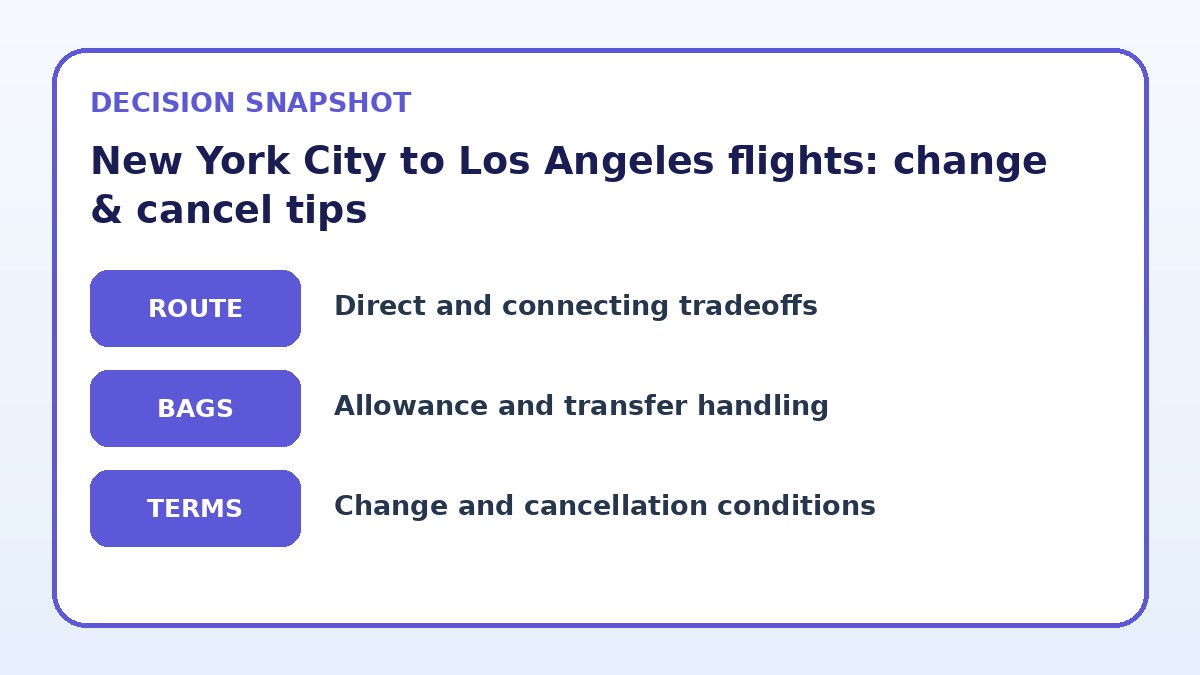
See current options before you compare the details
Availability and final conditions change. Open Trip.com now or keep reading for the practical comparison.
Understand the basic ticket types and what they allow
Airlines typically sell several fare types: basic economy, main cabin/standard, and refundable or flexible fares. Basic economy often has the most restrictions — no seat selection, no upgrades, limited or no changes permitted and often a strict no-refund policy. Main cabin fares usually permit changes for a fee, sometimes plus fare difference; some carriers include one free change in higher-priced main-cabin tiers. Refundable or fully flexible fares are pricier but allow cancellations and changes with fewer or no fees, which can simplify travel for couples who anticipate shifting plans, such as family events or work obligations.
When comparing fares for a couple, look beyond the headline price. One traveler’s need for flexibility doesn’t have to force both passengers into expensive refundable tickets: sometimes booking different fare classes or separate itineraries gives the pair the balance they want. However, separate tickets can complicate checked-bag sharing, seat selection, and schedule protection in the event of delays — carriers rarely protect connections across separate PNRs. On the airline’s final booking page verify exactly which changes are allowed, whether fees are per passenger or per booking, and whether the fare rules permit partial refunds if only one passenger cancels.
How change fees, same-day rebooking, and fare differences work
Two costs combine when you change a ticket: the airline’s change fee (which some carriers have removed for many domestic fares) and any difference in fare between the original and new flight. If you move to a more expensive flight, you will almost always owe the fare difference; if the new fare is lower, some airlines issue a travel credit rather than a cash refund. Same-day confirmed changes — useful if you want to travel earlier or later within the same day — may be free or cheaper, but availability is limited and rules vary by carrier and fare class. Couples should check whether same-day options apply to both passengers and whether seats must be available in the same fare class.
When assessing change risk, think about likely scenarios: minor timing shifts, a cancellation by one partner, or an emergency forcing both to cancel. For minor shifts, low-cost change options or a low-value travel credit may be sufficient. If one partner may need to cancel entirely, confirm whether the airline allows a single-passenger cancellation on a multi-passenger booking without penalties for the remaining traveler. The final booking page should list whether cancellations produce refunds, credits, or require fee payments; it will also show any time limits for requesting changes or refunds.
| Approach | Best for | Tradeoff to check |
|---|---|---|
| Buy refundable fares for both passengers | Couples needing maximum flexibility | Higher upfront cost but straightforward cancellations and refunds |
| Buy one refundable and one restricted ticket | Couples with asymmetric flexibility needs | Reduces cost but complicates joint changes and seat coordination |
| Buy nonrefundable fares plus travel insurance | Couples prioritizing price with some protection | Insurance adds cost and may exclude some cancellation reasons |
| Book separate tickets for each traveler | Couples who plan independent itineraries | Lacks joint protection for missed connections and can complicate baggage and rebooking rules |
Ready to check the option that fits your plan?
Use your exact dates and traveler details so the provider page can show the current total and conditions.
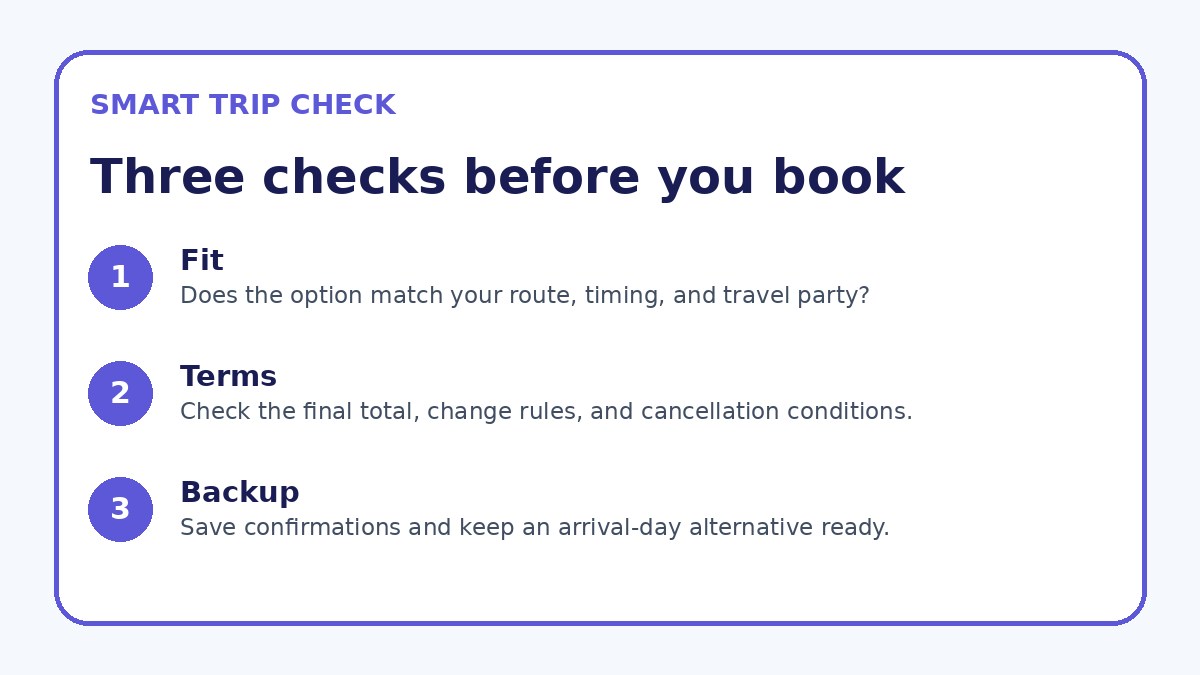
Cancellation policies, refunds, and third-party bookings
Cancellation rules differ widely. Refundable fares will return money to the original form of payment, sometimes minus administrative processing if specified. Nonrefundable fares often offer a travel credit usable for future travel; the credit’s expiration window and permitted uses are set by the carrier. For couples, that distinction matters: if one partner must cancel and the other can still travel, a nonrefundable ticket that converts to a credit may be acceptable. But if both might cancel, a refundable fare or insurance that covers cancellations may be worth the extra cost for peace of mind.
If you book through an online travel agency or a third-party site, confirm whether the agency or the airline handles cancellations and refunds. Some third-party bookings require you to contact the agency to change or cancel, adding an extra step and occasionally service fees. When using a third-party seller, note exactly how refunds are issued and whether the agency’s customer support hours and responsiveness meet your needs. Always verify final change and cancellation fees on the airline’s official booking page and keep screenshots or saved copies of the fare rules and the confirmation email.
Before you book
- Compare the final change and cancellation fee amounts on the airline’s booking page before confirming payment.
- Decide together whether to prioritize refundable fares, flexible bundles, or insurance and document that choice in writing.
- Add both passengers’ contact details and frequent flyer numbers to the PNR to ensure change notifications reach you both.
- If booking through a third-party agent, confirm who processes refunds and whether the agent charges change or cancellation fees.
- Take screenshots or save PDFs of the fare rules, confirmation email, and final booking page that lists change/cancellation terms.
- If you expect one partner to travel earlier or later, ask the airline about partial PNR modifications and any penalties for changing one passenger on a multi-person booking.
Practical couple-focused strategies for booking and managing risk
Decide jointly on a primary risk tolerance: flexibility (higher-cost, refundable options), savings (lower-cost, nonrefundable fares), or a hybrid. For example, one partner can buy a refundable fare while the other chooses a cheaper restricted fare if budgets differ and travel plans are asymmetric. If you expect possible date shifts but want to limit expense, consider main-cabin refundable bundles that include one free change or look for fares where the carrier waives change fees for U.S. domestic routes. Also compare travel insurance policies carefully to ensure they cover the specific reasons you worry about, such as illness, work changes, or family emergencies.
On the day of booking, pay attention to who’s listed as the primary contact and whose frequent flyer numbers are attached: modifications sometimes require the primary contact to authorize changes. Keep both passengers’ contact details on the PNR so both get notifications of schedule updates. Before you confirm payment, review the fare rules on the final airline page: note deadlines to request refunds, whether name corrections are permitted and at what cost, and how credits are issued. Finally, store screenshots or PDFs of the fare rules and your confirmation; if a dispute arises, having the carrier’s published terms at time of purchase makes resolving issues quicker.
Frequently asked questions
Can one person change or cancel their ticket without affecting the other on a joint booking?
Often yes, but it depends on the airline and the fare rules. Many carriers allow changes or cancellations for individual passengers on a booking, charging fees per person. However, some penalties or fare re-pricing can be applied to the itinerary as a whole, particularly if the change disrupts a multi-passenger seat reservation or a group fare. Always review the specific fare conditions on the airline’s final booking page and, if necessary, call the carrier to confirm whether modifying one passenger will affect the other’s reservation or seat assignments.
Should couples buy travel insurance or just pick flexible tickets?
This depends on what you want covered. Flexible or refundable tickets simplify airline changes and refunds, but they rarely protect against things outside the airline’s control, like non-covered medical events or personal emergencies. Travel insurance can cover trip cancellation for covered reasons, medical emergencies, and some other risks, often at lower cost than refundable fares. Read insurance policies carefully — look for coverage limits, excluded reasons, and whether pre-existing conditions are covered. For many couples, a hybrid approach (one flexible fare plus insurance) balances cost and protection.
What should we verify on the airline’s final booking page before paying?
On the final booking page confirm the exact change fees (or whether they are waived), whether fare differences apply, refund eligibility and timelines, and expiration rules for travel credits. Check name-correction policies, whether changes can be made online or require phone support, and whether same-day confirmed changes are permitted. If booking as a couple, verify whether fees are charged per passenger and whether partial cancellations are processed without affecting the other traveler. Save or screenshot this page for proof if policies are contested later.
Final planning note
For couples flying New York City to Los Angeles, the practical choice comes down to how much uncertainty you expect and how you weigh cost against peace of mind. If plans are likely to change, refundable or flexible-fare options reduce friction and financial risk. If you’re confident in dates, mixing a lower-cost fare with insurance or a single flexible ticket can lower expense while retaining some protection. Always read the airline’s final booking page before payment — that’s where exact fees, timing rules, and refund mechanisms are listed. Use the checklist above during booking, save documentation, and consider Trip.com or another comparison tool to spot current options before you confirm.
Continue planning
Check current options and final conditions
Use the provider page to confirm live availability, the final total, cancellation terms, and every condition that matters to your trip.
This evergreen planning guide was created with AI-assisted drafting and a structured quality review. It does not display live prices, schedules, availability, visa guidance, or provider rankings. Verify current details before booking. Some links are affiliate links; we may earn a commission at no additional cost to you.