If you need to book Melbourne to Queenstown flights for business, start with a short, actionable checklist: confirm possible connections, total door-to-door travel time, luggage rules, and any documentation you’ll need. Business trips often hinge on predictable schedules and smooth airport-to-meeting transfers, so prioritize options that minimize transfer risk and allow flexible changes. Use the checklist to compare direct versus connecting itineraries, class and seat availability, loyalty benefits, and arrival logistics in Queenstown—then validate the live details on the airline or booking site's final page. This article lays out exactly what to check before you hit purchase, explains tradeoffs so you can align choices with your meeting priorities, and gives a practical comparison of common decision approaches for business travellers on this Oceania route.
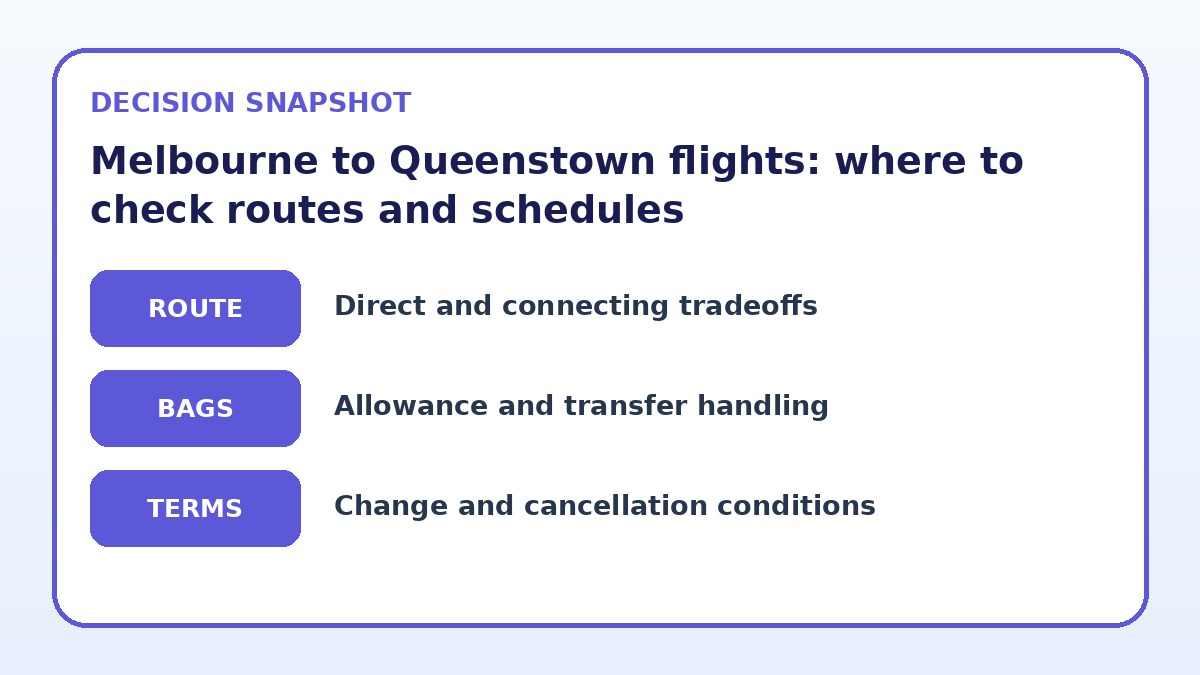
See current options before you compare the details
Availability and final conditions change. Open Trip.com now or keep reading for the practical comparison.
Decide which flight factors matter most for your trip
When booking Melbourne to Queenstown flights for business, clarify your non-negotiables before you search. Are start and end times fixed? Do you need the earliest arrival to reach a meeting, or the latest departure to finish work? Consider whether loyalty program benefits, seat selection, or extra legroom matter. Also weigh the value of refundable or flexible fares versus lower-cost tickets that may restrict changes. Setting these priorities up front makes comparison faster and prevents emotional choices under time pressure.
Once priorities are clear, translate them into measurable criteria: maximum acceptable total travel time, maximum number of connections, minimum transfer cushion, and permitted fare change fees. For example, if on-time arrival is essential, give higher weight to itineraries with fewer connections and longer minimum connection times. If cost sensitivity is higher than flexibility, you might accept tighter connection windows but then build contingency time for meetings. Keep these criteria visible while searching so you can objectively score options.
Compare direct versus connecting options and how to assess risk
Direct flights, when offered, reduce complexity: fewer takeoffs and landings, no change of aircraft, and typically lower chance of missed transfers. But routes with a change can open up better schedules or lower fares. For business travellers, the key is not just flight duration but reliability and recovery options: how easy is it to rebook if a connection is missed, and what alternatives exist the same day? When evaluating connections, look at minimum connection time, whether the connection is within the same terminal or requires transfer, and airline policies on missed connections.
Because schedules and operations can change, do not assume a specific connection will remain stable—verify the connection on the carrier’s final booking page. When a trip is time-sensitive, prefer itineraries booked on a single ticket or within the same alliance where the airline assumes responsibility for missed connections. If you choose separate tickets to save money, factor in the risk that one delay could void your onward flight and leave you responsible for rebooking and extra costs.
| Approach | Best for | Tradeoff to check |
|---|---|---|
| Book the fastest single-ticket itinerary | Time-critical meetings and minimal transfer risk | Likely higher fare and fewer options for cheap alternate times |
| Choose a lower-cost itinerary with connections | Cost-sensitive travellers with flexible schedules | Higher risk of missed connections and longer recovery if delayed |
| Buy a flexible or refundable fare | Uncertain schedules or frequent plan changes | Higher upfront cost that may not be recovered if unused |
| Mix and match separate tickets to save money | Savvy packers who can buffer time and manage disruptions | No airline responsibility for missed onward flights, extra ground risk |
Ready to check the option that fits your plan?
Use your exact dates and traveler details so the provider page can show the current total and conditions.
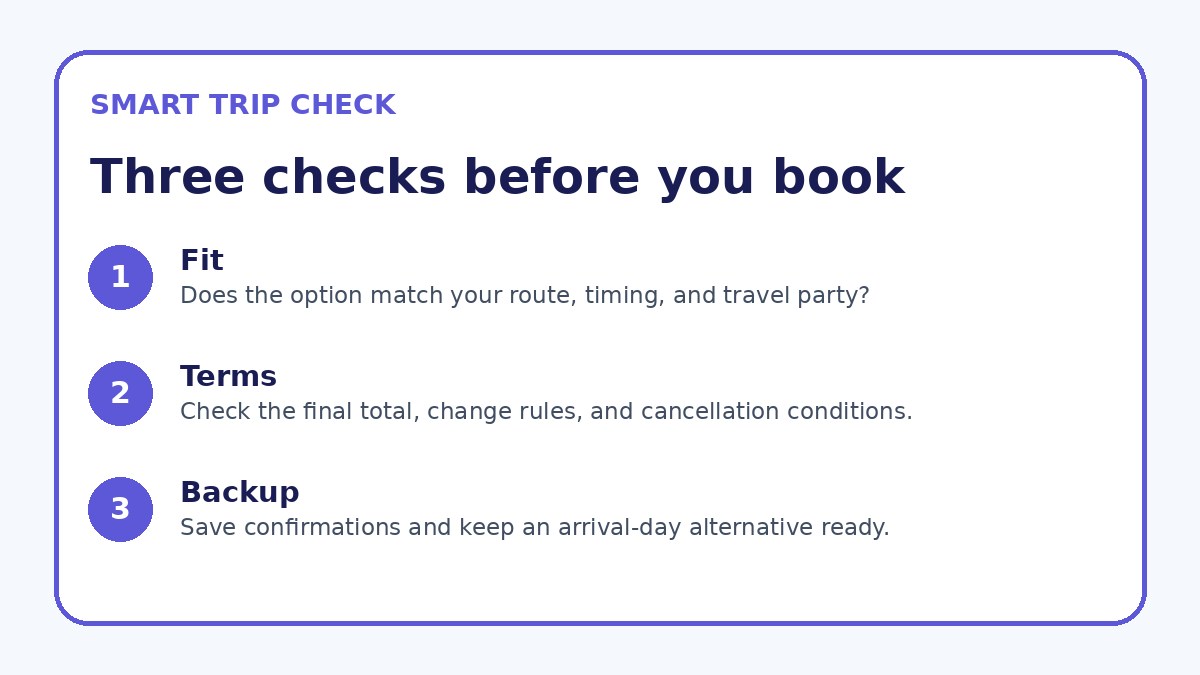
Practical checks for fares, seats, and baggage rules
Fare classes and baggage allowances differ widely and often determine the total cost and convenience of a business trip. Before booking, read the fare rules on the airline’s booking page: what is allowed for carry-on and checked bags, what fees apply for extra weight, and what change or cancellation options exist. For travellers relying on fast turnarounds, confirmed overhead bin space (e.g., priority boarding) and advance seat selection can be worth the extra fare. Also check whether seat changes are allowed without penalty and how changes are handled if your itinerary is reissued.
If you travel with specialised equipment or need guaranteed checked weight, confirm those specifics before purchase. Business travellers who prefer to travel light should still verify carry-on size and whether a personal item is separate from a bag allowance. Frequent flyers should check how crediting the flight will work with their loyalty program and whether upgrades or lounge access can be booked in advance. Always confirm the live baggage and seat policies on the final provider page before completing payment.
Before you book
- Confirm total door-to-door travel time including expected transfer, transit to/from airports, and any required check-in or security windows.
- Compare direct versus connecting itineraries and note the number of connections, minimum connection times, and whether transfers require terminal changes.
- Read fare rules on the carrier’s final booking page: change/cancellation fees, rebooking policies, and any restrictions on refunds or credits.
- Verify baggage allowances and fees for both carry-on and checked luggage on the airline’s live booking page before selecting a fare.
- Check seat availability, upgrade options, and priority boarding—book seats that meet your work needs (power access, aisle/window, extra legroom) if important.
- Plan final-mile logistics in Queenstown: arrange transfers or estimate taxi/rideshare times, confirm pickup points, and allow buffer time for unexpected delays.
Arrival logistics in Queenstown and last-mile planning
Queenstown is known for compact geography but variable travel options from the airport to town and business venues. Before booking, plan the ground leg: how long taxi, shuttle, or rideshare typically takes, whether pre-booking is needed for transfers, and where business hotels cluster relative to the terminal. Consider arrival time versus hotel check-in and the proximity of your meeting location. For early-morning meetings, arriving the day before and prioritizing a late-evening flight into Queenstown may be less risky than a tight onward connection.
Also check what facilities you’ll need on arrival—car hire desks, meeting-friendly lounges, or fast-track immigration—and confirm availability with providers. If you have luggage that requires special handling, verify baggage claim procedures. When logistic details are provider-specific or time-sensitive, validate them on the operator’s final booking page; local transfer operators and accommodation sites will list exact pickup points, operating hours, and any advance-reservation requirements.
Frequently asked questions
Should I prioritize a direct flight when travelling from Melbourne to Queenstown for a tight business schedule?
If arrival reliability and minimizing transfer complexity are critical, a direct flight (if available) usually reduces one significant layer of risk: no aircraft change and fewer points of delay. But a direct option might not match your preferred times or could be less frequent. If direct service isn’t practical, choose a single-ticket connecting itinerary with generous connection time and operated by the same airline or alliance so rebooking responsibility is clearer. Always verify connection details and recovery policies on the airline’s final booking page.
How can I balance cost savings with the need for schedule flexibility on this route?
Balancing cost and flexibility requires ranking how much you value each. If flexibility is essential, allocate budget to fares with free or low-cost changes and consider refundable options. If cost is paramount, you can accept stricter rules but add buffer time around connections and meetings. Another middle path is buying a lower fare but adding a seat selection or priority boarding to reduce stress. Before booking, compare total expected out-of-pocket costs—fares plus likely baggage or change fees—and confirm the fare rules on the final provider page.
What practical steps should I take the day before travel to reduce the chance of disruptions?
The day before departure, reconfirm your flight status with the carrier, check-in online, and confirm seats and any special requests. Reprint or download boarding passes and ensure digital copies of travel documents are accessible. Verify ground transfers and pickup points in Queenstown and reconfirm with the transfer operator if pre-booked. Also prepare contingency time for delays—pack essential work items in your carry-on and save contact numbers for your airline and local transfer provider. For final operational details and last-minute policy changes, check the airline’s booking page and Trip.com or the carrier app.
Final planning note
A focused pre-booking checklist makes Melbourne to Queenstown flights manageable for busy business travellers. Start by defining what you cannot compromise—arrival time, number of connections, or fare flexibility—then compare itineraries using those priorities. Always read fare rules, baggage policies, and connection responsibilities on the airline’s final booking page before you pay, and plan last-mile transfers in Queenstown to ensure timely arrival at meetings. Use the checklist to make tradeoffs explicit: faster direct options reduce connection risk, while cheaper or mixed-ticket routes require more buffer time. With these checks in place, you’ll book an itinerary aligned with both your schedule and acceptable risk level.
Continue planning
Check current options and final conditions
Use the provider page to confirm live availability, the final total, cancellation terms, and every condition that matters to your trip.
This evergreen planning guide was created with AI-assisted drafting and a structured quality review. It does not display live prices, schedules, availability, visa guidance, or provider rankings. Verify current details before booking. Some links are affiliate links; we may earn a commission at no additional cost to you.