If you’re booking Melbourne to Queenstown flights as a solo traveller, the practical priority is choosing a fare and booking path that balances flexibility, cost, and peace of mind. Start by deciding how likely your travel dates are to shift and whether you value refundable tickets, flexible change allowances, or minimal upfront cost with a buy-up option for flexibility later. Check the airline or travel agent’s stated change and cancellation rules, then confirm those terms at the point of payment: who pays the fare difference, whether credit or refund applies, and any time limits or fees. Also verify baggage and seat-change consequences tied to refunds or ticket types. Finally, compare direct vs connecting options for their separate change policies: connecting itinerary disruptions often follow the rules of the booking carrier, not simply the operating carriers. Following the steps below helps you make a confident booking decision without relying on assumed protections.
See current options before you compare the details
Availability and final conditions change. Open Trip.com now or keep reading for the practical comparison.
Understand the different flexibility options
Airlines and booking channels typically offer a few distinct approaches to flexibility: refundable tickets, flexible-change fares with no or reduced fees, non-refundable fares with paid-change options, and post-purchase add-ons like travel credits or cancellation protection. Refundable tickets provide the fewest surprises but often cost significantly more up-front. Flexible-change fares may remove change fees but still require you to pay any difference in fare if the new ticket is more expensive. Non-refundable fares can be the cheapest initially but can leave you with vouchers or little recourse if you cancel, so examine what form of credit (airline credit, travel credit, or value valid only on the same carrier) you would receive.
Add-on protections sold at booking—such as cancellation insurance or ‘flex’ products—vary in scope. Some allow cancellations for any reason and issue refunds less fees, while others only permit date changes. Read the policy terms: look for exclusions (medical, strikes, or government restrictions), whether refunds are to the original payment method or as travel credit, and the time window to request a change or refund. If you use a third-party travel agent or aggregator, confirm which policy applies: the airline’s terms usually govern, but agents may add their own service fees or processes for handling changes.
Comparing direct and connecting itineraries
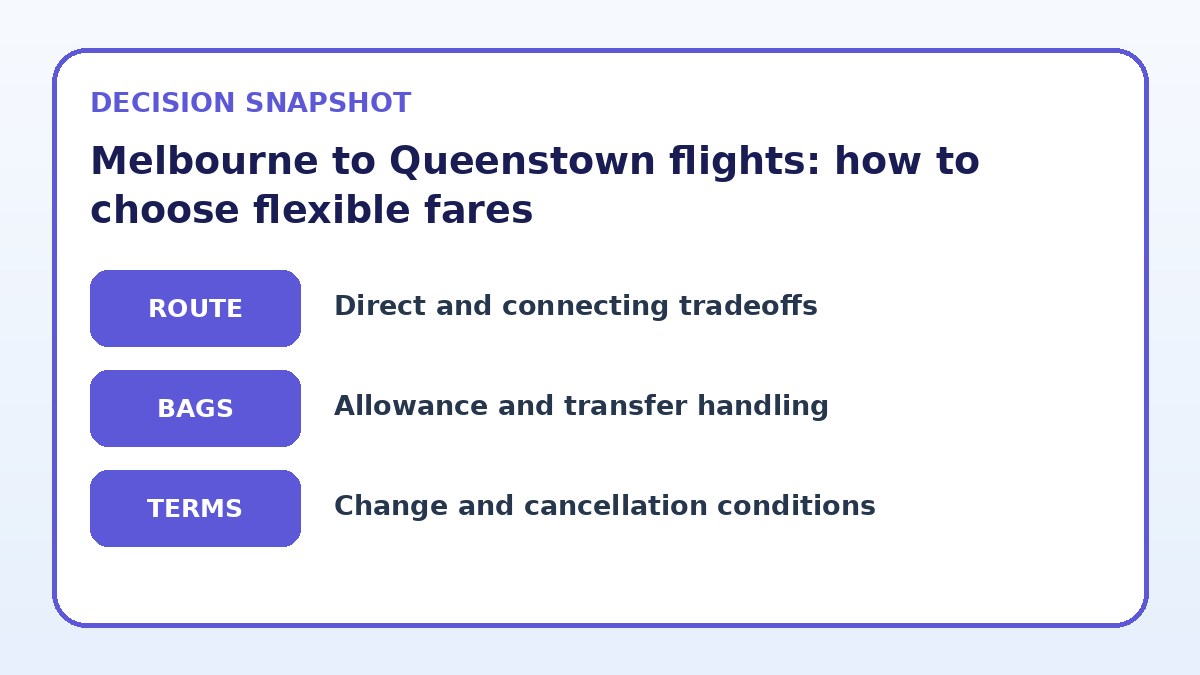
Direct flights simplify change and cancellation decisions because you typically deal with one operating and contracting carrier and one set of fare rules. If a direct service is available, its fare class and airline rules largely determine your options. Connecting itineraries introduce complexity: if both legs are on a single ticket issued by one carrier, that carrier’s terms usually control the entire booking. But if you assemble legs separately (separate tickets), each leg has its own rules and changing one segment may not protect you for missed connections. As a solo traveller, weigh the convenience of a direct flight against potential higher costs for flexible fare classes.
When comparing options, inspect the booking flow for who issues the ticket and whose contract of carriage is referenced in the fare rules. If different carriers operate legs on the same ticket, look for interline or codeshare language that clarifies transfer protections, rebooking procedures, and baggage transfer. Also check minimum connection times and the provider’s policy for rebooking missed connections due to earlier flight delays—these operational protections can be just as important as change fees if you prefer tight connections to save time.
| Approach | Best for | Tradeoff to check |
|---|---|---|
| Buy refundable fare | Travellers who want minimal hassle if plans change | Higher upfront cost compared with non-refundable tickets |
| Choose flexible-change fare | Those who expect likely date tweaks but not full cancellations | May still require paying any fare difference on rebooking |
| Non-refundable fare with add-on protection | Budget-conscious travellers who want limited backup cover | Protection terms can be restrictive and vary by provider |
| Assemble separate legs on sale fares | Experienced solo travellers comfortable managing rebookings | Little to no protection for missed connections or disruptions |
Ready to check the option that fits your plan?
Use your exact dates and traveler details so the provider page can show the current total and conditions.
What to verify on the provider’s final booking page
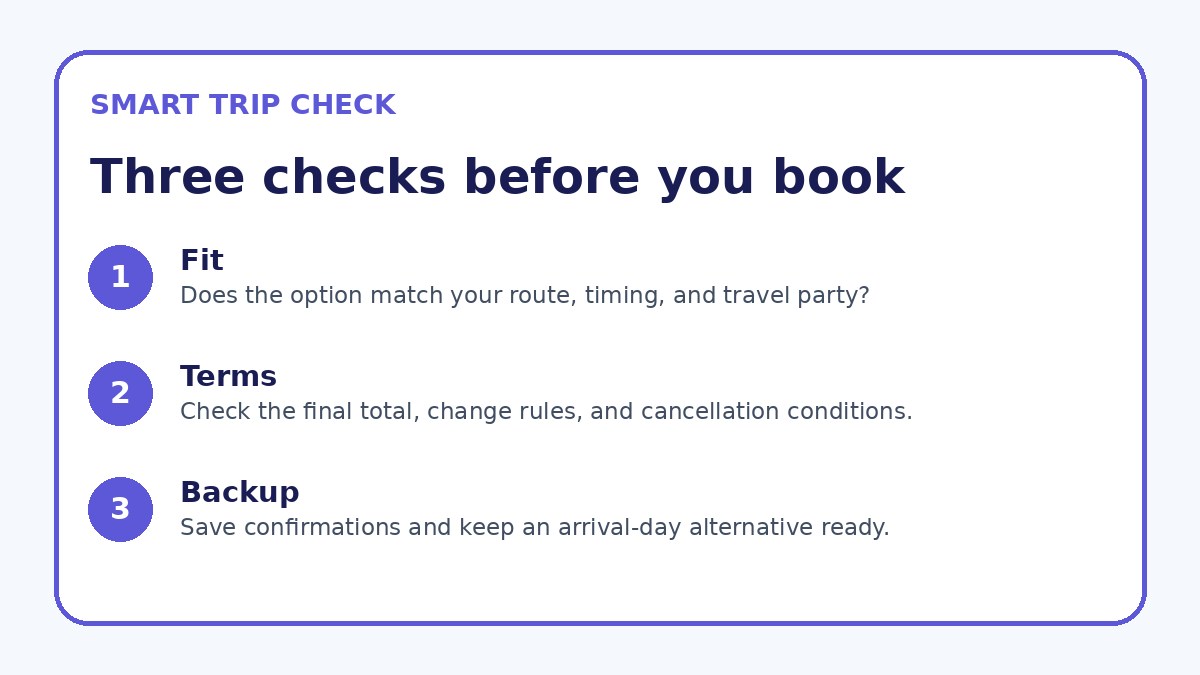
Before you hit pay, verify specific elements on the booking confirmation page: the exact fare class, any listed change or cancellation fee, how refunds are processed (credit vs cash), and whether taxes or service fees are non-refundable. Look for explicit language about whether changes are allowed up to departure, whether same-day changes exist and their cost, and whether unused portions of a ticket convert to travel credit. If an add-on (like seat selection or baggage) is non-refundable, that should be stated as well. Save or screenshot the booking page that lists these rules; it’s your immediate record if a dispute arises.
If you booked through an online travel agent or aggregator, confirm whether changes must be requested through that agent or directly with the airline. Agents sometimes have their own change fees or processing windows. Where policy language is ambiguous on the page, call the airline or agent and confirm the same terms in writing (email or chat transcript) before finalizing the purchase. Trip.com can be used as one place to compare current availability and conditions, but always confirm the final fare rules and refund processes shown on the carrier’s or seller’s checkout page.
Before you book
- Screenshot the fare rules and change/cancellation text on the final booking page before you pay.
- Confirm who issued your ticket and which carrier’s policy governs changes and refunds.
- Ask the seller to email or chat-confirm any verbal promises about waivers or special conditions.
- Compare the incremental cost of a flexible fare versus buying a cheaper fare plus add-on protection.
- If booking connecting flights, verify whether the itinerary is on one ticket and whether baggage is through-checked.
- Retain booking reference and vendor contact details and note the deadline for requesting changes or refunds.
Decision tradeoffs for solo travellers
As a solo traveller you balance flexibility with cost and your appetite for administrative hassle. If you expect high schedule certainty—fixed dates, few layover concerns—opting for a lower-cost non-refundable fare and accepting limited change options can be sensible. If your plans are fluid, flexible-change fares or refundable tickets reduce exposure to unexpected changes, and they save the stress of negotiating credits after a cancellation. Another option is to buy a non-refundable fare and then add cancellation protection or travel insurance that specifically covers ticket changes and trip interruption; compare the extra fare cost against the insurance premium to find the cheapest way to retain your preferred level of flexibility.
Think about non-ticket factors too: if you value a single seamless booking and protected connections, prefer through-ticketing with a single carrier even if the fare is slightly higher. If you’re comfortable handling separate legs and you can accept the risk of missing a connection, separate tickets sometimes lower costs but increase personal responsibility for rebooking. Decide what you value most—lower upfront cost, simple customer service, or maximum flexibility—and make your booking choice based on that priority rather than assuming policies are uniform across flights or agents.
Frequently asked questions
If I buy a cheap non-refundable ticket from Melbourne to Queenstown, can I still change my dates?
Many non-refundable tickets permit date changes but usually charge a change fee plus any fare difference. Policies vary widely between carriers and fare classes. Some sellers convert cancellations to travel credit rather than cash refunds. Before booking, read the exact fare rules on the checkout page to see if changes are allowed, how fees are calculated, and whether credits expire. If the booking path is through an agent, confirm whether they impose extra processing fees on top of the airline’s charges.
What happens to baggage, seats, or add-ons if I cancel or change my flight?
Add-ons such as checked baggage, seat selection, or priority boarding often follow the original ticket terms and may not be automatically refunded if you cancel—some carriers refund these, others do not. For changes, your purchased extras may need to be rebooked or paid again under the new fare conditions. Check the provider’s add-on refund policy on the final booking page and keep proof of purchase. If protection was purchased for the trip, verify whether it explicitly covers ancillary fees as well as the base fare.
Is booking through an online agent different from booking directly with the airline for changes and refunds?
Yes. When you book through an agent, the airline’s contract of carriage usually still governs your flight, but the agent may have its own service fees, different timelines for processing changes, and its own cancellation terms. Some agents handle rebooking for you, others require you to contact the carrier directly. Always check both the agent’s stated policies and the airline’s fare rules at checkout, and keep any confirmation emails that show which party is responsible for change handling.
Final planning note
For solo travellers booking Melbourne to Queenstown flights, the most useful action is to match your risk tolerance to the fare rules you actually see at checkout. Choose a refundable or flexible fare if date certainty is low and you prefer straightforward refunds; choose cheaper non-refundable options if your schedule is firm and you’re comfortable with add-on protections. With connecting itineraries, prioritise through-ticketing for protection and verify who handles rebooking. Always save the exact terms from the booking page, confirm any verbal promises in writing, and weigh the incremental cost of flexibility against the potential financial and logistical headache of changing plans later.
Continue planning
Check current options and final conditions
Use the provider page to confirm live availability, the final total, cancellation terms, and every condition that matters to your trip.
This evergreen planning guide was created with AI-assisted drafting and a structured quality review. It does not display live prices, schedules, availability, visa guidance, or provider rankings. Verify current details before booking. Some links are affiliate links; we may earn a commission at no additional cost to you.