
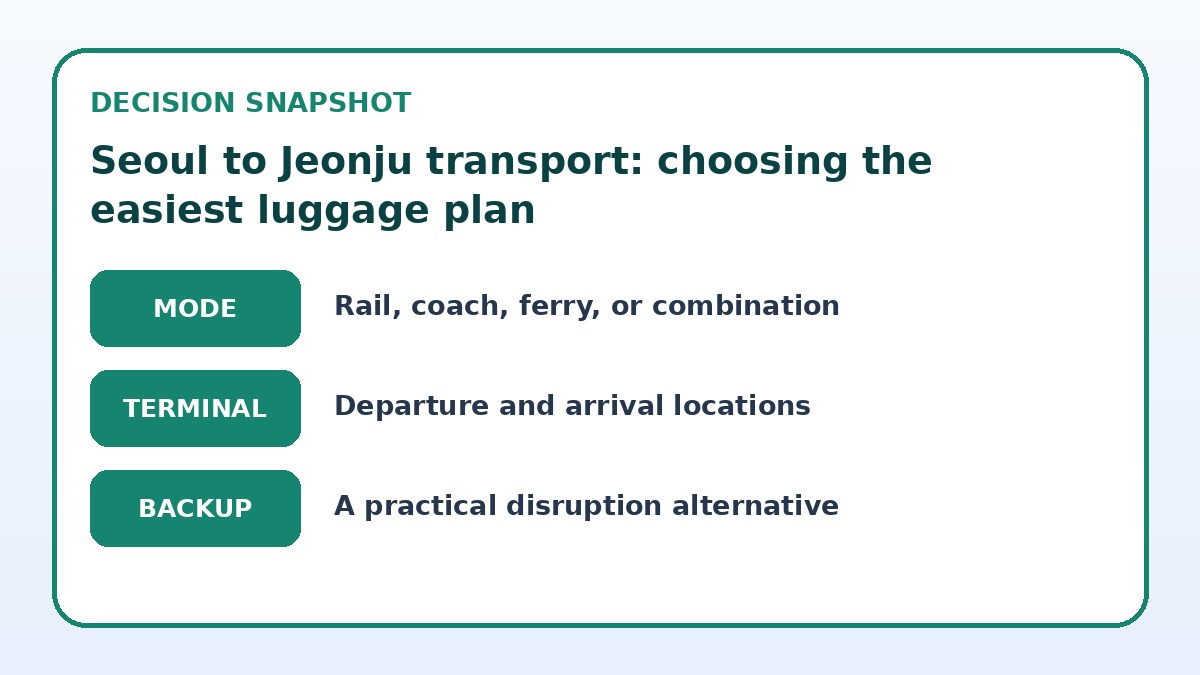
If you’re traveling from Seoul to Jeonju with extra luggage, pick the option that lowers handling and transfers: a direct intercity train or express bus with easy station access, or a private transfer if you must avoid stairs and crowded platforms. Decide first whether you prioritize fewer handlings, lower cost, or schedule flexibility. Once that priority is set, compare door-to-door time, how luggage is stored at stations, and whether a reservation includes space for bulky bags. For any provider you consider, check the operator’s baggage rules, how they handle oversized items, and whether additional booking steps are required for large suitcases. Use the following practical checklist and comparison framework to prepare the travel day so your Seoul to Jeonju transport goes as smoothly as possible.
See current options before you compare the details
Availability and final conditions change. Open Trip.com now or keep reading for the practical comparison.
Choose the right mode for luggage: train, bus, or private transfer
For travelers carrying extra or bulky luggage, the primary decision is how many times you want to move the bags. Trains can offer large luggage racks or designated storage areas near doors, but require navigating station concourses and platforms. Express buses may have large underfloor bays where you hand your bags to a loader — that reduces carrying but means you won’t control the bag during the journey. Private transfer services, from taxis to booked minivans, offer door-to-door convenience and minimal handling, but they can be less predictable in traffic and often cost more than public options.
When comparing modes, think about the walk distance between where you are staying and the departure point, plus the arrival station to your final accommodation in Jeonju. If your hotel is close to Seoul Station or a convenient bus terminal, a train or bus becomes more attractive. If you’re starting from a small apartment with stairs or tight corners, arranging a vehicle that loads at your door is likely worth the added expense. Whatever you pick, verify baggage rules and how oversized items are treated on the provider’s booking page before you commit.
Pack, label, and stage luggage to speed the transfer day
Reduce friction by grouping items and labeling every bag with your name, phone, and both origin and destination addresses in English and Korean if possible. Pack a small ‘day bag’ with essentials, medication, and documents you’ll keep with you so you do not need to open main suitcases mid-journey. If you have multiple suitcases, consider bringing collapsible straps or a luggage belt to join bags together for easier rolling; this is especially useful when elevators are tight or you must move between platforms quickly.
Staging luggage the night before saves time: charge electronics, empty trash, and put travel documents where you can reach them without unpacking. Photograph each bag and its contents list — photographs can be useful if a piece is lost or needs inspection. Also prepare small repairs: a roll of duct tape, a basic zip repair kit, and an extra lock make it less likely a snag becomes a major delay on travel day.
| Approach | Best for | Tradeoff to check |
|---|---|---|
| Direct intercity train | Travelers who want fewer transfers and secure on-board storage | Requires walking through stations and possible stair use to reach platforms |
| Express bus with underfloor baggage | People who prefer handing luggage to staff and minimal in-vehicle clutter | You don’t control the bag during transit and loading can take extra time |
| Private transfer or taxi | Door-to-door service with minimal handling for bulky or irregular items | Higher cost and vulnerability to road traffic delays |
| Split approach (transfer + luggage forward service) | Those combining speed with reduced carrying by sending bags separately | Extra coordination and potential wait or pickup steps at destination |
Ready to check the option that fits your plan?
Use your exact dates and traveler details so the provider page can show the current total and conditions.
Navigate Seoul stations and transfer hubs with heavy bags
Major stations in Seoul can be large and have multiple levels, so map the route within the station before you go. Identify elevators, staffed help desks, and luggage trolley rental points where available. Allow extra time for ticket lines, security checks, and any steps between platforms; elevators and ramps may be limited during peak hours, so factor in possible waits. If you need assistance, station staff and platform attendants can often help with large suitcases, but confirm whether any extra fees or reservations are needed for oversized items.
At bus terminals, learn where to drop off and pick up baggage: many terminals load bags into underfloor compartments handled by terminal staff. Stay with your bag until it is accepted and tagged, and keep the claim stub in your pocket. If you transfer between a train and bus, plan the layout and walking distance between the two terminals, and give yourself buffer time so a delayed connection doesn’t force rushed handling of multiple bags.
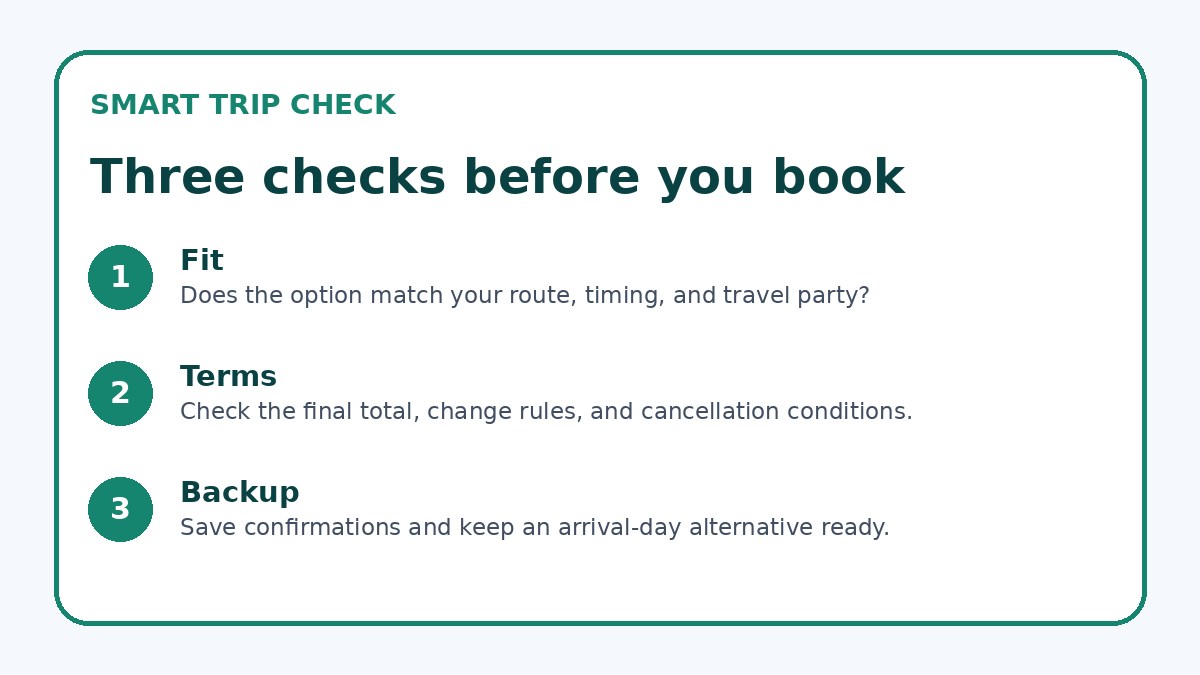
Before you book
- Measure and photograph every suitcase; keep the dimensions and an image saved on your phone and printed copy.
- Confirm baggage size and booking rules on the carrier’s official page and request written confirmation for oversized items.
- Book a seat or transfer time that allows at least 30–60 minutes buffer for station navigation and luggage handling.
- Label each bag in English and Korean, and put a small daypack with essentials in your carry-on.
- Reserve or request a vehicle large enough for all suitcases for door-to-door transfers and confirm pickup details.
- Print or screenshot booking confirmations, baggage claim tags, and the operator’s contact number for easy access.
Booking tips and what to verify on the provider page
When you book, read the provider’s baggage policy carefully and look for information on size, weight limits, and how oversized bags are managed. Check whether a reservation includes a luggage reservation or if you must book an extra space. Also verify refund and rebooking terms in case your schedule shifts. For private transfers, confirm the vehicle size and how many large suitcases it can take; when in doubt, request a larger vehicle and get the confirmation in writing.
Don’t rely solely on third-party summaries: always confirm details on the carrier or operator’s final booking page, including pickup points, allowed luggage dimensions, and any additional handling fees. Trip.com can be used as one place to compare options and current availability, but cross-check the operator’s own terms before you finalize plans. Finally, keep digital and printed copies of your booking, claim tags, and the operator’s contact number to resolve any luggage issues quickly on the travel day.
Frequently asked questions
Can I take oversized suitcases on trains between Seoul and Jeonju?
Many train services allow large suitcases but treat them differently depending on carriage layout and platform access. Before you book, check the operator’s baggage policy on their official booking page for any size or weight limits and whether oversized items require reservation. Also confirm if there are dedicated storage areas, whether staff can help on platforms, and whether there are fees. If the policy isn’t clear, contact the operator directly and ask how they handle irregular-sized items to avoid surprises on travel day.
Is it safer to put my luggage in bus underfloor compartments or keep it on a train?
Both have pros and cons. Underfloor bus compartments reduce the need to carry heavy bags through stations, and terminal staff typically load and tag your items; however, you won’t have direct control over the bag during transit. Trains often offer onboard storage near doors and luggage racks where you can keep an eye on your bags, but reaching those spots may involve more walking and stairs. Choose based on whether you prefer minimal carrying or visual control during the journey, and verify handling practices with the operator beforehand.
How much extra time should I allow at Seoul departure points when traveling with many bags?
Give yourself significantly more time than usual because elevators, ticket counters, luggage trolleys, and security lines can add delays. A sensible approach is to add at least 30 to 60 extra minutes beyond standard arrival advice, especially during peak travel periods or if you must change platforms. Also factor in time to tag and hand over underfloor luggage at bus terminals or wait for station staff assistance. If your trip depends on a tight connection, consider an earlier booking or a private transfer to reduce risk.
Final planning note
Traveling from Seoul to Jeonju with extra luggage is perfectly manageable with a bit of planning. Decide first whether you value fewer handoffs, lower cost, or door-to-door convenience, then match your choice to the practicalities of station layouts, baggage policies, and your own mobility. Measure and label bags, stage them the night before, and verify all baggage rules on the provider’s booking page — don’t rely only on third-party summaries. If convenience matters most, book a vehicle that loads at your door; if cost or schedule drives your choice, select a train or bus after confirming oversized item procedures. A clear plan and the right confirmations make the travel day far less stressful and keep your extra luggage under control.
Continue planning
Check current options and final conditions
Use the provider page to confirm live availability, the final total, cancellation terms, and every condition that matters to your trip.
This evergreen planning guide was created with AI-assisted drafting and a structured quality review. It does not display live prices, schedules, availability, visa guidance, or provider rankings. Verify current details before booking. Some links are affiliate links; we may earn a commission at no additional cost to you.