
If you need to travel from Melbourne to Adelaide for work, the practical priorities are simple: choose the transport mode that matches your schedule, prepare the travel day to protect meeting time and focus, and verify the last-mile details so you arrive on time. Business travel often hinges on small margins—how long security or transfers take, whether you can work en route, and how reliable local transit is at your destination. This guide walks you through the decisions to make on the booking page and the actions to take the day before and the morning of travel. It focuses on realistic tradeoffs—cost versus convenience, speed versus reliability, and flexibility versus fixed schedules—so you can arrive ready for your meeting, presentation or client visit.
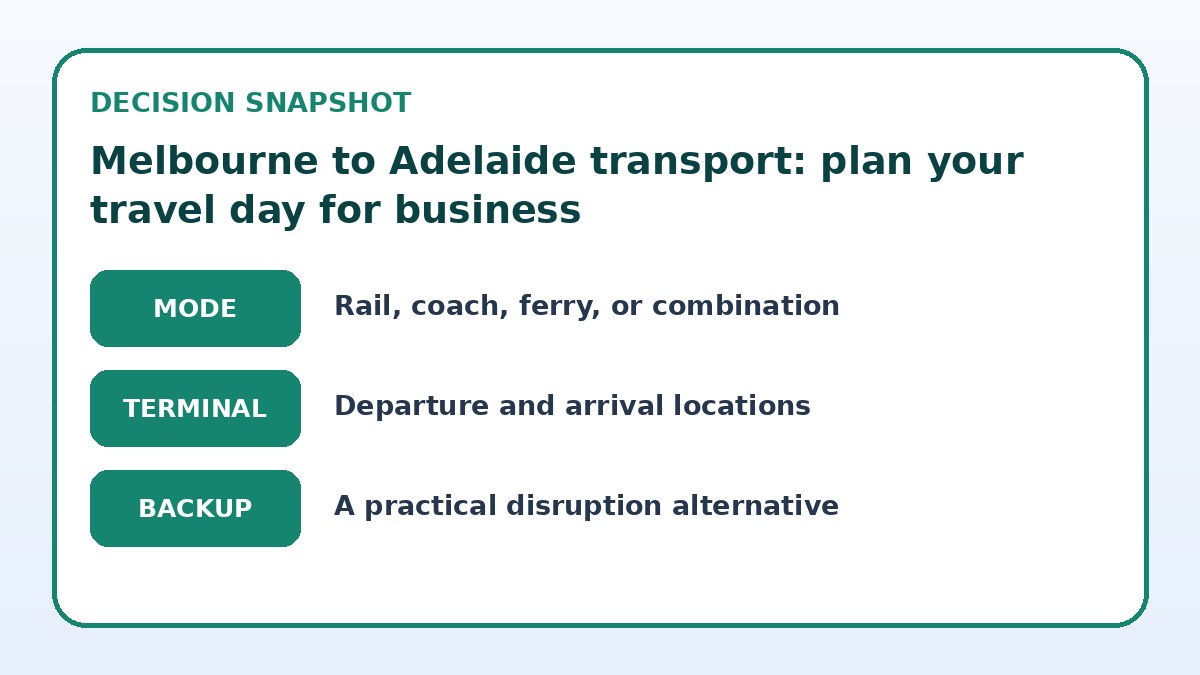
See current options before you compare the details
Availability and final conditions change. Open Trip.com now or keep reading for the practical comparison.
Choosing the transport approach for your schedule
Start with what matters for the day: do you need to minimize door-to-door time, guarantee uninterrupted work time, or control costs? A faster scheduled service may still require longer transfers; a slightly slower option could give predictable checkpoint timings and reliable onboard working conditions. Compare typical end-to-end scenarios rather than headline travel times: include transfer time to and from stations or airports, expected security and check-in margins, and local traffic variability when driving.
When comparing direct versus connecting options, consider the consequences of delays. Direct services reduce connection risk but can have fewer departure times; connecting flights or trains may offer greater schedule flexibility but increase the chance of missed connections. For many business trips, a single reliable departure time that aligns with meeting windows and offers easy last-mile options will be preferable to a marginally faster itinerary with uncertain transfers. On booking pages, verify whether an option is direct or requires changes and confirm minimum connection times.
Preparing the travel day: timing and buffer planning
Build buffers into both departure and arrival. Aim to arrive at your departure hub early enough to handle unexpected lines, check-in or domestic security checks, and a brief work or call session if needed. At the other end, allow extra time for luggage, customs if relevant, and ground transport to your meeting. For meetings scheduled soon after arrival, choose a departure that leaves ample margin rather than relying on optimism about traffic or on-time departures.
Use realistic buffer rules: shorter city-to-city hops can tolerate smaller margins than longer or international itineraries. If you plan to work on the travel day, factor in transition time—getting your devices packed, connected, and focused again on arrival can take 20–45 minutes. Reserve additional buffer if you need to print materials, change clothes, or brief a local colleague before a meeting. When booking, check the provider’s cancellation and change policies so you can adjust if the meeting time moves.
| Approach | Best for | Tradeoff to check |
|---|---|---|
| Direct scheduled service (train or flight) | Minimizing connection risk and simplifying timing | Fewer departures and possibly higher local transfer time |
| Connecting options with flexible times | More departure choices and potentially lower fares | Increased chance of missed connections and tighter buffers |
| Drive or car hire | Door-to-door control and on-demand stops | Variable traffic and added responsibility for navigation and parking |
| Mixed-mode (train+ride-share or flight+train) | Balancing speed with reliable last-mile access | More segments to coordinate and more potential points of delay |
Ready to check the option that fits your plan?
Use your exact dates and traveler details so the provider page can show the current total and conditions.
Work setup, connectivity, and productivity en route
Decide what you must accomplish while traveling and prepare a compact, resilient kit for it. Prioritize essentials: a fully charged laptop with power-saving settings and a light charger, a high-capacity power bank, reliable earbuds, and necessary documents in digital and offline formats. If you expect long stretches without reliable Wi-Fi, download files and set up local copies of presentations. For phone calls, a small headset with noise-cancellation and an external battery can keep you connected through transfers and transit.
Check connectivity options before you travel: some trains and airports offer reliable Wi-Fi, others do not. If uninterrupted internet is essential, plan for a mobile data fallback or a portable hotspot, and verify roaming/data costs with your provider. Consider whether you need to avoid background syncs or large uploads that will strain limited bandwidth. Lastly, plan micro-tasks for short windows—emails, quick notes, or call prep—so you use fragmented time efficiently and keep high-focus work for stable, quiet periods.
Before you book
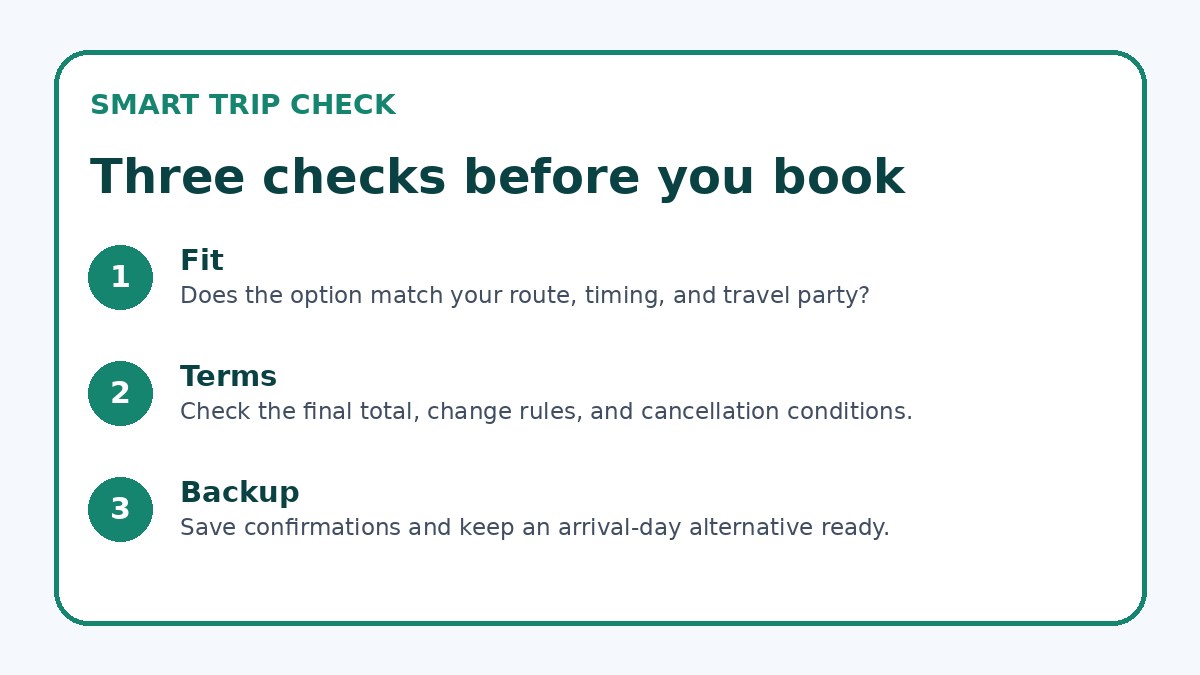
- Confirm whether your chosen itinerary is direct or requires transfers and note the minimum connection times shown on the booking page.
- Check pickup and drop-off addresses, rideshare coverage, and walking distances from stations or terminals to your meeting or hotel.
- Charge and test all essential devices and pack a power bank and necessary cables in your carry-on.
- Download critical documents, presentations and contact details for offline access in case of poor connectivity.
- Block buffer time on your calendar for transit, arrival reset, and unexpected delays before the meeting starts.
- Verify change and cancellation policies on the provider’s booking page so you can adjust if flight or train times change.
Last-mile logistics: arriving ready for the meeting
Prioritize how you’ll travel from arrival point to your meeting or hotel. Confirm rideshare availability at the arrival station or airport, check scheduled shuttle services, and note typical pick-up points and walking routes. If your meeting location is in the city center, public transit can be reliable and often faster than road transport during peak hours; if it’s across town or with heavy equipment, a private car may be a better choice despite higher cost.
Reserve contingency plans: pre-bookable rides, flexible hotel check-in, or a nearby coworking or lounge space to refresh if you arrive earlier than the meeting time. Communicate arrival windows with meeting participants so they can adapt if you are delayed. On booking pages and transport provider sites, verify exact pickup locations, baggage rules, and any travel time disclaimers that affect your final onward transfer.
Frequently asked questions
What’s the most reliable way to get from Melbourne to Adelaide for an important meeting?
Reliability depends on where you need to be and how sensitive your schedule is to transfers. A single direct service (train or flight) with straightforward ground transfers is usually the least complex: fewer hands-off segments mean fewer things that can go wrong. Evaluate end-to-end reliability by adding expected transfer time, typical traffic or local transit performance, and whether the departure hub is prone to delays. On the booking confirmation, check whether the option is direct and read the provider’s guidance on connection recommendations.
How much buffer should I allow when scheduling a meeting soon after arrival?
For domestic city-to-city business travel, a conservative buffer is typically 60–120 minutes from arrival to a meeting in the same urban area, depending on baggage and transfer needs. If you must change clothes, print materials, or travel across town, use the upper end of that range. Short hops with checked luggage or multiple transfers merit extra cushion. Tailor the buffer for local traffic patterns at the expected arrival time—rush-hour arrivals usually need significantly more margin.
Can I reliably work on trains or planes when traveling between cities?
You can get effective work done if you prepare: ensure your devices are charged, have a portable power option, and use offline copies of essentials in case Wi-Fi is unreliable. On trains, table space and power vary—choose a seat with access and bring a small laptop stand if you need ergonomic support. On planes, turbulence and tray table size limit tasks; focus on review, writing or calls if permitted. Always test conference calls and VPN access before departure and have a phone-based fallback for critical calls.
Final planning note
Preparing a business travel day from Melbourne to Adelaide is about pragmatic decisions: choose the transport mode that best matches your schedule and risk tolerance, add realistic buffers, and set up a compact, dependable work kit. Focus on end-to-end timing—transfers, local traffic and meeting logistics matter as much as the headline travel time. Verify directness, connection requirements and ground transfer details on the provider’s booking page before you finalize anything, and plan a contingency ride or a flexible check-in option at your destination. With those elements checked, you’ll reduce stress and increase the chance of arriving on time and ready to perform.
Continue planning
Check current options and final conditions
Use the provider page to confirm live availability, the final total, cancellation terms, and every condition that matters to your trip.
This evergreen planning guide was created with AI-assisted drafting and a structured quality review. It does not display live prices, schedules, availability, visa guidance, or provider rankings. Verify current details before booking. Some links are affiliate links; we may earn a commission at no additional cost to you.