
If you’re travelling solo from Melbourne to Adelaide with more than a carry-on, focus first on three practical choices: choose a booking you can easily check baggage for, plan transfers and last-mile logistics around luggage handling, and pick transport that aligns with how much you want to carry and lift. Trains and coaches often make managing big suitcases simpler because you can stow them in dedicated luggage bays or under-seat spaces; flights can be quickest but add check-in and security steps; driving gives you full control but adds loading and parking decisions. This article helps you weigh the trade-offs, identify what to verify on booking pages, and decide the most luggage-friendly option for your trip.
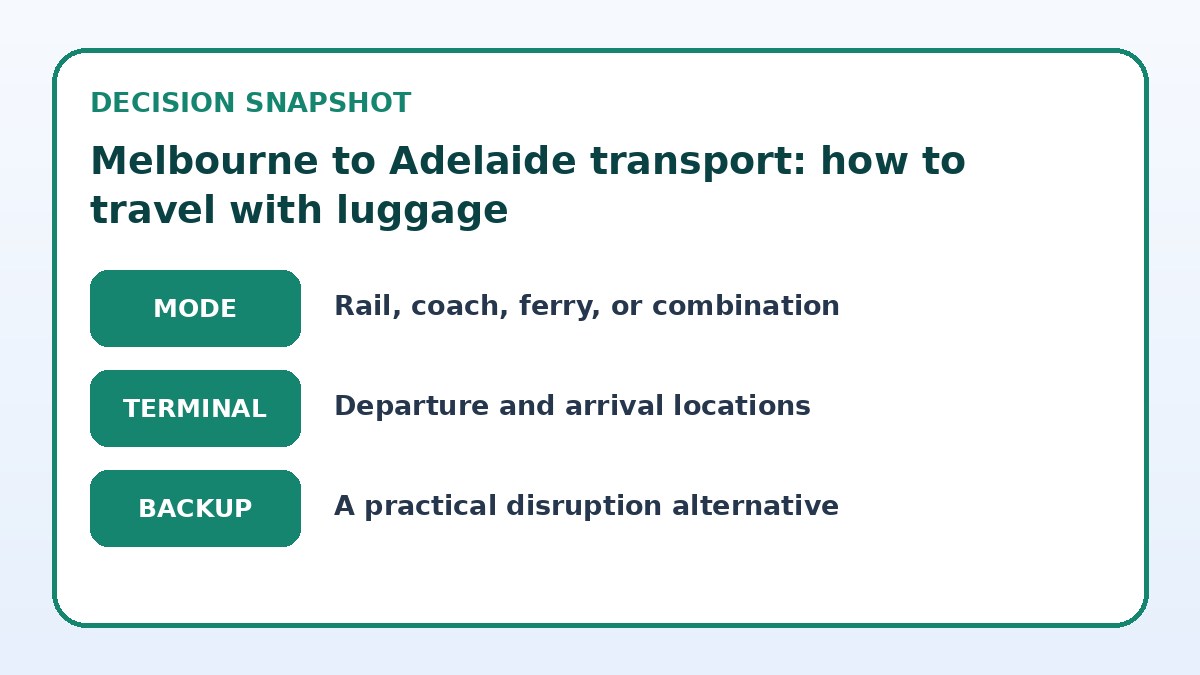
See current options before you compare the details
Availability and final conditions change. Open Trip.com now or keep reading for the practical comparison.
Choosing the right transport by luggage type
Start by matching your luggage to the transport options available between Melbourne and Adelaide. If you travel light with a backpack or carry-on, flights or express coaches are practical: they usually fit overhead bins or under-seat spaces and let you move quickly. For larger suitcases, trains often provide dedicated luggage bays or roomier vestibules where staff or fellow travellers can help, while driving gives you the most flexibility to load and unload without size restrictions. Think also about weight and how many times you will have to lift your bags—repeated lifts push the choice toward fewer transfers.
Consider luggage configurations beyond size: wheeled suitcases are easiest if you’ll be navigating stations, but backpacks can be better for stairs or crowded platforms. If you have bulky items—sports gear, instrument cases, or oversized boxes—check whether the operator accepts special items and whether advance notice or booking is required. Wherever possible, choose a transport option that minimises the number of times you must move heavy bags between vehicles, and always plan for how you’ll manage bags during any transfer.
Train or coach: pros, cons and practical tips
Trains and long-distance coaches commonly provide more predictable space for luggage than short-haul flights, but they differ in access and handling. Trains often have larger storage areas at carriage ends and can be easier to board with a suitcase if platforms are level with the carriage floor; coaches may have underfloor bays where you hand luggage to the driver. Both options can be more forgiving if you’re travelling solo because you don’t have to lift bags into overhead compartments, but boarding with heavy luggage can still be physically demanding if the station or stop has steps or significant gaps.
When you consider train or coach travel, plan your station arrival to allow time for stowing and ask staff about the best carriage for luggage. If step-free access matters, verify station accessibility at both ends and whether there are ramps or assistance services. For coaches, confirm whether the driver will help load and unload luggage and whether you’ll need to retrieve bags at rest stops. Always check the operator’s baggage size and liability policies on their booking page, and consider a luggage tag with your contact details in case of misplacement.
| Approach | Best for | Tradeoff to check |
|---|---|---|
| Train travel | Solo travellers with large suitcases who prefer minimal lifting into overhead bins | May require navigating stations and possible steps, and check station accessibility before booking |
| Coach travel | Those who want simple checked-under-bus storage without airport processes | You hand luggage to driver and may have limited access during the trip |
| Flight | Travelers prioritising time savings over handling complexity | Adds multiple baggage handling points and requires checking airline baggage rules |
| Drive or hire car | People carrying unusually large or many items who want full control of loading | Involves solo driving responsibility, parking/unloading logistics and potential fatigue |
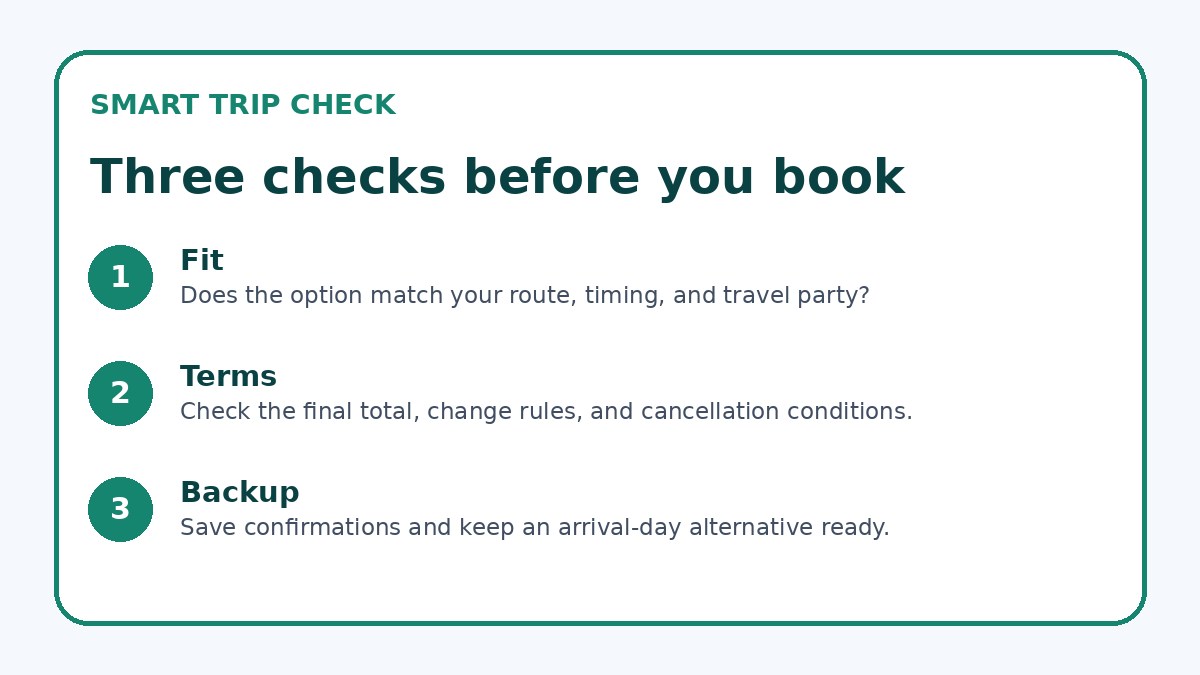
Ready to check the option that fits your plan?
Use your exact dates and traveler details so the provider page can show the current total and conditions.
Flying: speed versus extra handling
Flights can shorten your travel time, but they add layers of handling: check-in, security, baggage reclaim and possibly a shuttle between city terminals and central locations. For solo travellers, this means more tasks—dropping bags at check-in counters, waiting at reclaim belts, and lifting luggage into taxis or public transport upon arrival. If you prefer fewer hands-on moments, factor in the extra time and steps rather than just the airborne leg when comparing flights to ground travel.
Before booking a flight-focused itinerary, verify on the airline or booking page whether baggage is included in your fare, the allowed dimensions and weight, and how to request assistance if you need it. Also check transfer requirements between airport and your onward transport: will you need to change terminals, or use public transport with luggage? Trip.com can be used as one place to compare current availability, but always confirm baggage rules and transfer options on the carrier’s official page before you commit.
Before you book
- Measure and weigh your luggage; verify size and weight limits on the transport provider’s final booking page.
- Plan the first and last mile: confirm step-free access, station layout, and available assistance at both ends.
- If using flights, check whether baggage is included in the fare and whether oversized items need prior approval.
- When booking coaches or trains, ask about luggage storage location and whether the driver or staff assist with loading.
- For car hires, confirm trunk capacity and any regional travel restrictions on the rental agreement.
- Label all bags with contact details and a distinct identifier; keep essential items and documents in a personal carry-on.
Driving or mixed-mode travel with heavy luggage
Hiring a car or driving your own gives you maximum control over where luggage is placed and how often it’s handled. For heavy or multiple bags, this is often the least physically taxing option because you load once and unpack at your destination. Consider, though, the stress of solo driving over long distances, parking logistics at both ends, and whether your accommodation offers easy vehicle access for unloading. Also think about road conditions and rest stops, and plan breaks to avoid fatigue when handling both driving and moving luggage.
A mixed approach—drive one way and return by train, or use a park-and-ride with train or coach for part of the journey—can balance convenience and effort. When renting a car, verify trunk capacity and any restrictions on regional travel on the rental agreement. If using multiple modes, schedule connections with generous time cushions to avoid rushed transfers with heavy bags. Always confirm the facility access and any carrier-specific rules on the provider’s booking page, especially for oversized or numerous items.
Frequently asked questions
How do I decide between train, coach, flight or driving if I have two large suitcases?
Start by listing what matters most: fewer lifts, total journey time, cost, and flexibility. Trains and coaches generally reduce the need to lift bags into overhead bins and keep them accessible, while flying may save time but adds check-in and reclaim steps. Driving gives maximum control over bulky items but means you handle loading and parking yourself. Compare the number of transfers, station access, and whether assistance services are available; always confirm baggage policies on the provider’s booking page before choosing.
Can I expect help loading luggage on trains and coaches?
Assistance levels vary by operator and station. Some coaches have drivers who will load and unload underfloor baggage bays, while trains may not offer active loading help beyond staff support in accessible stations. If you need physical assistance, contact the operator ahead of booking to request help and verify what they provide. Also check whether stations at both ends offer ramped or step-free access so you don’t have to lift heavy bags multiple times.
What are the best ways to avoid losing luggage on this route?
Use visible luggage tags with up-to-date contact information and a unique identifier like a bright strap. Keep a small carry-on with essentials and documents at all times so a short delay in reclaim doesn’t ruin your day. Photograph the exterior and contents of checked bags before travel to help with recovery claims if needed. When possible, choose direct journeys or ones with minimal transfers to reduce the number of times bags change hands, and verify baggage handling and delay procedures on the operator’s official site.
Final planning note
For solo travellers moving between Melbourne and Adelaide with luggage, the right choice depends on how much you want to lift, how many transfers you’re willing to manage, and how quickly you need to arrive. Trains and coaches often ease luggage handling, flights shorten travel time but increase handling steps, and driving provides the most control at the cost of solo driving duties. Before you book, measure and weigh your bags, check baggage rules and station accessibility on the provider’s booking page, and plan the first and last mile carefully. A little preparation—clear packing choices, advance verification of baggage policies, and realistic transfer time—makes the journey smoother and reduces surprises.
Continue planning
Check current options and final conditions
Use the provider page to confirm live availability, the final total, cancellation terms, and every condition that matters to your trip.
This evergreen planning guide was created with AI-assisted drafting and a structured quality review. It does not display live prices, schedules, availability, visa guidance, or provider rankings. Verify current details before booking. Some links are affiliate links; we may earn a commission at no additional cost to you.