
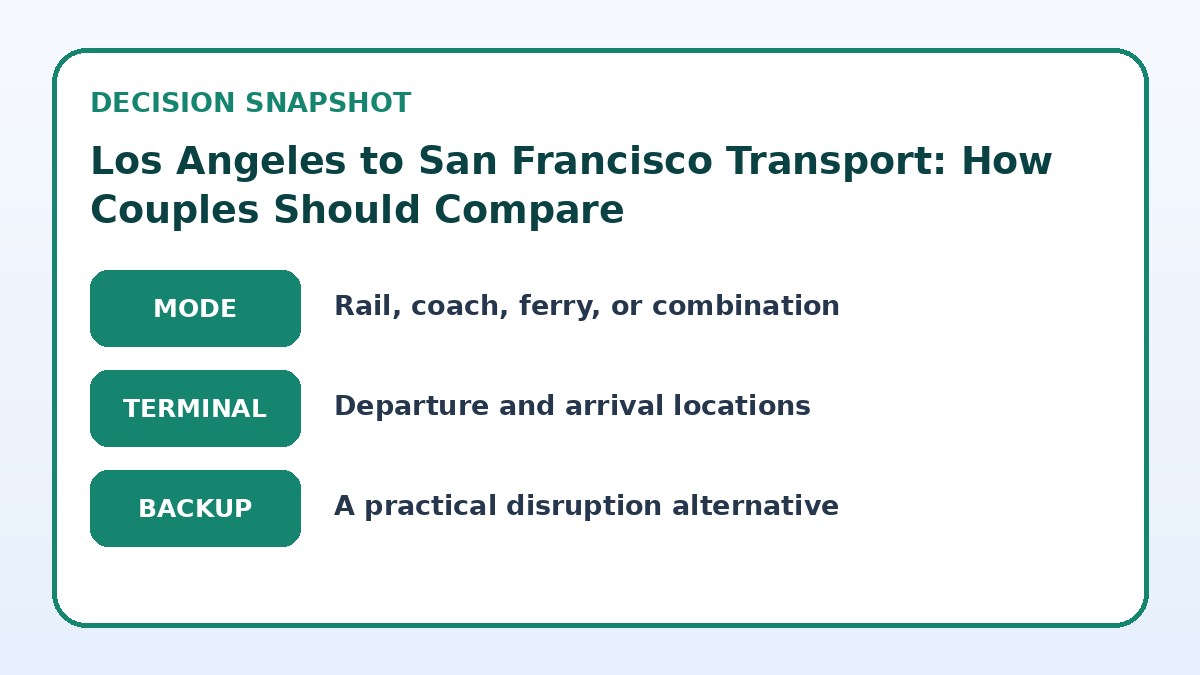
Practical answer up front: for most couples who value comfort and scenery, a daytime or overnight train segment combined with a short coach or rideshare for local connections is the most balanced way to travel between Los Angeles and San Francisco. If budget and speed are top priorities, coach or flights with careful transfer planning can make sense; if you want a unique coastal experience, combine train travel with local ferries where possible on the Bay Area end. Start by prioritizing what matters for your trip—time, comfort, scenery, flexibility, or budget—then use that to eliminate options. Later sections explain the daily tradeoffs, what to verify before you book, and how to mix modes to fit a couple’s rhythm rather than treating every choice as an all-or-nothing decision.
Train: comfort, scenery, and predictable pacing
Trains between Los Angeles and northern California offer a relaxed rhythm that suits couples who want to travel together in comfort and see coastal or inland scenery without driving. On longer rail segments you’ll have room to move, access to a café car or food service, and the ability to talk, read, or nap without navigating traffic. For many couples the train becomes part of the trip rather than a necessary chore—pick daytime seats if you want views, or choose overnight options if you’d rather sleep through travel time and wake up already closer to your destination.
Tradeoffs include fewer departures than buses or planes and less flexibility for last-minute changes. Verify seat types, baggage allowances, and whether sleeping accommodations require reservations. Also confirm how you’ll get from the train station to your San Francisco neighborhood—stations may not be centrally located, and local transit, ferry runs, or a short rideshare can bridge the gap. Before booking, check the exact train timetable and connection points on the operator’s official pages or a live aggregator such as Trip.com.
Coach and shuttle: budget-friendly and frequent
Coaches and intercity shuttles run many times a day and are often the least complicated ground option for couples on a budget who prefer a direct land route. Buses typically stop at central terminals or convenient hubs, which can reduce transfer time at either end. For couples traveling light, coach travel means you can often board with carry-ons and avoid the time spent at airports; plus, frequent departures make it easier to change plans mid-trip without heavy penalties.
However, coaches trade comfort and scenery for price and frequency: legroom varies and overnight coaches can be cramped for taller travelers. Road traffic—especially around Los Angeles and Bay Area corridors—will affect total travel time unpredictably, so plan buffer time for important appointments. Always check seat pitch, restroom access, luggage rules, refund/change policies, and where exactly buses drop you off in San Francisco before committing to a ticket.
| Approach | Best for | Tradeoff to check |
|---|---|---|
| Train-first then rideshare | Couples valuing comfort, conversation, and scenic travel | Fewer departures and possible station-to-hotel transfers to plan |
| Coach direct | Budget-conscious couples who want more schedule flexibility | Less legroom, variable traffic delays, and longer door-to-door time |
| Flight plus local transit | Couples prioritizing speed and maximum time at destination | Airport procedures and transfers can reduce net time savings |
| Mixed rail + ferry | Couples seeking memorable, scenic last-mile experiences | Fixed ferry schedules and possible extra connections add complexity |
Flights and fast surface options: speed at a cost
Flying between Los Angeles and the Bay Area is the fastest way to cover the route, making sense when you need to maximize time at your destination. For couples, flying can be convenient if one partner prefers to minimize travel time while the other tolerates the airport experience—choose seats together and factor in carrying essentials in a single checked or carry-on bag to reduce waits. Small regional flights may offer departures from closer airports that cut ground transfer time.
But speed comes with tradeoffs: airports require extra time for security, possible delays, and travel to and from terminals. Once you land, you may still need a rideshare or public transit to reach central San Francisco, which erases some time savings. Compare total door-to-door time rather than just airborne duration, and always review baggage rules, connection requirements, and the cost of transfers on the airline or booking page before buying tickets.
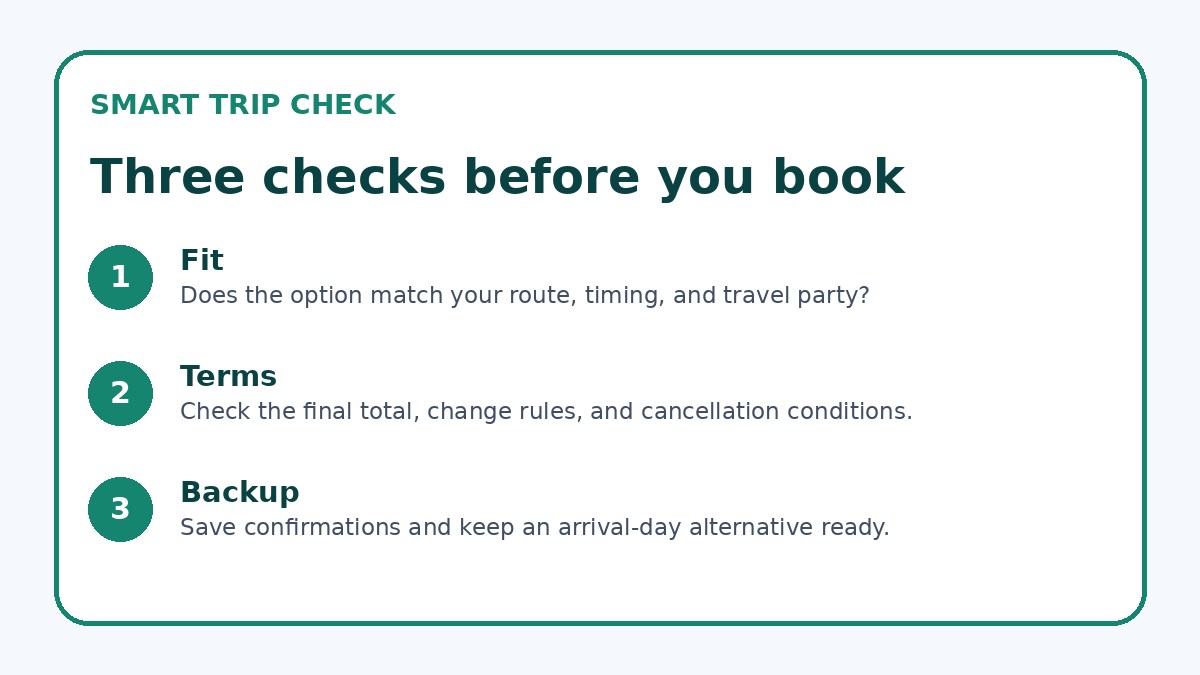
Before you book
- Decide your priority order (time, comfort, scenery, budget) and eliminate obviously conflicting modes first.
- Check exact station, terminal, or port locations for arrival and departure—confirm how much time a rideshare or transit trip will add.
- Compare total door-to-door travel time, not just in-transit duration; include security, transfers, and wait time.
- Verify baggage rules and seat assignments for trains, coaches, and flights on the provider’s booking page before you pay.
- Look up cancellation and change policies—couples should agree on flexibility needs in case plans shift.
- If combining modes, build at least 60–90 minutes of buffer between connections, more if arriving during rush hours.
Ferry and mixed-mode itineraries: scenic last miles
While you cannot take a ferry directly from Los Angeles to San Francisco, ferries become an attractive and romantic option for the San Francisco Bay portion of your journey. Couples who arrive by train, coach, or plane can layer in a water crossing for sightseeing, short-hop transfers to waterfront neighborhoods, or an evening cruise to set the tone for a stay. Ferries offer unique vantage points of the skyline, bridges, and shoreline, and can convert a routine transfer into a memorable part of the trip.
The main tradeoffs are schedule limits and capacity constraints—ferries run on fixed timetables that may not align with every arrival time—and they’re weather-dependent. When planning a mixed-mode route, time each transfer with extra padding, confirm ferry departure points and final landing locations relative to your accommodation, and check whether tickets sell out or require reservations, especially for weekend travel or special events.
Frequently asked questions
Is the train between Los Angeles and San Francisco a good choice for couples who want to relax?
Yes—trains are often the most relaxing single-mode option because they offer more space to stretch, the ability to move around, and scenic views that make travel part of the experience. For couples who enjoy conversation, reading, or watching the coast roll by, trains can feel less stressful than driving. However, check how close the train stations are to your lodging and whether you’ll need an extra transfer; verify seat types and any sleeper availability directly on the operator’s booking site.
Should we choose a coach or a flight if we’re trying to save time and money?
That depends on priorities: coaches usually cost less and have frequent departures, reducing the need for advanced planning, while flights save travel time but add airport transfers and security waits. For short stays, flying can maximize time in San Francisco despite higher per-person costs; for couples on a tight budget who don’t mind more travel time, a coach may be preferable. Compare total costs including transfers, and confirm departure and arrival points before booking.
Can we mix modes—like train to a city near San Francisco and then a ferry—and still keep the trip simple?
Yes—mixing modes is a great way to balance comfort and scenery, but it requires coordination. Pick connections with comfortable transfer windows, verify ferry timetables against your arrival, and be ready for limited ferry frequency. Keep luggage minimal if you’ll be moving between vehicles and watercraft, and book any required ferry or connecting tickets in advance when possible. Always double-check schedules on the provider pages to avoid missed connections.
Final planning note
For couples planning Los Angeles to San Francisco transport, the right choice depends on what you want from the journey. If comfort, conversation, and views matter most, prioritize rail with practical local transfers at either end. If budget and schedule frequency are most important, coach travel is a straightforward option; if speed is the goal, compare flights while accounting for airport transfers. Ferries and mixed-mode plans add romance and scenery but demand careful timing. Before booking, decide your deal-breakers, confirm station and port locations, and verify seat, baggage, and change policies on provider pages—Trip.com can help compare live availability if you want a quick snapshot of options.
Continue planning
Check current options and final conditions
Use the provider page to confirm live availability, the final total, cancellation terms, and every condition that matters to your trip.
This evergreen planning guide was created with AI-assisted drafting and a structured quality review. It does not display live prices, schedules, availability, visa guidance, or provider rankings. Verify current details before booking. Some links are affiliate links; we may earn a commission at no additional cost to you.