If you’re flying from Los Angeles to Honolulu with extra bags, start with a focused pre-booking checklist so you don’t get surprised at the airport. The practical first step is simple: before you choose a fare, compare each airline’s carry-on allowance, checked-bag size and weight limits, per-bag fees, and whether excess or oversized items require special handling. Next, weigh direct versus connecting options, because connections can add time and handling steps that increase the chance of delays or transfer fees for oversize pieces. Also check aircraft type and seat cargo limits on the provider’s final booking page — these affect whether large items travel in hold or as special cargo. Finally, plan arrival handling in Honolulu and how you’ll move excess luggage between airport and lodging so you’re prepared every step of the way.
See current options before you compare the details
Availability and final conditions change. Open Trip.com now or keep reading for the practical comparison.
Baggage rules and how to compare them
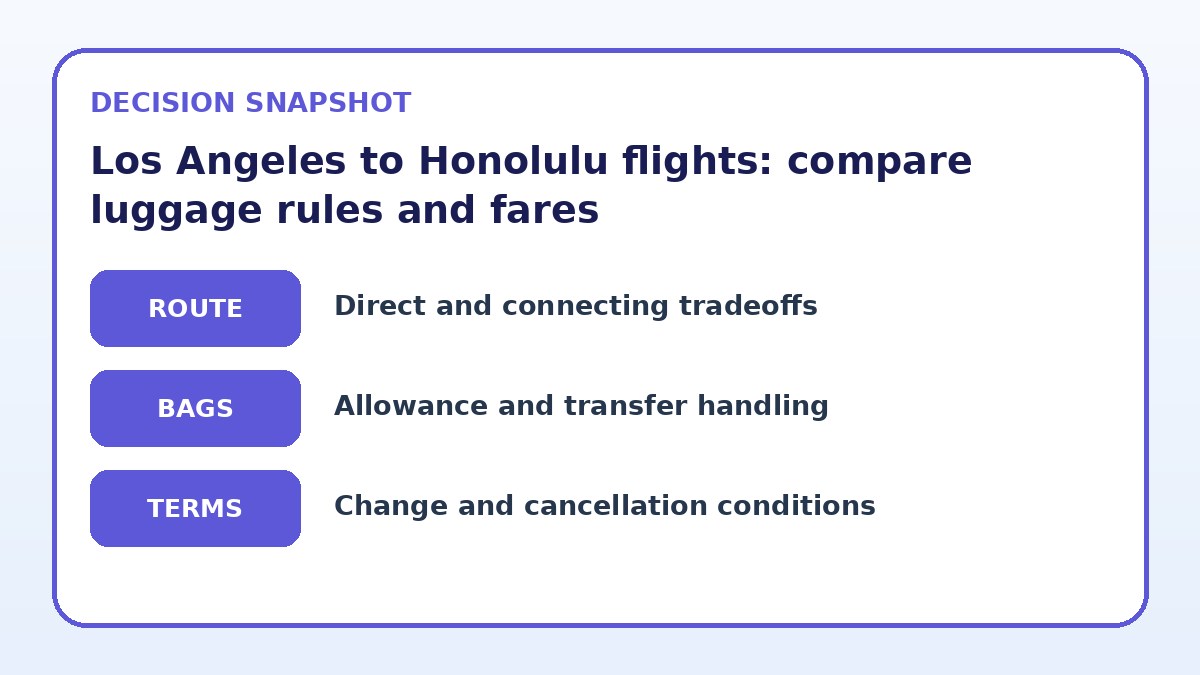
Airlines use different rules for carry-on, checked, overweight, oversized, and special items. When planning Los Angeles to Honolulu flights, open each airline’s baggage policy page from the booking flow and note dimensions, weight limits, included number of bags, and whether fees are charged per segment or per direction. Don’t rely on third-party summaries; policies can vary by fare class and by purchasing channel. Also confirm whether an item counts as checked or oversized (for example, surfboards or oversized luggage) and whether a separate cargo reservation is required for certain large items.
Make a compact comparison table for yourself with columns for: carry-on size and weight, included checked bags, first and second checked bag fees, overweight fee thresholds and costs, oversized surcharges, and special item rules. Add a note to check if fees are per segment or round trip because a return segment can double costs. If a provider offers a baggage bundle or subscription, calculate the break-even point versus paying per trip; include the logistics of paying online ahead of departure versus at the counter.
Direct flights versus connections: tradeoffs for extra luggage
Direct flights reduce the number of times your bags are handled, which lowers the chance of damage or misrouting. For travelers with extra luggage, a nonstop from LAX to HNL often simplifies transfers and reduces stress about narrow connection windows, baggage re-checks, and additional domestic fees. However, direct options may be less frequent or use aircraft with stricter cargo size limits, so check aircraft type in the booking details and confirm that oversized items are accepted and how they will be processed.
Connecting itineraries sometimes offer lower base fares or better schedule flexibility, but they add handoffs — and each handoff may incur separate handling fees or require you to claim and re-check baggage depending on the carriers involved. If you consider connections, check transfer time minimums to ensure ground staff can move large pieces between aircraft, and verify whether partner carriers honor through-checked baggage for oversized or special items. Make contingency plans in case a delayed inbound flight affects your checked pieces.
| Approach | Best for | Tradeoff to check |
|---|---|---|
| Book the cheapest base fare and pay baggage fees separately | Travelers prioritizing lowest upfront fare who can accept fee uncertainty | May cost more overall if multiple bags or overweight charges apply; requires careful fee tallying |
| Purchase a bundled fare with included checked bags | Those traveling with predictable extra luggage who prefer simplicity | Higher base fare upfront; could be wasted if you end up traveling lighter on return |
| Choose nonstop flights when possible | Passengers with fragile or oversized items who want fewer handoffs | Nonstops can limit schedule options and may use aircraft with cargo size restrictions |
| Ship oversized items with a specialist courier | Travelers with very large or valuable equipment that exceed airline limits | Adds lead time, logistics, and cost but reduces risk of airline refusal or damage |
Ready to check the option that fits your plan?
Use your exact dates and traveler details so the provider page can show the current total and conditions.
Special items, oversized luggage, and sports equipment
Hawaii travel often involves surfboards, snorkeling gear, bicycles, and other bulky items that don’t fit standard checked-bag rules. For these, check whether the airline treats them as oversized baggage or requires separate cargo booking. Look for specific packing requirements (rigid cases, protective padding, or seat-belt straps for bikes) and whether advance notice is requested during booking. If an airline’s booking path lacks a clear option, contact the carrier directly and get the exact verbiage you will need to show at the counter.
Consider third-party freight or specialized sports shippers if your item exceeds carrier limits or if you prefer guaranteed door-to-door handling. That adds planning: you’ll need pickup timing that meets your flight schedule and a reliable arrival delivery plan in Honolulu. When using freight, compare pickup deadlines, transit time, insurance options, and whether the shipper will handle customs or local airport release. Always record the shipper’s contact and the airline’s cargo desk number in case coordination is needed on arrival.
Before you book
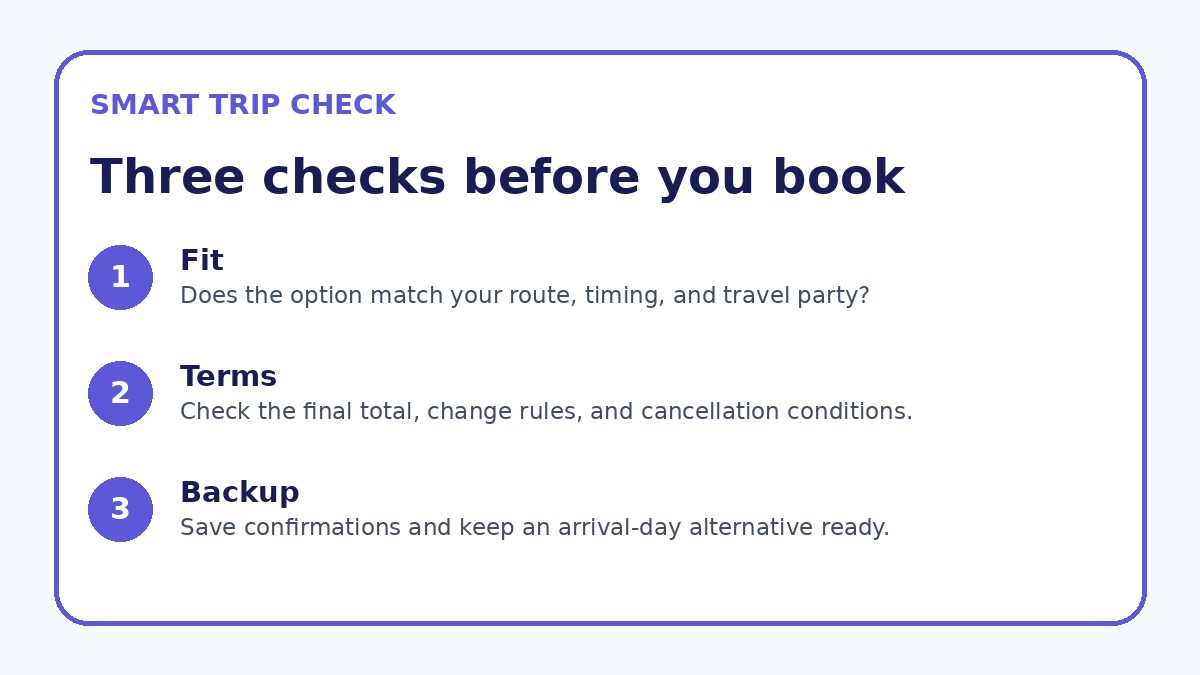
- Open each potential airline’s baggage policy from its actual booking page and note carry-on size, checked weight, and included bags by fare class.
- Calculate total baggage costs for your round trip: base included bags plus likely overweight, oversized, or per-item special fees.
- Confirm aircraft type and cargo hold restrictions in the booking flow and ask the airline if oversized items require cargo booking.
- Decide between nonstop and connecting itineraries based on handling risk, total travel time, and transfer minimums for large bags.
- If traveling with sports gear or a surfboard, verify packing and declaration requirements and pre-notify the carrier if instructed.
- Plan ground handling at HNL: confirm cargo desk hours, coordinate pickup or delivery, and prebook transport that fits your luggage volume.
Airport logistics: LAX departure and HNL arrival considerations
At Los Angeles International, check which terminal the airline uses and whether curbside check-in, oversized baggage drop, or ground-handling services are available. Some terminals offer dedicated oversized-baggage desks or priority lanes for heavy items; others require you to use the standard counter and possibly a separate cargo facility. Verify terminal-specific guidance in the airline’s booking steps, and factor extra time for check-in screening if you’re traveling with wrapped or non-standard luggage.
In Honolulu, understand the arrival process for oversized or special items—whether you collect items at baggage claim or pick them up at cargo. Confirm the airport’s cargo hours and whether after-hours pickup incurs a fee. If you’ll need ground transport for multiple or heavy pieces, prebook a courier, oversized luggage taxi service, or rental vehicle with sufficient cargo capacity. Add a contact for your accommodation to coordinate arrivals and any handling needs.
Frequently asked questions
How can I estimate whether paying for an extra checked bag or upgrading to a bundled fare makes sense?
Start by listing the fees for each airline and fare class using the airline’s booking page. Add first- and second-checked-bag fees, overweight thresholds, and oversized surcharges for both outbound and return segments. Compare that total against the incremental cost of a fare that includes checked bags. Factor in the value of simplicity and reduced risk of surprises at the airport. If your round-trip baggage fees approach or exceed the bundled-fare premium, the bundle may be the better buy. Always note whether the included bag allowance applies per segment or round trip.
What should I check if I plan to bring a surfboard or bicycle to Honolulu?
Check whether the airline accepts the item as checked baggage or requires cargo booking, and review size and case requirements. Look for explicit packing rules, such as rigid cases, padding, and taping, plus any per-item fees. If rules aren’t clear during booking, contact the carrier and save the response text or reference number. Also verify pickup procedure at HNL: some large items are released at cargo rather than baggage claim, and cargo desk hours can affect arrival timing and transport to your lodging.
If I choose a connecting itinerary, how do I reduce the risk of my oversized bags missing the connection?
Build generous connection time to allow ground handlers to transfer oversized pieces, especially if you change carriers. Confirm in the booking process whether your baggage will be through-checked; if not, plan for claim-and-recheck time. Prefer itineraries with the same alliance or interline agreement, which improves through-checked chances. Photograph and label bags clearly, attach contact info inside and out, and consider travel insurance that covers delayed or misrouted baggage. Keep essential items and one light bag as carry-on in case a transfer is delayed.
Final planning note
Booking Los Angeles to Honolulu flights with extra luggage is mainly about information and a few practical choices. Before you commit, compare baggage rules on the airline’s actual booking pages, add up round-trip fees, check aircraft cargo limits, and decide whether the convenience of a nonstop or an included-baggage fare outweighs a lower upfront price. For oversized or sports equipment, confirm whether the airline will handle the item or if a specialist shipper is smarter. Finally, plan ground logistics at both LAX and HNL so arrival and pickup run smoothly. A clear checklist and a little extra time at booking will save money and stress on travel day.
Continue planning
Check current options and final conditions
Use the provider page to confirm live availability, the final total, cancellation terms, and every condition that matters to your trip.
This evergreen planning guide was created with AI-assisted drafting and a structured quality review. It does not display live prices, schedules, availability, visa guidance, or provider rankings. Verify current details before booking. Some links are affiliate links; we may earn a commission at no additional cost to you.