Practical answer up front: if you arrive or depart Los Angeles with a lot of heavy, bulky, or delicate luggage, a private transfer (ride‑hail, airport shuttle, or car service that allows extra bags) usually saves time, physical strain, and the stress of managing bags across multiple transfers. Public transport — trains, buses, and light rail — can be cheaper and avoids traffic in some corridors, but it means lifting, carrying, and sometimes navigating stairs, crowded platforms, or tight connections. Your best choice depends on how many bags, whether someone helps you, how much you value door‑to‑door convenience versus lower cost, and how comfortable you are moving luggage on and off vehicles. Below I explain the key tradeoffs and exact points to check before you book so you can pick the option that fits your arrival time, destination, and energy level.
See current options before you compare the details
Availability and final conditions change. Open Trip.com now or keep reading for the practical comparison.
Assess your luggage and travel party
Start with an honest count and description: number of checked suitcases, carry‑ons, sports gear, instruments, strollers, and any oddly shaped items. Also note who’s traveling with you — solo travelers handle luggage very differently from families or groups who can share the load. A single heavy suitcase is less of a logistical problem than several medium suitcases plus a stroller and a garment bag. Think through how you will move bags between vehicle and building: will you need assistance, a luggage trolley, or help from staff?
Next, match your luggage profile to vehicle types. Private sedans handle two medium suitcases at most; SUVs, minivans, and small shuttle vans have more capacity but still vary. Public transit requires lifting bags onto platforms, up and down ramps or stairs, and into crowded spaces. If any piece is fragile, oversized, or time‑sensitive, lean toward private options. Finally, consider timing: late‑night arrivals or very early departures make private transport more attractive for safety and convenience.
Time, reliability, and how much you value door‑to‑door service
Private transfers can offer predictable door‑to‑door service: a driver meets you at the terminal curb or arrivals hall and takes you straight to your accommodation. That reduces the walking, waiting, and transfers that come with public options. But predictability varies with traffic; during heavy congestion a private car still faces the same roads. When time is tight — tight flight connections or early check‑ins — a private transfer that minimizes transfers and walking often reduces the risk of missing important appointments.
Public transit is often more immune to traffic delays if it uses dedicated rail or bus lanes, and in some east‑west corridors trains can be faster than driving. However, public options require buffer time for transfers, luggage handling, and waiting for the next service. If you are comfortable absorbing that buffer and want to save money, public transit is a reasonable choice. If not, prioritize a private option and plan for traffic windows when possible.
| Approach | Best for | Tradeoff to check |
|---|---|---|
| Private transfer (ride‑hail, prebooked car or shuttle) | Travelers with multiple or oversized bags, limited mobility, or tight schedules. | Higher cost and potential exposure to surface traffic delays; verify vehicle size and luggage policies. |
| Public transit (metro, light rail, buses) | Travelers with one or two manageable bags, flexible time, and destinations near transit lines. | Lower out‑of‑pocket cost but requires lifting, transfers, and walking with luggage. |
| Mixed approach (transit plus a short ride‑hail) | Those who want savings while avoiding the longest walks or most transfers. | Adds one more coordination step and may still require dealing with a heavy bag for part of the trip. |
| Hotel or dedicated airport shuttle | Travelers staying at hotels that offer pickups or groups with lots of luggage. | May require advance booking and fixed schedules; check pickup points and luggage handling rules. |
Ready to check the option that fits your plan?
Use your exact dates and traveler details so the provider page can show the current total and conditions.
Cost tradeoffs and what to verify before booking
Don’t assume one option is always cheaper—compare realistic door‑to‑door costs. For public transport, add the cost of any final mile needed (ride‑hail, taxi, or shuttle from a transit stop), and the value of your time and effort moving bags. For private transfers, factor in the need for a larger vehicle or an extra seat for bulky items, and check whether the booking flow lets you specify luggage. When comparing, include the cost of potential delays or missed connections that would force you into pricier last‑minute transfers.
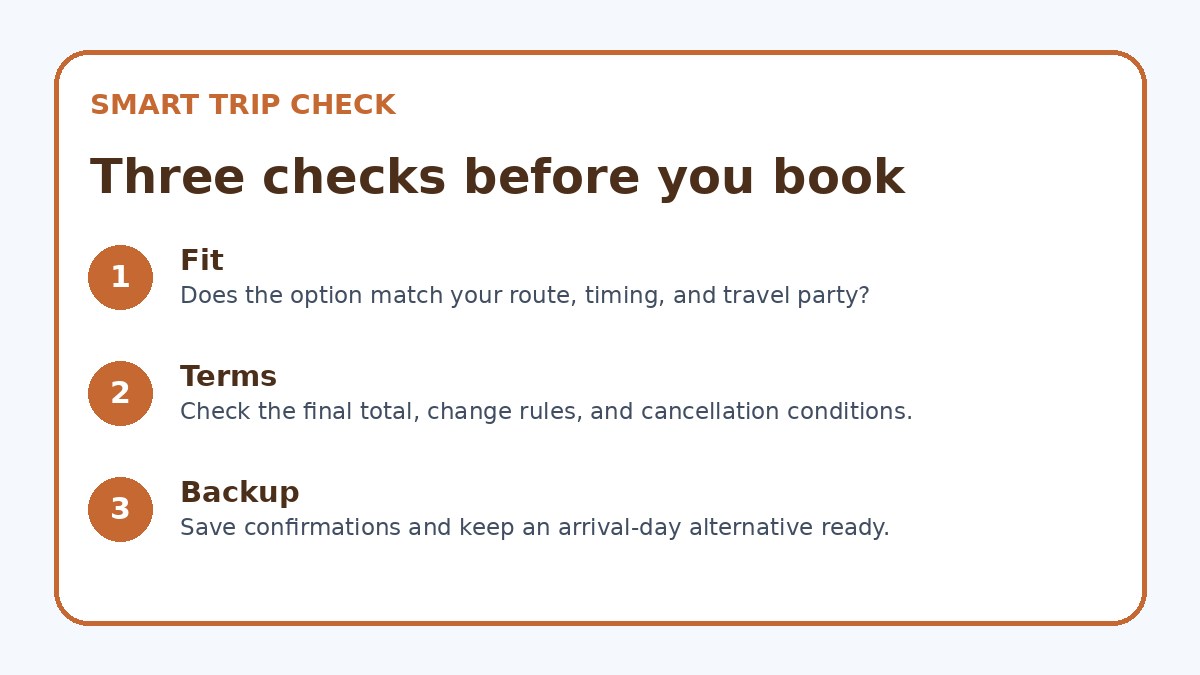
On any provider page, verify vehicle size, luggage allowance, pickup and dropoff points, cancellation rules, and any additional fees for oversized or extra bags. If you use Trip.com or another aggregator, remember those pages show options but always click through to the provider’s final booking page to confirm terms like baggage limits, exact pickup procedures, and whether the driver meets you inside the terminal or at curbside.
Before you book
- Count each bag, note dimensions and weight, and decide which items must stay with you at all times.
- Measure or confirm trunk/cargo capacity with your booked vehicle or provider before finalizing a private transfer.
- Check terminal pickup rules, whether the driver meets you inside arrivals, and where curbside meeting points are located.
- Compare door‑to‑door travel time for private transfer versus public transit plus any last‑mile ride.
- Look for baggage policies and extra‑item fees on the provider’s final booking page before you pay.
- Plan assistance: reserve a porter, request wheelchair or luggage help, or coordinate a helper to meet you at arrival.
Accessibility, physical effort, and realistic expectations
Think about the physical effort required. Public stations sometimes have elevators or ramps, but outages or full elevators can force you to carry bags up stairs. Transfers between light rail and buses may involve walking across lots or long platforms. If anyone in your party has limited mobility, or if your bags are heavy, private transport avoids those uncertainties and reduces physical strain. Also think about how many doorways, narrow aisles, or small trunks you’ll face — some luggage shapes don’t fit well in compact cars.
Finally, set realistic expectations for arrival and departure. Even a private transfer requires clear directions and communication: confirm meeting points, terminal signage, and how the driver will identify you. For public transit, allow extra time to find platforms and to secure luggage. Preparing a simple luggage plan — who carries which bag, what stays with you, and where to store fragile items — makes either option smoother once you reach Los Angeles.
Frequently asked questions
Can I put oversized items like surfboards or bicycles in a private transfer?
Many private services can accommodate oversized items but policies vary widely. Before booking, specify the item type, length, and whether it is disassembled; check the vehicle options (SUV, van, or shuttle) offered during booking. If the booking flow does not allow you to describe the item, contact the provider directly to confirm they can carry it and to learn if any extra fees or special packing requirements apply. Do the same on the provider’s final booking page rather than relying solely on third‑party listings.
Is public transit in Los Angeles feasible with two checked suitcases?
Yes, public transit can work with two suitcases if you are comfortable lifting them and your journey has few transfers. Light rail stations and many buses have space for luggage, but you may need to navigate stairs, uneven platforms, or crowded vehicles. Allow extra time for platform changes and walking between lines. If your final destination is not within a short walk of a station, factor in a short ride‑hail or shuttle for the last mile to avoid heavy lifting over long distances.
How do I compare a ride‑hail to a prebooked car service for heavy luggage?
Compare the vehicle options and the ability to guarantee a larger vehicle up front. Ride‑hail apps let you request SUVs or larger cars, but availability varies by location and time; surge pricing can also affect cost. Prebooked car services and airport shuttles often let you select vehicle size and list luggage allowances during booking, which reduces uncertainty. Always confirm on the provider’s final page that the selected vehicle has the cargo space you need and whether extra charges apply for additional or oversized bags.
Final planning note
If your trip to or from Los Angeles involves heavy, bulky, or multiple bags, prioritize door‑to‑door convenience and a correctly sized vehicle: private transfers typically reduce physical effort and make arrivals and departures less stressful. If you have only one or two manageable bags, are traveling light on time, and your destination is near transit, public options can save money and in some cases avoid traffic. The deciding factors are luggage count and size, your party’s ability to carry bags, time sensitivity, and whether you prefer to trade money for convenience. Before booking, verify vehicle size, baggage rules, pickup points, and cancellation terms on the provider’s final page so there are no surprises when you arrive. For a quick comparison of current services and availability, you can check aggregators like Trip.com and then confirm details with the chosen provider.
Continue planning
Check current options and final conditions
Use the provider page to confirm live availability, the final total, cancellation terms, and every condition that matters to your trip.
This evergreen planning guide was created with AI-assisted drafting and a structured quality review. It does not display live prices, schedules, availability, visa guidance, or provider rankings. Verify current details before booking. Some links are affiliate links; we may earn a commission at no additional cost to you.