Practical answer up front: families should weigh refundable or changeable fares for peace of mind, semi‑flexible fares when you need a balance between cost and change options, and fully fixed fares only if every detail is certain. For London to Paris travel, the main choices usually come down to trains (often with advance, semi‑flexible, and flexible fare classes) and flights or ferries with their own change/cancellation rules. Prioritize seats or cabins that allow easy access for children and space for baggage, and check family discounts or group seating options before you commit. In the sections below I explain the tradeoffs — what you get for your money, which risks you are insulating against, and the exact details to verify on the provider’s booking page so your purchase actually matches the protection you expect.
See current options before you compare the details
Availability and final conditions change. Open Trip.com now or keep reading for the practical comparison.
How ticket flexibility affects family travel decisions
Flexibility matters more for families than for solo travellers because small disruptions multiply: a missed connection, a sick child, or an unexpected hotel delay can force a reroute. A fully refundable or changeable ticket reduces stress and often includes free rebooking windows or modest fees, which saves time and dispute hassles at stations or airports. When you evaluate flexibility, look beyond the headline word “flexible” and read the fine print: what counts as allowable reasons for change, how far in advance changes must be made, whether refunds are processed back to the original card, and whether name changes or partial refunds are permitted for unused segments.
Some families accept tighter advance fares in exchange for significantly lower cost, planning instead to buy travel insurance that covers cancellations for illness or other covered reasons. That can work but requires checking insurance exclusions and the insurer’s refund process. Another common approach is booking a mix — flexible outbound with a cheaper return — to protect the start of the trip when delays are most disruptive. Whatever you choose, check the provider’s final booking page for the exact change and cancellation fees, any family or child fare rules, and the deadline for making changes without penalty.
Comparing trains, flights and ferries by flexibility
Trains between London and Paris often sell multiple fare classes: advance (cheapest, limited changes), standard (some changes allowed for a fee), and fully flexible (highest price, free or low‑fee changes). For families, flexible trains usually include easier seat swaps, more forgiving luggage rules, and sometimes refundable pre‑booked seats. When comparing train offers, verify whether tickets are exchangeable to a different train on the same day, transferable to other passengers, or refundable; also check boarding and arrival station details because a later train might use a different terminal or platform, affecting logistics with children and luggage.
Flights typically have a different set of tradeoffs: low‑cost carriers advertise very low fares with strict change and baggage rules, while legacy carriers offer fare families that bundle baggage and seat selection and add flexibility for a higher price. Flight bookings sometimes permit free name corrections or same‑day flight changes for a fee, but connecting itineraries booked separately can expose you to missed connection risk. Ferries and vehicle shuttles are another option with their own booking classes and change policies; they can be more straightforward for carrying a lot of baggage or a car, but you should confirm vehicle space rules, child seating, and whether changes are allowed close to departure.
| Approach | Best for | Tradeoff to check |
|---|---|---|
| Fully flexible fares | Families who need maximum peace of mind and expect schedule changes | Highest upfront cost but minimal fees or restrictions for rebooking or refunds |
| Semi‑flexible / refundable with fees | Families wanting some protection at a lower cost than fully flexible fares | Lower cost than fully flexible but still subject to change fees and fare differences |
| Advance non‑flexible fares | Families with fixed travel plans and strong interest in lowest upfront price | Cheapest upfront but little to no protection for last‑minute changes or cancellations |
| Mix-and-match approach | Families seeking balance: protect key legs, save on less risky segments | Requires careful planning; separate bookings can increase missed‑connection risk |
Ready to check the option that fits your plan?
Use your exact dates and traveler details so the provider page can show the current total and conditions.
Decision criteria: what to prioritize for your family
Start by listing what would disrupt your trip most: illness, missed school drop‑offs, stroller storage, luggage, or tight timed connections. If health and last‑minute cancellations are your top concern, flexible refundable tickets win despite higher cost. If budget is the limiting factor and your family’s schedule is unlikely to change, semi‑flexible fares or advance tickets paired with travel insurance can be the right compromise. Also consider the age and needs of children — an infant will change what you value (e.g., extra time at boarding, easy seat access) compared with teens, who may tolerate tighter change rules.
Next, factor in logistics: will you need to move between different terminals, or change transport modes? If your plan includes separate bookings (for example, booking a low‑cost flight and a separate train), you accept more risk: the late arrival of one leg typically won’t be covered by the next provider. When comparing options, check whether family seats are pre‑assigned, if priority boarding is available for families, and how much space you can reasonably expect for prams or bulky luggage. Those practicalities frequently outweigh small fare savings on a stressful travel day.
Before you book
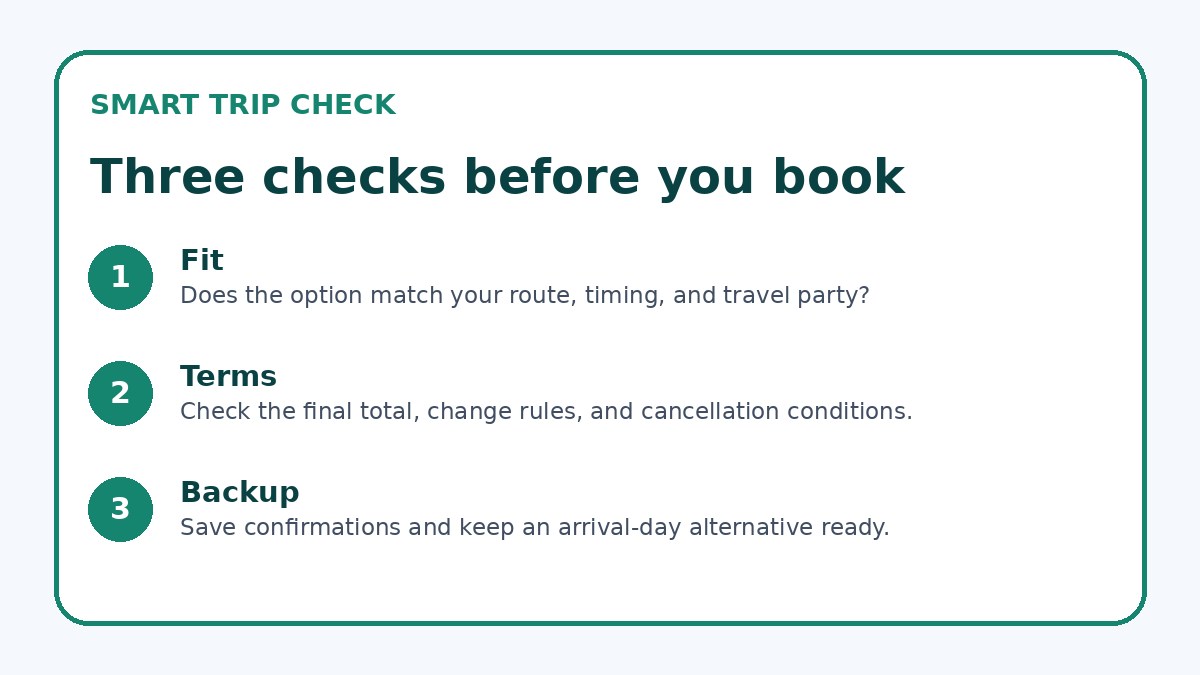
- Read the provider’s change and cancellation terms line by line on the final booking page before paying.
- Confirm seat assignments and book adjacent seats or family seating where possible.
- Check exactly what baggage, stroller, and car seat allowances are included with your fare.
- Decide whether travel insurance is needed for cancellations or medical coverage and confirm exclusions.
- If you have a connecting leg, allow ample transfer time and avoid separate unprotected bookings when possible.
- Save all confirmations, screenshots of terms, and provider contact details for quick rebooking if plans change.
What to verify on the booking page and how to protect your family
When you reach a provider’s booking page, verify the exact change and cancellation policy: are changes allowed without fee, do you pay just the fare difference, and is the refund processed to the original payment method? Confirm baggage allowances, stroller or car seat rules, and whether family or child fares apply automatically or require a separate booking action. Look for explicit mention of seat reservations for families because holding adjacent seats may require an extra fee or special request, and verify how name corrections are handled if you need to swap passengers within the booking.
Beyond the booking page, consider purchasing a flexible travel insurance policy that covers trip interruption, medical issues, and delays — but read exclusions carefully to ensure the coverage applies to changes you anticipate. If you book separate legs, leave buffer time for transfers and avoid tight same‑day connections. Keep copies of booking confirmations, change logs, and the provider’s contact phone or chat details so you can act quickly if a change is necessary; having the right documentation speeds rebooking and refunds, which is crucial when travelling with children.
Frequently asked questions
Should I book flexible train tickets for all family members or just the parents?
Book flexibility for every passenger whose absence would force a change of plans. If one child is sick, a ticket held only by a parent may not let you alter the child’s seat without a full rebooking. Some providers allow name changes or swapping within a family booking, but others treat each ticket individually. If you value the option to alter the composition of the travelling party at short notice, choose flexible fares for each person or verify that the provider’s policy permits easy passenger substitutions.
Is it safer to buy flexible tickets or to rely on travel insurance?
Both have roles: flexible tickets give immediate ability to rebook or refund directly with the transport provider, which is faster and often simpler for day‑of changes. Travel insurance can reimburse you for covered reasons like illness or certain disruptions but usually requires documentation and a claims process. If you want fast on‑the‑spot changes with children, flexible fares are more reliable; if you’re protecting against specific catastrophic events, insurance can be a cost‑effective complement.
How do I compare flexibility across trains, flights and ferries when booking?
Compare the precise terms: allowable changes, when penalties apply, whether refunds are processed to your card or travel credit, and luggage/seat rules. Don’t assume similar language means identical protection — ‘flexible’ on one provider can be different on another. Use the booking page to confirm the fees for a change, the window for fee‑free modifications (if any), and whether family seating options are guaranteed. For current availability and to compare options quickly, you may optionally check a comprehensive site like Trip.com, but always confirm terms on the provider’s final booking page before committing.
Final planning note
For families traveling between London and Paris, the best ticket flexibility depends on how much risk you can tolerate and what disruptions matter most. Flexible fares reduce stress and save time when plans change, while semi‑flexible or advance fares can save money if your itinerary is firm. The smartest approach is intentional: decide which legs you must protect, verify exact change and refund rules on the provider’s booking page, secure family seating, and consider insurance for added financial protection. With those steps you’ll be prepared to choose a booking strategy that balances cost, convenience, and the unpredictability of family travel.
Continue planning
Check current options and final conditions
Use the provider page to confirm live availability, the final total, cancellation terms, and every condition that matters to your trip.
This evergreen planning guide was created with AI-assisted drafting and a structured quality review. It does not display live prices, schedules, availability, visa guidance, or provider rankings. Verify current details before booking. Some links are affiliate links; we may earn a commission at no additional cost to you.