
If you’re traveling solo between London and Paris and carrying more than a daypack, your main decision is this: choose transport and ticket types that match how much you want to carry, how mobile you want to be, and how much time you have. For many solo travelers the high-speed train option minimizes transfers and lets you keep your bags with you, while flights or coach routes can be better if you prioritize price or specific departure points. Before you book, identify realistic luggage dimensions and weights, confirm allowed baggage on the provider’s booking page, and compare station-to-station transfer times. This article walks through tradeoffs for door-to-door planning, explains what to check on provider pages, and gives a short checklist so you can book with confidence.
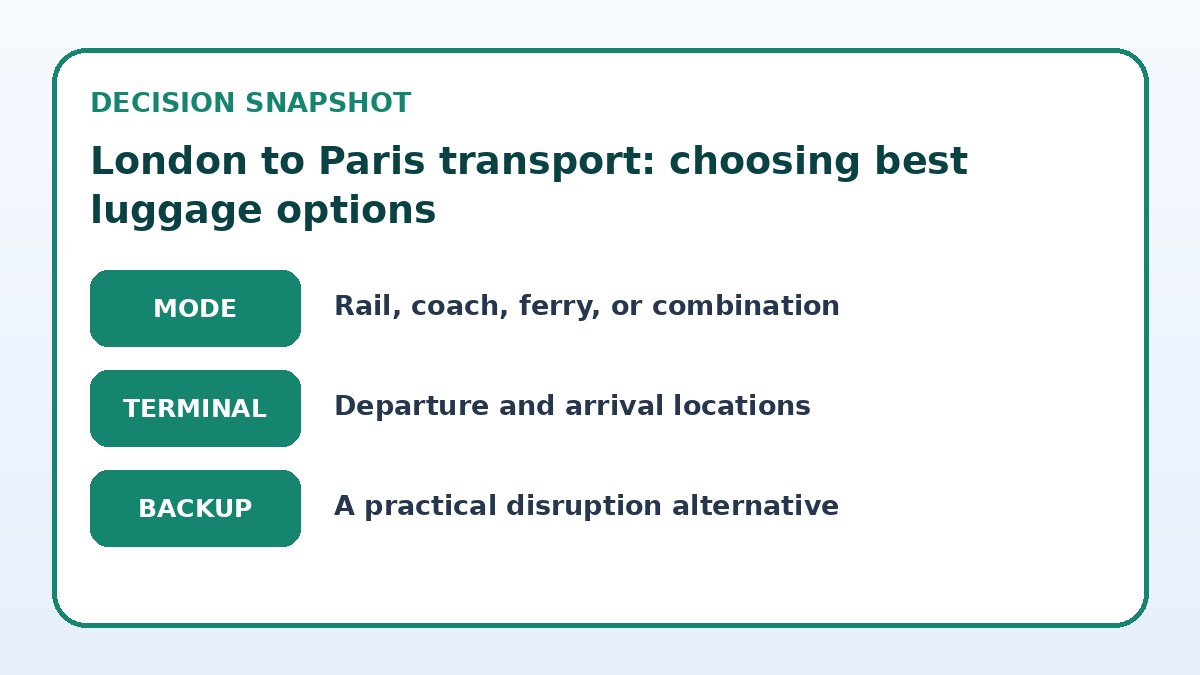
See current options before you compare the details
Availability and final conditions change. Open Trip.com now or keep reading for the practical comparison.
Compare transport modes by luggage handling
When you plan London to Paris travel with luggage, start by mapping how many times you will touch your bags. Trains usually offer the simplest chain: check into London, travel from a central station, and step off in Paris with no aircraft hold or extra reclaim. That reduces the risk of delays caused by checked-bag processing and missed connections, and keeps your luggage visible during the journey. But some train fares restrict the size of bags on crowded services or have limited space near seats, so mentally reserve room for a medium suitcase and a daypack rather than shipping trunks.
Flights add a separate handling stage because most travelers check bags into the hold, which means dropping luggage at check-in and collecting it at baggage claim after arrival. That may be fine if your bags are large or you’re transporting items that don’t fit carry-on rules, yet it increases the number of transfers and the chance of misrouting. Coaches and ferries often accept bulky items with dedicated storage compartments, but transfer times, frequent stops, and long border procedures can make the trip slower. For each mode, verify luggage policies and allowed dimensions on the provider’s booking page before finalizing a ticket.
Station and airport transfers: practical choices
Beyond the moving vehicle itself, the time and cost to get to and from departure and arrival points shapes the best choice for solo travelers with luggage. City-center stations reduce last-mile hassle because you’re more likely to arrive directly at your neighborhood, and many stations have lifts, ramps, and porters for assistance. However, some older stations include stair-only platforms or long tunnels; if your suitcase is heavy, check station accessibility details and plan your route inside the station. Pre-booked door-to-door services, local taxis, or rideshares can remove a heavy-carry burden, but always compare those additional transfer times and costs against any savings from a cheaper through-ticket.
Airports are typically further from central locations and require more internal movement — check-in counters, security lanes, and baggage reclaim areas add time and effort when managing luggage solo. If you choose an airport option, allow ample buffer for timed steps and confirm whether your ticket includes priority lanes or fast check-in, which can matter when you’re solo and handling bags. For coach or ferry terminals, research where luggage is stored on board and whether you can access your bag during the journey. The practical rule: prefer routes that minimize repeated lifting and tight connection windows.
| Approach | Best for | Tradeoff to check |
|---|---|---|
| High-speed train (central station to central station) | Minimizing handling steps and quicker city-center arrival | May have limited dedicated luggage space and tight seat-area storage |
| Flight (airport to airport) | If airports match your schedule or origin/destination convenience | Adds check-in, security, and baggage reclaim stages that increase handling |
| Coach or ferry | Lower-cost travel with allowance for bulkier items | Often slower with more stops and longer door-to-door time |
| Multimodal with pre-booked transfers | Maximizing comfort and minimizing stairs or public-transport carrying | Higher total cost and requires coordinating multiple bookings |
Ready to check the option that fits your plan?
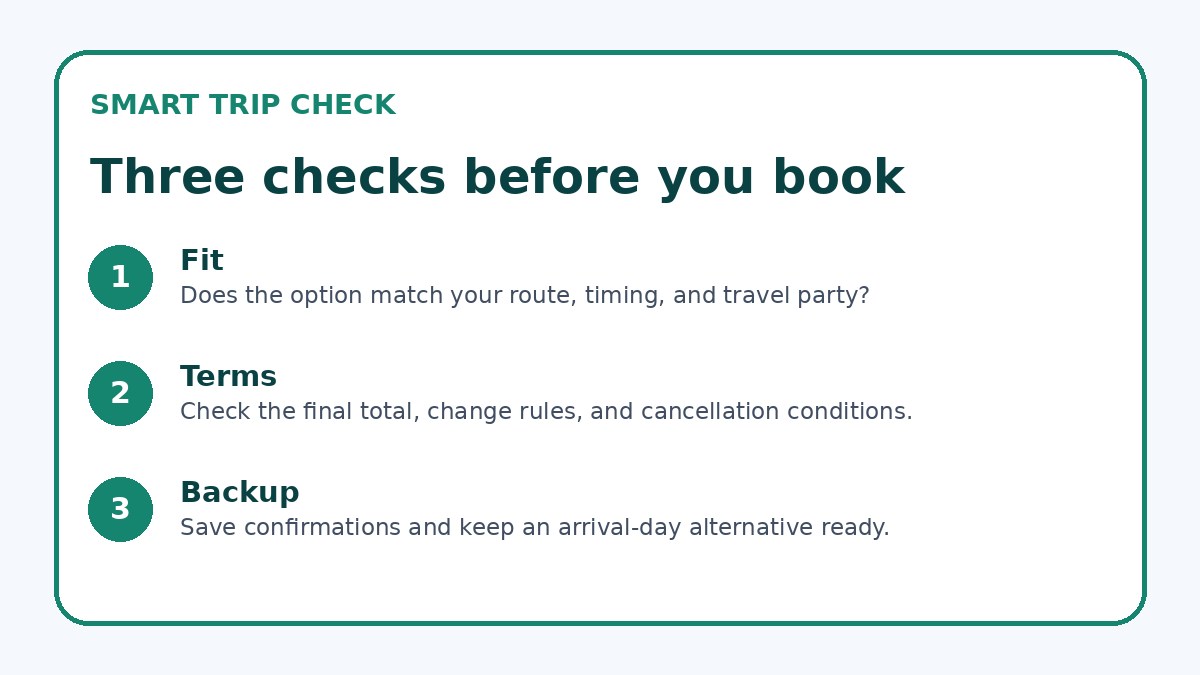
Use your exact dates and traveler details so the provider page can show the current total and conditions.
Packing and gear choices for single travelers
Select luggage that you can manage alone across cobbled streets, station ramps, and short platform gaps. A single wheeled suitcase with a robust handle and smooth-rolling wheels usually beats two smaller bags because it centralizes weight and frees one hand. Add a slingable daypack that you can wear when maneuvering stairs or walking short distances. Use packing cubes and an external quick-access pouch for passport, tickets, and essentials so you avoid opening the main bag in crowded places; keeping important documents close reduces stress at checkpoints and ticket barriers.
Consider weight distribution more than absolute size. If you travel with a backpack-style carry-on, practice loading it so weight sits close to your spine; heavy suitcases should be packed with frequently used items near the top for quick retrieval. Bring a lightweight luggage strap and a compact luggage scale to prevent surprises when you check a bag or if you need to shift items between bags. Also check whether your accommodation has lift access and luggage storage options for early arrivals or late departures — that affects how much you want to carry on the move.
Before you book
- Weigh and measure all luggage; note dimensions and recorded weight to match booking rules.
- Check the carrier’s final booking page for exact baggage allowances, fees, and any special-item rules.
- Plan door-to-door time including transfers; add 30–90 minutes buffer for security, check-in, or customs.
- Confirm station accessibility (lifts, ramps) and pre-book assistance if you need it for heavy luggage.
- Pack essentials in a small daypack and keep passport, tickets, and phone reachable at all times.
- Save screenshots or PDFs of your booking and baggage policy so you can show them at check-in if needed.
Booking decisions and what to verify before paying
When you reach the booking screen, treat luggage rules as a ticket feature, not a peripheral note. Confirm the exact allowed dimensions and weight for both carry-on and checked baggage, and whether the fare includes any checked bag at all or only cabin luggage. If a fare shows flexibility, verify how changes or cancellations affect luggage allowances and whether upgrades to a higher class or a flexible ticket change baggage entitlements. Always print or save the final baggage policy page or screenshot it from the provider’s site so you can reference it at check-in.
Also verify station names, platform transfer times, and whether connections are guaranteed by the operator for the ticket you buy; if a connection is not protected, allow longer buffers between segments. For flights, check how long recommended check-in and security times are, and whether priority services are included. Where available, read the luggage entry on the provider’s booking page for special items such as sports equipment, bikes, or musical instruments and note any advance booking requirements. Trip.com can be used to compare current availability and conditions, but always rely on the chosen carrier’s final page for definitive baggage rules.
Frequently asked questions
Is the train usually better than flying if I have medium-sized luggage?
For many solo travelers with a medium wheeled suitcase and a daypack, the train is often the simpler option because you avoid checked-bag handling and typically arrive in a central station. That means fewer transfers and less time spent queuing for check-in or reclaim. However, check the specific service’s luggage guidance before booking — some high-demand trains have limited onboard space and different carriage layouts. If your luggage is bulky or you need to transport unusual items, verify whether those are permitted or need advance reservation on the provider’s final booking page.
What should I do if I need to travel with oversized or special luggage?
If your luggage exceeds standard dimensions or is a special item (bike, large equipment), you must confirm carrier rules in advance. Many providers require advance booking for oversized items, specify packing requirements, or route such items on particular services. Do not assume standard fares cover them. Contact the carrier or check the detailed baggage policy on their official booking page to understand costs, required advance notice, and any limits on carriage. Allow extra time at departure for handling and possible separate check-in procedures.
How far in advance should solo travelers arrive when traveling with luggage?
Arrival time depends on the transport mode and how much you need to process: trains typically need less pre-departure time than flights, but station layouts, busy periods, and ticket checks matter. For flights, factor in time for check-in, security, and bag drop; for trains, allow time for platform changes and boarding with luggage. Build a comfortable buffer so you don’t rush with heavy bags; if a connection is tight, choose a later service or pay for a flexible fare. Always verify provider recommendations on their booking page to align with current procedures.
Final planning note
Solo travel between London and Paris with luggage is a manageable challenge when you match transport mode, packing, and transfers to your priorities. Trains often simplify handling and reduce door-to-door time, while flights may suit particular origin or destination needs despite added baggage stages; coaches and ferries can be economical for bulky items. Before you book, measure and weigh your luggage, read the carrier’s baggage rules on their booking page, and plan transfers that avoid repeated heavy lifting. Use the checklist to confirm the practical details, and remember: clear paperwork and realistic buffers reduce stress and keep the journey focused on the destination.
Continue planning
Check current options and final conditions
Use the provider page to confirm live availability, the final total, cancellation terms, and every condition that matters to your trip.
This evergreen planning guide was created with AI-assisted drafting and a structured quality review. It does not display live prices, schedules, availability, visa guidance, or provider rankings. Verify current details before booking. Some links are affiliate links; we may earn a commission at no additional cost to you.