
Practical answer first: before you buy any Las Vegas travel deal, add up the real trip cost — not just the headline fare or room rate. For a solo traveler that means combining your flight or bus ticket, all taxes and baggage fees, airport transfers, hotel resort or parking fees, planned gambling or entertainment budgets, meals, rideshares, and a modest contingency buffer. Only when that total fits your budget should you commit. This approach prevents surprises (a cheap room can become expensive once resort fees and parking are added) and helps you compare options like staying on the Strip versus nearby neighborhoods, or choosing a package with a prepaid show versus cash purchases on site. The rest of this article explains the trade-offs, what to verify on supplier booking pages, and how to choose the option that gives you the comfort and flexibility you want.
See current options before you compare the details
Availability and final conditions change. Open Trip.com now or keep reading for the practical comparison.
Counting every travel component: flights, transfers and luggage
Start with transport into and out of Las Vegas. Look at ticket prices for direct and connecting flights, bus or coach options, or long-distance rideshares. When comparing fares, explicitly add any optional charges you would pay: checked baggage, seat selection, in-flight meals, and change or cancellation fees. For ground travel, check shuttle timetables and whether prebooking is required; if you plan to arrive after midnight, rideshare surge pricing or late-night cab supplements can change the final cost substantially.
When you see a fare or deal, go to the airline or operator’s final booking page and verify the total amount before payment. Confirm the fare class, baggage allowance, and whether baggage or extras are included. If you care about flexibility, check the change and cancellation terms and whether a refundable fare is worth the extra cost for your risk tolerance. Don’t forget to convert any foreign charges to your home currency to understand the real cost.
Hotel math: posted rate vs. what you actually pay
A hotel’s nightly rate is rarely the full story in Las Vegas. Many hotels add resort fees, self-parking or valet fees, and sometimes destination or amenity surcharges. Before you book, find the final total on the booking page or contact the property to confirm which fees are unavoidable and which are optional. Also check whether breakfast, gym access, or Wi-Fi are included or charged separately; small daily charges can add up across a multiday stay.
Consider location trade-offs: staying on the Strip can save rideshare costs and walking time to major casinos and shows but may come with higher resort fees. Nearby neighborhoods or Downtown Las Vegas often have lower base rates and fewer surcharges, though you’ll weigh that against the cost and convenience of transport. If you want to sleep in during the day or avoid casino noise, check room views and policies on quiet floors or non-smoking rooms at booking.
| Approach | Best for | Tradeoff to check |
|---|---|---|
| Book lowest base-rate hotel on the Strip | Travelers prioritizing location and walking to shows | Higher resort and parking fees can erase nightly savings; verify final total and noise levels before booking |
| Choose a nearby off-Strip hotel with free parking | Budget-conscious travelers who will rent a car or accept a short rideshare | You may spend more on transport to main attractions and miss late-night convenience |
| Buy a bundled flight+hotel deal | Travelers wanting one transaction and potential bundled discounts | Packages can limit flexibility; check which cancellations or changes are allowed for each component |
| Book refundable fares and rooms | Travelers who may change dates or want insurance against disruption | Refundable options cost more up front, which reduces short-term savings |
Ready to check the option that fits your plan?
Use your exact dates and traveler details so the provider page can show the current total and conditions.
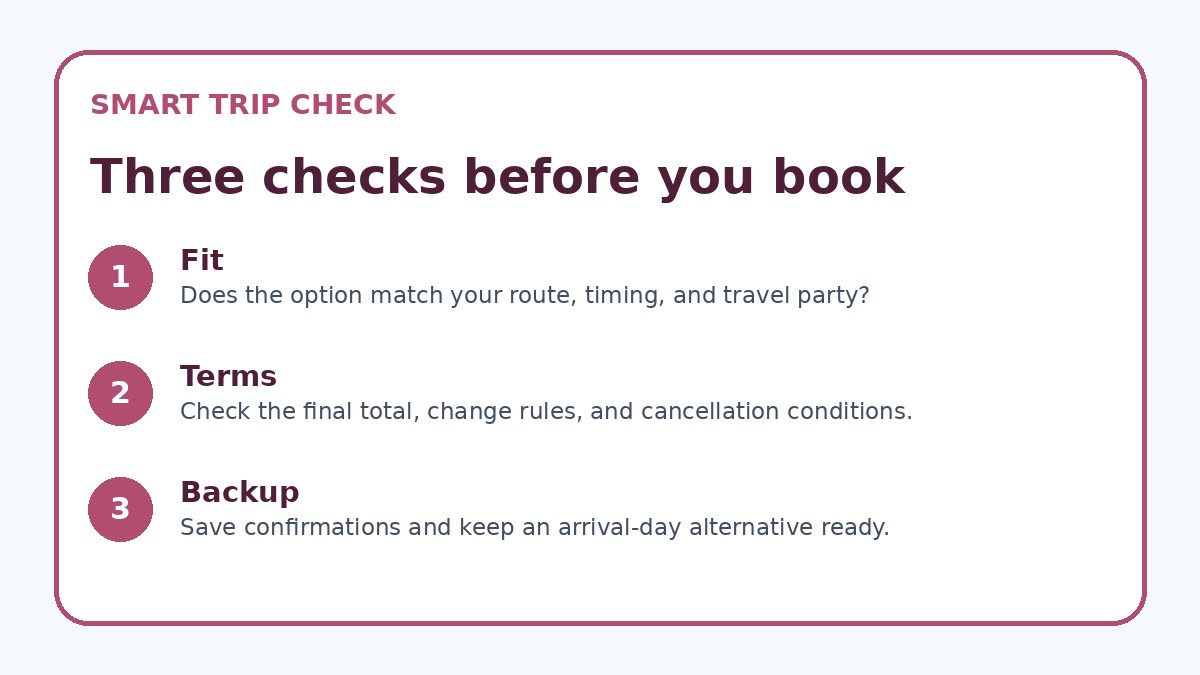
Budgeting daily expenses and entertainment choices
Plan a realistic daily budget that includes meals, coffee runs, tipping, rideshares, and entertainment. Decide in advance whether you’ll allocate money for gambling, nightclubs, or several shows and tours. For shows, confirm seating category options and whether a package price includes tickets; when seeing a promotional package, verify seat location, refund terms, and voucher redemption steps on the provider’s booking page. For attractions like observation decks or day trips, check if pre-purchase is required and whether timed-entry reduces wait times.
Meals come in many price bands in Las Vegas, from fast-casual to high-end dining. If you like variety, set a daily cap and prioritize splurges (a steak dinner or brunch) rather than letting convenience dictate higher-cost pickups. Factor in gratuities—service workers depend on tips and some restaurants include service charges for larger parties. Finally, leave a contingency fund of 10–20% for unplanned opportunities or last-minute changes.
Before you book
- Open the airline or operator’s final booking page and confirm total fare, baggage allowances, and refund/change policies before paying.
- On the hotel booking page, verify nightly rate, resort fees, parking costs, and exactly which amenities are included.
- Estimate a daily spending cap covering meals, tips, rideshares, and at least one entertainment or attraction expense.
- Compare transport options from the airport: shuttle schedules, taxi fares, and typical rideshare windows for your arrival time.
- Calculate the extra cost for refundable rates and decide whether the flexibility is worth the premium for your trip.
- Save copies of confirmation emails and screenshots of cancellation terms in case policies change or charges appear incorrectly.
Choosing flexible bookings and what to verify before paying
Flexibility matters for solo travelers who may change plans. When possible, compare refundable and nonrefundable fares or room rates and calculate how much extra you’d pay to keep booking flexibility. Read cancellation policies carefully: confirm the exact timestamp for penalty-free cancellation, whether refunds are instant or take processing time, and which taxes or third-party fees might be nonrefundable. If you’re booking a package that bundles flight and hotel, verify which component controls the change rules and how to request modifications.
For any supplier-specific fact that can change—resort fee amounts, shuttle schedules, included amenities, or fare class rules—go to the provider’s final booking page or contact customer service to confirm before payment. If you use a third-party site, note that the displayed total may differ from the supplier’s final invoice; Trip.com can be used as one place to compare availability, but always check the airline or hotel page to verify policy details and final totals.
Frequently asked questions
How do I compare a package deal to booking components separately?
To compare a package versus separate bookings, list every component the package covers and get isolated quotes for each: flight, hotel base rate, airport transfers, and any included tickets. Add known taxes, baggage fees, and resort charges to the separate quotes so you compare final totals. Check the package’s change and cancellation rules and see whether one supplier controls them. If the package is cheaper but less flexible, decide if the savings outweigh the potential cost of changing plans.
Are resort fees required at every Las Vegas hotel and how should I treat them?
Resort fees are charged by many hotels in Las Vegas but the amount and included services vary. Treat resort fees as part of the non-negotiable room cost unless the property confirms they are optional. Before booking, verify on the hotel’s final booking page what the resort fee covers—Wi‑Fi, gym access, or local calls are common inclusions—and whether daily fees apply to all room types. Include this amount in your nightly total to compare true costs between properties.
What’s the smartest way for a solo traveler to limit unexpected spending in Las Vegas?
Set clear spending limits by creating a daily cash or card budget for meals, rideshares, and entertainment, and leave an emergency buffer separate from daily funds. Prebook high‑cost items you care about, such as a headliner show or a special restaurant, to lock in price and avoid impulse splurges. Use a separate card or digital wallet for discretionary entertainment so you can monitor those charges easily, and check cancellation policies to avoid surprise nonrefundable losses.
Final planning note
For solo travelers, careful cost comparison before booking reduces stress and gives clearer control over your Las Vegas trip. Don’t be tempted by a low headline fare without adding baggage, resort, parking, and transfer costs—those extras often determine whether a deal is genuinely good for your needs. Decide which trade-offs you accept: location versus fees, flexibility versus upfront savings, or bundled convenience versus itemized control. Verify any provider-specific facts on the supplier’s final booking page, keep a contingency fund, and use the checklist to confirm totals before payment. With the full trip cost mapped out, you’ll make booking choices that match your budget and travel style.
Continue planning
Check current options and final conditions
Use the provider page to confirm live availability, the final total, cancellation terms, and every condition that matters to your trip.
This evergreen planning guide was created with AI-assisted drafting and a structured quality review. It does not display live prices, schedules, availability, visa guidance, or provider rankings. Verify current details before booking. Some links are affiliate links; we may earn a commission at no additional cost to you.