
If you’re visiting Kyoto for the first time and want freedom to change plans, focus on cancellation terms before you buy. The practical choice: prioritize bookings that explicitly state refundable or change-permitted options on the final checkout page. For flights, look for fares that permit free name changes or fee-free exchanges; for hotels, compare refundable and non-refundable rates side by side and note the deadline to cancel without penalty. For tours and experiences, check whether a full or partial refund is offered, or if only a credit is available. Don’t assume similar wording means the same rules: the provider’s final booking confirmation and the purchase page are the authoritative sources. Trip.com can be one place to compare availability, but always confirm the exact cancellation language and any fees on the supplier’s payment screen before you commit.
See current options before you compare the details
Availability and final conditions change. Open Trip.com now or keep reading for the practical comparison.
Flights: comparing flexible fares and the real tradeoffs
When shopping flights to Kyoto, start by filtering for refundable or flexible fares where available, then compare base fare differences and any change-fee policies. Flexible fares may allow date or routing changes without a penalty or with a small fee; refundable fares generally allow you to cancel for a full or partial refund. However, airfare class names and fare rules differ widely between airlines and even between routes. Never rely on summary labels—open the full fare rules on the carrier’s checkout page and confirm whether taxes, fuel surcharges, or third-party booking fees are refundable.
A common tradeoff is price versus certainty: lower fares often come with strict cancellation or change restrictions and minimal or no refunds, while flexible fares cost more up front but reduce the risk of losing the entire ticket. If you anticipate schedule uncertainty—open dates, possible itinerary shortening, or chance of illness—spending a little more for flexibility can be worth it. For multi-leg trips, check whether changes to one segment affect the rest of the reservation. Finally, if booking through an online travel agency, verify whether refunds come from the carrier or the agency and how long the refund processing takes.
Hotels and ryokans: refundable rates, deposit rules, and blackout risks
Hotel and ryokan rates in Kyoto commonly include both refundable and non-refundable options. Refundable rates usually allow cancellation up to a specified time before arrival—often 24 to 72 hours, though the exact deadline varies—and may require a credit card guarantee. Non-refundable rates are cheaper but typically forfeit the full payment if you cancel. Important to check: whether the property charges a deposit at booking, whether the penalty is a percentage of the stay or the full amount, and whether the property’s policy applies differently for group bookings, holiday periods, or high-demand dates.
A subtle risk is blackout or peak-date restrictions: a refundable rate on low-demand dates might become limited or suspended during festivals, and some properties apply different rules for special event periods. Also confirm whether third-party platform cancellations follow the property’s stated rules or add their own fees. If you need room-type flexibility—like the option to switch from a standard room to a suite—ask whether that change is allowed without incurring a new cancellation penalty. Always capture the provider’s cancellation window and penalty language from the confirmation email in case you need to argue or claim a refund later.
| Approach | Best for | Tradeoff to check |
|---|---|---|
| Book non-refundable to save money | Travelers with fixed dates and low change risk | Lowest upfront cost but full financial loss if plans change |
| Choose refundable hotel and tour rates | Visitors who may need to shift dates or cancel | Higher price but ability to cancel with limited or no penalty |
| Buy flexible or change-permitted airfare | Multi-leg trips or uncertain arrival/departure times | More expensive fares but easier to rebook or adjust |
| Secure non-refundable bookings plus travel insurance | Budget-focused travelers wanting some protection | Insurance may not cover all supplier-imposed penalties; check policy limits |
Ready to check the option that fits your plan?
Use your exact dates and traveler details so the provider page can show the current total and conditions.
Tours, day trips, and activities: credits, full refunds, and timing
Tour operators and activity providers in Kyoto vary widely in their refund practices. Some offer full refunds up to a few days before the start, others only allow exchanges or provide vouchers for future use. For popular guided tours, cancellation windows may be stricter to cover guide staffing or entrance reservations. When booking, read whether refunds are processed to the original payment method, issued as a credit, or subject to an administrative fee. Also check whether weather-related cancellations follow a separate policy and whether time-zone differences affect the deadline to cancel.
Decide what type of flexibility matters most: a full refund, the ability to switch dates, or simply transferability to another guest can each matter differently depending on your risk tolerance. If a provider only offers credits and you’re uncertain you’ll return to Japan, that tradeoff reduces practical value. For high-cost experiences—private tea ceremonies, multi-day guided trips, or workshops—ask the operator directly about emergency cancellations, documentation they require for medical refunds, and the timeline for receiving any refund or voucher.
Before you book
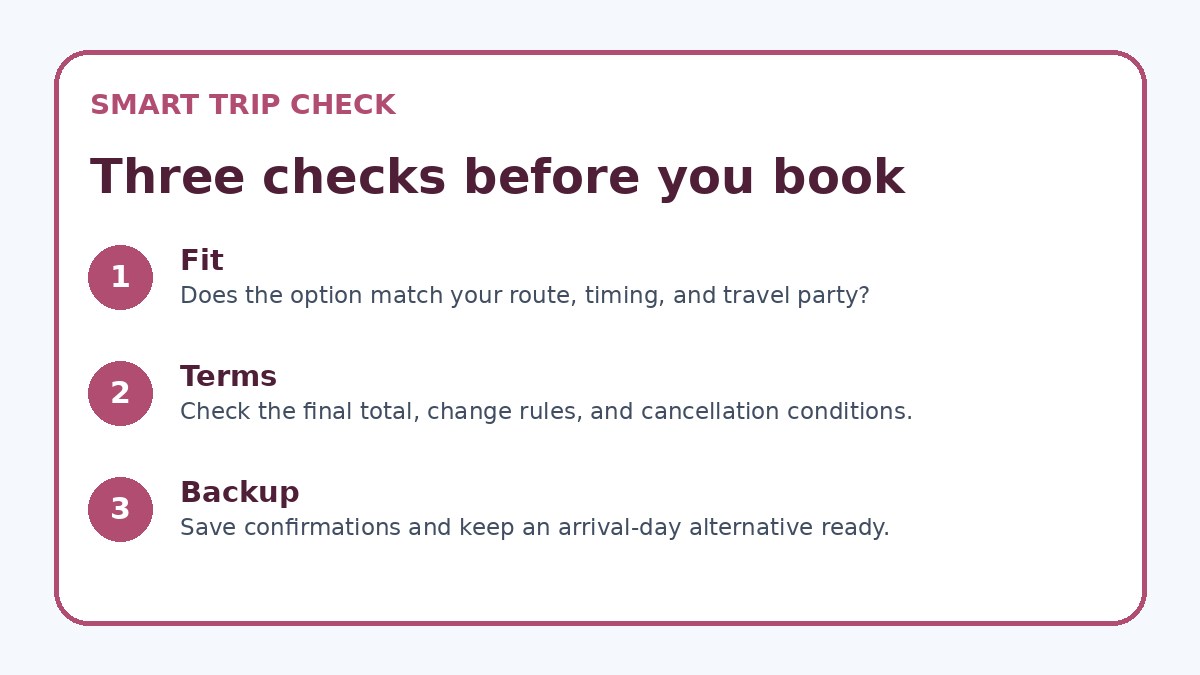
- Open the airline’s full fare rules on the carrier’s checkout page and save a screenshot of the cancellation and change terms.
- Compare refundable and non-refundable hotel rates, noting the exact cancel-by date and whether a deposit is charged.
- For each tour or activity, confirm whether cancellations result in a monetary refund, credit, or date change and record the deadline.
- If booking through an OTA, verify who issues a refund (OTA or supplier) and the expected processing time shown on the payment screen.
- Assess whether travel insurance covers supplier change fees and purchase a policy that matches the trip’s cancellation risks.
- Save confirmation emails and the provider’s written cancellation policy so you can reference them if a dispute arises.
How to choose: decision criteria for first-time visitors
Start by mapping your personal risk profile: how likely are your dates to change, and how important is the money you might forfeit? For short, fixed trips with set dates, locking in a lower non-refundable rate might make sense. For open-ended or multi-stop itineraries, prioritize refundable or change-permitted bookings. Always compare the incremental cost of flexibility to the total potential loss if you had to cancel. If the extra fee is small relative to the trip’s total value, paying for flexibility can be a reasonable hedge.
Also weigh logistical friction: refundable airline tickets that require a phone call to process a change have different convenience than instant online exchanges. Consider time-to-refund and cancellation service channels—online, phone, or email—and whether the provider’s support hours align with your schedule. Finally, for every booking, save screenshots and written confirmation of the cancellation terms from the supplier’s final payment page; these are the documents you’ll need if there’s a dispute.
Frequently asked questions
Should I always buy flexible tickets for Kyoto travel deals?
Not always. Flexible tickets are worthwhile if your dates or plans are likely to change, if you’re booking multi-leg travel, or if losing the fare would be a major financial hit. For travelers with fixed schedules—set vacation days, work commitments, or confirmed events—the incremental cost of flexibility may not justify the purchase. Compare the price difference and consider alternatives like refundable hotels paired with lower-cost non-refundable flights, or buy travel insurance to cover specific cancellation reasons. Always verify the exact change and refund terms on the provider’s payment and confirmation pages before deciding.
How do I know if a tour’s cancellation policy is trustworthy?
Trustworthiness depends on clarity and specificity. A reliable policy states exact deadlines, refund percentages, and the method of refund (original payment method or credit). Avoid purchases where the terms are vague or only available after booking. For higher-cost tours, request the policy in writing via email if it’s not obvious on the booking page. Also check whether the operator lists separate weather or force majeure rules. If booking through an agent or OTA, confirm whether refunds pass through that platform or come directly from the operator and what their dispute process is.
Can travel insurance replace flexible booking options?
Travel insurance can cover many cancellation scenarios but is not a complete substitute for flexible bookings. Policies vary: some reimburse non-refundable costs for covered reasons (illness, family emergency), while others exclude routine schedule changes or voluntary cancellations. Insurance also usually requires timely documentation and may have claim limits or deductibles. If you want both protection and convenience, combine flexible booking options for critical items (like long-haul flights) with insurance for medical or emergency coverage. Always read the insurance policy’s cancellation coverage and claim process before relying on it.
Final planning note
For first-time visitors to Kyoto, balancing cost and cancellation flexibility comes down to assessing your personal risk and what you value most: lowest price, easy date changes, or guaranteed refunds. Start by extracting and saving the precise cancellation language from the provider’s final booking and confirmation pages—those words determine what you can actually do later. Use refundable options for elements of the trip where uncertainty is highest, and consider travel insurance as a complementary layer for covered emergencies. When comparing Kyoto travel deals, weigh the incremental cost of flexibility against the potential loss you’d face if plans change; that calculation will guide the right mix of refundable bookings, flexible fares, and insured non-refundable purchases.
Continue planning
Check current options and final conditions
Use the provider page to confirm live availability, the final total, cancellation terms, and every condition that matters to your trip.
This evergreen planning guide was created with AI-assisted drafting and a structured quality review. It does not display live prices, schedules, availability, visa guidance, or provider rankings. Verify current details before booking. Some links are affiliate links; we may earn a commission at no additional cost to you.