If your flight or connecting train lands late near Kyoto, the practical priority is simple: pick a transfer and first-night stay that minimize hassle, keep you safe, and let you recover before sightseeing. For most solo travelers that means choosing a transfer mode that matches your arrival time, luggage, sleep needs, and comfort with navigating late-night transit. This guide gives a quick decision framework — walkable central hotel, short shuttle/taxi into the city, or an overnight in a nearby airport-area hotel — then explains tradeoffs you’ll weigh when you book. I’ll also list what to verify on provider pages, how to compare direct and connecting routes, and a short checklist so you don’t miss essentials at the airport or on arrival.
See current options before you compare the details
Availability and final conditions change. Open Trip.com now or keep reading for the practical comparison.
Choose where to sleep: city center versus airport area
Picking between staying in central Kyoto or an airport-area hotel is the foundational choice for a late-night arrival. A central hotel gets you closer to temples, restaurants, and evening atmosphere the next morning, and it can be worth the transfer if you arrive early enough to reach town. By contrast, an airport-area hotel eliminates late-night travel stress, offers quicker bed time after a long journey, and makes an early morning departure easier. Think about how jet lag and luggage will affect your first morning: if you want a full first day, staying centrally may save time the next day.
When comparing specific neighborhoods, prioritize safety, late-night check-in policies, and how easy it is to reach your chosen accommodation from the airport. If you prefer a quiet room for sleep, an airport hotel usually delivers that; if you want immediate access to Kyoto’s sights, a hotel near central train stations or a major bus hub will be more convenient. Also check whether your hotel has 24-hour reception, a late check-in process, and luggage storage so you can arrive late and still start exploring early.
Transfer methods: public transport, taxi, or private transfer
Public trains and buses are often the cheapest option and can drop you close to central Kyoto, but they depend on the late-night timetable and require carrying your bags. For a solo traveler comfortable navigating stations and language basics, rail or express bus may be perfectly fine, provided the schedules match your arrival. If your route includes connections, compare the door-to-door journey time and add buffer for immigration, baggage claim, and any potential delays—route planners and provider pages will list schedules you must verify before booking.
Taxis and private transfers simplify the arrival: they pick you up close to arrival gates and take you to your door, which is attractive after a long flight or if you’re carrying heavy luggage. The tradeoff is higher cost and, for taxis, variability in availability late at night. If you prefer certainty, a pre-booked private transfer or hotel-arranged pick-up can be reassuring—check the provider’s final booking page for exact pick-up locations, cancellation rules, driver contact options, and whether they wait for delayed flights.
| Approach | Best for | Tradeoff to check |
|---|---|---|
| Stay in central Kyoto and arrive late | Travelers who want next-day convenience and fewer morning transfers | May require a longer late-night transfer and more effort navigating with luggage |
| Sleep near the airport the first night | Those prioritizing rest and minimizing late-night travel stress | Adds morning travel time to reach Kyoto’s sights the next day |
| Use public rail or bus | Budget-conscious solo travelers comfortable with stations and schedules | Schedules can be limited at night and require handling luggage between connections |
| Book a taxi or private transfer | Travelers wanting door-to-door convenience and minimal walking | Higher cost and potential availability issues without prior booking |
Ready to check the option that fits your plan?
Use your exact dates and traveler details so the provider page can show the current total and conditions.
Late-night arrival logistics: documents, luggage, and safety
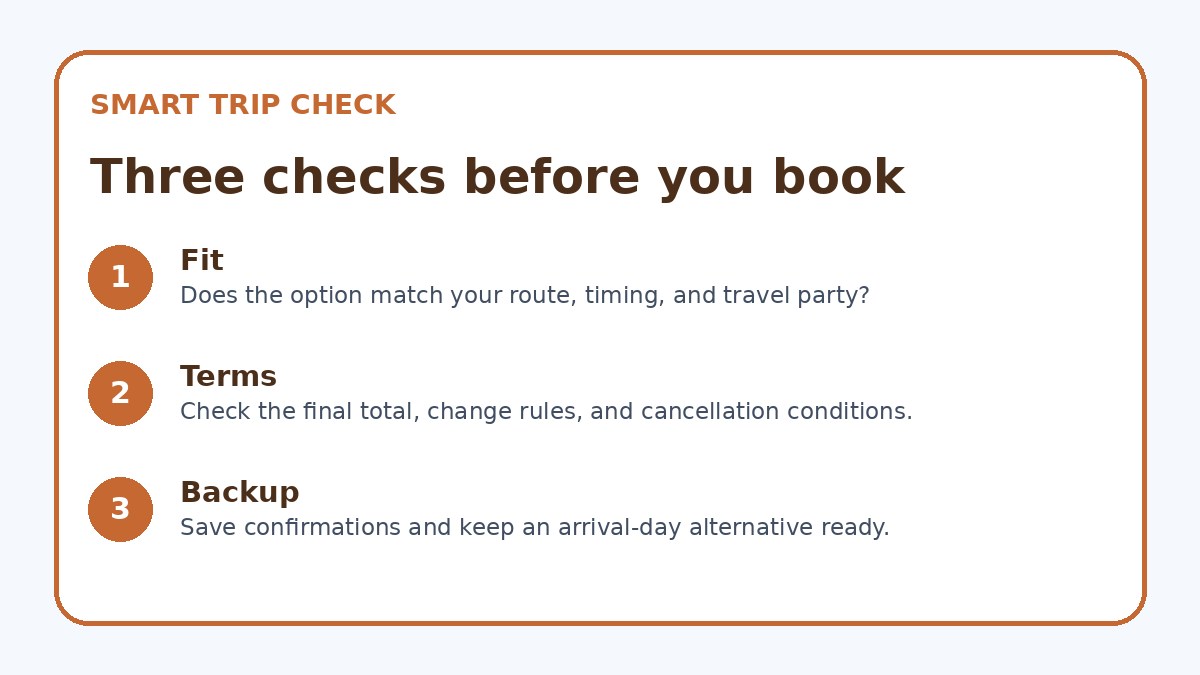
Before you travel, gather the small set of items that make late-night arrivals easier: screenshots of your booking confirmations, clear instructions to show a driver or hotel staff, and a charged phone with a roaming plan or local SIM. Carry a compact flashlight or use your phone for low-lit paths, and pack a small overnight bag with essentials so you don’t need to access checked luggage immediately. Keep a physical copy or screenshot of the address in Japanese and English for taxi drivers or station staff to avoid miscommunication late at night.
Safety for solo travelers on late arrivals is mostly about planning rather than alarm: choose well-lit pick-up points, verify the official taxi rank or hotel meeting spot, and tell someone (friend or family) where you’re staying. If you use a ride-hailing app, confirm the vehicle plate and driver identity before getting in. Finally, have a backup plan in case planned services are canceled—know the nearest 24-hour options, whether a hotel will allow late arrivals, and where to wait inside the terminal if weather or a transfer delay is a concern.
Before you book
- Confirm your flight arrival terminal and estimated time at baggage claim before you choose a transfer.
- Check the provider’s final booking page for exact pick-up/drop-off locations and late-night service rules.
- Save your hotel address in Japanese and English and screenshot it for taxi drivers or station staff.
- Pack an overnight bag with essentials accessible in your carry-on to avoid unpacking checked luggage.
- Notify someone of your hotel name and expected arrival time and share the reservation confirmation.
- Have at least two backup transfer options (rail/bus and taxi/private) in case your preferred choice is unavailable.
What to verify on booking pages and at the airport
Whenever a provider’s schedule or policy might affect your late arrival, check the booking page for exact pick-up and drop-off points, any required booking windows, and the provider’s rules about flight delays and wait times. Do not assume night services operate the same as daytime ones; confirm whether night trains, buses, or shuttles run on your specific date and whether you must reserve a seat. If you’re comparing direct and connecting options, use the provider’s route map and final booking details to confirm transfer windows and whether luggage transfer between legs is handled.
Also verify identification and payment requirements—some services require the card used for booking to be presented, others accept cash, and some may need passport details for local arrangements. For hotel pickups, confirm how to find the meeting point inside the terminal and whether the hotel waits for delayed flights or has an alternative contact number. Trip.com can be one place to compare current availability, but always read the final provider page and terms before you confirm.
Frequently asked questions
Is it safe for a solo traveler to arrive in Kyoto late at night?
Kyoto is generally safe, but late-night safety depends on specific circumstances and your comfort level. For solo travelers, reduce risk by choosing well-lit, official pick-up points, using licensed taxis or prearranged transfers, and staying at accommodations with 24-hour reception. Keep important documents and phone charger handy, and avoid isolated walking routes with heavy luggage. If you have any doubts about navigating late at night, booking an airport-area hotel for your first night or arranging a confirmed transfer through your hotel can provide extra reassurance.
How do I decide between a public transfer and a private taxi after a late arrival?
Start by comparing convenience, cost tolerance, and schedule certainty. Public trains or buses are usually more economical but depend on timetables and may involve stairs or transfers. A taxi or private transfer gives door-to-door service and reduces physical effort with luggage, which is valuable after a long day of travel. If public schedules match your arrival and you’re comfortable moving through stations, that may be fine; if not, factor the higher cost of a taxi against the benefits of speed, simplicity, and reduced stress.
What should I check on my provider’s booking page before confirming a late-night transfer?
Look for exact pick-up points inside the terminal, the provider’s policy for flight delays and waiting time, cancellation terms, and any luggage restrictions. If the transfer requires meeting at a specific exit or level, note that detail and save a screenshot for the driver. Also confirm payment methods and whether the booking requires the same card at pickup. For any transfers arranged by your hotel, verify how they identify guests and where to meet the driver in case of terminal changes or delays.
Final planning note
Planning a late-night arrival in Kyoto is about matching your energy level, luggage, and tolerance for late travel to the right transfer and first-night accommodation. Choose whether you want to prioritize immediate access to Kyoto’s center or a quick, low-stress bed near the airport. Compare public schedules against the certainty of a taxi or pre-booked transfer and always verify pick-up points, flight-delay policies, and luggage rules on the provider’s booking page. With a clear decision framework and a few backups saved, a late arrival can be a smooth start to your solo trip in Kyoto.
Continue planning
Check current options and final conditions
Use the provider page to confirm live availability, the final total, cancellation terms, and every condition that matters to your trip.
This evergreen planning guide was created with AI-assisted drafting and a structured quality review. It does not display live prices, schedules, availability, visa guidance, or provider rankings. Verify current details before booking. Some links are affiliate links; we may earn a commission at no additional cost to you.