If you want the simplest, most practical single option from Seoul to Busan as a solo traveler, start by comparing direct high-speed trains and budget flights for total door-to-door time and reliability. For many solo travelers the high-speed train offers the clearest tradeoff: comfortable seats, predictable schedules, and city-center-to-city-center stations that reduce transfer hassle. But the right choice depends on what you value—lowest out-of-pocket cost, minimizing trip time, luggage ease, or flexibility in case plans shift. This article puts the practical answer up front, then explains how to weigh transit time, station access, comfort, and transfer logistics. I’ll also list testing steps to compare current services, what to verify on booking pages, and a compact checklist so you can decide and book with confidence.
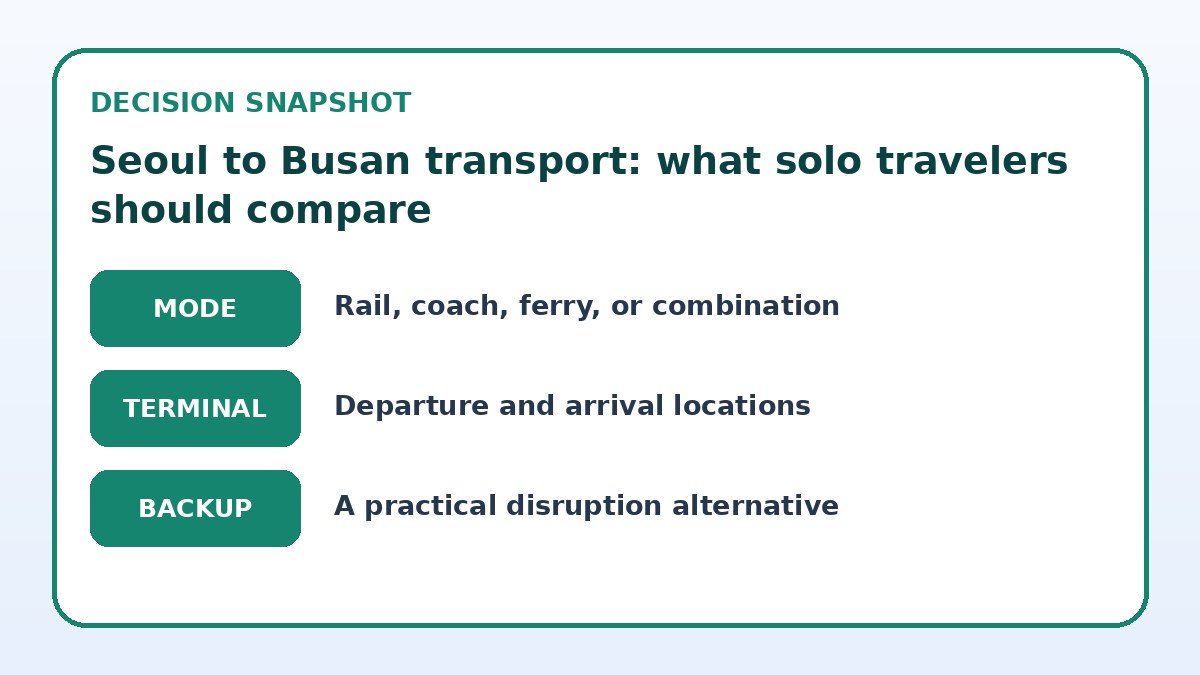
See current options before you compare the details
Availability and final conditions change. Open Trip.com now or keep reading for the practical comparison.
How to prioritize what matters to you
Start by listing the three factors that matter most for this trip: total door-to-door time, comfort and space, and flexibility or cost. For a short city break where time is limited, minimizing door-to-door travel time will often push you toward higher-speed options that depart from central stations or airports. If avoiding transfers and the stress of tight connection windows matters most, prefer options that drop you directly in or very near your arrival neighborhood in Busan.
Consider luggage and personal comfort: solo travelers carrying large bags or camera gear may value guaranteed seat and space more than the slight savings a bus or low-cost flight might offer. Also factor in how you like to spend travel time—if you work, need power outlets, or prefer standing and stretching, shorter, faster transit may be worth the premium. Finally, think about contingency: how difficult will it be to change plans if a service is full or delayed? That can steer you toward providers with flexible exchange or refund terms, which you must verify on their booking pages.
Comparing train, flight, bus and driving in practical terms
High-speed trains typically offer city-center departure and arrival points, which reduces the need for extra transfers. Trains usually provide more legroom, the ability to move about, and consistent schedules that solo travelers find easy to plan around. When comparing train options, check whether services are direct or require transfers, confirm seat reservations, and verify boarding and platform procedures on the operator’s booking page. For Seoul to Busan specifically, compare total journey times including the walk or transit to the stations rather than headline travel time alone.
Flights can shorten pure air time but add time for check-in, security, and transfers to and from airports—sometimes making the air option not much faster door-to-door. Buses can be the cheapest and often go directly between terminals, though they may stop en route and offer less space and fewer amenities. Driving gives full control of schedule but places all navigation and fatigue responsibility on you. For each mode, add local transfer times, luggage handling, and potential crowds into your practical comparison, and confirm baggage policies and transfer options on the provider’s official pages.
| Approach | Best for | Tradeoff to check |
|---|---|---|
| Direct high-speed train | Minimizing overall stress and predictable city-center travel | May be higher cost than a bus and depends on direct-service availability |
| Budget flight | Reducing in-vehicle travel time when airports are conveniently accessible | Adds airport transfer time and security steps that can erode time savings |
| Intercity bus | Lowest out-of-pocket ticket cost and simple point-to-point routing | Longer journey time, less space, and more vulnerability to road delays |
| Driving or car service | Maximum schedule flexibility and door-to-door control | Solo responsibility for navigation, fatigue, and higher variable costs |
Ready to check the option that fits your plan?
Use your exact dates and traveler details so the provider page can show the current total and conditions.
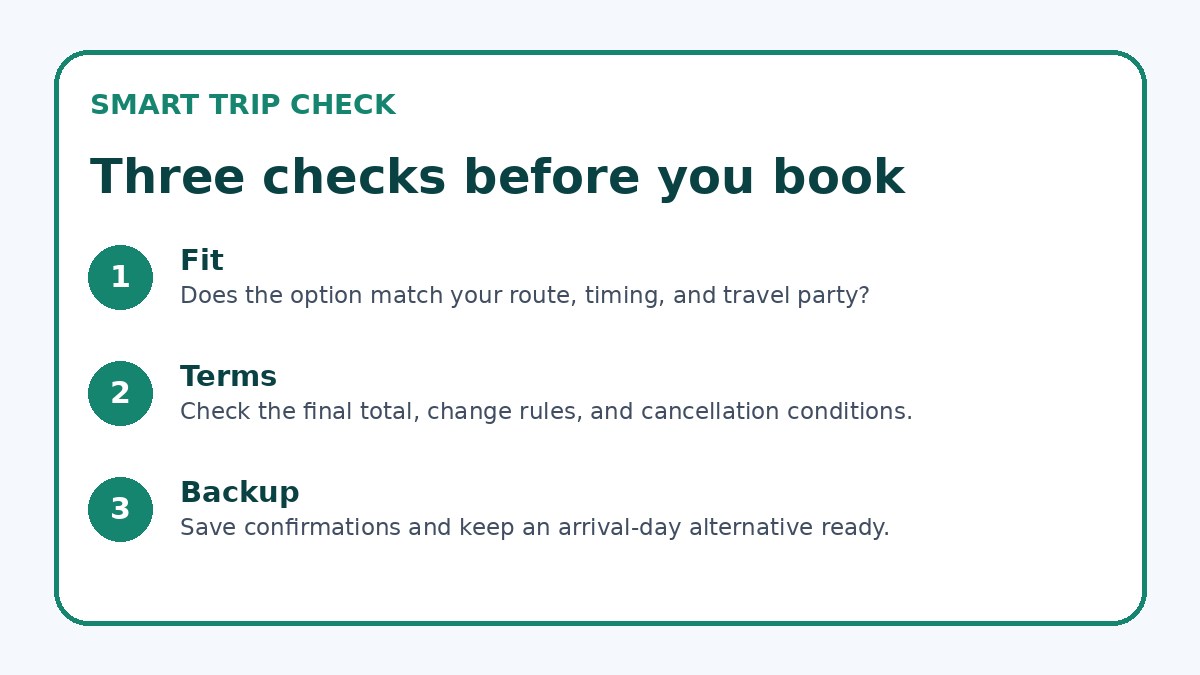
Decision criteria and how to compare options before booking
Create a simple comparison table for the trip: list door-to-door time estimate, number of transfers, luggage ease, cost range, and how flexible the booking terms are. Use published station and airport locations to calculate transfer times rather than relying on generic claims. Verify seat reservation requirements for trains and any check-in cutoffs for flights on the final booking page. If you’re sensitive to delays, look at the typical on-time performance, but always confirm the carrier’s change and cancellation policy before payment.
If you plan to work en route, check for onboard power, Wi-Fi availability and signal expectations; for rest or photography, estimate how comfortable you’ll be with seat spacing and ability to walk. For late-night arrivals, look up safe, reliable onward transit options in Busan and where the departure terminal or station sits relative to your accommodation. A quick call or web check of how busy stations and airports are at your intended travel times will help set realistic expectations about crowding and transfer speed.
Before you book
- List your top three priorities (time, cost, comfort) and use them to rank transport modes.
- Calculate door-to-door time using exact station/airport addresses and local transfer methods.
- Check the provider’s final booking page for baggage rules, seat reservations, and refund/change terms.
- Compare at least two departure times and the next available options in case of delays.
- Confirm how you will travel between the arrival point and your accommodation, including late-night options.
- Save screenshots of confirmations and the operator’s customer-service contact before you depart.
Practical booking steps and what to verify right before you buy
Start booking by confirming direct service availability for your desired departure time—direct services usually reduce stress for solo travelers. On the provider’s booking page verify baggage allowances, seat reservation rules, exact drop-off and pickup points, and whether tickets are refundable or changeable. If you use an aggregator like Trip.com to compare current availability, treat it as a starting point and follow through to the operator’s site to confirm final terms and any differences in luggage rules or boarding procedures.
Before you commit, calculate total door-to-door time again with the exact station or airport addresses and the local transit or taxi time at both ends. Ensure you have a contingency plan: note the next few departures in case of delay, and check whether the operator’s help desk at the station or airport can assist solo travelers with luggage or rebooking. Keep digital copies of confirmations, and have local contact numbers for your arrival transport options ready on your phone.
Frequently asked questions
Is the train always the easiest choice for a solo traveler from Seoul to Busan?
Trains are often the easiest because they leave from central stations, offer more space, and typically have simple boarding. However, 'easiest' depends on your priorities—if you’re near an airport and value the shortest time in motion, a flight could suit you better. Also check whether the service is direct or requires transfers: a direct train beats a flight that requires long airport transfers. Always verify seat reservation rules and the station platform procedures on the operator’s booking page before you commit.
How should I weigh ticket cost against travel time when I’m traveling solo?
Decide how you value your time versus money: calculate the total door-to-door time for each option and estimate the cost difference. If saving one to two hours saves you significant on-trip time or allows you to visit more, it may be worth paying more. Conversely, if you’re budget-conscious and comfortable with longer travel and less space, buses or discounted options may be preferable. Remember to factor in potential extra costs for transfers, baggage, and the value of convenience when you’re traveling alone.
What specific things should I verify on the booking page before buying a ticket?
On the provider’s final booking page confirm whether the service is direct or requires transfers, exact departure and arrival locations, baggage allowances and fees, seat reservation requirements, and the operator’s change or cancellation policy. Check boarding or check-in cutoffs and any ID requirements. If you used an aggregator like Trip.com to compare options, follow through to the carrier’s site to confirm these details, because policies and boarding procedures are set by the operator and can change.
Final planning note
For most solo travelers looking for a practical, low-stress journey between Seoul and Busan, a direct high-speed train balances comfort, predictability, and straightforward city-center access. That said, the optimal choice depends on your priorities: budget constraints can make buses attractive, while a well-timed flight might win when airport transfers are short. Use the decision criteria and checklist above to estimate door-to-door time, compare booking conditions, and confirm baggage and refund policies on provider pages before you buy. With those checks done, you’ll be able to pick the option that fits your needs and travel style with confidence.
Continue planning
Check current options and final conditions
Use the provider page to confirm live availability, the final total, cancellation terms, and every condition that matters to your trip.
This evergreen planning guide was created with AI-assisted drafting and a structured quality review. It does not display live prices, schedules, availability, visa guidance, or provider rankings. Verify current details before booking. Some links are affiliate links; we may earn a commission at no additional cost to you.