If you’re traveling between Kuala Lumpur and Singapore with oversized suitcases, sports gear, or several checked bags, your choice of departure and arrival stations or terminals will determine how smooth the trip feels. The practical answer is to plan transfers around stations and terminals that minimize repeated lifts, provide easy taxi or shuttle access, and offer paid luggage services or short-term storage at one end. That means weighing door-to-door transfer time, number of vehicle-to-platform moves, and whether you want to lock luggage in storage during a long connection. This article focuses on station and terminal-level decisions—how to pick locations, coordinate transfers, and what to verify on booking pages—so you can reduce heavy handling and unexpected logistics when moving between the two cities.
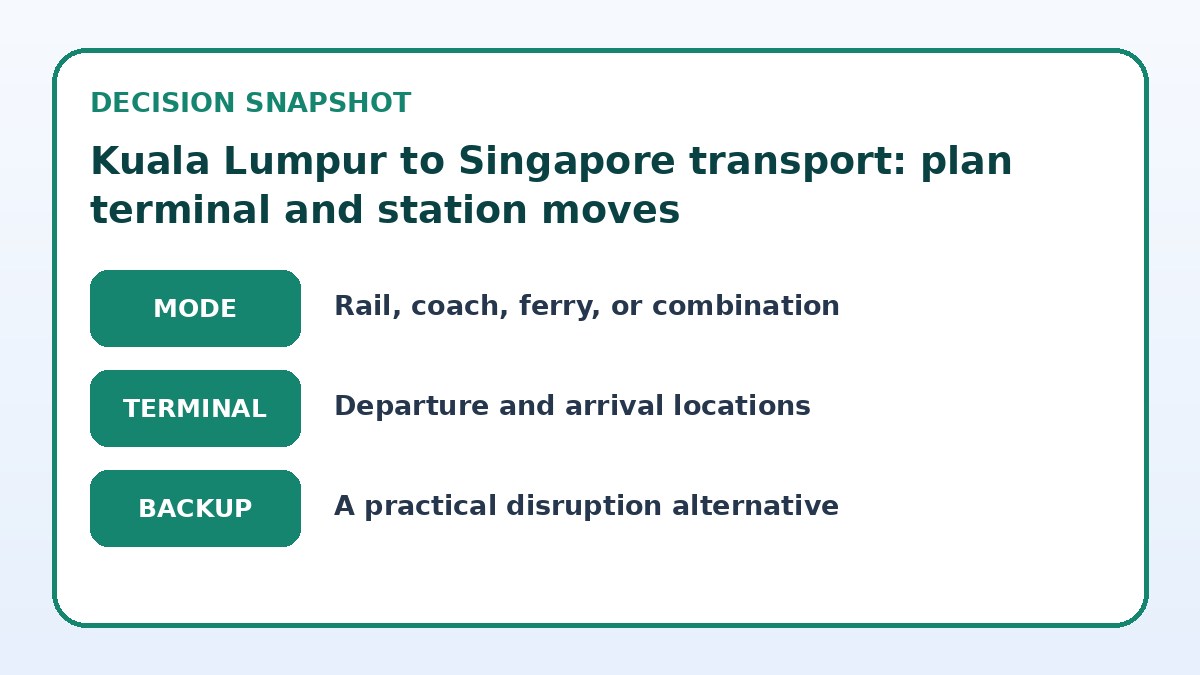
See current options before you compare the details
Availability and final conditions change. Open Trip.com now or keep reading for the practical comparison.
Deciding which stations and terminals reduce heavy handling
Start by mapping each part of the journey from door to door: your lodging, the departure station or terminal in Kuala Lumpur, the arrival point in Singapore, and the transfer methods between them. For travelers carrying extra luggage, stations with direct curbside access and short, level routes from drop-off to check-in are preferable. If you plan to use land services (overnight coach or private van), choose terminals with covered loading zones and clearly marked taxi stands to avoid dragging bags across open plazas or long staircases.
If you intend to fly for part of the route, prioritize airports or terminals with dedicated intermodal links—rapid rail or express bus services that remove the need to transfer luggage repeatedly between modes. When using trains, prefer stations with platform-level boarding or elevators and escalators rated for luggage trolleys; this reduces the number of times you must lift heavy suitcases. Note down official station names and terminal letters or concourses so taxi drivers and transfer services know precisely where to meet you.
Transfer options and how they affect luggage management
Common transfer choices between Kuala Lumpur and Singapore include direct long-distance coaches, overnight or day trains with transfers, flights, and private car or minivan hires. Each approach changes how often you touch your bags: door-to-door private transfers minimize handling but may cost more; coach travel concentrates handling at a single check-in and final drop-off, which is convenient when luggage is stored in an underfloor compartment. Trains can be convenient if the station layout supports level boarding and you can pre-book help or use luggage racks.
When comparing these options, think about the number of times luggage leaves your sight and how secure it will be during those intervals. For example, a coach or express bus often stores cases in a loading bay where drivers supervise loading, and you only handle bags at origins and destinations. Flights require airport check-in and collection, creating two separate handling events plus potential inspection; if you dislike transfers, factor that extra handling time and uncertainty into your planning and choose services offering minimal gate-side walking and direct transfer shuttles.
| Approach | Best for | Tradeoff to check |
|---|---|---|
| Private door-to-door transfer (van or car) | Travelers who prioritize minimal handling and direct delivery to accommodation | Higher cost and potential variability in vehicle sizing for very large items |
| Long-distance coach with underfloor storage | Travelers wanting simple, consolidated handling at origin and destination | Limited access to bags during transit and possible juggling at busy terminals |
| Train segments with station-level boarding | Those who want a stable ride and stations with luggage-friendly facilities | Multiple platform moves possible unless you book stations with elevators or porter help |
| Flight with airport transfers | Speed between cities and established ground transport links at terminals | More separate handling events (check-in, collection) and stricter airline baggage rules |
Ready to check the option that fits your plan?
Use your exact dates and traveler details so the provider page can show the current total and conditions.
Practical arrangements: porters, storage, and last-mile transfers
Before booking, check whether your chosen station or terminal provides porters, luggage trolleys, or short-term storage—services that let you lighten loads for a connection or a city stopover. Porters can be especially helpful when you have several heavy items or awkwardly shaped gear. If you expect a long layover in either city, secure short-term storage near the arrival concourse or at a nearby station so you can explore without hauling everything. On the provider’s booking page, verify exactly where storage or porter services are located, hours of operation, and maximum item dimensions they accept.
Last-mile transfers matter as much as the long-haul segment. Pre-booked airport transfers, private vans, or metered taxis that accept large luggage will reduce stress; confirm that vehicles have enough trunk space for your largest item. If you’re using public transit in either city for the final leg, plan routes with elevators or escalators rather than stairs. For complicated multi-step transfers, consider hiring a day porter or luggage forwarding company that moves bags between stations or hotels so you only travel with a small carry item.
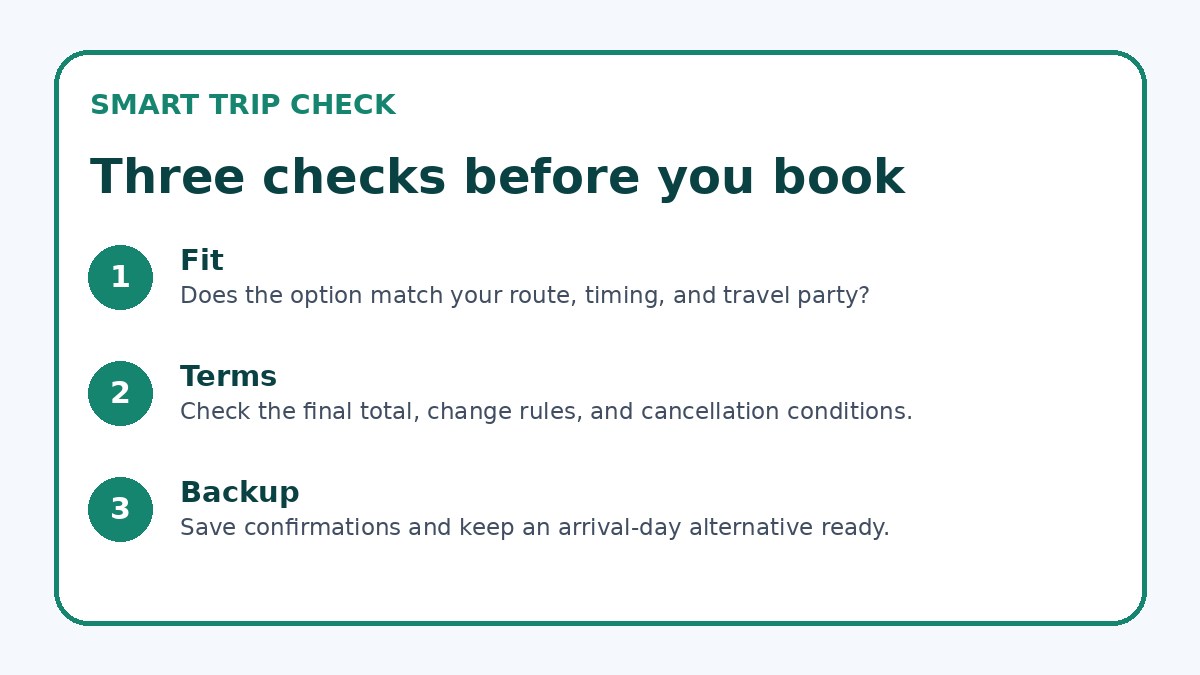
Before you book
- Confirm exact station or terminal names and meeting points for pickups and drop-offs on the provider’s final booking page.
- Measure and weigh every bag and compare dimensions to the provider’s stated allowances before booking.
- Reserve a transfer with confirmed vehicle trunk capacity or book a larger vehicle if you have awkward or oversized items.
- Arrange porter service or short-term storage at the station if you have a long connection or want to sightsee luggage-free.
- Pack an essentials carry-on with documents, medications, and one change of clothes you keep with you at all times.
- Photograph your bags and tag them with your contact details; note the driver’s name and vehicle plate before loading.
What to verify before final booking and day-of-trip checks
On the provider’s final booking page, check luggage allowances, permitted dimensions, and the exact meeting point for transfers—this prevents surprises at pickup. For services that advertise complimentary assistance or “assistance on request,” read the fine print to learn whether it’s included or an extra-charge add-on. If you plan to combine modes (for example, bus to a border crossing plus a local ride to the city), verify connection windows and where luggage will be stored during border formalities or immigration stops.
Day-of-trip checks are simple but effective: photograph luggage contents and tag each bag with contact details, confirm the transfer vehicle’s license plate and driver contact before departure, and allow extra time for loading and unloading at each transfer. Keep essential items, documents, and a change of clothes in a carry-on you control. If you use a third-party comparison site such as Trip.com to review current availability, remember to double-check any luggage specifications and meeting point details on the transport provider’s own booking confirmation page.
Frequently asked questions
Is it better to take a coach or train when traveling between Kuala Lumpur and Singapore with heavy luggage?
Both coaches and trains can work well for heavy luggage but they differ in handling. Coaches typically store bags under the vehicle and reduce how often you must handle them, which many travelers find convenient. Trains can be preferable if the stations offer elevators, trolleys, or porter assistance, and if you want a smoother ride. Compare the station layouts, the number of transfers involved, and whether the coach company or train operator specifies any size or weight limits before you book.
Can I leave luggage at the station if I have a long layover in Kuala Lumpur or Singapore?
Short-term luggage storage is often available at major stations and some terminals, but services vary by location and may have size or time limits. If storage exists, check the opening hours, security measures, and maximum accepted item dimensions on the station’s or operator’s official page. Alternatively, many travelers book nearby hotels for day-use or use a dedicated luggage forwarding or storage app if you need guaranteed space for oversized items—confirm all details before you travel.
How should I plan the last-mile transfer from the arrival station to my hotel with multiple large bags?
Plan a vehicle that can accommodate your luggage—book a private transfer or a taxi with confirmed trunk space, and communicate the number and size of bags when you reserve. If using public transit, map a route that relies on elevators or escalators and minimal platform changes; avoid stations with long pedestrian bridges or stairs. Allow extra time for loading and unloading, and consider hiring a porter at the station if you expect steep steps or long walks to the taxi stand.
Final planning note
Traveling between Kuala Lumpur and Singapore with extra luggage requires thinking beyond in-transit time and focusing on the transfers and handling at stations and terminals. Choose options that reduce the number of times you touch and lift your bags, favoring curbside access, direct transfers, or services with porter or storage support. Before booking, verify luggage allowances, exact meeting points, storage hours, and vehicle suitability on the provider’s final booking page. Small preparations—measuring bags, arranging a proper vehicle, and planning last-mile movement—will pay off with a smoother, less stressful trip.
Continue planning
Check current options and final conditions
Use the provider page to confirm live availability, the final total, cancellation terms, and every condition that matters to your trip.
This evergreen planning guide was created with AI-assisted drafting and a structured quality review. It does not display live prices, schedules, availability, visa guidance, or provider rankings. Verify current details before booking. Some links are affiliate links; we may earn a commission at no additional cost to you.