Practical answer first: if your idea of a “family road trip” on Jeju means visiting multiple coastal viewpoints, farms, child-friendly sites, and remote cafés in a single day, renting a car usually makes that plan far easier than depending on buses. Driving adds flexibility for timing, luggage and comfort, especially when you want to simulate the relaxed pace of family travel alone. That said, the car option brings paperwork, local driving rules to check, insurance choices to read closely, and the hassle of pickup and return near ports or the airport. If you prefer to avoid driving, there are workable fallbacks—organized day tours, a mix of taxis and buses, or hiring a local driver for a day—that preserve many highlights without you taking the wheel. Read on to weigh route value, insurance wording, pickup friction, and credible non-driving alternatives so you can decide before you book.

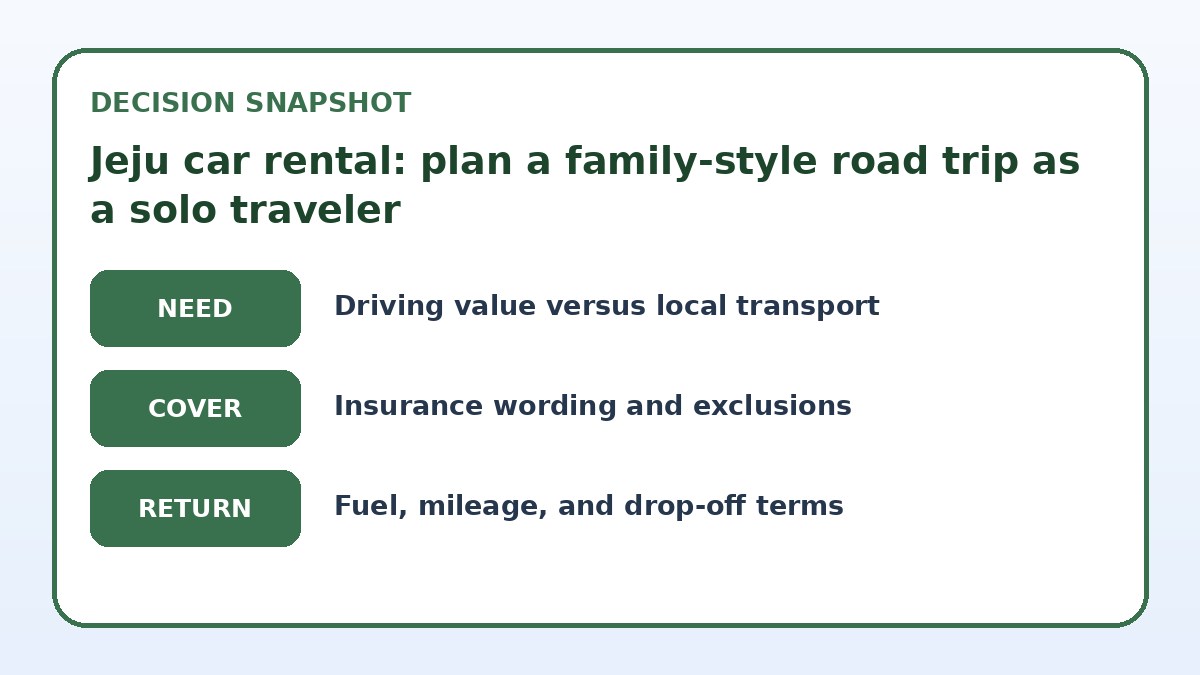
Does renting improve a family-style Jeju itinerary?
Ask what you want from the trip: flexible timing, multi-stop days, luggage and snacks, or quiet sunrise views outside town. If your itinerary strings together widely separated highlights—coastal drives, a rural farm stop, and an afternoon on a quiet beach—having a car shortens transit time and removes the need to coordinate timetables. For a solo traveler aiming to recreate family-travel comfort, a car also means solitude when you want it, room for shopping or picnic supplies, and the ability to change plans on a whim without waiting for a scheduled bus or tour.
Compare that convenience against the costs: extra paperwork at pickup, unfamiliar driving conditions, and the responsibility for damage and tickets. Think about whether your chosen routes are primarily along scenic main roads or require negotiating narrow lanes and busy tourist areas. If your days are tightly urban or concentrated near a single town, public transport and taxis can work well. If you want varied, dispersed experiences across Jeju’s coastline and interior within a short time, renting typically improves the itinerary.
Decide whether driving earns its place
| Mobility strategy | Best for | Cost or friction to check |
|---|---|---|
| Rent a car and drive yourself | Travelers seeking full control over schedule, luggage, and stop choices. | Must handle paperwork, local driving, insurance decisions, and parking logistics alone. |
| Rent a car for part of the trip | Those who want flexibility for a few key days but prefer public transport otherwise. | Requires planning to switch modes and may pay extra pickup/return fees when splitting rental days. |
| Hire a private driver for selected days | Solo travelers who want the vehicle benefits without driving responsibilities. | Less freedom to detour spontaneously and potentially higher per-day cost than self-drive. |
| No car: buses, taxis, and day tours | Those who prioritize simplicity and avoiding rental formalities or driving in an unfamiliar place. | Less timetable flexibility and possible limits reaching very remote or scattered sites. |
Check live rental choices only after the route test
Use the exact driver, dates, pickup point, and return plan to compare current conditions.
Route value: which drives are worth the rental?
Plan routes in clusters so each driving day connects several nearby stops. For example, focus one day on one coast with multiple lookouts, a cultural stop, and a café; another day can concentrate on inland attractions and short hikes. This reduces needless backtracking and makes car time pleasant rather than a slog. Evaluate each stop’s proximity to parking; some small coastal viewpoints and popular attractions have limited or paid parking, so check ahead whether spaces fit standard rental vehicle sizes and whether parking costs apply.
When assessing route value, consider road types and seasonal traffic. Main island roads are generally suitable for casual driving, but certain scenic lanes are narrow and can be busy during peak times—those conditions affect how comfortable you’ll feel driving alone. Also account for daylight hours: if you plan sunrise or sunset stops, ensure you’re comfortable navigating unfamiliar roads in low light. If any of your desired stops lack convenient parking or require rough access, weigh whether the inconvenience negates the benefits of having a car.
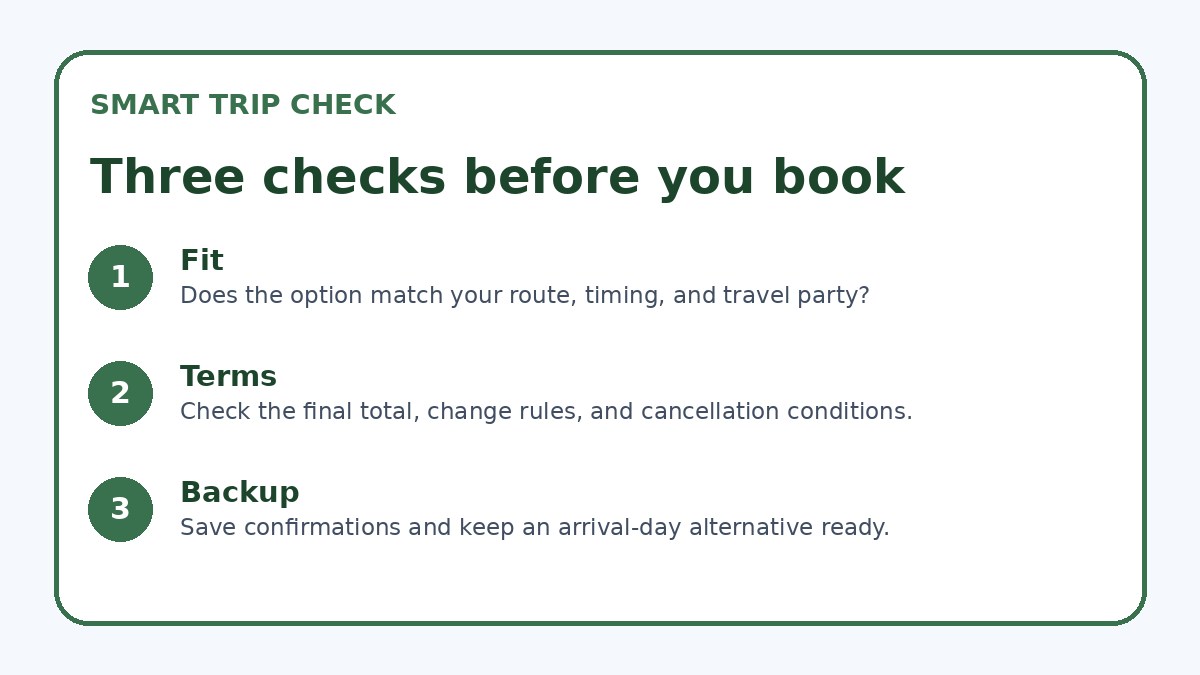
Compare the full rental conditions
Confirm insurance wording, exclusions, deposit, fuel, mileage, and return terms on the final page.
Insurance and liability: what wording you must verify
Insurance descriptions can look similar but cover very different risks. On the rental page and contract, verify the exact wording for collision damage waiver (CDW), theft protection, third‑party liability, and any excess amounts (your financial responsibility after a claim). Some products lower the excess; others only reduce it partially. Confirm whether roadside assistance, towing, and tire or windshield coverage are included or sold as add‑ons. If an additional driver is planned, check whether their authorization changes coverage or increases the fee.
Don’t rely on broad phrases like ‘comprehensive cover’ without reading what that means in practical terms. Look for explicit statements about whether damage from gravel roads, parking lot dings, or single‑vehicle incidents is excluded. Also verify whether local traffic fines and administrative penalties are your responsibility, and how claims are processed—some companies require you to file a police report for certain incidents. When in doubt, ask the provider to email contract clauses you can read before you arrive.
Car rental terms to verify
- Compare insurance wording: note excess amounts, exclusions (gravel, windscreen, single-vehicle), and whether roadside assistance is included.
- Confirm exact pickup and drop-off locations, hours, required documents, and whether a shuttle is needed from the airport or port.
- Check driver eligibility rules: age limits, international license or local translation requirements, and extra-driver policies.
- Plan daily route clusters with realistic parking checks and alternative options if a site has limited vehicle access.
- Photograph the vehicle at pickup round-trip and get signed inspection notes from staff to avoid disputes at return.
- Decide on a clear fuel policy before booking: full-to-full, pre-purchase, or other, and budget for parking fees on busy days.
Pickup, return friction and non-driving fallbacks
Pickup and return are where a smooth trip can become stressful. Confirm the provider’s exact pickup location—airport counter, terminal kiosk, or a remote lot—and whether they offer shuttle service. Check documentation required for pickup: your driver’s license (international or Korean translation/endorsement), passport, credit card in the driver’s name, and any age restrictions or surcharges. Ask how vehicle inspection is handled: will staff walk the car with you and mark existing scratches, or will they rely on photos? Understand the fuel policy and whether early/late returns incur fees.
If driving feels like too much responsibility, viable non-driving fallbacks exist. Organized small-group day tours cover major highlights with a local driver and allow you to keep the family-road-trip rhythm without navigating. You can also combine local buses and short taxi hops for tighter budgets, or hire a private driver for a day to reach remote spots without renting a vehicle. Each alternative trades independence for simplicity: weigh the trade-offs mentally before deciding whether to book a rental.
Car Rental & Road Trip questions travelers ask
Do I need a local license or international driving permit to rent and drive in Jeju?
Rules vary by provider and your country of origin. Many rental companies require an international driving permit (IDP) in addition to your home license if it’s not in English or Korean. Some travelers from countries with license-recognition agreements may be able to use their domestic license, but companies still set their own rules. Before booking, check the rental company’s driver eligibility section and the contract wording on the final booking page. Bring your passport and a credit card in the driver’s name to avoid last-minute issues at pickup.
What should I do if I’m involved in a minor accident or parking damage on Jeju?
First, ensure everyone is safe and move to a safe location if possible. Follow local law: if authorities should be notified for insurance purposes, call them and obtain a report. Document the scene thoroughly with photos, note other parties and witnesses, and collect any available contact details. Contact the rental provider’s emergency or claims number immediately and follow their instructions. Retain all documentation: police reports, repair estimates, and communication records. The rental company’s contract will explain required steps—verify that process on the final booking page before you drive.
Is parking widely available and affordable across Jeju for a rented car?
Parking availability and costs vary by location. Popular coastal viewpoints, museums, and market areas often provide designated lots—some free, some paid—and space can fill quickly in peak times. Smaller rural viewpoints or narrow village lanes may have limited or informal parking where maneuvering is tighter. Check attraction pages for parking notes and call the rental company if you expect to use compact or larger vehicles at sites with constrained space. Plan to arrive early at busy spots to secure convenient parking and avoid long searches.
Final decision note
For a solo traveler wanting the relaxed flow of a family road trip on Jeju, renting a car commonly delivers the flexibility, comfort, and route control that create that experience. The decision hinges on how dispersed your desired stops are, how comfortable you are with local driving, and whether the administrative and insurance responsibilities fit your travel style. If any of those raise concerns, hybrid approaches—renting only for specific days, hiring a driver, or using organized tours—preserve much of the itinerary’s value without full-time driving. Before booking, read the rental contract lines about insurance, pickups, and damage reporting, and compare those exact clauses on the provider’s final booking page (you can check availability and options on Trip.com as one reference). With clear planning, a single traveler can enjoy the space and rhythm of a family road trip across Jeju safely and with minimal surprises.
Continue planning
Check current options and final conditions
Use the provider page to confirm live availability, the final total, cancellation terms, and every condition that matters to your trip.
This evergreen planning guide was created with AI-assisted drafting and a structured quality review. It does not display live prices, schedules, availability, visa guidance, or provider rankings. Verify current details before booking. Some links are affiliate links; we may earn a commission at no additional cost to you.