Practical answer first: if you can shift your travel by a few days and compare the same itinerary details, flexible dates often let you find materially better options for flights, hotels, and multi-day attraction passes in Osaka. Before you assume a package is a bargain, put the components side by side with matching dates, traveler counts, baggage rules, change/cancellation terms, and total out-the-door cost. Flexibility helps most when you: avoid peak weekend or local-holiday travel, are willing to take an earlier or later flight, or can trade exact hotel location for a lower nightly rate. This guide shows how to evaluate inclusions and flexibility, how different booking approaches stack up for first-time visitors, and what final terms to verify on the provider’s checkout page before you commit.

Test package value fairly
| Booking approach | Best for | Tradeoff to check |
|---|---|---|
| Full package (flight + hotel + transfers) | Travelers wanting one checkout and worry-free logistics | Less granular control over specific fare classes, seat selection, and separate refund policies |
| Flight booked separately, hotel bundled with local passes | Flexible flyers who want curated local experiences without handling hotel logistics | May still tie hotel change rules to package terms; watch the pass activation and refund rules |
| All components booked separately | Price-conscious travelers who can handle coordination and risk multiple suppliers | More time required to compare and manage each supplier’s change/cancellation terms |
| Flight+hotel bundled, add transfers a la carte | Those who want bundled savings but prefer to choose their own arrival method | Potential mismatch of schedules and separate supplier cancellation policies to reconcile |
Check current package and separate options
Use identical dates, travelers, room needs, baggage, and flexibility so the comparison stays meaningful.
What to compare before judging a package
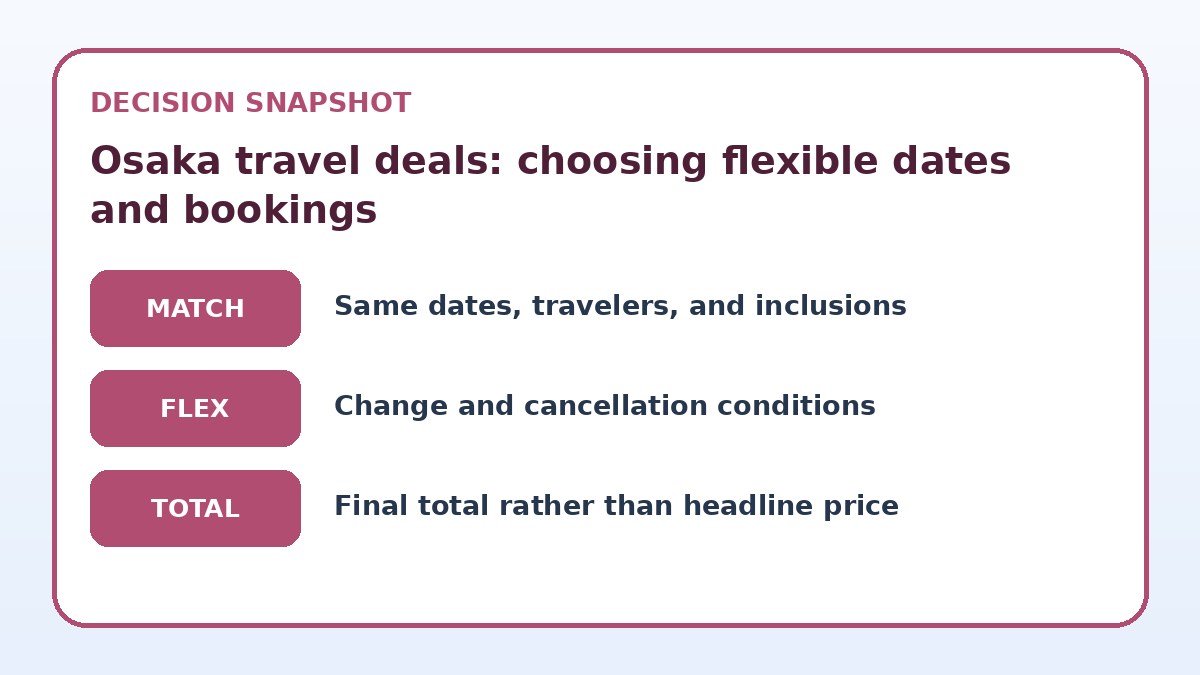
Start by listing the exact pieces you need: flights (including connections), airport transfer or train tickets to central Osaka, nights in a preferred neighborhood, and any attraction passes or guided tours. For each piece note the carrier or supplier, class of service, number of checked bags included, checked or carry-on baggage allowances, and whether tickets are refundable or changeable. Only after you have those matched across both bundle and separate quotes can you trust a headline saving. If a bundle includes extras—like a guided day trip or rail pass—decide whether you would buy that extra on its own at full price and factor that value in.
Next, compare timing and logistics: arrival and departure times, minimum connection times, and how late a flight lands relative to hotel check-in. For train links from Kansai Airport or Itami, confirm how the provider describes the connection (transfer, shuttle, or train) and whether you’re paying extra at check-in. Remember that travel windows matter more than calendar days; a midnight arrival on one date is effectively a different travel day for planning transport and the first night. When in doubt, pull the component details into a single spreadsheet so fees, dates, and terms are visible side by side.
Inclusions and flexibility: where value hides
Inclusions that commonly change the calculus are baggage, seat selection, transfers, breakfast, and attraction tickets. A bundle that looks cheap may exclude baggage or assign basic economy fare conditions that you wouldn’t accept separately. Equally, some bundles put flexible vouchers or rebooking allowances into the package price; that could be valuable for travelers who need changeable plans. For first-time visitors to Osaka, consider whether hotel breakfast and easy arrivals from the airport save you time and stress—sometimes that convenience is the real value rather than a nominal price drop.
Flexibility is rarely binary. Look for how each supplier handles changes and cancellations: check how many days before departure you can change without a penalty, what portion of the purchase becomes nonrefundable, and whether vouchers or credits are used instead of cash refunds. If you anticipate schedule risk—uncertain work approvals, family obligations, or health concerns—prefer options with free or low-cost changes. Always verify the provider’s final booking page for the exact fare rules, change fees, and how refunds are processed; these can differ between the quote and the live purchase.
Look past the headline total
Compare inclusions and change conditions before deciding whether a package is genuinely useful for this trip.
Deal comparison checklist
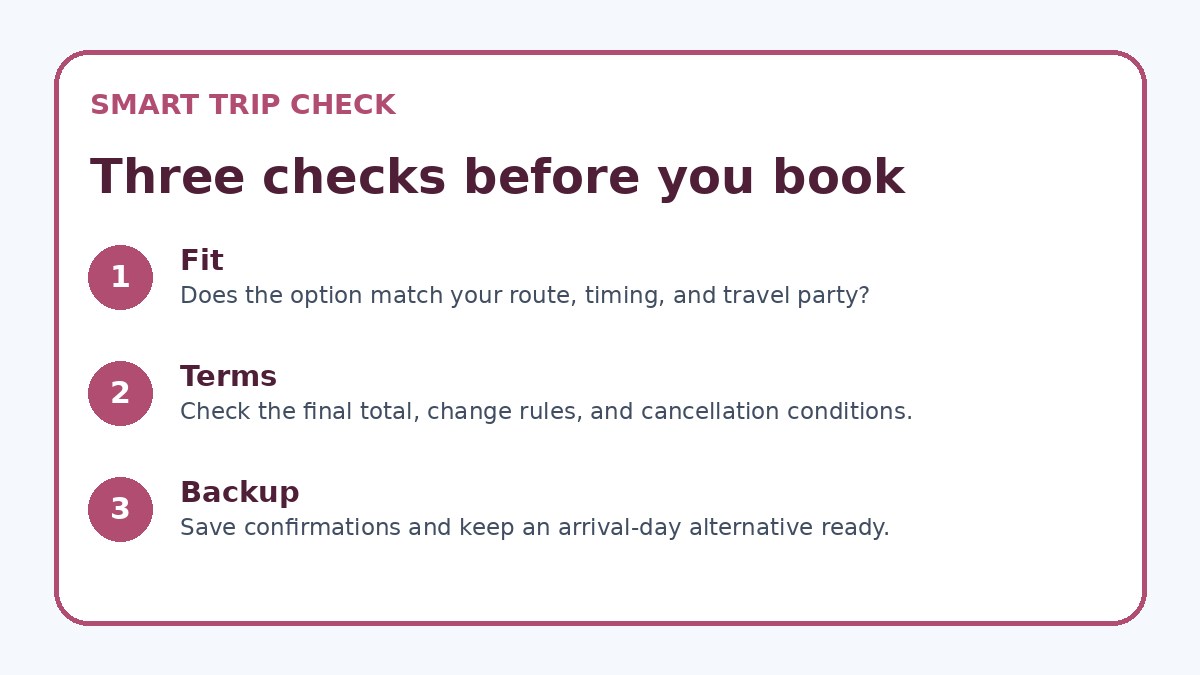
- Run flexible-date searches three days before and after your ideal travel dates for flights and hotels to compare price sensitivity.
- List and match baggage allowances, seat rules, and breakfast or meal inclusions across bundle and separate quotes.
- Confirm exact change and cancellation deadlines on the checkout page, and note whether refunds are cash or travel credit.
- Verify arrival transfer details—meeting point, duration estimates, and whether the service is shared or private—before booking.
- Compare the same traveler count and room type when testing package versus separate bookings to avoid false savings.
- If a bundle includes passes or tours, check activation windows, refund rules, and who provides on-the-ground support.
Traveler-specific value: who benefits most from flexibility
Different travelers get different value from flexible dates. Solo first-time visitors with light baggage who want to hunt for low fares will benefit most from scanning multiple date combinations for cheaper flights and weekday hotel rates. Families or groups that need guaranteed adjoining rooms, specific seat assignments, or predictable arrival times may value bundled transfers and refundable fares more, even if the up-front price is higher. Business travelers with tight schedules generally should prioritize reliable connections and refundable changes over the absolute lowest fare.
If you’re aiming to balance budget and convenience, set a clear priority list before comparing offers: lowest total cost, minimal time lost in transit, or maximum refundability. Once your priority is set, use flexible-date searches—three to seven days on either side of your ideal travel dates—for each relevant component. That approach reveals whether the savings stem from a cheaper day-of-week for flights, seasonal hotel rate swings, or specific package terms that matter to your party.
Final terms to verify on the provider’s booking page
Before you click purchase, verify these final terms: the exact travel dates and passenger names, baggage allowances and fees, seat selection policies, change and cancellation penalties (including deadlines), whether refunds are cash or travel credit, and any local taxes or service fees added at checkout. Also check arrival logistics: where the transfer meets you, how long the transfer takes, and whether it's shared or private. If the bundle includes a local rail or attraction pass, confirm the activation window and whether it must be collected in person.
If you see a bundled price that looks attractive, confirm the supplier identity and whether separate supplier terms apply to different components (for example, flight rules set by an airline and hotel rules set by a lodging operator). Trip.com can be one place to compare live availability and conditions, but always read the supplier’s final cancellation and change policies on the checkout page where you will pay. If anything is unclear, contact customer support and get the representative’s name and confirmation of the terms before paying.
Travel Deals & Booking Strategy questions travelers ask
How far from Osaka should I be willing to shift my travel dates to find meaningful savings?
Start with a three-day window on either side of your target dates; that is often enough to reveal weekday versus weekend differences and local market swings. If you’re traveling around common Japanese holiday clusters or large local events, extend the window to a week on either side to see the full impact. For hotels, also test shifting the length of stay by a night—sometimes adding or removing a night changes which rate tiers are offered. Use these tests for flights and hotels separately first, then recombine the best-matching components into a final comparison.
If a bundle looks cheaper, what hidden costs should I check before trusting it?
Look for omitted baggage fees, mandatory taxes or service charges added at checkout, nonrefundable attraction passes, and restrictive change or cancellation rules. Check whether the bundle locks you into specific flight times that force extra-night hotel stays or expensive transfers. Also verify who is responsible if one component is disrupted—some bundles require you to work through the bundler for refunds, which can add time and complexity. Always confirm the provider’s final terms on the payment page and request written clarification for anything ambiguous.
Can flexible dates help with on-the-ground logistics in Osaka, not just price?
Yes. Adjusting dates can avoid peak arrival times that complicate airport transfers or create long lines at transport hubs. Shifting to arrive during daytime hours often makes your first transit into central Osaka simpler and gives you more hotel options to choose from at check-in. Flexible dates also let you target days when specific attractions are less crowded or when neighborhood events align with your interests. When choosing dates for logistics reasons, weigh the time saved against any price difference to decide what matters most for your visit.
Final decision note
Flexible dates are one of the simplest levers first-time visitors can use to improve Osaka travel deals, but flexibility only pays if you compare like with like. Build a side-by-side list of components—matching dates, travelers, baggage, and refund rules—then test a small date window to find when flights and hotels dip. Decide whether convenience (bundled transfers, breakfast, or packaged passes) is worth a modest premium for your group, and always verify the final terms on the provider’s checkout page before you pay. A clear priority list and a short, methodical comparison will help you secure the right balance of price, convenience, and peace of mind for your first Osaka trip.
Continue planning
Check current options and final conditions
Use the provider page to confirm live availability, the final total, cancellation terms, and every condition that matters to your trip.
This evergreen planning guide was created with AI-assisted drafting and a structured quality review. It does not display live prices, schedules, availability, visa guidance, or provider rankings. Verify current details before booking. Some links are affiliate links; we may earn a commission at no additional cost to you.