In the first hour after you land at Brisbane, the main decision is simple: will you handle your extra luggage through public transport or opt for a private transfer that loads and drops you at your door? That choice shapes the rest of your arrival—how you collect bags, where you meet drivers or board services, and how much walking or waiting you’ll do. If you have oversized suitcases, sports equipment, or more than two checked bags, the transfer style will change your stress level and onward time. This guide gives the short practical answer up front, then explains the tradeoffs you should weigh: luggage and party size, late or disrupted arrivals, clarity of meeting points, and whether your accommodation’s drop-off area suits a shuttle or private vehicle.
Check options for your arrival details
Use your flight, luggage, party size, and accommodation address to compare current choices.
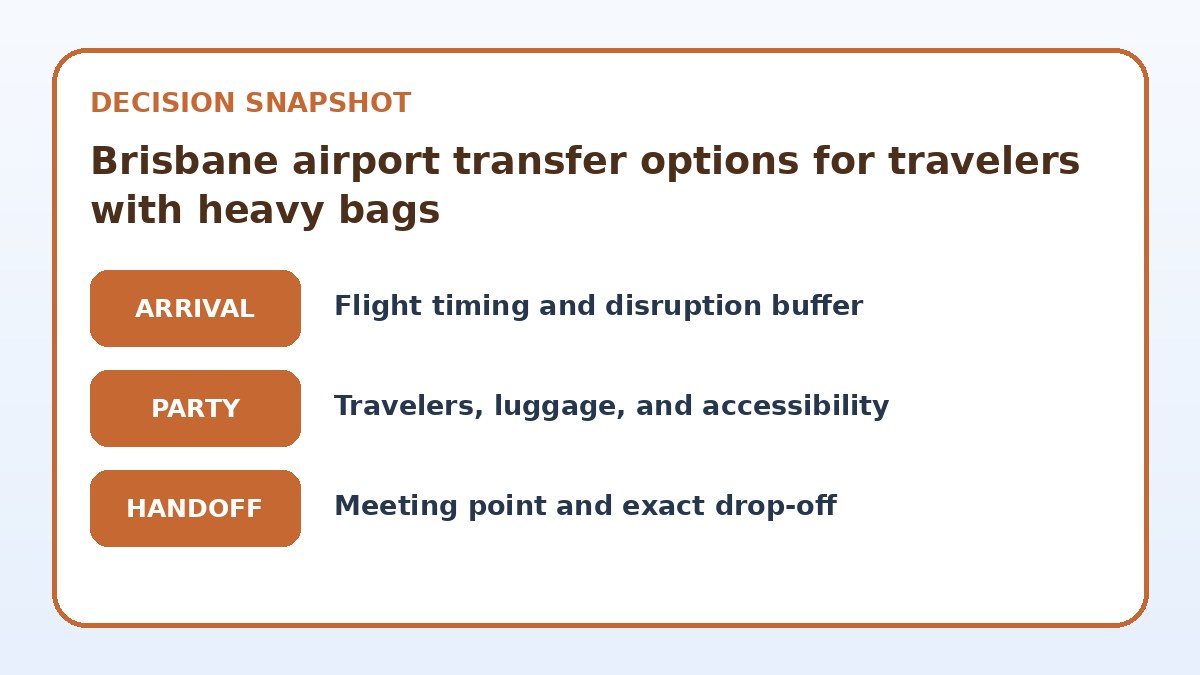
Luggage and party size: matching vehicle capacity and effort
Count bags by size and type before you book. Small checked suitcases and a carry-on per person can often fit on regular public buses or trains with some lifting and aisle time, but oversized cases, surfboards or multiple large suitcases change the calculation. Public vehicles are typically limited in dedicated luggage space, so you’ll carry bags through terminals, onto platforms and up steps or ramps. If any traveler has mobility needs, include that when comparing steps and transfers—public options can involve short but awkward carries.
Private cars, taxis, or meet-and-greet services usually advertise vehicle categories for larger loads. A private transfer lets you load luggage at the kerb and place it directly in a trunk or roof box, which reduces handling. For groups of four or more with several large bags, shared shuttles that limit luggage per person may be problematic; a larger private van or minibus could be a better fit. When in doubt, measure or weigh your largest pieces and confirm dimensions with the provider before booking.
Arrival details to have ready
- Count and photograph every piece of luggage, noting any oversized or fragile items before you book a transfer.
- Check your flight’s arrival terminal and whether transfers require an inter-terminal shuttle or a walking transfer to the pickup point.
- Measure the largest bag and confirm vehicle dimensions or luggage allowances with the transfer provider before finalising booking.
- If arrival could be delayed, read the provider’s delay and waiting-time policy and save their contact number for real-time updates.
- Ask your accommodation about permitted drop-off zones, loading restrictions, and the closest legal vehicle stop for large luggage.
- Compare door-to-door time, walking distance with bags, and the number of stops for public shuttles versus private vehicles.
Late or disrupted arrivals: flexibility and reliability considerations
If your flight might arrive late or suffer delays, think about transfer flexibility. Public services follow timetables that may still run late at night or less frequently when disruptions occur. You may face long waits or additional connections if flights land outside peak hours. Also consider how long you are willing to wait with luggage if a connection is missed. Public transport staff may not be able to assist with heavy bags during unexpected circumstances, which adds stress for solo travelers or those with children.
Private transfers and meet-and-greet options generally offer arrival monitoring and driver waiting period policies, which reduce the need for immediate rebooking when schedules slip. That said, operators set their own terms for delays and waiting time—always verify any included grace period and how they handle long hold-ups. If you choose a private option and your itinerary has multiple possible arrival times, confirm how to communicate real-time changes so the driver can be informed of late arrivals or diverted flights.
Match the transfer to your arrival
| Arrival approach | Best for | Detail to verify |
|---|---|---|
| Public train or bus from the airport | Solo travelers or light packers comfortable with transfers and walking. | Lower personal cost but more handling of luggage, possible stairs and timed schedules. |
| Shared airport shuttle or coach | Budget-conscious groups with moderate-sized luggage and flexible timing. | Can be cheaper per person but may involve multiple stops and luggage limits. |
| Private pre-booked car or minivan | Families, groups, or anyone with oversized or numerous items wanting door-to-door service. | Higher cost than public options, and you must confirm vehicle size and pickup details. |
| Taxi or on-demand rideshare at arrival | Travelers needing immediate departure with medium luggage and no advance booking. | Convenient and flexible but vehicle luggage space varies and waiting in queues is possible. |
Make the meeting plan clear
Check the final pickup instructions, waiting conditions, and exact drop-off coverage.
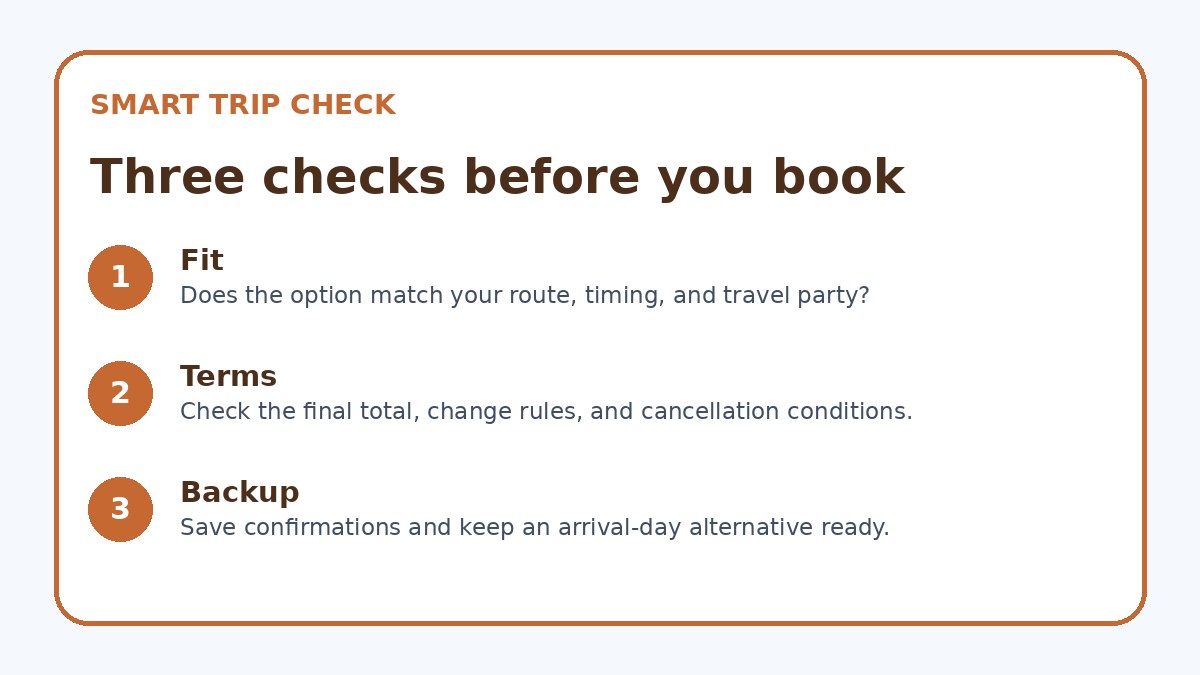
Meeting-point clarity: avoid confusion and wasted time
Clear meeting instructions are crucial when you carry extra bags. Public transport usually requires you to move from the terminal to a bus stop, train platform or coach bay; signs and airport maps help but can be crowded or confusing with heavy luggage. Allow extra time to navigate from baggage reclaim to the correct departure area, and check whether your chosen public route requires an initial shuttle between terminals or a footbridge that could be challenging with large cases.
Private transfers rely on a driver-to-passenger meeting point that should be precise: kerb number, a specific terminal exit, or a named meeting zone. Before you book, ask the provider for the exact spot and the driver’s contact method—phone, SMS, or an app—so you can coordinate if baggage delays occur. If you prefer a wait-inside option, confirm where the driver will meet you inside the terminal; airports sometimes restrict indoor pickup areas, and policies can differ by terminal and time of day.
Destination-side drop-off fit: where the vehicle can actually stop
Consider your accommodation’s access carefully. Hotels with dedicated drop-off zones, apartment blocks with loading bays, or suburban homes with wide driveways are usually easy for private cars and small shuttles. In contrast, narrow streets, pedestrianised zones, or buildings with strict short-term parking rules may force drivers to stop farther away, requiring extra luggage carry time. Public transport often drops you close to main streets or stations, but may not stop at smaller residences or remote lodgings—expect a short walk from the nearest stop unless you arrange a final-mile pickup.
If your accommodation won’t accept large vehicles near the entrance, a mixed approach works well: use a private transfer to a convenient hub or station, then switch to a short taxi or rideshare for the final narrow-street leg. Confirm with your host whether there are loading restrictions or recommended pickup points. When booking a private service, tell them the exact drop-off address so they can advise about vehicle size limits and where drivers usually stop for quick unloads.
Airport Transfer & Local Mobility questions travelers ask
Can I use Brisbane public transport with surfboards or oversized sports equipment?
Public transport sometimes allows oversized items but policies and space vary; buses and trains have limited dedicated luggage areas and steps to navigate. Before relying on a public service, check the transport operator’s rules for items like surfboards or bicycles and whether peak-period restrictions apply. If your equipment is long or bulky, a private transfer often reduces handling and risk of damage. When booking a private vehicle, confirm the driver can transport the item and whether a roof rack or larger van is necessary.
How should I handle an arrival late at night when public services run less frequently?
Late-night arrivals reduce public transport frequency, which may increase waiting times and involve additional connections. If you expect to land after public routes have thinned, weigh the convenience of a pre-booked private transfer or taxi against potential late-night waits. Private services often offer extended-hour pickups but check their availability and waiting policies beforehand. For peace of mind, save the taxi rank location and rideshare app and make sure your phone is charged so you can arrange a last-minute alternative if needed.
What proof or details should I provide to a private transfer operator to avoid pickup confusion?
Provide your airline, flight number, terminal, expected arrival time, and the number of passengers and bags when booking a private transfer. Also give a mobile number you’ll have on arrival and confirm the exact meeting point—kerb number or named terminal exit—and any details about mobility needs or oversized luggage. If your flight might be delayed, ask how the operator monitors arrivals and what their grace period is for driver waiting time. Keep a quick confirmation message or reference number handy to show airport staff if needed.
Final decision note
For travelers with extra luggage arriving in Brisbane, the practical first-hour decision hinges on how much you value minimising handling and unpredictability versus saving money. Public transport can be perfectly adequate when you travel light, have time, and your accommodation is near a main stop, but it increases walking and lifting. Private transfers reduce bag handling and coordinate pickup for late flights, yet require checking vehicle size and meeting-point rules. Use the checklist to confirm luggage dimensions, terminal procedures, host drop-off rules, and provider delay policies before you book. If you want a quick place to compare services and real-time availability, Trip.com is an option to check but always verify details on the provider’s final booking page.
Continue planning
Check current options and final conditions
Use the provider page to confirm live availability, the final total, cancellation terms, and every condition that matters to your trip.
This evergreen planning guide was created with AI-assisted drafting and a structured quality review. It does not display live prices, schedules, availability, visa guidance, or provider rankings. Verify current details before booking. Some links are affiliate links; we may earn a commission at no additional cost to you.