
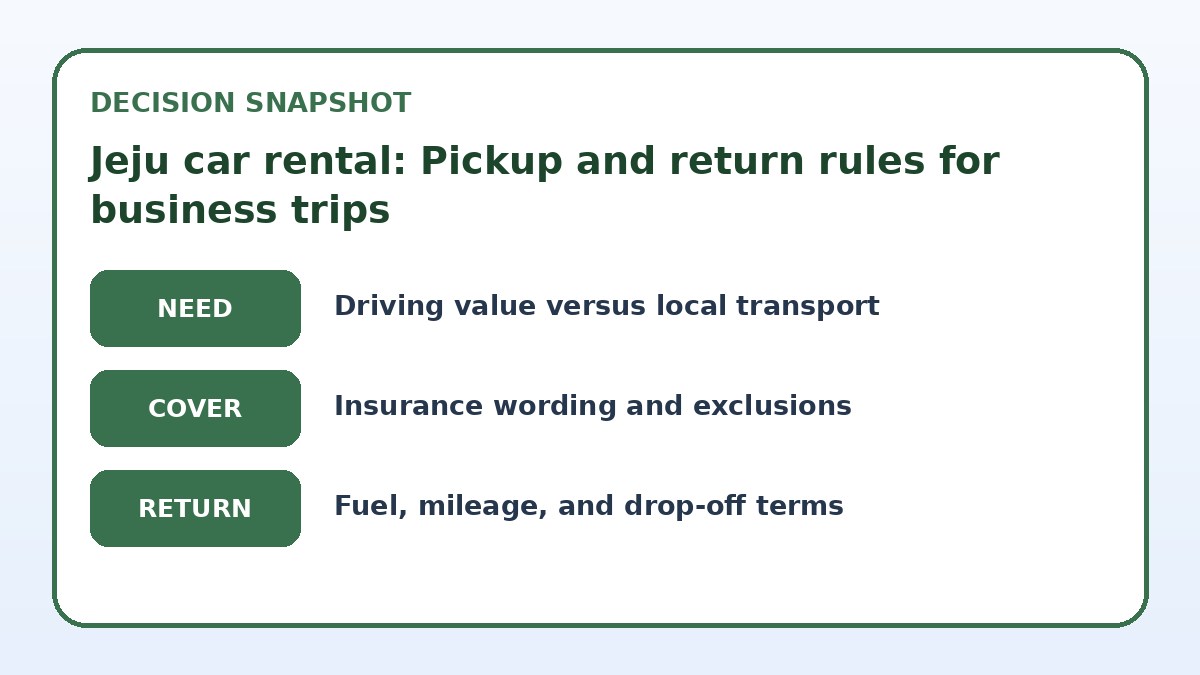
If you’re on a business trip to Jeju, the practical facts that matter most at booking are how and where you pick up the car, what the return window requires, and which clauses could delay your schedule or add fees. Prioritize pickup location (airport vs. city), opening hours and after-hours handover, fuel and mileage rules, and whether your reservation includes insurance, additional drivers, or GPS. Read rental confirmations carefully and compare the provider’s final booking page for exact terms — don’t rely on summary listings alone. This article walks through tradeoffs business travelers commonly face: speed versus cost, convenience versus control, and the paperwork details that make a rental fit a tight meeting itinerary.
See current options before you compare the details
Availability and final conditions change. Open Trip.com now or keep reading for the practical comparison.
Choosing pickup: airport desk, off-airport branch, or delivery
For business travelers, pickup location determines how quickly you can be on the road after arrival. Airport desks are convenient when they have a staffed counter in the arrivals hall, a clear shuttle path to remote lots, or in-terminal garages. Off-airport branches sometimes offer lower rates and quieter handovers, but they require extra transfer time—factor that into meeting schedules. Some providers will deliver the car to your hotel or a meeting venue for an added fee; this saves time but may cost more and require precise coordination.
When comparing options, check the provider’s published pickup hours and whether after-hours pickup is allowed or involves a different process. Verify exactly where the vehicle will be located (terminal garage number, lot name, or branch address) and how staff confirm identity and driver documentation. On the booking page, look for notes about airport surcharges, shuttles, or required pre-notification for late arrivals. If anything on the confirmation is vague, call the provider or use the booking platform’s customer support to get a written clarification you can show at pickup.
Return terms that affect tight schedules
Return rules can disrupt a tightly scheduled business trip if you don’t plan around them. Key elements are the allowed return window, where you must leave the car, fuel policy, and the inspection process. Some firms set a strict hour-by-hour charge for late returns; others provide a grace period. The required return location may be the branch you picked up from, a designated airport lot, or a specific dropbox for keys and keycards. For airport returns, confirmation of acceptable lanes or parking areas reduces confusion and potential towing or relocation fees.
Before you book, identify how handover is documented at return: is there a formal exit inspection with a signed report, or do they rely on timestamped photos? Ask whether the fuel policy requires filling to the original level or if there’s a prepaid option that may be convenient but not necessarily cost-effective. Also confirm how claims for post-return damage are handled and how long afterwards a charge may appear on your card. These details are often in the fine print; request the exact return policy language if it’s not immediately clear on the provider’s booking page.
| Approach | Best for | Tradeoff to check |
|---|---|---|
| Airport pickup with full protections | Travelers prioritizing speed and minimal administrative hassle | Higher daily cost; confirm exact coverage and airport surcharge on the booking page |
| Off-airport branch with lower rate | Travelers with flexible arrival times and budget constraints | Requires transfer time; verify shuttle availability and branch hours before booking |
| Hotel or meeting-point delivery | Executives needing immediate mobility on arrival | Extra fee and need for precise timing; get delivery window and contact details in writing |
| No-added-insurance, corporate-card coverage | Companies with comprehensive card or corporate insurance policies | Potential large deductible and complicated claims process; confirm card issuer’s terms and proof requirements |
Ready to check the option that fits your plan?
Use your exact dates and traveler details so the provider page can show the current total and conditions.
Insurance, damage claims, and inspection consistency
Insurance and damage terms are the parts of a contract that most commonly create disagreement. Business travelers should know the coverage included in the rate, the amount of the deductible, whether third-party liability meets your corporate requirements, and if collision or theft waivers are optional or included. Some corporate cards provide primary or secondary coverage; check with your card issuer and your company’s travel policy. At pickup, inspect the vehicle with staff and ensure existing scratches, dents, and tire or windshield issues are recorded in writing and photographed to avoid being held responsible at return.
If you decline offered protections at pickup, understand the administrative process for reporting damage and filing a claim, including expected response times. Clarify whether a police report or local authority documentation is required for third-party incidents on Jeju. If you are handed documents in Korean, ask for an English version or a clear verbal explanation and get any critical terms recorded in an email. When possible, request the provider’s damage claim timeline and the contact method they will use to report post-return charges, so you can follow up through official channels if necessary.
Before you book
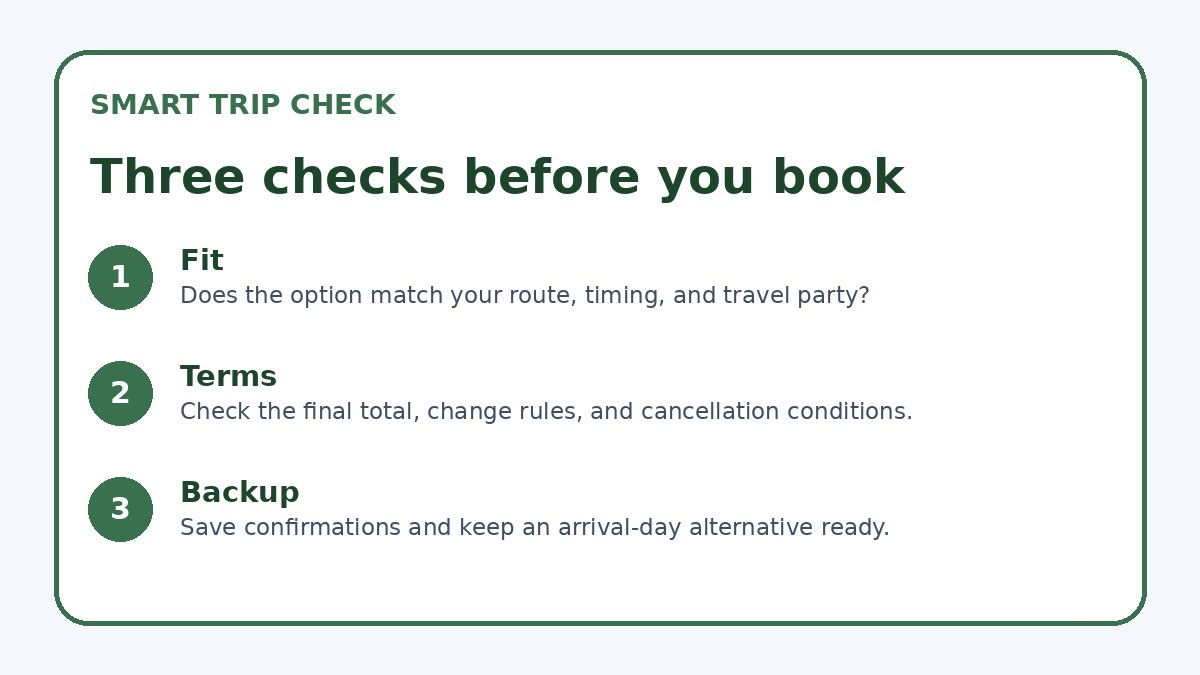
- Confirm pickup location details and operating hours on the provider’s final booking page and save a screenshot or email of that confirmation.
- Ask the provider to document existing vehicle damage with photos and a signed report at pickup, and retain a copy for your records.
- Verify the exact return procedure (location, inspection process, and after-hours options) and request any exceptions be recorded before you depart.
- Check your corporate card and employer travel policy for rental coverage limits, required documentation, and claim contact points.
- Clarify the fuel policy and decide whether to return full, use prepaid fuel, or accept refill charges based on total trip distance.
- Record staff names and timestamps at pickup and return, and keep rental agreement pages that state insurance, excess/deductible, and grace-period terms.
Practical tradeoffs: speed, cost, and liability for business trips
Speed and convenience often increase cost. You can save money by choosing off-airport branches, limited insurance, or stricter fuel policies, but that can add time and administrative burden if a problem arises. Conversely, picking a high-convenience package — airport pickup, after-hours return, and full waivers — reduces risk to your schedule but raises the upfront cost. Think about the value of your time and the potential expense of a missed meeting when deciding. For short business stays, paying a bit more for streamlined pickup and a reliable return process often pays back in reduced stress.
Another tradeoff is flexibility versus clarity. Flexible, open-ended return times sound attractive, but they are rare; many companies prefer fixed windows to manage fleet logistics. If your agenda might change, negotiate a longer grace period or an agreed contact point who can approve an extension without creating a dispute. Always confirm these concessions in writing before you drive away. When comparing providers, weigh the likelihood of schedule shifts against the incremental cost of added protections and conveniences that keep your plans on track.
Frequently asked questions
Can I pick up a car at Jeju Airport after my flight lands late in the evening?
Many providers operate desk hours that do not match every late-arrival time, and after-hours pickup processes vary widely. Before booking, check the provider’s listed airport desk hours and whether they offer a key-drop or night-collection service; if an after-hours procedure exists, confirm the exact steps you must follow and whether any additional fee applies. If the online summary is unclear, call the reservation desk or use the booking platform’s messaging to get written confirmation that specifies where to meet staff or how to collect the vehicle at night.
How do I avoid being charged for damage discovered after I return the car?
The most reliable prevention is a documented inspection at return that both you and an agent sign or timestamp, plus dated photos of the vehicle. If the provider uses photographic check-in/out, request copies or a reference number. Keep records showing the car’s condition at handover and the name of the staff member who accepted it. Also, check the provider’s stated window for post-return claims on the booking page and ask how disputes are handled; if possible, have your company’s travel manager copy any correspondence to accelerate resolution.
Should my company accept provider-supplied damage waivers or rely on corporate card coverage?
That depends on the card’s terms and your company’s risk tolerance. Company cards sometimes provide primary or secondary collision and theft coverage, but they may carry significant deductibles or exclude certain damage types common in island driving. Compare the waiver’s reduction in excess with the card’s coverage details: ask for written policy language and a sample claim process. If documentation is unclear, it can be safer to take the provider’s waiver for single-day contracts or high-liability situations, especially when a straightforward waiver avoids potential administrative burdens after a business trip.
Final planning note
For business travel to Jeju, the right rental is the one that keeps your schedule predictable and your paperwork minimal. Focus on pickup logistics (where exactly you’ll collect the car and who will meet you), the return process (inspection, fuel policy, and grace periods), and the insurance or corporate-card interplay that determines your financial exposure. Don’t rely on summary listings; verify all critical terms on the provider’s final booking page and get any agreed exceptions in writing. If you want to compare live availability and wording, platforms such as Trip.com can show current options, but always crosscheck the provider’s own confirmation before you commit. With a few targeted checks at booking and a careful handover inspection, you can avoid surprises and keep your Jeju business trip on schedule.
Continue planning
Check current options and final conditions
Use the provider page to confirm live availability, the final total, cancellation terms, and every condition that matters to your trip.
This evergreen planning guide was created with AI-assisted drafting and a structured quality review. It does not display live prices, schedules, availability, visa guidance, or provider rankings. Verify current details before booking. Some links are affiliate links; we may earn a commission at no additional cost to you.