If you’re a first-time visitor weighing whether to drive in Seoul, the short practical answer is: drive only if your itinerary needs flexible access beyond Seoul’s central districts and you accept extra time for insurance reading and pickup friction. Many visitors find Seoul’s efficient subway, buses, taxis, and app-based ride-hailing faster and lower-stress for inner-city travel. But a car can transform trips to the DMZ border areas, rural Gyeonggi-do spots, Jeolla or Gangwon road routes, or for coordinated multi-stop day trips. Before you book, the key decision isn’t simply price; it’s what the rental insurer actually covers, how deductibles and liability limits are written, and which additional waivers convert you from “responsible for damage” to “covered.” This guide gives a clear, practical way to read insurance wording, compare mobility options, and plan pickup and return so you can make a confident drive-or-not decision for Seoul.
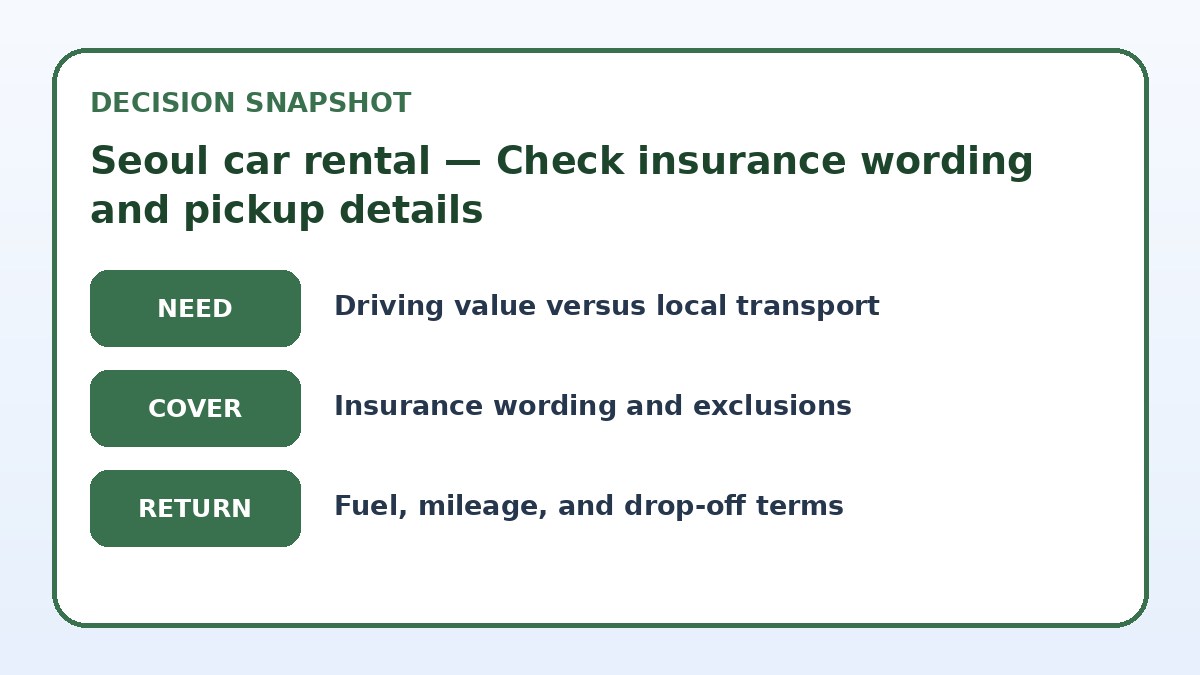
Decide whether driving improves your Seoul itinerary
Start by mapping your planned destinations and asking how much time you’ll spend inside Seoul’s central wards versus outside the metro area. If most activities are downtown—museums, palaces, markets, and compact neighbourhoods—the subway and short taxi rides will usually be quicker, cheaper, and far less stressful than navigating congested roads and paid parking. Driving pays off when you have scheduled, spaced-out stops in different counties, or when public transit would force early departures and missed evening returns. Think of the car as enabling remote-day trips and flexible departure times rather than as a city convenience.
Also weigh parking and congestion: central Seoul parking is limited and sometimes priced by the hour; traffic can add unpredictability. Factor in the extra cognitive load of lane rules, expressway access, and possible language barriers when handling police or rental paperwork. If your group includes someone comfortable with local driving and navigation, that shifts the balance toward renting. Otherwise, the time lost to parking, navigation, and stress can erase any perceived benefit of a car.
Decide whether driving earns its place
| Mobility strategy | Best for | Cost or friction to check |
|---|---|---|
| Rent a car (self-drive) | Flexible multi-stop countryside routes and travelers comfortable with local driving rules. | Higher paperwork, insurance reading, parking hassle, and potential language friction during claims. |
| Taxi and ride-hailing | Short downtown trips, late-night returns, and visitors who prefer door-to-door convenience without insurance concerns. | Costs can add up for multiple long day trips; availability varies outside the metro core. |
| Public transit plus regional trains | Visitors focused on Seoul’s core attractions and major regional hubs connected by rail or express buses. | Less flexibility for rural sites and scheduled services may force earlier or rigid return times. |
| Private driver or local shuttle | Groups wanting guided day trips or last-mile transport in rural areas without rental responsibility. | Typically more expensive than public transit and requires booking in advance; confirm cancellation and coverage terms. |
Check live rental choices only after the route test
Use the exact driver, dates, pickup point, and return plan to compare current conditions.
How to read insurance wording and what each term means
Insurance wording on rental agreements uses several recurring terms. Collision Damage Waiver (CDW) or Loss Damage Waiver (LDW) often limits or eliminates your financial responsibility for physical damage to the rented vehicle but may exclude tyres, glass, undercarriage, and interior. Third-Party Liability covers damage to other people or property; check the coverage limit and whether it matches local legal minimums. The deductible (or excess) is the amount you pay before coverage applies—clarify whether it’s per incident and if reductions require extra paid waivers.
Also look for territorial limits and driver restrictions: some policies exclude certain highways, islands, or cross-border travel. Confirm whether the policy requires an International Driving Permit alongside your national licence. Important procedural details include the claim process, required police reports after a collision, and whether the provider settles claims directly or charges you and seeks reimbursement. For every provider you consider, verify these precise policy phrases on the final booking page and the rental contract presented at pickup.
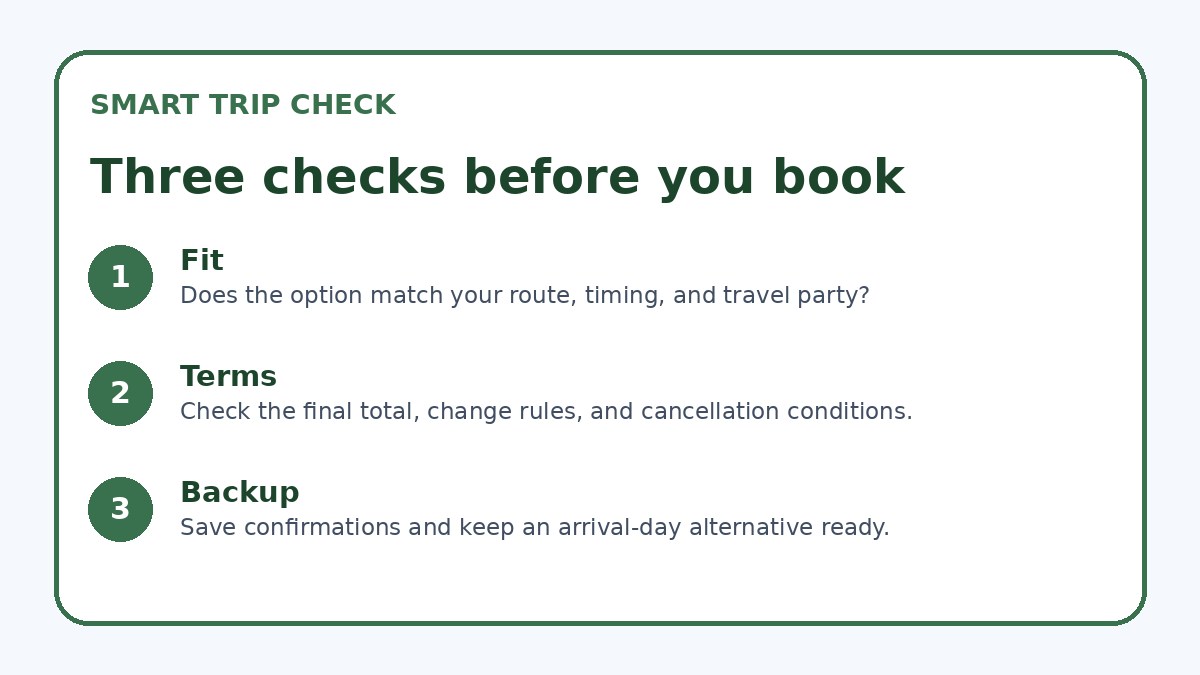
Compare the full rental conditions
Confirm insurance wording, exclusions, deposit, fuel, mileage, and return terms on the final page.
Pickup and return friction: what to expect and check
Pickup time can be longer than you expect: agents will ask to inspect the vehicle, photograph existing damage, and run through insurance options. Before signing, carefully compare the contractual damage report with your own photos and keep dated images of every panel, tyre, and interior. Ask how late returns are handled and whether there’s a grace period or an overnight fee. Obtain written confirmation of fuel policy—full-to-full is common—and whether any fuel charges include service fees if you return less than full.
At return, staff will inspect for damage; minor scuffs or unreported incidents can trigger disputes. Ask how damage is assessed and whether temporary holds on your credit card will be released immediately or after a claims period. If you add optional waivers that reduce the deductible, confirm their start time—some apply only after a waiting period or require activation through a separate document. Finally, know who to call and what documents (police report, repair estimate) are needed in the event of an accident.
Car rental terms to verify
- List every destination and mark which fall outside Seoul’s subway network to decide if a car is necessary.
- On each rental provider’s final booking page, copy the exact deductible amount, CDW exclusions, and third-party liability limits into your notes.
- Photograph the rental car (all sides, tyres, interior) with timestamps before leaving the lot and again at return.
- Confirm fuel policy, toll handling, and whether any credit-card pre-authorisation holds will be released immediately or after claims processing.
- Ask for written clarification on territorial limits and whether the vehicle can legally access your planned roads or islands.
- If purchasing extra waivers, get the waiver name and activation time in writing and verify it appears on your signed agreement.
Non-driving fallback: practical alternatives for first-time visitors
If you opt not to drive, plan a layered mobility approach. Seoul’s subway and buses cover the city core efficiently; intercity buses and KTX trains connect to regional destinations. For day trips outside strict rail corridors, use taxis, app-based ride-hailing, or local private shuttle services to bridge the last mile. Combine modes: take a train to a regional gateway town, then hire a local driver or taxi for rural sites where schedules are sparse. This approach minimizes insurance complexity and eliminates parking worries while still reaching many outer destinations.
Budget time for transfers and peak-hour congestion; the subway is faster at rush hour than surface streets. For mornings or late-night returns when trains are less frequent, reserve a taxi or pre-arranged transfer. If you want door-to-door convenience without rental risk, consider hiring a driver for a full day—confirm in writing what is included, the rate basis (hourly or per trip), and whether VAT or tolls are additional. Where helpful, compare current options on Trip.com or provider booking pages to see live availability and exact contract wording before committing.
Car Rental & Road Trip questions travelers ask
Does Korean liability law change what rental insurance covers for visitors?
Korean civil and traffic laws define third-party liability responsibilities, but rental contracts set the insurer’s practical payout limits and processes. That means you must check the rental policy’s stated liability limit and whether it meets local legal requirements for injury or property damage. Also confirm whether the provider places a temporary hold on your card that covers potential liability or damage. For definitive legal obligations in a serious incident, consult local authorities or legal counsel; for rental decisions, rely on the policy wording and the provider’s damage-claim procedures shown on the final booking page.
Will my domestic auto insurance or credit card cover rentals in Seoul?
Some domestic auto insurers and credit cards offer rental coverage abroad, but coverage varies widely by country, vehicle type, and listed exclusions. Before relying on external coverage, request the insurer’s or card issuer’s written confirmation that Korea is included, what types of damage are covered, the deductible that applies, and any required claim steps or contact numbers. Present this confirmation at pickup if you intend to decline the rental company’s waivers. Always check the rental agreement for language requiring specific waivers despite third-party coverage.
How do I handle an accident or damage in Seoul while driving a rental?
Immediately ensure everyone’s safety, contact emergency services if needed, and call the rental company’s emergency number listed on your contract. Obtain a police report for accidents involving other parties—that report is usually required for claims. Photograph the scene, all vehicles, licence plates, and any relevant road signs. Notify your insurer or credit-card coverage line if you used external coverage. Keep copies of the police report, repair estimates, and the rental contract; the provider’s final booking page will show exact claims contacts and whether they handle repairs directly or require upfront payment and later reimbursement.
Final decision note
For first-time visitors, the right choice about renting a car in Seoul comes down to itinerary geometry and risk tolerance. If your plans keep you largely inside the compact core, choose public transit plus targeted taxis or a private transfer for the occasional rural leg. If you need full-day, multi-stop flexibility outside the metro, a car makes sense—but only after you read and compare insurance wording for deductibles, exclusions, territorial limits, and the provider’s claim procedures. At booking and at pickup, insist on seeing the exact policy phrases and keep dated photos and paperwork. That discipline avoids most surprises and lets you enjoy Korea’s roads with a clear understanding of who pays if things go wrong.
Continue planning
Check current options and final conditions
Use the provider page to confirm live availability, the final total, cancellation terms, and every condition that matters to your trip.
This evergreen planning guide was created with AI-assisted drafting and a structured quality review. It does not display live prices, schedules, availability, visa guidance, or provider rankings. Verify current details before booking. Some links are affiliate links; we may earn a commission at no additional cost to you.