If you have a flight to catch, the practical answer is to pick a transfer method that matches your meeting schedule, luggage needs, and risk tolerance — then confirm it the evening before departure. For many business travelers on Jeju, that means choosing between shared airport buses, private car hires, taxis, or arranging a hotel shuttle where available. Decide first whether you need guaranteed point-to-point pickup or are comfortable with a timed public service; that determines how much buffer time you must build into your schedule. Before finalizing any booking, check the provider’s live pickup options, vehicle capacity, luggage policies, and clear instructions for where the driver will meet you. If you use Trip.com or another booking site, use it only to compare current availability and provider details, and verify pickup location and cancellation terms on the supplier’s confirmation page.
See current options before you compare the details
Availability and final conditions change. Open Trip.com now or keep reading for the practical comparison.
Choose the right transfer type for your schedule
Start by matching transfer type to how your day unfolds. If your meeting ends with little flexibility, a reserved private car offers the simplest guarantee of leaving at a specific time from a known address. Private cars are also better if you carry bulky equipment or multiple suitcases. If you have a fixed hour when you can leave and want to save money and reduce the need to book in advance, local airport buses or a scheduled hotel shuttle can work, but they can require a short walk to the stop and adherence to published timetables.
Shared shuttles and buses are fine when you have time margins and want predictable cost, but they often make multiple stops and add ride time. Taxis provide flexible, immediate departures but may have varying availability in off-peak hours; they can be quicker if traffic is light, and drivers usually handle luggage. Evaluate where your meeting finishes, whether other colleagues will travel with you, and how much spare time you can tolerate before choosing the transfer mode that best aligns with your schedule and risk tolerance.
Timing: planning buffers and pickup windows
Work backwards from your flight check-in and boarding deadlines to establish a transfer departure time. For business travel, conservative planning is wise: allow enough time for travel to the airport, check-in, security, and any last-minute work or printing needs. Consider the effect of peak traffic periods, local events, and weather — these can add variable delays on Jeju roads. If you must be at the airport by a specific time, book a pickup that guarantees a window or offers real-time driver tracking so you can watch progress and adjust if necessary.
When you book, opt for a pickup window rather than an approximate suggestion where possible, and confirm how the provider handles late-running flights or meetings. If a driver service promises to wait, verify how long and whether there are extra charges for delays. For buses or shuttles, note departure times and the stop location precisely; missing a scheduled shuttle often means waiting for the next one with uncertain frequency. Always have a backup option on standby — a local taxi app or the hotel front desk phone — in case your primary transfer runs into unexpected problems.
| Approach | Best for | Tradeoff to check |
|---|---|---|
| Private car hire | Tightly scheduled departures and door-to-door service | Higher cost and need to book in advance |
| Taxi | Immediate departures and unpredictable end times | Variable availability and costs, especially during peak hours |
| Hotel shuttle or scheduled bus | Predictable timetables and lower cost if schedules match | Less flexibility and possible extra stops or walking to pickup |
| Shared shuttle service | Small teams seeking a balance of price and convenience | Longer travel time due to multiple pickups and drop-offs |
Ready to check the option that fits your plan?
Use your exact dates and traveler details so the provider page can show the current total and conditions.
Practical checks before you confirm the transfer
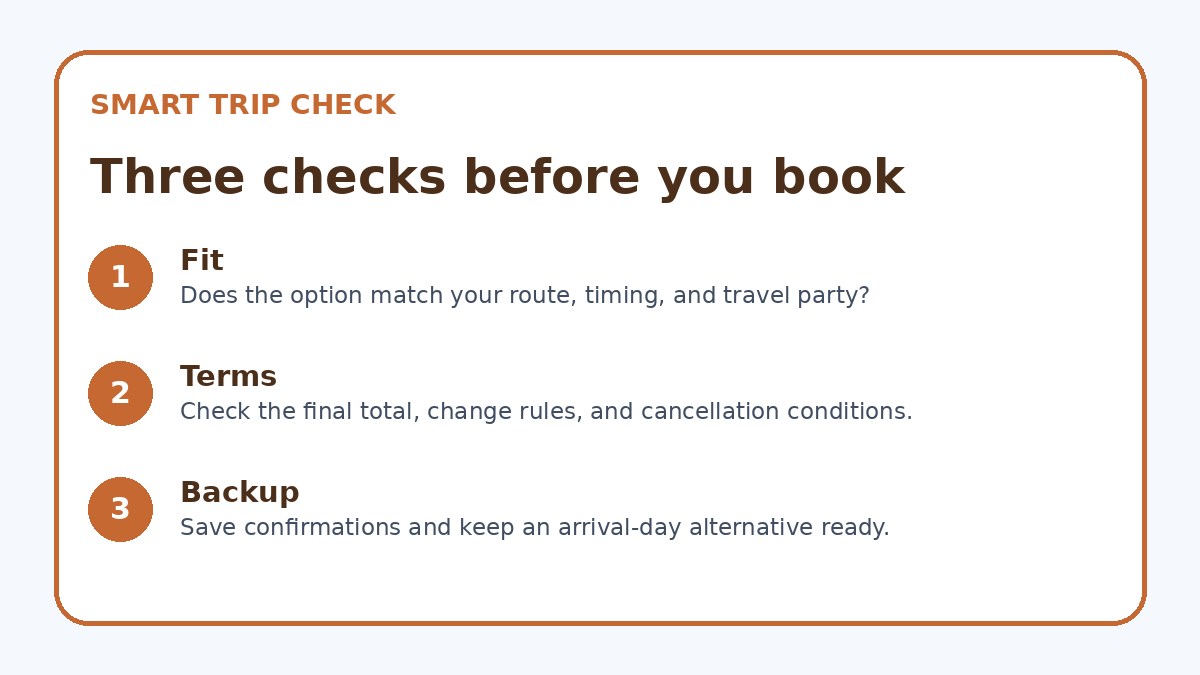
Before you finalize any transfer booking, verify the essentials on the provider’s final booking page. Confirm pickup and drop-off points, vehicle model or class, passenger and luggage limits, cancellation and change policies, and whether the driver will wait past the scheduled pickup time. Make sure the booking shows a local contact number you can call if plans change. If the supplier uses an app for tracking, download and set it up; if not, save the driver or company phone number and communicate a clear meeting location and backup landmark.
Also check the payment and receipt process so expenses can be reported or reimbursed easily. If you need a VAT invoice or corporate receipt, confirm how to request one. Note any language support the driver or company provides; for non-Korean speakers, choose a provider that clearly explains pickup instructions in English or uses an app with translation. Finally, review how changes or cancellations are handled close to departure — business schedules often shift, and a flexible policy can preserve your time and options.
Before you book
- Confirm the exact pickup address and meeting landmark with the driver or provider the evening before departure.
- Verify vehicle size and luggage capacity against what you will carry, including any presentation equipment.
- Save a local contact number for the transfer provider and your hotel’s front desk for quick coordination.
- Plan a realistic buffer for travel time and traffic, then add an extra margin for unforeseen delays.
- Download any provider app, send your live location if available, and test it before the pickup.
- Check how to obtain a corporate receipt or invoice and record payment details for expense reporting.
Comparing cost, convenience, and control
Weigh cost against convenience and how much control you want over timing. Lower-cost shared options or scheduled buses reduce expense but can increase ride time and unpredictability when meetings run long. Private hires and taxis give more control and fewer unknown stops, which matters if you must get to the airport by a firm deadline. For small teams traveling together, a single private vehicle can simplify logistics and keep everyone on the same timeline, though it requires confirming adequate space for luggage and equipment.
Remember that the apparent cheapest choice on a booking site may not be the most effective for a business itinerary with strict timing. Look at total door-to-door time, pickup flexibility, and customer service responsiveness. If you use Trip.com for comparison, treat it as a tool to see options and then verify provider details directly. Prioritize the transfer that minimizes the chance of a missed flight or a stressful rush — time saved and mental ease are often worth paying a bit more for on a tight business schedule.
Frequently asked questions
How far in advance should I book a private transfer from Jeju to the airport?
Book a private transfer as soon as your departure time is fixed, especially if traveling during local events or peak periods. Early booking increases the chance of securing the vehicle class you need and avoids last-minute rate surges or limited availability. If your schedule is flexible, you can compare options close to departure, but for strict business timelines you’ll reduce stress by confirming a pickup the day before. Always verify the supplier’s cancellation and rescheduling policy on the booking page in case your meeting runs late or flight plans change.
Is it better to rely on a hotel shuttle or to book a taxi for an early morning flight?
A hotel shuttle can be convenient if its schedule aligns exactly with your flight check-in needs and the hotel guarantees a pickup point. It’s usually easier for coordination via the front desk. However, if your meeting ends unpredictably or you need door-to-door pickup at an odd hour, a taxi gives more flexibility. For early morning flights, confirm whether shuttle services operate at that time; if not, arrange a taxi or private hire in advance and confirm pickup time and driver contact information the night before.
How can I reduce the risk of a missed flight during the transfer on Jeju?
Build conservative buffer time into your schedule and choose a transfer option that minimizes variables: private cars or pre-booked taxis reduce the chance of delays caused by multiple stops. Communicate a firm pickup time, confirm driver contact details, and have a backup plan such as a local taxi app or hotel concierge phone. Check real-time traffic and driver tracking if available, and verify luggage handling procedures so you don’t waste time at pickup. Finally, confirm all provider terms on the booking page, including how late pickups are handled and any extra charges for delays.
Final planning note
For business travelers, a calm return to Jeju Airport starts with picking the right tradeoff between control and cost. If your day ends at a rigid time, prioritize a reserved private transfer or pre-booked taxi and confirm driver details the evening before. If you have more schedule flexibility, scheduled buses or hotel shuttles can be efficient and economical, but you must accept possible extra stops and fixed departure times. Always verify pickup locations, vehicle capacity, waiting policies, and receipt procedures on the provider’s final booking page. Having a backup taxi option and a realistic buffer will keep your return trip smooth and let you focus on work until the last minute.
Continue planning
Check current options and final conditions
Use the provider page to confirm live availability, the final total, cancellation terms, and every condition that matters to your trip.
This evergreen planning guide was created with AI-assisted drafting and a structured quality review. It does not display live prices, schedules, availability, visa guidance, or provider rankings. Verify current details before booking. Some links are affiliate links; we may earn a commission at no additional cost to you.