Short answer: most family visitors to central Osaka don’t need a rental car, but families with young children, mobility needs, or multi-day side trips to rural Kansai will often find a car worth the cost and hassle. Osaka’s compact city center, frequent trains, and walkable neighborhoods make public transport efficient for sightseeing, while driving pays off if your itinerary includes day trips (Nara, Koyasan, rural Wakayama), stays in spread-out accommodations, or bulky gear like strollers and car seats. Decide by comparing your planned daily destinations, how many times you’ll cross the city, the ages and mobility of family members, and whether you prefer door-to-door convenience over navigating parking and city traffic. The rest of this guide lays out tradeoffs, concrete decision criteria, what to check on rental pages, and a simple checklist to help you make the call and book with confidence.
See current options before you compare the details
Availability and final conditions change. Open Trip.com now or keep reading for the practical comparison.
Who benefits most from an Osaka car rental?
Families who gain the most from renting a car in Osaka share a few clear traits: they plan several day trips outside the city to places with limited public transport, they carry bulky equipment like double strollers or sports gear, or they travel with members who need door-to-door mobility. Rural or mountainous destinations in Kansai and neighboring prefectures are easier to reach by car, reducing transfers and long walks between stations and final lodging. If your family itinerary includes early starts, late returns, or scattered accommodations across prefectures, a car turns travel time into usable family time.
Equally important are family size and luggage. A compact economy car won’t suit large families or those with multiple suitcases and child seats; you’ll need to verify passenger capacity and cargo space when booking. Also consider arrival and departure logistics: if you arrive at Kansai International Airport and plan to leave from a different city or airport, check whether cross-drop fees apply. For short city-only trips with multiple children, taxis combined with trains often remain simpler and faster than parking and navigating urban traffic.
When public transport is the smarter choice
Osaka’s trains, subways, and buses reach most tourist neighborhoods quickly and frequently; stations cluster near hotels and attractions, reducing the need for a car. Families used to urban public transport will find stroller-friendly stations, elevators, and staff assistance at major hubs, which make navigating comfortable. For itineraries focusing on Osaka’s central districts, Universal Studios Japan, Osaka Aquarium, or downtown shopping and dining, relying on public transport plus occasional taxis is often faster than dealing with parking, congestion, and unfamiliar driving rules.
Cost and convenience also tip the balance toward transit: when you factor in parking fees, potential tolls on expressways, fuel, and the time spent learning routes and parking areas, trains and subways become cost-competitive. If your lodging sits in a pedestrian-friendly neighborhood, you might prefer a hotel that offers easy access to transit and accepts luggage delivery, allowing you to move between train stations and attractions with minimal fuss. For families wanting to maximize sightseeing time without driving stress, public transport frequently provides the best balance.
| Approach | Best for | Tradeoff to check |
|---|---|---|
| No rental — rely on trains, subways, and taxis | Families staying in central Osaka with compact itineraries | Less door-to-door flexibility; easier navigation and lower parking/toll hassle |
| Rent only for specific day trips | Families who mostly use public transit but need a car for 1–3 excursions | Some packing/unpacking and pickup logistics, but saves daily parking fees |
| Full rental for entire stay | Families with mobility needs, many stops across prefectures, or heavy gear | Higher parking/toll costs and driving stress; greater door-to-door convenience |
| Hybrid approach: hotel near station + occasional taxi or rented car | Families wanting flexible balance between convenience and cost | Requires more planning to schedule car days and manage luggage logistics |
Ready to check the option that fits your plan?
Use your exact dates and traveler details so the provider page can show the current total and conditions.
Practical tradeoffs: parking, tolls, and baby gear
Parking is the most tangible tradeoff when you rent a car in Osaka. Urban parking lots and hotel garages vary in size, availability, and nightly rates. Narrow streets and one-way systems add driving complexity. Expect to search ahead for family-friendly parking spaces and to check whether your hotel reserves a spot for guests. If your rental comes with additional items—child seats, booster cushions, or a navigation unit—verify availability and exact service fees on the rental provider’s final booking page before you commit.
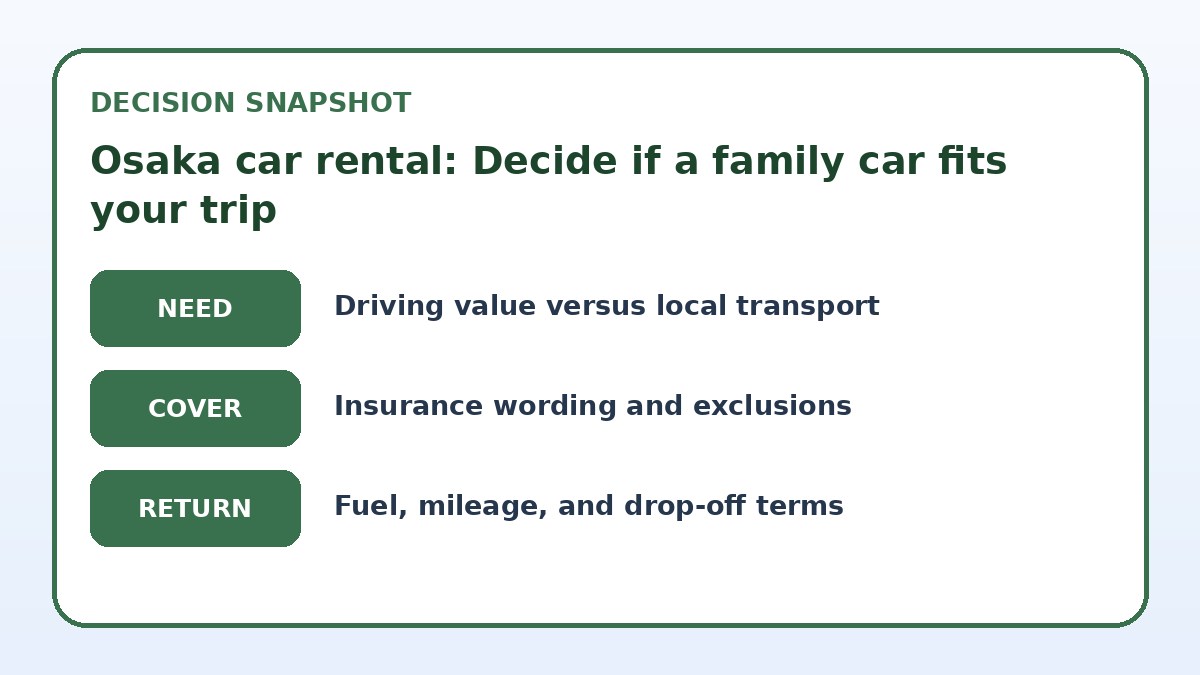
Tolls on expressways add another variable, especially for day trips that cross prefectural borders; decide whether to rent an ETC card (electronic toll device) with the car. For families with infants, bringing your own car seat may be easier but heavy to carry; conversely, renting seats from the car company reduces baggage but verify age and model compliance and any sanitation policies on the provider’s page. Always check the provider’s fuel policy, allowed mileage, insurance coverage levels, and cross-border restrictions, because these details change and affect total trip cost and convenience.
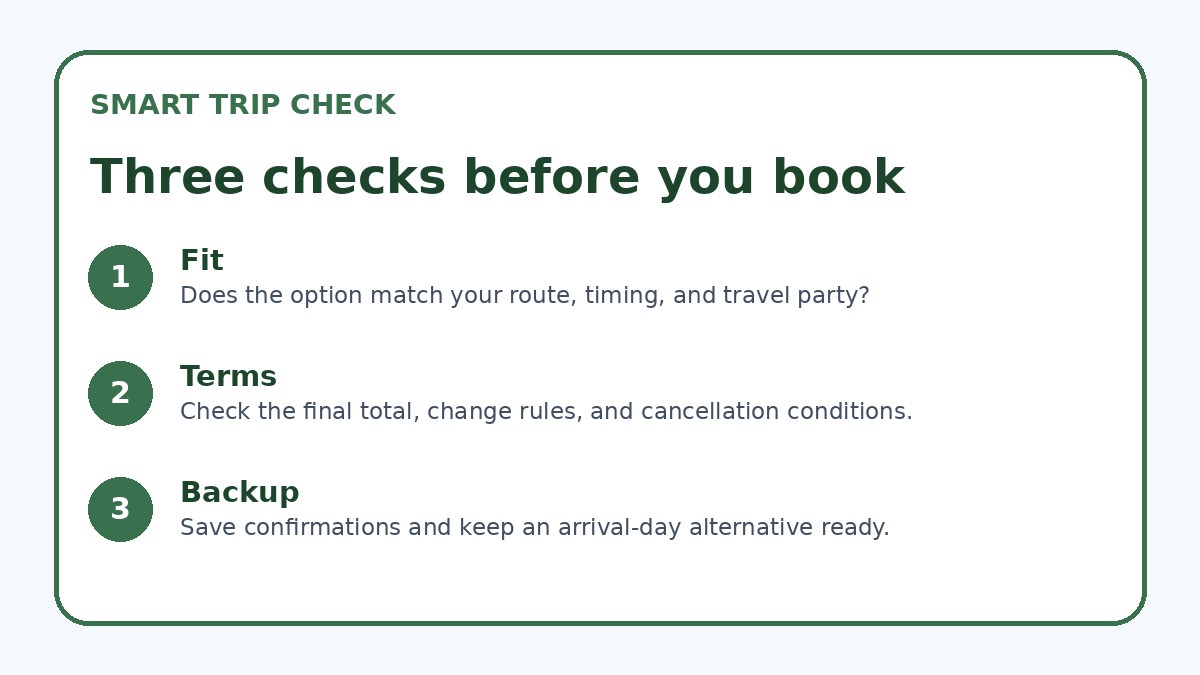
Before you book
- Map your daily itinerary and mark which days include rural or multi-stop routes that are hard to reach by train.
- Check your hotel’s parking availability and size restrictions; confirm whether they reserve spaces for guest rentals.
- On the rental booking page verify vehicle passenger and cargo capacity, and confirm child-seat availability and fees.
- Estimate daily parking and toll costs for driving days and compare that to train and taxi expenses for the same routes.
- Confirm accepted driver documents (international driving permit or national license) and any cross-prefecture or airport drop-off rules.
- Read the rental company’s insurance excess, fuel policy, late return penalties, and exact pickup/drop-off hours before payment.
How to compare rental options and make the final call
Start by mapping your planned destinations and approximate driving times, then estimate cumulative parking and toll costs per day. Compare that figure with the cost of train tickets, taxi rides, or rail passes for your party. Factor in non-monetary costs: the time spent finding parking, handling child seats, and adjusting to local traffic rules. If the estimated extra time and complexity of driving outweigh the door-to-door benefits for most days, limit your car rental to the specific days you need it and use public transport for the rest.
On rental pages, verify the vehicle size, luggage capacity, child-seat options, pickup/drop-off locations, insurance excess amounts, and whether mileage or tolls are included. Confirm pickup and drop-off hours to avoid late fees, and check whether the provider requires a Japanese or international driving permit for your nationality. For up-to-date availability and to compare offers, you may optionally look at Trip.com or other booking platforms, but always read the rental company’s final terms before paying.
Frequently asked questions
Can I use an international driving permit (IDP) to rent and drive a car in Osaka?
Many international visitors use an IDP to drive in Japan, but documents and acceptance rules depend on your country of issue and the rental company. Before booking, check the rental company’s driver requirements and confirm whether they accept your IDP and passport combination. Also verify whether any additional identification, credit card holds, or age restrictions apply on the provider’s final booking page. If you’re unsure, contact the rental provider directly to avoid complications at pickup.
How do I handle child seats for a rental car in Osaka?
You have two main choices: bring your own child seat or rent one from the car company. Bringing your own guarantees fit and cleanliness but adds luggage bulk and possible airline fees. If you rent a seat, check the provider’s models, age/weight suitability, sanitation policies, and per-day fees on the final booking page. Reserve seats in advance because availability can be limited, and confirm whether the rental company installs seats for you or requires self-installation.
Are expressway tolls and parking included in rental quotes?
Tolls and parking are generally not included in basic rental rates. Some rentals offer optional ETC devices for convenient electronic toll payments; others invoice tolls separately. Parking is almost always an extra cost and varies by location and time of day. To know exactly what’s covered, examine the rental terms for fuel policy, mileage limits, and toll handling on the provider’s final page. For quick comparisons, you can optionally check Trip.com, but always verify details with the rental company before booking.
Final planning note
Choosing an Osaka car rental for your family comes down to matching itinerary shape with mobility needs. Stay car-free if your trip centers on central Osaka and relies on compact, transit-friendly days — you’ll save on parking, avoid traffic stress, and move quickly between attractions. Consider renting for specific days if you expect to visit rural Kansai destinations, travel with bulky gear, or need flexible door-to-door movement for children or elders. Use the checklist to quantify costs and verify rental terms, and always confirm driver documentation, child-seat options, and pickup/drop-off details on the rental company’s final page before you pay. With a few realistic comparisons, you’ll pick the option that keeps your family comfortable and your schedule simple.
Continue planning
Check current options and final conditions
Use the provider page to confirm live availability, the final total, cancellation terms, and every condition that matters to your trip.
This evergreen planning guide was created with AI-assisted drafting and a structured quality review. It does not display live prices, schedules, availability, visa guidance, or provider rankings. Verify current details before booking. Some links are affiliate links; we may earn a commission at no additional cost to you.