Short answer: most couples will find Hong Kong’s public transport faster, cheaper, and far less stressful than renting a car, unless your plans include day trips outside the dense urban core or flexible countryside exploration. Hong Kong’s MTR, buses, ferries and trams connect key neighborhoods and tourist sites efficiently, letting you travel without parking worries or city driving. Rent a car if your itinerary leans heavily on remote beaches, outlying islands without frequent public connections, or if you value private time and on-demand flexibility. Before you choose, weigh comfort versus logistics: parking, tolls, driving side, and where you’ll sleep. Verify any rental company’s insurance terms, cross-border rules, and parking options for your hotels. Use local transit maps and operator pages or a service like Trip.com to compare current availability and terms before booking.
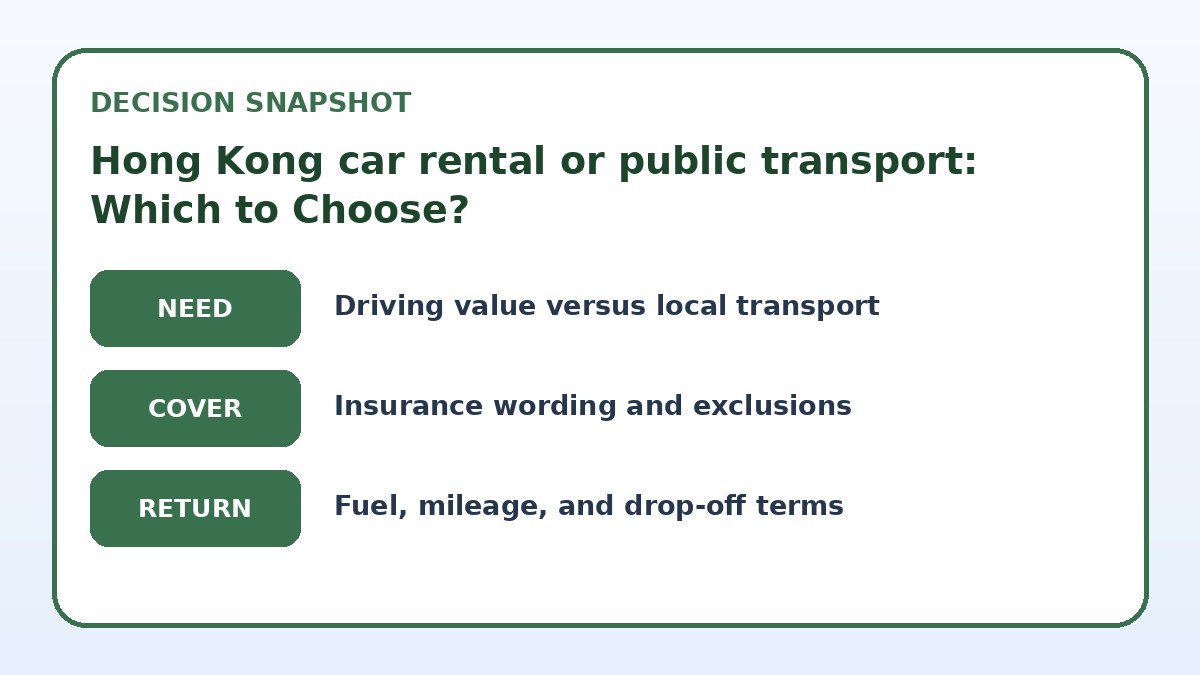
See current options before you compare the details
Availability and final conditions change. Open Trip.com now or keep reading for the practical comparison.
When public transport is the smarter choice
Hong Kong’s public transit is designed for compact urban travel. For couples staying in central neighborhoods—like those along major MTR lines—most museums, markets, dining areas and harborfront promenades are a short train or tram ride away. Public transit eliminates the need to hunt for scarce parking, reduces exposure to heavy city traffic, and lets you relax with drinks or an evening out without planning a designated driver. Frequent services also let you be flexible: hop off at a neighborhood, explore on foot, and jump back on the next route without worrying about parking time limits or fees.
Using public transport also opens options couples often enjoy: scenic ferry rides, historic trams that double as short tours, and smooth airport-to-city connections that reduce transit time after long flights. Public transport keeps budgets predictable because you avoid rental base charges, extra insurance add-ons, and unfamiliar tolling systems. If you prefer planned, walkable days interspersed with short transit hops, public transport offers a low-friction, romantic city experience that emphasizes exploration rather than managing a vehicle.
When renting a car makes sense for couples
Renting a car becomes appealing when your trip priorities extend beyond the dense urban grid into Hong Kong’s hills, less-served country parks, or outlying areas where service frequency drops. Couples who want to chase sunrise at remote viewpoints, visit multiple beaches in a single day, or use a vehicle as a private base for photography and scenic detours will appreciate the independence a car provides. A rental also suits travelers who value a private, climate-controlled space for luggage, souvenirs, or naps between long drives, and don’t want to coordinate transport schedules.
Driving together requires extra planning: parking availability and cost near attractions, narrow hillside roads, and limited vehicle access on some islands. If one partner is nervous about city driving, a car may increase stress rather than reduce it. Also plan where you’ll leave the car overnight—many central hotels do not include parking, and secure long-term parking near popular neighborhoods can be limited. If these constraints fit your plans and comfort level, a rental can transform certain itineraries by letting you craft a route on your own timetable.
| Approach | Best for | Tradeoff to check |
|---|---|---|
| Public transport only | Couples staying in central neighborhoods who prefer low-stress, walkable days | Less flexibility for remote day trips and limited luggage or private space |
| Rent a car for select days | Couples combining city stays with a few rural day trips or island excursions | Pay for rental days plus parking and potentially complex pick-up logistics |
| Rent car for entire trip | Couples focused on non-urban exploration and a private, self-paced itinerary | Higher overall cost, parking hassles, and city traffic stress |
| Mixed approach (public transit + one-way rental) | Couples who want urban convenience and a single driving day for remote sites | Requires planning pick-up/drop-off timing and verifying one-way rental terms |
Ready to check the option that fits your plan?
Use your exact dates and traveler details so the provider page can show the current total and conditions.
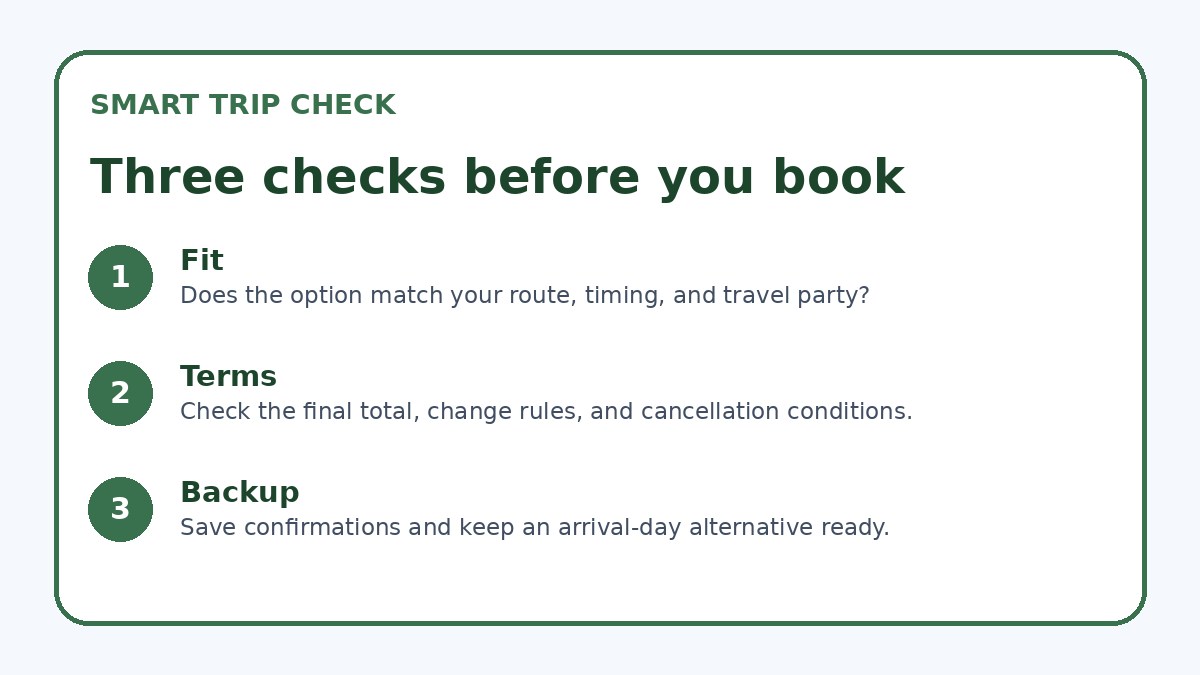
Key tradeoffs: cost, time, and flexibility
Cost comparisons aren’t straightforward: a short in-city rental can add up once you include daily base fees, mandatory insurance options, fuel, tolls, and parking. Public transport keeps per-trip costs smaller and predictable, especially for couples sharing an Octopus-style transit card. Time matters too: during peak hours, driving might be slower than the MTR’s dedicated lines. But on routes where public transit requires multiple connections or long waits, driving can be faster and more direct, particularly for early morning or late-night departures where services reduce frequency.
Flexibility is the core decision factor. A rental gives door-to-door control and a buffer for spontaneous side trips; public transit confines you to schedules but often provides higher point-to-point reliability in the urban core. Consider your mood priorities: if you want to maximize leisurely shared drives and private playlists, driving rewards that desire. If you prefer to mingle in local neighborhoods, rely on frequent services, and minimize planning friction, public transport better supports a relaxed, communal travel rhythm.
Before you book
- Map each day’s destinations and mark how many require two or more transfers by public transit.
- Check your hotels’ parking availability and reservation policy before booking a rental car.
- Confirm driver license requirements and whether an international driving permit is needed for your nationality.
- Compare rental insurance coverage types and ask the supplier which scenarios are excluded before you finalize payment.
- Estimate total parking time and likely costs near major stops you plan to visit during driving days.
- Verify ferry, park access, and road restrictions for any islands or country parks on your itinerary on official operator pages.
How to decide and what to verify before booking
Start by mapping your day-by-day itinerary and flagging destinations that lack straightforward public connections. For each flagged day, estimate total door-to-door time using transit maps and journey planners; if several days show long or complex transfers, a rental may be justified. Also factor hotel location: staying near an MTR station significantly reduces the appeal of a car. Discuss comfort with driving and parking, and whether one of you prefers not to navigate unfamiliar roads, since that affects enjoyment more than pure cost calculations.
Before you reserve a rental, verify specific provider facts: the level of insurance included and optional upgrades, cross-border restrictions and extra fees, exact pick-up and drop-off locations, permitted driver age and license requirements, and whether hotels you plan to use offer guest parking and at what terms. When comparing transit, check operator pages for route maps and any service advisories. Use Trip.com or similar sites to compare real-time availability, but always confirm key rental terms on the provider’s final booking page.
Frequently asked questions
Is driving in Hong Kong difficult for visitors?
Driving can be more demanding than in many places because urban streets are dense, signage mixes languages in some areas, and parking is limited in popular neighborhoods. If you’re used to right- or left-side driving differences, adapt gradually and pick quieter roads at first. Visitors who plan only a few rural day trips often find hiring a car just for those days less stressful than driving in the central city. Always confirm local license requirements and insurance details with the rental company before you drive.
Can public transport get us to Hong Kong’s beaches and parks?
Many beaches, country parks and scenic viewpoints are reachable by a combination of MTR, bus, and short walks; some require a dedicated bus or a ferry connection. Service frequency can fall outside city levels, so check current timetables and plan extra time for transfers. If your beach days involve carrying bulky gear or multiple remote stops, a car will make logistics easier. Use official transit maps and operator pages to plan door-to-door routes and transfer points before deciding whether to rent a vehicle for those days.
How should couples split driving and navigation duties?
Discuss roles before you travel: one partner can focus on parking and navigation while the other handles timing, music, and route confirmations. Use a shared navigation app and set realistic driving shifts to avoid fatigue on longer drives. If one partner is uncomfortable driving in busy or unfamiliar settings, plan for that person to be a passenger for urban days and only take the wheel on quieter stretches. Bring printed or saved hotel addresses and clear pickup/drop-off instructions for rental counters to avoid last-minute stress.
Final planning note
Choosing between Hong Kong car rental and public transport comes down to where you want to spend your time and how much logistical hassle you’re willing to accept. For most couples staying within the urban core, public transport delivers convenience, fewer decisions about parking, and a relaxed rhythm for exploring neighborhoods. A rental is useful when your plans include multiple remote sites, beaches, or flexible timelines that public services don’t serve well. If uncertain, lean toward a mixed plan: use transit for city days and book a car only for specific day trips. Before you finalize anything, confirm rental insurance terms, driver permit rules, pick-up/drop-off logistics, and hotel parking to avoid surprises.
Continue planning
Check current options and final conditions
Use the provider page to confirm live availability, the final total, cancellation terms, and every condition that matters to your trip.
This evergreen planning guide was created with AI-assisted drafting and a structured quality review. It does not display live prices, schedules, availability, visa guidance, or provider rankings. Verify current details before booking. Some links are affiliate links; we may earn a commission at no additional cost to you.