
If you travel to Ho Chi Minh City for work, price alerts can save time and highlight useful fare or hotel changes—but they can also tempt you into hasty choices. Start by setting targeted alerts only for the routes, dates, and hotel types that match your business priorities: flight times that fit meetings, refundable or flexible rates, and hotels near your meeting neighborhoods. Use a primary alert source and one backup so you avoid redundant notifications. When an alert fires, pause and run a quick checklist: confirm total trip cost on the provider’s final booking page, check cancellation or change rules, and compare a direct-versus-connecting flight option if relevant. That practical pause prevents impulse booking while letting you capture genuine opportunities.
See current options before you compare the details
Availability and final conditions change. Open Trip.com now or keep reading for the practical comparison.
Choose the right alert scope for business travel
The first step is defining what matters for your work trip: arrival and departure times that fit meetings, hotel proximity to your primary client or office, and fare classes that allow changes. Resist broad alerts covering whole months or multiple airports; they create noise and increase the chance you’ll click a tempting deal that doesn’t actually match your schedule. Instead pick narrow date windows that reflect your travel flexibility—one or two days earlier or later—and specify cabin or room type if refundable or flexible conditions are important.
Also decide which costs matter beyond the headline fare. For flights, include baggage, seat selection, and change fees when you compare options; for hotels, check whether corporate amenities or breakfast are included. Flag whether you require loyalty program accrual or elite benefits—alerts that ignore those details can look cheaper at a glance but cost more in convenience or lost benefits. This upfront discipline keeps alerts relevant and reduces the impulse to book just because a notification arrived.
Set up alerts and a two-step verification habit
Use one alert source that updates frequently and a secondary source to catch differences; for example, use an aggregator to see market movement and a direct airline or hotel site to confirm provider rules. When you create alerts, store the search criteria in a short, clear label—route, dates, cabin/room, and whether you need refundable conditions. Schedule a daily summary window rather than push notifications for every minor price wobble, so you only act when a meaningful change appears and you have time to evaluate it calmly.
Train yourself to follow a two-step verification before booking: (1) click through the alert to the booking page shown by the provider and confirm the full price, cancellation policy, and any luggage or service fees; (2) run a quick comparison for direct versus connecting flights or alternative hotels in the same neighborhood. If anything on the provider’s final page differs from the alert—fare class, refundable tag, or total cost—treat that as a red flag and re-evaluate rather than proceed immediately.
| Approach | Best for | Tradeoff to check |
|---|---|---|
| Narrow alerts for specific times and hotels | Travelers with fixed meetings and little schedule flexibility | You’ll miss broader market moves that could offer cheaper alternatives outside your narrow window |
| Broad alerts across weeks and nearby airports | Travelers with flexible dates who prioritize lowest headline fares | More notifications and a higher risk of impulse bookings that don’t fit your schedule |
| Aggregator alerts plus direct-provider checks | Business travelers wanting market visibility and accurate policy info | Requires two-step verification and slightly more time before booking |
| Single-source push notifications | Travelers who need to act instantly and have pre-approved budgets | Higher chance of booking without fully verifying fees or rules on the provider site |
Ready to check the option that fits your plan?
Use your exact dates and traveler details so the provider page can show the current total and conditions.
Compare direct vs. connecting options and hotel proximity
Business travelers often trade time for money. When an alert shows a cheaper option, check whether it is direct or has connections and calculate the total door-to-door time, including transfer risk and potential delays. For flights to Ho Chi Minh City, compare the arrival airport options and how long ground transfer takes to your meeting location. If a cheaper fare involves a long layover or tight connection, factor in the stress and potential missed-meeting costs even if the headline fare looks attractive.
For hotels, distance matters as much as star rating. Use the alert to identify hotels in the neighborhoods where you’ll spend most of your daytime hours. Once an alert fires, open a map and measure travel time during typical rush hours, consider public transit options or reliable taxi/ride services, and verify whether the room rate includes essential services like breakfast or business facilities. A lower nightly rate can be offset by daily commuting time, so prioritize convenience when your schedule is tight.
Before you book
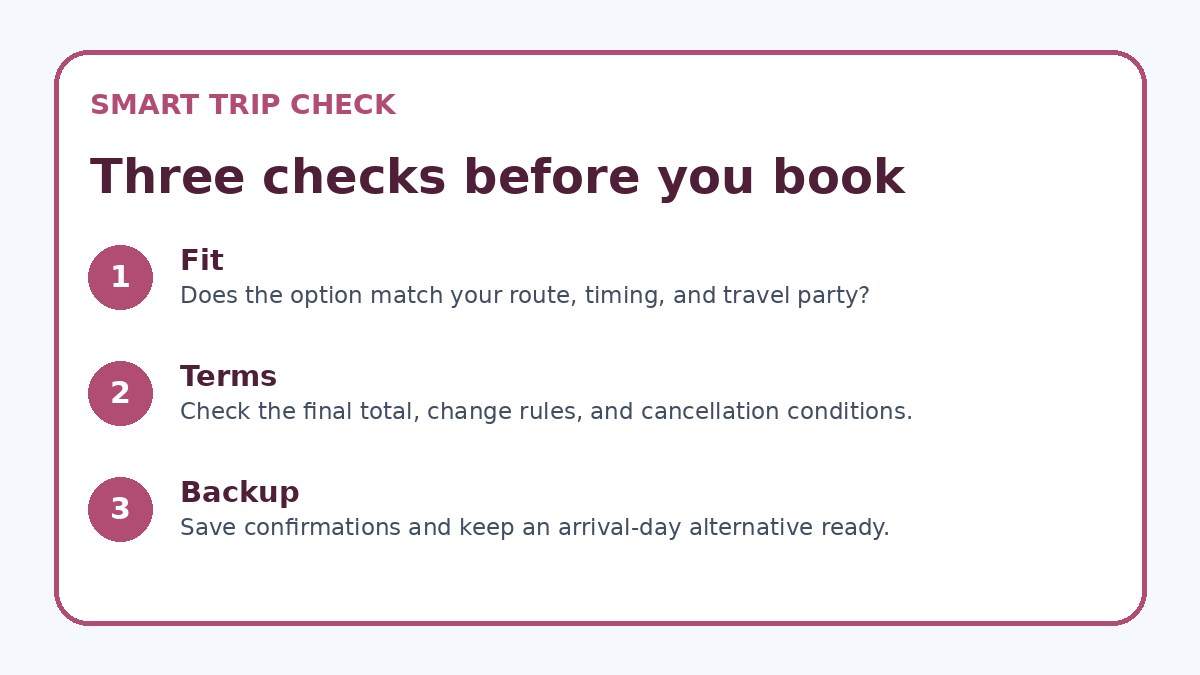
- Confirm the final total price on the airline or hotel provider’s booking page, including taxes, baggage, and other mandatory fees.
- Verify change and cancellation policies on the provider page and ensure they meet your company’s travel policy before booking.
- Compare door-to-door travel time (including ground transfers) for each flight option and factor it into meeting schedules.
- Map hotel distance to your primary meeting locations and estimate commute times during typical rush hours.
- Set a personal booking rule (for example, 24-hour review or refundable-only) to prevent impulse decisions.
- Sync alert results with your travel manager or assistant so a second pair of eyes can confirm corporate compliance.
Control impulsive behavior with rules and fallback plans
Set personal booking rules before you search: for example, require at least 24 hours of review after an alert before booking nonrefundable fares, or mandate that any fare under a certain threshold must be refundable. Use your calendar to block a short decision period so you don’t book during an emotional high. If your company allows it, pre-approve a vendor list or rate range so you can act quickly when a suitable alert appears without scrambling to get approvals.
Prepare fallback plans in case a cheap option disappears: identify a second-choice hotel and a backup flight window and set alerts for those too. If you use corporate travel tools, sync alerts with your travel manager or assistant so they can vet opportunities and confirm corporate policy compatibility. Finally, remember that aggregators and providers sometimes display different fees or availability—always confirm the final total and booking conditions on the provider’s checkout page before confirming.
Frequently asked questions
How many price alerts should a business traveler set for a Ho Chi Minh City trip?
Limit yourself to two to four targeted alerts: one for your preferred flight window, one for a nearby alternative date or airport, and one or two for hotels in the neighborhoods you’ll actually use. Too many alerts create noise; too few can miss reasonable alternatives. Make each alert specific—date range, cabin/room type, refundable preference—and label them clearly. If you use corporate travel tools, align alerts with approved vendors so you don’t waste time vetting noncompliant options.
If an alert shows a much lower fare, how do I know when to book?
First, click through to the provider’s final booking page and confirm the full total and policy details. Then compare the option against your predefined rules: Is it refundable if your meeting changes? Does it arrive at a workable time and include baggage you need? Consider the cost of a missed meeting or an overnight delay. If the option passes your rules and aligns with corporate policy, proceed; if not, either wait for a better-matched alert or use a refundable option even if it costs more.
Which sources should I trust for alerts and final verification?
Use one reliable aggregator to see market movement and a direct airline or hotel site to verify provider rules. Aggregators are useful for spotting trends; the provider’s booking page is where you must confirm exact fare class, baggage rules, and cancellation or change terms. You can mention Trip.com as one place to compare availability, but always treat it like any aggregator and verify final details on the airline or hotel’s checkout. For corporate travel, also confirm with your company’s travel policy or travel manager.
Final planning note
Price alerts can be a powerful tool for business travelers heading to Ho Chi Minh City if you use them with discipline. Define tightly scoped alerts that align with your meeting schedule, set clear personal booking rules, and always verify the total cost and policy details on the provider’s final booking page. Use a two-source approach—an aggregator for market visibility and a direct-provider check for exact rules—and train yourself to pause before hitting book. That combination helps you capture legitimate opportunities without sacrificing reliability, compliance, or your professional schedule.
Continue planning
Check current options and final conditions
Use the provider page to confirm live availability, the final total, cancellation terms, and every condition that matters to your trip.
This evergreen planning guide was created with AI-assisted drafting and a structured quality review. It does not display live prices, schedules, availability, visa guidance, or provider rankings. Verify current details before booking. Some links are affiliate links; we may earn a commission at no additional cost to you.