If your trip to Ho Chi Minh City hinges on speed, flexibility, or client visits outside district 1, renting a car can feel like the obvious choice—but only when you understand fuel and mileage rules. Practicalities such as whether a car is delivered with a full tank, whether you must refill before return, and whether daily mileage caps or per-kilometer excess fees apply all change the effective cost and convenience. For business travelers on tight schedules, a small missed clause can mean hours lost or unexpected charges on the corporate card. This guide gives the quick recommendation up front: drive only if your itinerary includes frequent travel between suburbs or meetings inaccessible by reliable taxis or ride-hail; otherwise choose local drivers or short-term vans. The rest of this article explains how to compare rental terms, spot insurance wording, plan pickups and returns, and choose a fallback that keeps meetings on time.

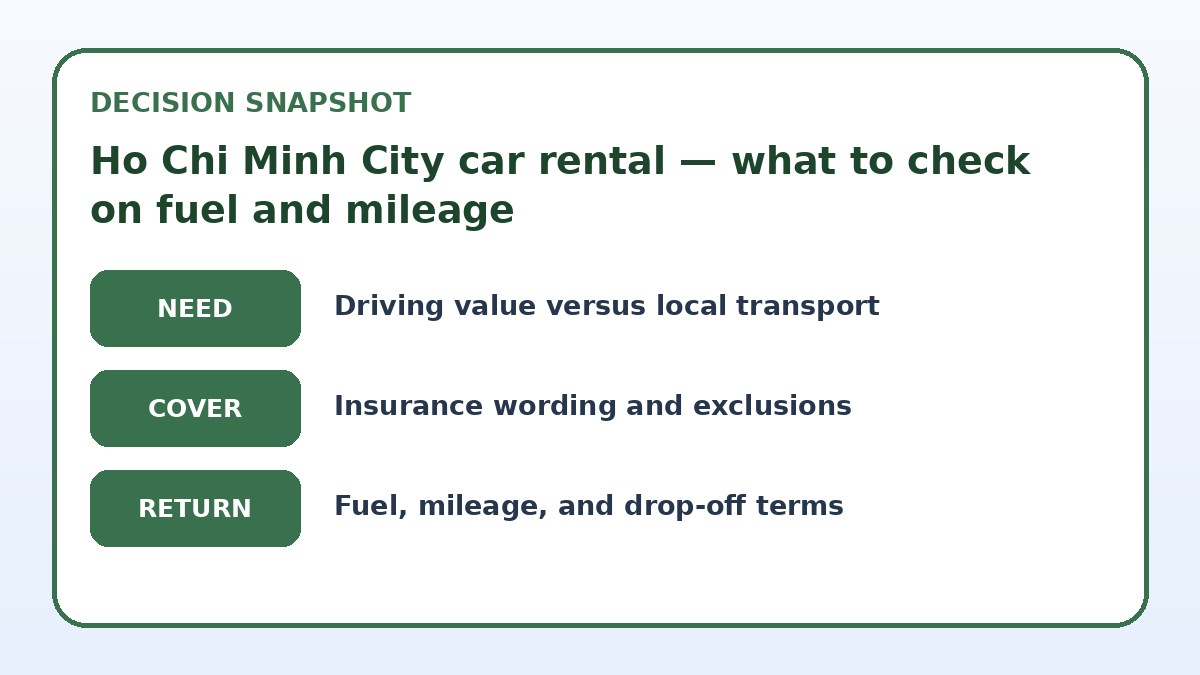
Decide if driving improves your business itinerary
Driving helps when your schedule requires frequent door-to-door transfers across separate districts, or when you must carry equipment and time windows are tight. In Ho Chi Minh City, central business districts are compact but congested; if most appointments cluster in District 1, 3 and Binh Thanh, a dedicated car can become more hindrance than help because of traffic and limited secure parking. Conversely, if you’re visiting industrial parks, suburban offices, or clients in satellite towns where public transport or ride-hailing is slow or unreliable, a rental can save time and preserve control over your schedule.
To decide, map your week’s meetings and measure where the majority of travel falls: short hops inside the core favor taxis, motorcycle taxis or a contracted driver, while multiple cross-city trips toward the outskirts favor renting. Factor in parking availability at each stop and any client preferences about security. Also weigh corporate policy: some companies prefer reimbursing local drivers or ride-hail receipts instead of taking on car rental liabilities and administrative overhead.
Decide whether driving earns its place
| Mobility strategy | Best for | Cost or friction to check |
|---|---|---|
| Self-drive rental (short-term) | Travelers needing full schedule control for cross-city meetings and equipment transport. | More admin work, fuel/mileage monitoring, parking hassle and potential insurance excesses. |
| Chauffeur or driver-for-hire | Delegates who prioritize punctuality without dealing with local driving rules or parking. | Higher hourly cost and less privacy, but avoids fuel and mileage management headaches. |
| Ride-hail and taxis (pooled as needed) | Short intra-central trips where parking is limited and meetings cluster in core districts. | Variable availability in peak traffic and less control for early or late pickups. |
| Hybrid: rental for long legs + ride-hail in city | Itineraries mixing suburban site visits and center-based meetings requiring flexibility. | Requires careful planning to avoid duplicate costs and clarifying fuel/mileage for rental segments. |
Check live rental choices only after the route test
Use the exact driver, dates, pickup point, and return plan to compare current conditions.
What to check about fuel policies and mileage caps
Fuel rules vary: common options include ‘full-to-full’ (you return the car with the same fuel level), pre-purchase with no refueling required, or a company refueling fee deducted on return. Each approach has tradeoffs: full-to-full is usually fair but requires time to refill before return; pre-purchase can avoid the final-fill hassle but may overcharge if you use less fuel. For business travelers, the practical step is to photograph the fuel gauge at pickup and return, keep receipts for any refills, and confirm the supplier’s measurement method for assessing fuel level on return.
Mileage restrictions are another pivotal clause. Some contracts impose a daily or total-km cap, after which they apply a per-kilometer penalty. If you plan to visit industrial zones, multiple client sites, or make day trips beyond the city, estimate total kilometers conservatively and compare included mileage to your estimate. When reviewing the booking page, note whether mileage is counted in calendar days or 24-hour periods, how they round kilometers (per km or per 10 km), and whether geographic limits apply to cross-border travel—always verify these specifics on the provider’s final terms.
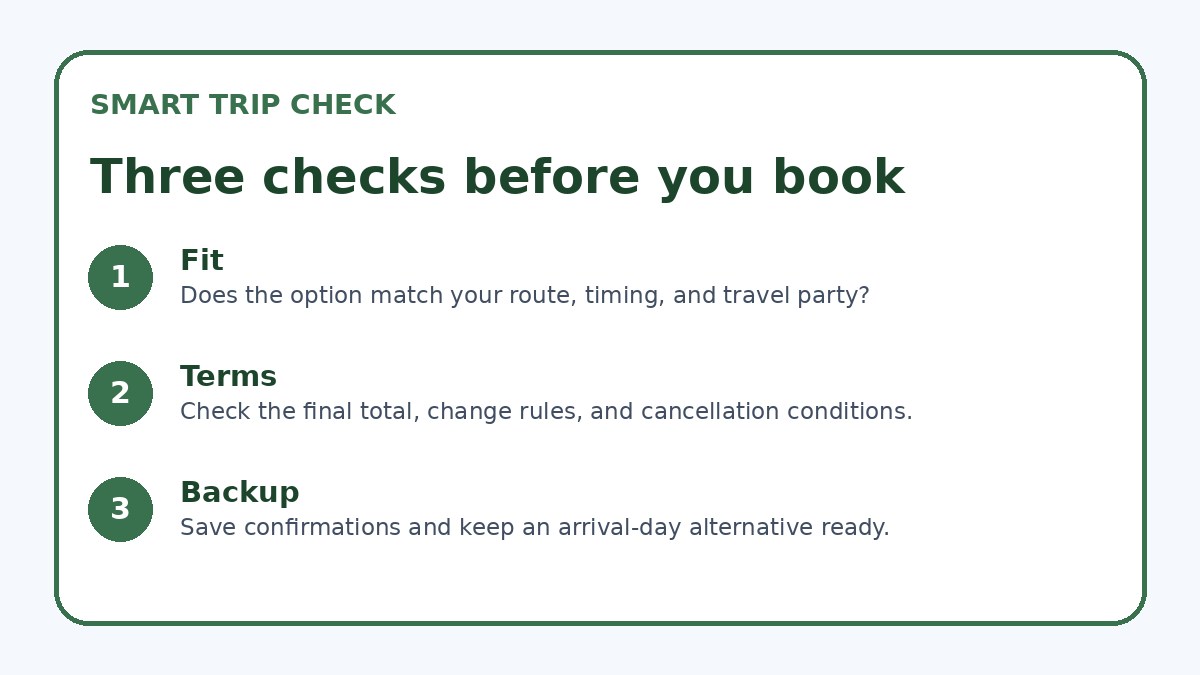
Compare the full rental conditions
Confirm insurance wording, exclusions, deposit, fuel, mileage, and return terms on the final page.
Insurance wording, liability, and driver restrictions
Insurance language can be dense; focus on the net liability you or your company will face after insurance, deductible amounts (often called excess), and what actions invalidate coverage. Confirm whether third-party liability and collision damage waiver (CDW) are included or optional, and whether an excess applies per incident or per rental. Also confirm whether the policy covers business use, which is sometimes excluded or requires an upgrade. On the final booking page, look for precise deductible amounts, conditions that trigger them, and whether credit-card or corporate insurance supplements the supplier’s coverage.
Driver eligibility matters too: many local rentals restrict drivers to certain ages, require an international driving permit or a Vietnamese translation, and may forbid additional drivers unless registered. For company rentals, check whether the named corporate driver can be added without extra fees and whether chauffeur services are available as an alternative. If roadside assistance is limited or response times are unclear, consider arranging a local driver through a reputable company to reduce operational risk and potential downtime during critical meetings.
Car rental terms to verify
- Photograph the fuel gauge and odometer at pickup and again at return; keep timestamps and receipts for any refueling.
- Confirm whether the rental uses full-to-full, pre-purchase, or provider-refuel policies and note any associated fees in writing.
- Calculate estimated kilometers for your trip and compare to the rental’s included mileage; note the per-kilometer penalty for excess.
- Read the insurance section on the booking page to find the excess amount, business-use coverage, and which incidents void coverage.
- Verify driver eligibility rules, additional-driver fees, and whether an international driving permit or local translation is required.
- Plan pickup and return windows to avoid after-hours penalties; record the supplier’s return procedure and emergency contact details.
Pickup, return friction and non-driving fallbacks
Pickup and return logistics can absorb your time if you don’t plan them. Airports and city-center offices may have different fuel policies and opening hours for returns, and after-hours returns sometimes require photographing the vehicle and submitting a form online to avoid disputes. Decide whether you need airport delivery, on-site pickup at your hotel, or a city-office handover; each option has different lead times and possible fees. For business travelers, lateness penalties and administrative checks at pickup can disrupt schedules, so allow buffer time in your calendar and keep the rental contact details handy.
Prepare a non-driving fallback that preserves meeting reliability: pre-book shared transfer services for specific connections, arrange a local driver-for-the-day through a corporate transport provider, or use reliable ride-hail options with business accounts. These fallbacks reduce the need to manage fuel top-ups, mileage disputes, parking fees and insurance claims while still delivering punctuality. If you consult comparison tools like Trip.com, use them as a place to check current availability and supplier terms, but always verify the final contractual wording directly on the provider’s booking page before confirming.
Car Rental & Road Trip questions travelers ask
Will I be charged if I return the car with less fuel than at pickup?
It depends on the fuel policy listed on your rental agreement. If the contract is full-to-full, you are expected to return it with the same level of fuel; if you return it lower, the provider may charge a refueling fee often above local pump prices. If you prepaid fuel you may not need to refill, but pre-purchase can be inefficient if you used less. Always photograph the fuel gauge at both ends and keep fuel receipts; verify the exact fuel assessment method and any minimum refuel thresholds on the final booking page before you confirm.
How do mileage limits affect business travel budgets?
Mileage limits create variable costs: a budget rate with low included kilometers can look cheap until you add per-kilometer overage charges. Estimate total trip distance conservatively—include transfers between meetings, airport legs, and potential detours—and compare that to included mileage. If your estimate exceeds the allowance, ask about an unlimited-mileage option or a higher-mileage tier, and confirm whether the rate applies per calendar day or per 24-hour period. Put the excess-kilometer rate into your expense forecast to avoid surprises on the corporate card.
Is hiring a local driver safer than self-driving for a business traveler?
A local driver reduces operational risk: they know traffic patterns, local regulations, parking options and can often handle administrative hurdles at pickups or client sites. This lowers the chance of delays that affect meetings and eliminates the need to monitor fuel and mileage clauses. However, a driver may increase travel costs and reduce privacy. Decide based on the complexity of your schedule, whether you’ll be traveling across unfamiliar routes, and corporate policy on using contracted drivers versus reimbursing self-drive rentals.
Final decision note
For business travelers in Ho Chi Minh City, a clear-eyed decision about driving depends on route value and the time cost of managing fuel, mileage and insurance details. If your week concentrates inside central districts, ride-hail or short-term hired drivers usually save time and administrative hassle. If you must cross the city frequently, or visit suburban clients, a rental with favorable mileage and transparent fuel terms can be worthwhile—provided you verify the booking page for fuel policy, excess-mileage rates, deductible amounts and driver rules. Use the checklist to document pickup and return, and keep a fallback plan so meetings stay on schedule even if logistics go off script.
Continue planning
Check current options and final conditions
Use the provider page to confirm live availability, the final total, cancellation terms, and every condition that matters to your trip.
This evergreen planning guide was created with AI-assisted drafting and a structured quality review. It does not display live prices, schedules, availability, visa guidance, or provider rankings. Verify current details before booking. Some links are affiliate links; we may earn a commission at no additional cost to you.