If you and your partner are planning Dubai to Doha flights, the core decision is usually routing versus fare: a direct routing saves time and connection stress, while a connecting itinerary can lower fares or open different departure times. For couples, that choice also interacts with comfort, luggage handling and the kind of travel rhythm you prefer—quick arrival for a short city break, or a scheduled stop that splits a longer travel day or aligns with cheaper fares. This guide gives a practical answer up front, then walks through how to compare routing, baggage and connection risk, schedule fit and fare conditions so you can choose with confidence and book the exact dates and passenger details you need.

See live routes for your exact travel day
Compare direct and connecting choices with the same baggage and traveler details.
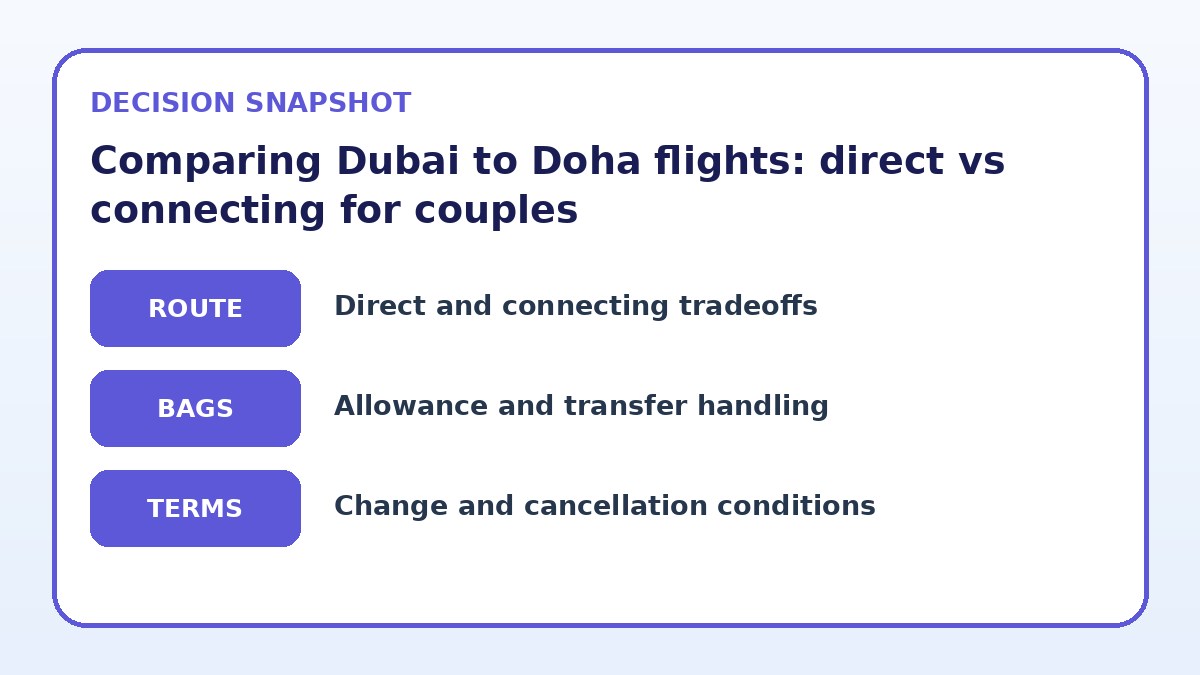
Routing: direct versus connecting — what to weigh
Start by mapping the simplest outcomes: a direct routing between Dubai and Doha typically means one takeoff and one landing with no en route stops and a shorter door-to-door time. For couples prioritizing time together on arrival or leaving the least possible margin for disruption, direct routing is often appealing because it eliminates intra-journey transfers and reduces the coordination you must do mid-trip. If you want a predictable, compact travel day to maximize time in Doha, focus first on direct options and their departure windows from Dubai.
Connecting flights introduce intermediate airports and transfer legs that can be useful for matching specific time preferences, reducing fares, or using frequent-flier routing rules. For couples, a single connection might be manageable if transfer times are comfortable and both travelers can navigate the layover together. However, multiple connections increase the number of moving parts — think extra security lines, potential terminal changes, and cumulative delay exposure. When comparing routes, list door-to-door travel time and number of transfers for each itinerary so you can compare the real cost of the schedule, not just the headline price.
Baggage and connection risk: practical concerns for two
Baggage handling matters more for couples traveling with shared luggage or checked items. On a direct itinerary the bags usually travel as a single transfer from aircraft to arrival baggage belt; with connections, verify whether checked bags transfer automatically or require recheck at the transfer point. Also check whether any carrier or transfer booking requires you to collect and re-check luggage during the connection. If either partner prefers to minimize lifting and logistics, prioritize itineraries that keep luggage on one ticketed itinerary and avoid airport recheck, even if the fare is marginally higher.
Connection risk extends beyond bags: every additional flight leg increases exposure to delays, missed-link scenarios and longer wait times in transit areas. For couples, these risks translate into emotional and logistical friction—stress over tight connections, reorganizing activities on arrival, or unexpected overnight stays. When weighing options, quantify layover minimums and buffer times, consider whether the itinerary is on a single ticket (which often offers missed-connection protection) and check the booking page for explicit transfer policies. If you’re traveling with mobility aids, strollers or limited transfer flexibility, err toward simpler routings.
Compare flight-selection strategies
| Flight strategy | Best for | Risk to check |
|---|---|---|
| Book a direct flight for both travelers on a single booking | Couples wanting a simple, predictable travel day and minimal transfer risk | Usually higher headline fare or fewer departure time choices compared with connecting options |
| Book a connecting itinerary on a single ticket | Couples balancing lower fares with some tolerance for a single transfer | Saves money or matches times, but increases delay and baggage transfer exposure |
| Mix carriers or buy separate tickets for each traveler | Couples seeking maximum price flexibility or unique scheduling for each person | Higher risk: no protection for missed connections and more complexity at check-in |
| Select a slightly longer layover to reduce stress | Couples who value buffer time for sightseeing, meals, or stress-free transfers | Longer total travel time and possibly extra airport expenses during the layover |
Recheck the complete itinerary
Confirm airports, connection handling, baggage, and change conditions before deciding.
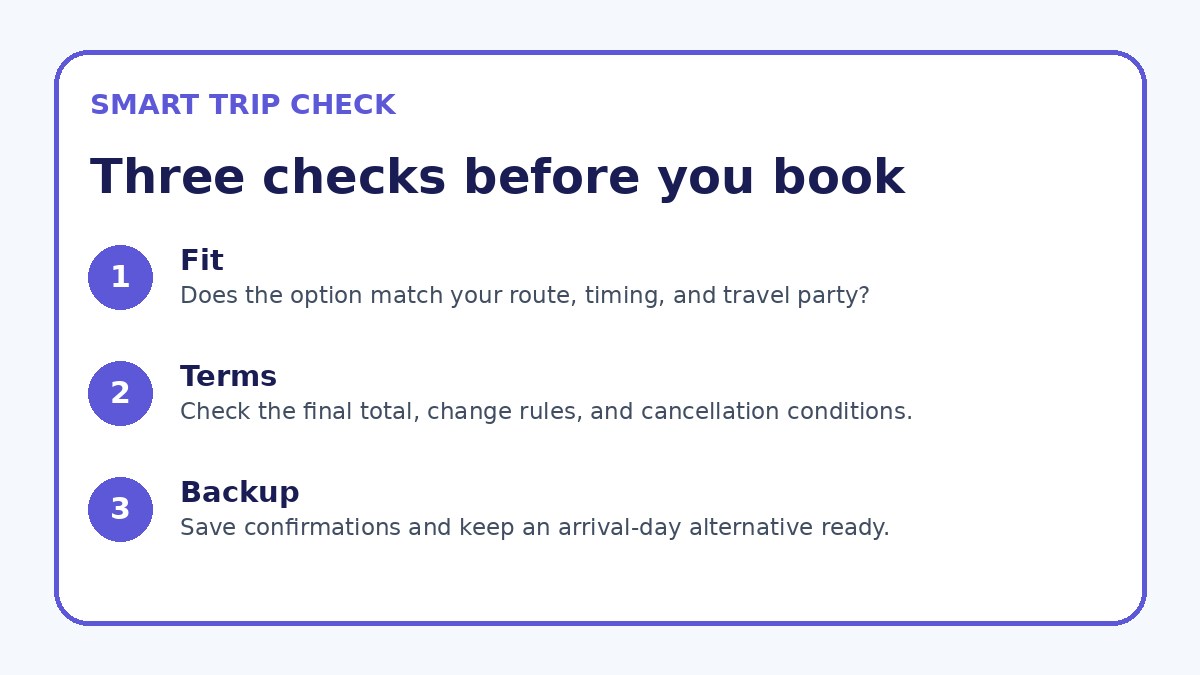
Schedule fit and travel comfort: planning the day together
Couples should consider the rhythm of travel: do you want an early arrival in Doha to start sightseeing the same day, or is a later evening touchdown acceptable if it saves money? Direct flights give clearer arrival windows and make planning connecting ground transfers, hotel check-ins and evening plans easier. Also think about cabin comfort and seat selection—if you want to guarantee adjacent seats or extra legroom, confirm seat availability for both travelers before buying, since lower fares sometimes restrict seat choice and separate allocations can place you apart.
Connecting options can be useful if the direct departures don’t match your preferred day schedule; a carefully chosen connection might allow a more convenient departure time from Dubai or return timing that suits evening plans. When you check options, compare total travel time, departure/arrival clock times, and how those fit with hotel check-in or dinner reservations. If either traveler has a strong preference for in-flight rest, look at flight durations and timing relative to usual sleep patterns—overnight or red-eye connections can alter how rested you feel together on arrival.
Flight details to verify
- Pick exact travel dates and both travelers’ passport names, birthdates and contact details before checking fares.
- Compare total door-to-door travel time, not just flight time, when evaluating direct and connecting options.
- Confirm baggage transfer rules and whether checked luggage is protected on connecting itineraries.
- Check seat availability for both passengers on the carrier’s booking screen before finalizing a fare.
- Read fare conditions for refunds, change fees and name corrections on the final checkout page.
- Take screenshots of the booking summary and fare rules after purchase and save supplier contact details.
Fare conditions and booking details to verify
Fares for couples can behave differently than solo bookings: some fare rules apply per passenger and change when multiple seats are taken together. Always check the fare conditions on the booking page for both passengers—specifically refundability, change fees, and whether the fare allows name corrections or date swaps without steep penalties. If the itinerary involves partners flying on different tickets or carriers, confirm both bookings’ change rules so that a single change doesn’t cascade into unpredictable costs.
Also verify baggage allowances, seat-selection fees, and whether connections are on one combined itinerary or separate tickets because that affects how carriers treat delays and missed connections. When possible, choose a booking that lists both passengers on a single PNR so changes and seat assignments are handled together. Before final payment, read the carrier or OTA final booking page for specific conditions and keep screenshots of the fare rules and passenger details; if you want to compare providers quickly, Trip.com can be used to view live availability and conditions alongside carrier pages, but always confirm final rules on the provider’s checkout screen.
Flight Guide questions travelers ask
Is it safer for couples to always choose direct flights between Dubai and Doha?
Safer in terms of fewer moving parts, yes: direct flights reduce the number of transfers, lower the chance of missed connections and simplify luggage handling. But “safer” depends on what you value—if saving money or fitting a specific schedule matters more, a single well-buffered connection may be acceptable. Consider your tolerance for transit stress, whether you can rebook quickly if plans change, and if mobility or baggage needs make transfers difficult. For many couples with limited time, a direct option is the least stressful choice.
Can I rely on a single-ticket connection to protect us if a first leg is delayed?
A single-ticket connection typically offers better protection because the operating carrier accepts responsibility for getting you to your final destination, or will rebook you if a delay causes a missed connection. That said, the specific protections and rebooking rules vary by carrier and fare class, so verify the exact policy on the carrier’s final booking page. If your itinerary mixes separate tickets or carriers, you should assume there is little to no automatic protection and budget extra time between flights.
How should couples decide whether a layover is worth it?
Weigh the layover’s effect on overall trip enjoyment: a short, comfortable connection that saves money might be worthwhile, while long or complex layovers can eat into your time together and create logistical headaches. Ask whether the layover time lets you relax, whether airport facilities meet your needs, and if both travelers can handle transfers without undue stress. Also factor in transfer logistics like immigration and recheck requirements. If the layover shortens the price gap materially and you can comfortably manage the transfer, it can be an acceptable tradeoff.
Final decision note
For couples planning Dubai to Doha flights, the simplest practical rule is to decide how much transfer risk and additional travel time you’re willing to accept to save money or match a preferred schedule. Direct routes minimize coordination, reduce baggage handling complexity and make arrival plans easier; connecting itineraries can unlock better departure times or lower fares but add transfer steps and exposure to delays. Before you book, lock in exact dates and traveler details, compare door-to-door time and fare conditions, and verify baggage and connection policies on the carrier’s checkout page. If needed, use a comparison site like Trip.com to surface options quickly, but always confirm final rules and seat assignments on the provider’s booking screen.
Continue planning
Check current options and final conditions
Use the provider page to confirm live availability, the final total, cancellation terms, and every condition that matters to your trip.
This evergreen planning guide was created with AI-assisted drafting and a structured quality review. It does not display live prices, schedules, availability, visa guidance, or provider rankings. Verify current details before booking. Some links are affiliate links; we may earn a commission at no additional cost to you.