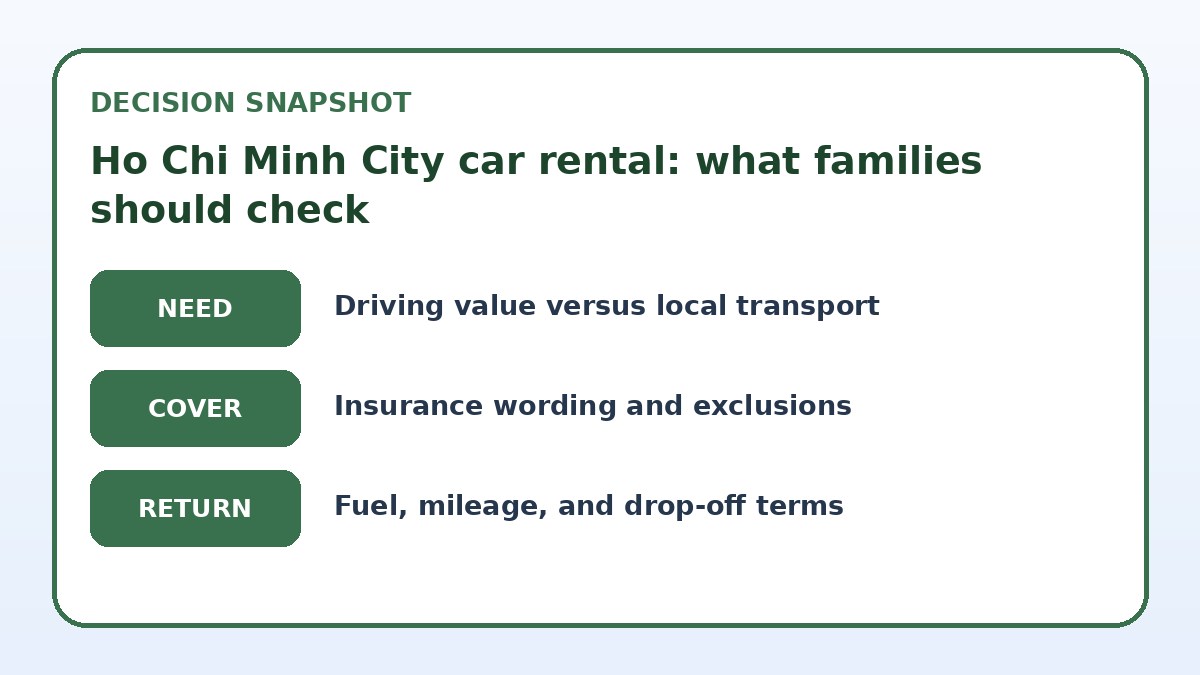
If you’re planning to rent a car for your family in Ho Chi Minh City, the most useful thing to do first is read the insurer and rental-agreement wording with a checklist in hand. Practical priorities are clear: who is covered to drive, what incidents are excluded, the size of the rental company’s excess (deductible), and how roadside assistance and third-party liability work in Vietnam. Insurance language can hide important limits—age restrictions, local driving requirements, and how claims are handled when a third party is involved. This article gives a quick decision-first summary, then explains tradeoffs and the questions to ask at booking and pick-up so you and your family can choose the right cover for comfort and budget.
See current options before you compare the details
Availability and final conditions change. Open Trip.com now or keep reading for the practical comparison.
Decoding key insurance terms families will see
Insurance documents use acronyms and phrases that matter for family trips. Collision Damage Waiver (CDW) or Loss Damage Waiver (LDW) limits your financial responsibility for damage to the rental car but rarely eliminates it entirely unless you pay for a zero-excess option. Third-party liability covers damage you cause to other people or property; this is different from personal injury cover, which pays for medical expenses for occupants. Supplemental Liability Insurance (SLI) can raise third-party limits, while Personal Accident Insurance (PAI) provides medical benefits to passengers. Understanding who is an authorized driver and whether your policy requires a local or international driving permit is essential.
Pay attention to exclusions and conditions that commonly appear in policy wording. Exclusions often include driving off-road, under the influence, using the vehicle for commercial activities, or driving on certain mountain or ferry routes. Family-car extras like child seats aren’t insurance items but can affect liability if not fitted correctly—some insurers can reduce or deny claims if a child restraint was not used properly. Also check whether damage from parking, tyre and glass damage, and loss of keys are covered or classed as separate, limited benefits; these are frequent sources of surprise charges at return.
Choosing cover levels: balancing cost, risk, and peace of mind
For families, the decision often comes down to balancing a lower upfront rental rate with higher financial risk if something happens. Basic rates may include minimal third-party liability required by law and a high excess for vehicle damage; this keeps price down but could be costly if there’s a collision or theft. Upgrading to a reduced-excess or zero-excess option increases cost but lowers out-of-pocket exposure at fault. Consider how much you could realistically pay on short notice if a claim arises—hotels, flights, and medical care for children may make a large deductible an unacceptable risk.
Supplemental covers change the equation. Adding SLI increases third-party protection and can be crucial in dense urban districts where repair costs are high. PAI is useful when you want direct, quick medical payouts for passengers without relying on national health systems or travel insurance. Also weigh whether your travel insurance or family credit card already provides collision or liability coverage; if so, you may not need duplicate cover, but you must confirm coverage applies to Vietnam rentals and whether it requires declining the rental company’s CDW to be valid. Always check the final booking page for any mandatory local surcharges that affect total cost.
| Approach | Best for | Tradeoff to check |
|---|---|---|
| Accept basic insurance and low daily rate | families on a tight budget comfortable with higher excess | Lower upfront cost but larger potential out-of-pocket expenses after an incident. |
| Buy reduced-excess (partial waiver) | families wanting a balance between cost and protection | Moderate extra cost reduces financial exposure but may still leave a significant deductible. |
| Purchase zero-excess / full-waiver upgrade | families wanting predictable, low-stress finances if damage occurs | Higher rental cost but minimal liability at claim time; verify conditions that could void cover. |
| Rely on travel/credit-card coverage instead | families who already have robust, validated third-party or collision policies | May save on rental add-ons, but requires careful pre-trip verification and possible denial if rental CDW is not declined. |
Ready to check the option that fits your plan?
Use your exact dates and traveler details so the provider page can show the current total and conditions.
What to verify on the booking page and at pick-up
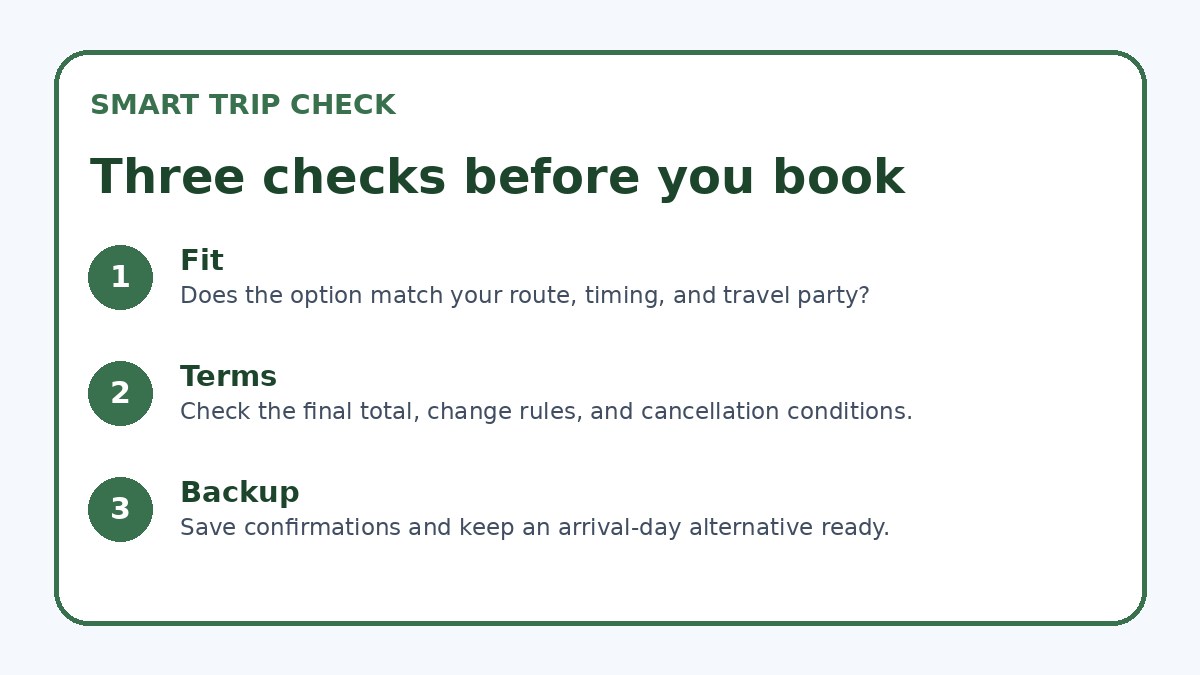
The booking page should show the exact wording and limits of included insurance and any optional upgrades. Before you confirm, verify the excess amount, whether the CDW/LDW is partial or complete, and whether roadside assistance is included or sold separately. Note any age-related surcharges or young-driver restrictions that could affect a family member charged to drive. Look for explicit statements about who is covered—named drivers only or any licensed driver in your group—and whether additional drivers can be added at no cost or a fee. If anything is missing, request a PDF of the rental terms and the insurer’s policy document.
At pick-up, inspect the vehicle thoroughly with photos and a written damage record, and get a copy signed by the agent. Confirm the exact procedure for filing a claim, including phone numbers, required documentation, and expected timeframes for reimbursement if you must pay upfront. Ask how minor damage like windscreen chips or tyre damage is handled: some contracts exclude these items or restrict cover to one occurrence. If you purchase a zero-excess product, ensure the agent notes that in the contract; verbal assurances are not enough. Keep emergency contacts and your insurer’s claims email handy in your phone.
Before you book
- Confirm named drivers and age/license requirements, and add additional drivers on the contract before you drive.
- Verify the excess amount for CDW/LDW and whether a zero-excess option is available and what limits apply.
- Check third-party liability limits and consider upgrading SLI if the included cover looks low.
- Ask the agent to note all existing vehicle damage on the contract and take time-stamped photos of the car.
- Get the insurer’s claim procedure, emergency phone number, and required documents printed or saved.
- Confirm whether tyre, windscreen, and key-loss incidents are covered or excluded and buy specific cover if needed.
Special family considerations in Ho Chi Minh City driving
Ho Chi Minh City’s traffic environment includes dense urban driving, frequent motorbike traffic, and narrow side streets in older districts. For families, choosing a vehicle with good visibility, functioning child restraints, and clear roadside assistance procedures reduces stress. If you plan trips outside the city, check whether the policy covers interprovincial travel or routes that cross bridge tolls or ferries. Some insurers limit cover to declared regions; driving outside those areas without confirmation can void protection. Also consider parking and infant-equipment needs: reliable child seats and secure boot space for luggage matter both for safety and for avoiding disputes about alleged interior damage.
Medical and evacuation clauses are important when travelling with children. Confirm whether passenger medical coverage applies regardless of fault, what the policy covers for hospital bills, and whether ambulance or air evacuation is included for serious incidents. If your family relies on travel insurance for medical evacuation, ensure the rental insurance does not conflict with or duplicate those protections in a way that complicates claims. Finally, prepare for the administrative side: keep original driving licences, any required international permits, and photo ID handy to avoid delays that could affect coverage eligibility at the counter.
Frequently asked questions
Does my home travel insurance or credit card cover rental cars in Ho Chi Minh City?
Possibly, but you must confirm specifics before booking. Check whether your policy or card covers rental cars in Vietnam, the policy’s excess, whether it applies to local law requirements, named-driver rules, and whether it requires you to decline the rental firm’s CDW to be valid. Some credit-card benefits only cover collision damage and exclude liability or passenger medical costs. Request a written confirmation or policy excerpt showing Vietnam coverage and the process for filing claims, because the rental company will require on-the-spot confirmation if you decline their optional waivers.
What counts as an excluded cause that could void my rental insurance?
Common exclusions include driving under the influence, using the vehicle for commercial activity, taking the car off-road, driving on restricted routes, or allowing an unauthorized driver to operate the vehicle. Policies may also exclude damage from racing, towing without permission, and using the wrong fuel. Some contracts decline cover for unattended vehicle break-ins if valuables were visible, or for child-seat misuse. Read the exclusions list closely and ask the rental agent to point out clauses that relate to your planned activities to avoid surprises during a claim.
How does the excess (deductible) process work if we need to make a claim?
If damage occurs, the rental firm will usually charge you the excess amount at pick-up or when the claim is filed, then pursue insurance settlement. If you bought a waiver that reduces the excess, the refunded amount will depend on the waiver terms and whether any exclusions apply. Keep copies of all police reports, photos, and receipts to speed reimbursement. If you pay for emergency repairs or towing, save invoices for the insurer. Ask your insurer how long reimbursements typically take and whether they pay suppliers directly or reimburse you after you pay.
Final planning note
For families renting in Ho Chi Minh City, careful reading and a few targeted questions are the best ways to avoid stressful surprises. Start by confirming who is insured to drive, the exact excess, and which incidents are excluded. Balance the cost of upgrades—like reduced or zero excess and supplemental liability—against what you could realistically pay out-of-pocket when travelling with children. At booking and at the counter, request written policy details and a clear damage record of the car. If you use third-party travel or card insurance, get explicit confirmation that it applies in Vietnam and meets rental requirements. Small preparation reduces risk and keeps your family trip focused on enjoying the city rather than handling paperwork.
Continue planning
Check current options and final conditions
Use the provider page to confirm live availability, the final total, cancellation terms, and every condition that matters to your trip.
This evergreen planning guide was created with AI-assisted drafting and a structured quality review. It does not display live prices, schedules, availability, visa guidance, or provider rankings. Verify current details before booking. Some links are affiliate links; we may earn a commission at no additional cost to you.