
If you’re a first-time visitor traveling between Hanoi and Ho Chi Minh City, prioritizing comfort on the flight and during any connection will make your trip far more pleasant. Practically: decide whether you want a direct flight for speed, a longer connection to rest or explore, or a timed overnight to sleep in transit. Balance cabin class, seat selection, luggage allowances, and airport transfer logistics when you compare options. This guide gives clear decision criteria and tradeoffs so you can pick the connection style that fits your itinerary, budget, and comfort needs. It also highlights what to verify on the final booking page — from seat maps to transfer times — so your plan actually works on travel day.
See current options before you compare the details
Availability and final conditions change. Open Trip.com now or keep reading for the practical comparison.
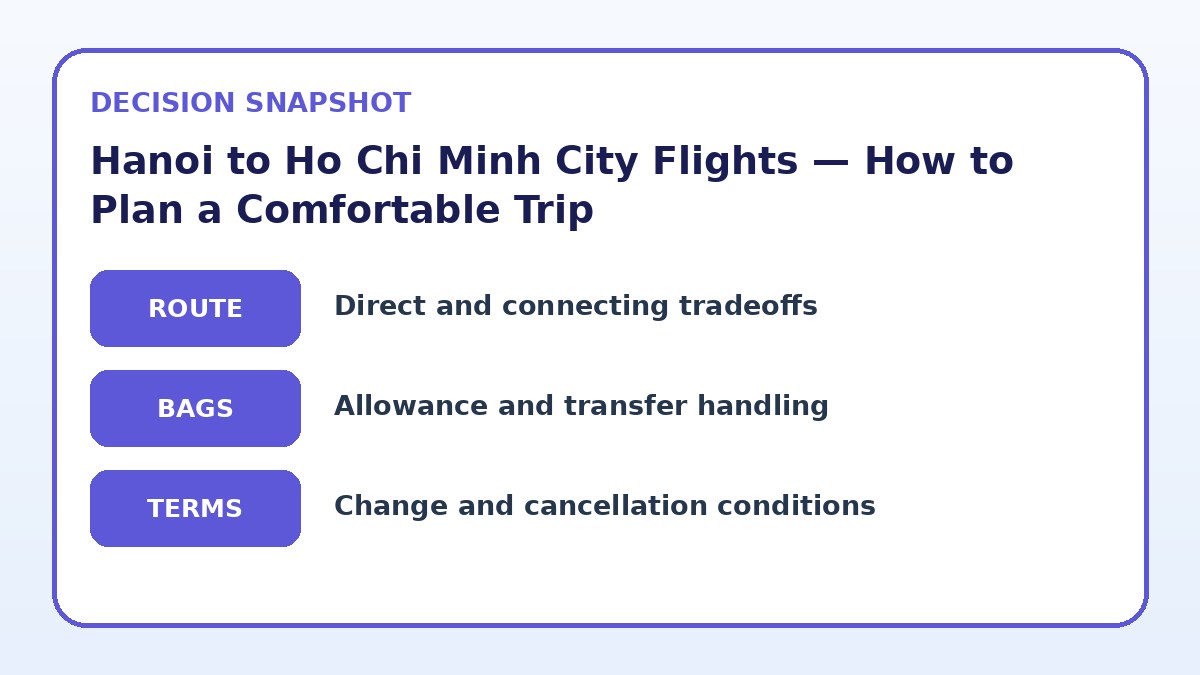
Direct vs connecting options: what to weigh
A direct flight between Hanoi and Ho Chi Minh City removes the risk and complexity of an intermediate transfer, which is attractive for first-time visitors who prefer predictability. Direct flights reduce the number of boarding cycles, layovers, and separate security or immigration steps. If your priority is to minimize time in transit and avoid extra planning, a direct flight is usually the simplest choice. Keep in mind that schedules, aircraft type, and seat pitch vary by carrier, so direct does not automatically equal comfortable — check aircraft layout and seat reviews where available.
Connecting options can be useful when they allow you to split a long day, add an overnight to sleep in a hotel, or time arrivals for late-night or early-morning entry into the city. A connection also gives flexibility if you’re combining this domestic leg with an international itinerary. The tradeoff is added complexity: each connection introduces tight transfer windows, potential extra baggage handling, and the need to coordinate transport between terminals or airports. When considering connections, compare total door-to-door time and the minimum connection time the airline promises on the booking page.
Comfort-focused booking choices
Seat selection is the single most direct way to improve comfort without upgrading cabins. Choose a seat with extra legroom, a bulkhead if that suits you, or an aisle if you prefer easy access. For first-time visitors, a seat closer to the front reduces boarding and deplaning time, which can be valuable when you’re unfamiliar with airport layouts. Always verify the seat map at the point of booking — seat availability and fees can change quickly and the airline’s site will show the most current configuration and any charges.
If you’re considering paid upgrades, compare the incremental comfort against the flight length and your needs. On a two-hour domestic hop, the benefit of a premium seat is smaller than on a longer daytime connection or overnight leg. Also check what the fare includes: lounge access, priority boarding, extra baggage allowance, or improved meal service can meaningfully change your transit experience. Confirm on the final checkout page which amenities are included, and avoid assuming upgrades include ground services or transfers unless explicitly stated.
| Approach | Best for | Tradeoff to check |
|---|---|---|
| Direct non-stop flight | Travelers who want the simplest, fastest door-to-door journey | Less flexibility to split travel for rest or adjust arrival times |
| Single daytime connection | Those who value comfort breaks and predictable daytime travel rhythm | Longer total travel time and increased chance of transfer hassles |
| Overnight connection with hotel stop | Passengers wanting to sleep in a proper bed and avoid tired arrivals | Requires extra planning and possibly additional lodging costs |
| Separate tickets for each leg | Travelers seeking price flexibility or combining different airlines | Higher risk if delays occur; you may be responsible for missed connections |
Ready to check the option that fits your plan?
Use your exact dates and traveler details so the provider page can show the current total and conditions.
Timing, transfers and airport logistics
Factor in how you’ll get to and from each airport and how long ground transfers will take. City-center transfer times, traffic patterns, and terminal layouts differ — leaving generous buffer time reduces stress if you’re unfamiliar with local transport. For connections that require changing airports or terminals, plan for sufficient time to collect luggage, travel between airports, and re-check in. Verify the airport transfer options and typical journey durations on official airport pages or reliable transport providers; don’t rely solely on approximate travel-time claims unless you can confirm them close to departure.
Pay attention to minimum connection times quoted by the airline and the practical time you’ll need to clear security and immigration, pick up baggage, and reach your next gate. If your connection is tight, consider booking through-checked luggage and selecting flights operated on the same ticket to ensure the airline’s responsibility for missed connections. When booking separate tickets, leave a longer buffer or book an overnight break — the latter can turn an awkward transfer into a restful stopover and reduce the pressure of making tight connections.
Before you book
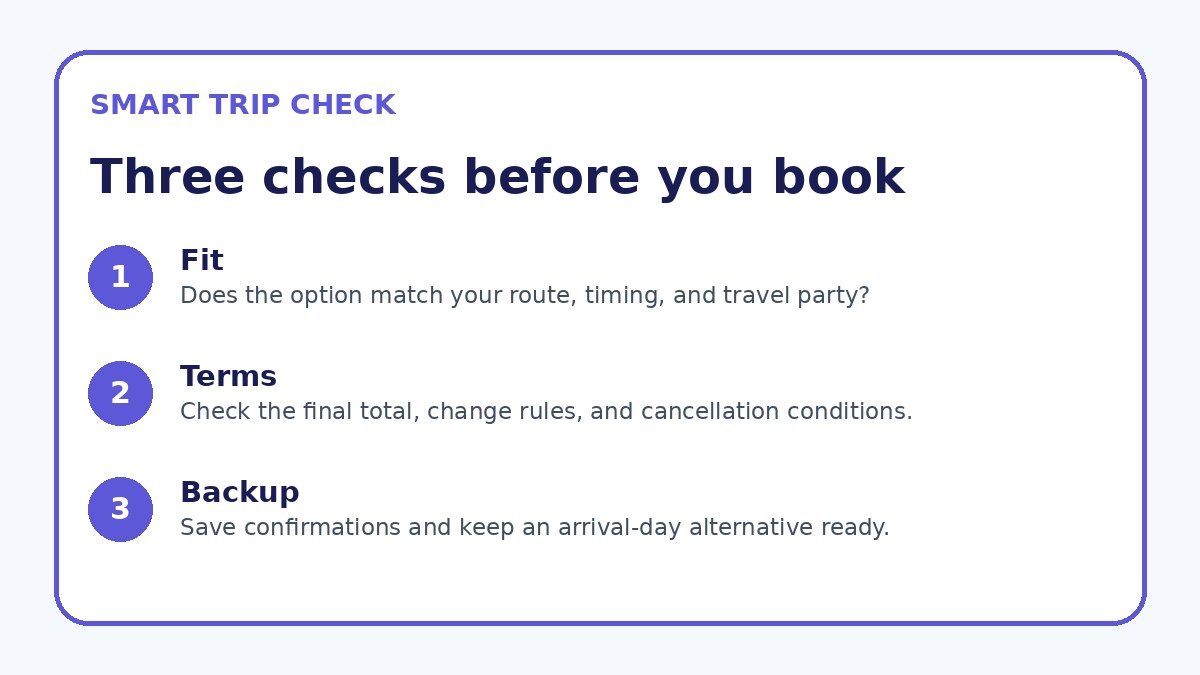
- Confirm direct versus connecting options and total door-to-door time on the airline’s final booking page before paying.
- Verify baggage allowances, checked and carry-on size rules, and any extra fees listed at checkout.
- Select seats immediately after booking to secure aisle or extra-legroom options shown on the carrier’s seat map.
- If booking a connection, ensure minimum connection time is comfortable and check whether luggage is through-checked.
- Plan ground transfers: note terminal names, typical traffic conditions, and time needed to move between airports or terminals.
- Pack a small comfort kit and pre-download entertainment and travel apps; carry printed or offline reservation confirmations.
Practical pre-booking checks and pre-travel routines
Before finalizing any ticket, check the carrier’s baggage policy, seat selection rules, change and cancellation conditions, and any fees that apply. Those details influence comfort and total cost more than the base fare alone. Look for how long the airline allows check-in before departure, what size of carry-on is permitted, and whether priority boarding or extra-legroom seats are offered. If you use a travel comparison site like Trip.com to view options, always click through to the airline’s official booking page to confirm the final terms before payment.
Create a simple travel routine for the day of travel: arrive with margin for unexpected delays, have printed or offline copies of your reservation and ID, and pre-download entertainment and travel apps. If you have a connection, note terminal maps and the transfer desk locations. Pack a small comfort kit — earplugs, an inflatable neck pillow, and a refillable water bottle — and check whether your ticket allows carry-on liquids. These small steps reduce friction and improve comfort whether you choose a direct flight or a multi-leg connection.
Frequently asked questions
Is a direct flight always the most comfortable option between Hanoi and Ho Chi Minh City?
Not always. Direct flights reduce logistical complexity and can feel more comfortable because there are fewer hands-on steps, but cabin comfort depends on aircraft type, seat choice, and whether you can choose bulkhead or extra-legroom seats. Some travelers prefer a planned connection that allows an overnight rest or a longer layover to recover between long international flights and domestic legs. Before deciding, compare total travel time, seat maps, and amenities — especially if flying during the day when seat comfort matters more.
How much connection time should I allow when transferring between flights?
Allow at least the airline-stated minimum connection time plus a safety buffer to account for delays, baggage claim, and moving between gates or terminals. If transferring between different airports, add time for ground transport and check-in again. For first-time visitors, err on the side of more time rather than less: a comfortable buffer reduces stress and gives time for unexpected queues or local transport delays. Always confirm the required minimum on the carrier’s booking page before you finalize the ticket.
Should I buy tickets on separate reservations to try for cheaper fares?
Buying separate tickets can sometimes be cheaper, but it raises risks: if the first flight is delayed, the second carrier may not be obligated to accommodate you, and you may need to rebook at your expense. Separate tickets also often require you to collect and re-check baggage and navigate terminal transfers on your own. If you choose separate reservations, allow substantial layover time or an overnight stop to protect your schedule, and make contingency plans for missed connections.
Final planning note
Planning a comfortable Hanoi to Ho Chi Minh City journey means choosing the connection style that matches your priorities: speed and simplicity, a leisurely daytime break, or an overnight stop to sleep. Focus on seat selection, baggage rules, and realistic transfer times rather than chasing the lowest headline fare. Verify all critical details on the airline’s final booking page — seat maps, baggage allowances, connection rules, and minimum transfer times — before you pay. With a little extra planning and the simple checklist above, first-time visitors can turn a routine domestic hop into a smooth, comfortable piece of the trip.
Continue planning
Check current options and final conditions
Use the provider page to confirm live availability, the final total, cancellation terms, and every condition that matters to your trip.
This evergreen planning guide was created with AI-assisted drafting and a structured quality review. It does not display live prices, schedules, availability, visa guidance, or provider rankings. Verify current details before booking. Some links are affiliate links; we may earn a commission at no additional cost to you.