
Practical answer first: for most solo travelers with moderate luggage (one checked-size suitcase plus a carry-on) the simplest balance of comfort and convenience is an intercity train or a direct coach with guaranteed luggage space—choose a flight only if time savings outweigh extra ground transfers. Trains usually let you move with a suitcase through stations and change to local transit without complicated check-in, while coaches can be cheaper and accept larger bags in the hold. Flights shorten door-to-door time only when your origin and destination are near their respective airports and you factor check-in and security time. Read the rest to compare tradeoffs—how much luggage, mobility needs, station access, and final destination in Berlin should steer your decision and what to verify on provider pages before you click buy.
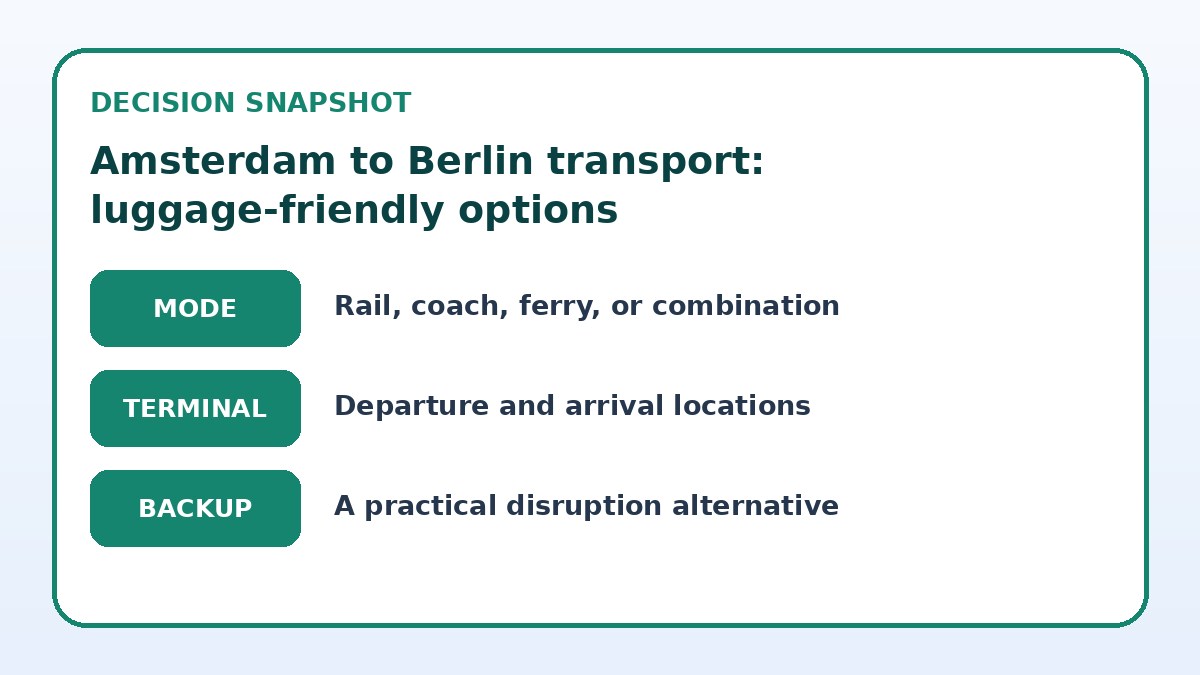
See current options before you compare the details
Availability and final conditions change. Open Trip.com now or keep reading for the practical comparison.
Choosing train travel: practicality and packing
Trains between Amsterdam and Berlin (and comparable cross-border routes) are attractive for solo travelers because stations are centrally located and you usually move directly from city center to city center. For luggage, that translates into fewer taxi rides and simpler last-mile logistics. Rolling suitcases fit in designated storage areas near carriage doors, and many trains have racks above seats for backpacks. If you rely on public transit in each city, measure the distance from your arrival platform to tram or metro stops—short transfers make trains a clear win for luggage management.
Packing decisions influence whether a train is truly luggage-friendly: a single medium hard-shell suitcase plus a daypack is easiest to stow. If you carry two large suitcases, check how many steps, ramps, or elevators are involved at stations you’ll use—some smaller regional stops lack lifts. Before booking, verify seat reservation rules and luggage allowances on the provider’s final booking page; reservation systems sometimes include a small luggage allowance note but do not consistently enforce specific size limits, so plan to keep bags maneuverable.
Coach options: cost-effective with specific baggage tradeoffs
Long-distance coaches are often the most cost-effective way to move with bulky luggage because they offer large underfloor holds and straightforward boarding at central terminals. For a solo traveler, that means one handover at departure and luggage retrieval at arrival—no flights’ security queues and fewer transfers. However, coaches can have limited onboard space for carry-ons, and accessing hold luggage during the journey is usually not possible, so pack items you might need en route in a small daypack.
When comparing coach operators, check how many bags are included, whether there are strict weight or size limits, and what happens if your bag is lost or delayed. Also consider the boarding process in Amsterdam (which terminal or stop you will use) and the drop-off point in Berlin; a central arrival reduces the need for additional taxis. Confirm the operator’s baggage policy on the booking page and, if useful, call customer service to clarify how they tag and handle single large items.
| Approach | Best for | Tradeoff to check |
|---|---|---|
| Intercity train (direct or with one change) | Travelers prioritizing central drop-offs and moderate luggage with minimal taxi use | May require platform transfers or steps at smaller stations; reservations and luggage rules vary |
| Long-distance coach | Budget-conscious solo travelers with bulky suitcases who want central terminals | No access to hold luggage during trip and longer journey times compared with flights |
| Flight (with carry-on only) | Those who need the fastest possible travel time and can keep luggage light | Airport transfers and security add time; checked baggage complicates logistics |
| Mixed approach (train to nearby airport or coach+train) | Travelers balancing cost and door-to-door speed or connecting from other towns | More handoffs increase handling of bags and require tight coordination between services |
Ready to check the option that fits your plan?
Use your exact dates and traveler details so the provider page can show the current total and conditions.
Flights and door-to-door time: when flying makes sense
A flight can be the right choice if your priority is minimizing time in transit and you’re near well-connected airports with fast ground links to city centers. For solo travelers with light carry-on only, flying avoids any hold baggage handling and can speed the trip considerably. But if you bring checked luggage, factor in check-in time, security lines, and potential delays at both ends—the extra steps often erode the on-paper savings in flight time, especially when airports are far from your accommodations.
If you consider flying, compare total door-to-door time: travel to the departure airport, time at the airport, flight duration, and onward transfer from arrival airport into Berlin. Also decide whether you can manage luggage yourself at each transfer or prefer services like curbside assistance or meet-and-greet help. On provider pages verify baggage allowances, carry-on rules, and whether a checked bag requires a separate fee or specific size. Trip.com is an option to check current availability, but always confirm baggage rules on the airline’s own booking page before purchasing.
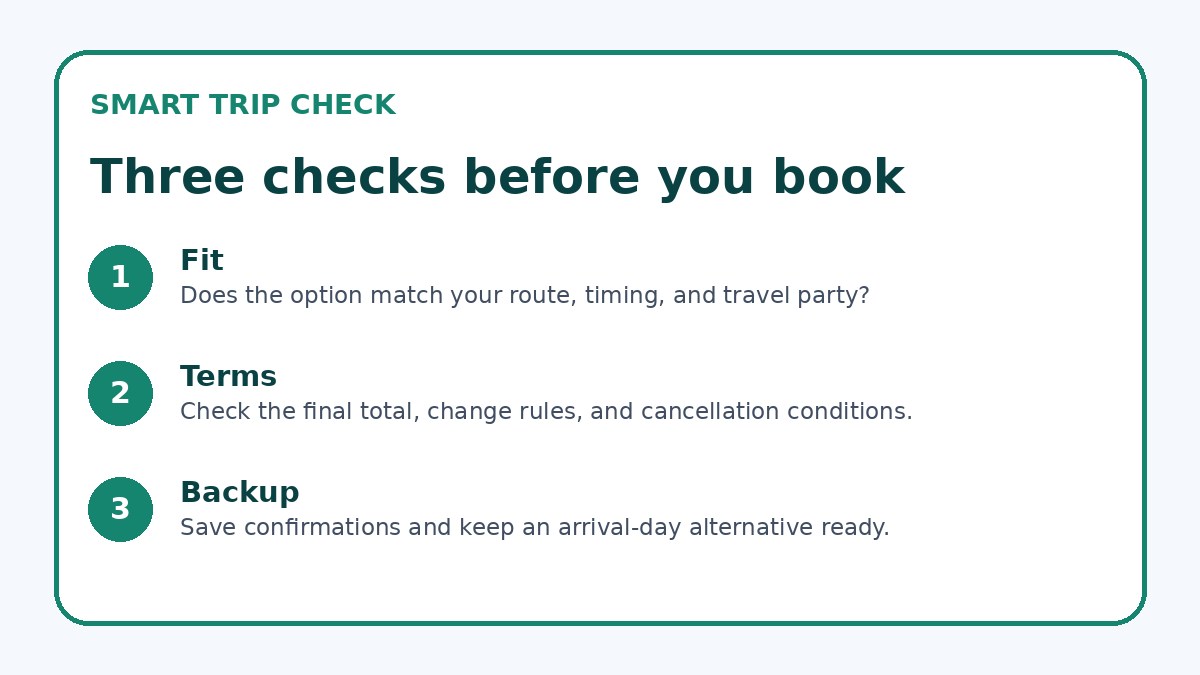
Before you book
- Measure suitcase dimensions and weigh bags to compare against baggage size/weight rules on the provider’s booking page.
- Map door-to-door times: add transfers (taxi, tram, metro) to advertised travel time for a realistic schedule.
- Confirm station/terminal locations in Amsterdam and Berlin and whether elevators or escalators are available for luggage.
- Pack essentials in an accessible daypack: documents, phone charger, medication, a water bottle, and a lightweight layer.
- Print or screenshot booking confirmations and baggage receipts, and store them in your phone and printed copy.
- Identify nearby luggage storage or short-term lockers at arrival points in case you need to leave bags for a few hours.
Practical day-of-travel tips for solo travelers with luggage
Plan your door-to-door logistics: pick a transport mode that matches how many times you want to move bags. If you value fewer handoffs, choose services that deposit you centrally (mainline trains or central coach terminals). Label luggage clearly and keep a simple kit—meds, documents, phone charger, a light rain layer—in an accessible daypack. Arrive early enough to find elevators or assistance at stations, and identify station exits near taxi ranks or nearby short-term luggage storage if you need a few hours hands-free.
Have contingency plans for missed connections or crowded services—know local taxi apps, shared-ride options, or luggage storage facilities in both Amsterdam and Berlin. Use luggage straps and a lock for ease and security, and photograph the outside and inside of checked bags before travel. Finally, keep digital copies of bookings and luggage receipts; if you plan to move between multiple cities, consider softening rigid schedules with flexible or refundable options to reduce the stress of tight transfers.
Frequently asked questions
How much luggage can I realistically handle alone on trains between Amsterdam and Berlin?
For a solo traveler, one medium-to-large rolling suitcase plus a daypack is the most manageable setup on intercity services. Trains provide racks and vestibule storage, but crowded services and station layouts with stairs can make multiple heavy bags unwieldy. If you plan to change trains or use local transit on arrival, downsizing to one main bag and a small daypack reduces time spent lifting and navigating platforms. Always check station accessibility and reserve assistance if you have mobility concerns; verify any luggage notes on the operator’s booking page.
Is it safer to put valuables in checked baggage or carry them on when traveling solo?
Keep valuables—passports, electronics, medication, and important documents—in a carry-on or daypack you can keep close to your seat. Checked baggage moves out of your sight and, while usually safe, has a small risk of misrouting. For solo travelers, keeping irreplaceable items with you avoids the hassle of baggage claims if a bag is delayed. If an item must go in checked luggage, photograph it and retain packing lists and receipts; confirm the carrier’s lost/damaged baggage process on their booking page prior to travel.
Should I pre-book seat reservations and extra luggage allowance?
Pre-booking seats is often worth the reassurance of space near the luggage racks and avoiding a scramble for storage on busy departures. If your bag exceeds standard allowances, paying for extra luggage or purchasing a higher fare class can spare last-minute problems; read the fine print on the booking page because terms differ between train companies, coaches, and airlines. For loose itineraries, choose flexible tickets that permit date changes without steep penalties, and always verify refund or change policies directly with the provider before finalizing.
Final planning note
Choose the transport mode that fits how you want to handle luggage, not just the fastest or cheapest headline option. Trains deliver city-center arrivals and straightforward onboard storage, coaches handle bulkier suitcases affordably, and flights are worth considering only if ground transfers and check-in times still leave you ahead on door-to-door time. For solo travelers, keep luggage minimal when possible, plan transfers carefully, and verify baggage allowances and station accessibility on the provider’s final booking page. Use flexible tickets or add modest extras if that buys you peace of mind during transfers. A small amount of planning turns a long cross-border move into a manageable, even relaxed, part of the trip.
Continue planning
Check current options and final conditions
Use the provider page to confirm live availability, the final total, cancellation terms, and every condition that matters to your trip.
This evergreen planning guide was created with AI-assisted drafting and a structured quality review. It does not display live prices, schedules, availability, visa guidance, or provider rankings. Verify current details before booking. Some links are affiliate links; we may earn a commission at no additional cost to you.