Practical answer first: before you buy any Fukuoka travel deal, add up flight or rail fare, airport transfer, your preferred neighbourhood’s nightly rate, typical daily spending, and any refundable or change fees. For solo travellers the arithmetic is different: single supplements, smaller shared accommodation savings, and timing-sensitive transport passes change the balance. Use the total-per-night or total-trip cost as your primary comparison metric rather than headline fares or flash discounts. Once you have totals for two or three realistic itineraries, weigh convenience and refund flexibility against small extra costs. The rest of this guide explains tradeoffs, where to verify live details, and a checklist to run through before you commit so your booking matches how you actually want to travel in Fukuoka.
See current options before you compare the details
Availability and final conditions change. Open Trip.com now or keep reading for the practical comparison.
What to include when totaling a Fukuoka trip
When you’re comparing Fukuoka travel deals, include every predictable cost so comparisons are apples-to-apples. Start with the transport to Japan (flight or rail) and add the cost of reaching Fukuoka from the arrival airport or station. Include airport transfers, luggage fees you’ll actually pay, and any seat-selection charges. For accommodation, use the nightly rate multiplied by nights plus taxes and any single-occupancy surcharges. Add in local transport passes only if they match your planned itinerary; a pass can be economical for heavy travel days but wasteful if you plan to stay in one district.
Next, estimate daily expenses: meals (breakfasts are sometimes included), entrance fees for attractions you plan to visit, occasional taxis, and a buffer for small purchases and emergencies. Don’t forget optional extras like mobile data, portable Wi-Fi, or luggage storage if your arrival or departure timing requires them. Finally, include the cost of travel insurance if you intend to buy it; check the policy details on the insurer’s page so you know what events and preexisting conditions are covered before you book anything nonrefundable.
Comparing routes and connections fairly
If you can fly or take a train to Fukuoka, compare total door-to-door travel time as well as cost. A cheaper flight with a long connection or an overnight transit can erode any savings once you factor in food, the need for accommodation during a long layover, or the exhaustion that reduces sightseeing time. For rail-based options, make sure you compare the number of changes and transfer convenience at major stations; moving luggage between lines can turn a slightly cheaper itinerary into a less practical one for a solo traveller.
When providers show multiple route options, create a simple spreadsheet or list that captures price, total travel time, number of changes, and what transfers require (e.g., long station walks, extra tickets). If a direct option exists, check whether the schedule and additional cost fit your tolerance for speed versus price. Always verify final routing and baggage rules on the carrier’s booking page—small print can change whether a connection is likely to be smooth and whether your costs are truly all-in.
| Approach | Best for | Tradeoff to check |
|---|---|---|
| Lowest headline fare | Travelers with fixed, non-changeable dates prioritizing upfront savings | Often nonrefundable, may include long connections or additional fees that raise the total trip cost |
| Flexible fares and refundable hotels | Solo travellers who need schedule peace of mind and may change plans | Higher upfront cost but lower risk of expensive changes or cancellations later |
| Cheapest neighbourhood hotel | Guests who prioritise nightly cost and expect to spend most time out exploring | May increase daily transport costs and reduce convenience for short trips |
| Closer, slightly pricier lodging | Short-stay travellers who value time savings and easy returns to base | Higher nightly rate that can be worthwhile when saved time replaces paid activities or taxis |
Ready to check the option that fits your plan?
Use your exact dates and traveler details so the provider page can show the current total and conditions.
Where neighbourhood choice changes the math
Fukuoka has compact districts with different price and convenience profiles. A cheaper room farther from the city centre can add daily commuting time and transport expense, which is particularly relevant for short solo trips where walking time is already limited. Consider what you want to do each day—if your priorities are museums, nightlife, or food markets, staying closer to those areas may save taxi or subway costs and let you use time more productively. Balance the nightly rate against expected local transit costs and the value you place on being able to return to your room easily during the day.
Also check how late public transport runs and whether you’ll need taxis at night; late-night taxi fares add up quickly. If you prefer quieter streets after long days, a slightly more expensive room in a calmer neighbourhood could improve rest and make the trip feel more relaxed. On the provider booking page, verify exact address, proximity to the nearest station, and whether the accommodation lists any additional charges—some places add local taxes or service fees at check-in that aren’t visible until the final payment screen.
Before you book
- Add up flight or rail fare plus airport-to-city transfer and any luggage or seat fees to get actual arrival cost.
- Multiply the nightly room rate by nights and include taxes, single-occupancy surcharges, and any mandatory accommodation fees.
- Estimate daily costs for meals, transport, attractions, and a contingency, then add that per-day figure to your total.
- Compare total door-to-door time and number of transfers for each route; note any long layovers that require extra expenses.
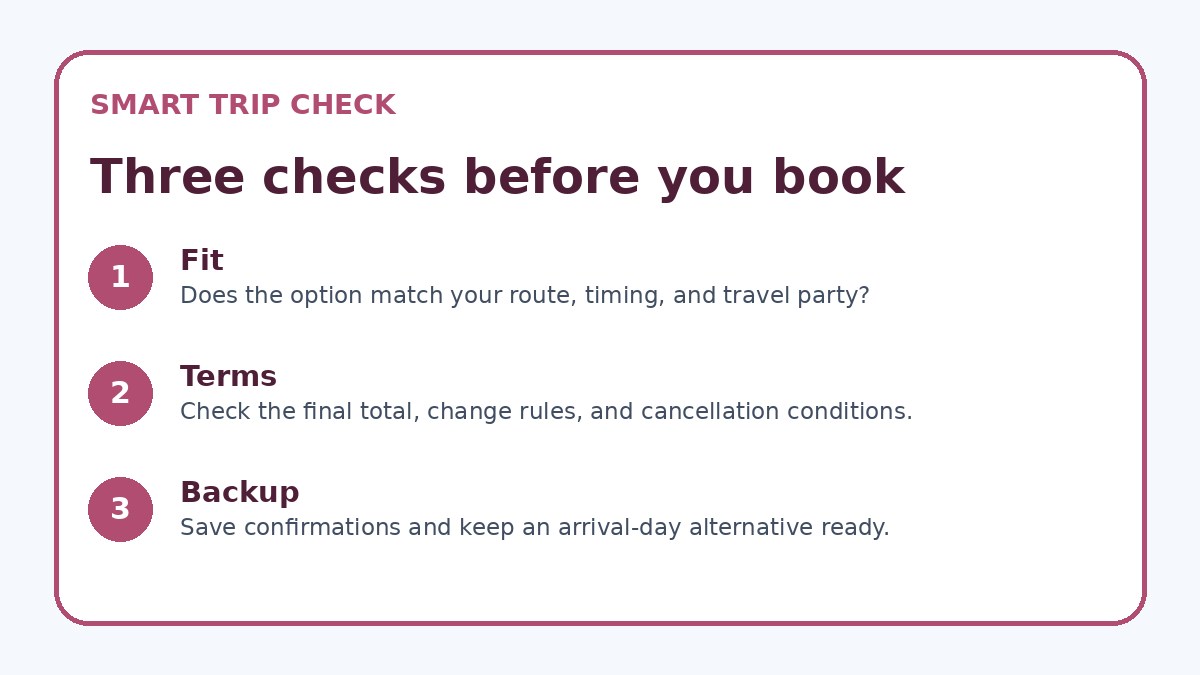
- Confirm cancellation and change terms on the provider’s final booking page and note any nonrefundable elements before payment.
- Verify exact accommodation address, proximity to transit, and any additional charges displayed only on the final confirmation screen.
Flexibility, refunds, and what to verify before paying
Change and cancellation policies determine how risky a low-priced deal really is for a solo traveller. A nonrefundable fare or prepaid hotel rate can be fine if your plans are fixed, but if you expect possible changes, the cost of a flexible ticket or refundable room can be lower than the penalty for changing. Look for explicit language about refunds, change fees, and any third-party booking restrictions. When a deal is through an aggregator or travel platform, check the provider’s own policy pages too—some restrictions only show up on the supplier’s final booking screen.
Before you click confirm, verify the total price breakdown on the final booking page: taxes, resort or city fees, luggage charges, seat-selection costs, and any mandatory service fees should be clear. Confirm the exact transport routing, luggage allowance, and whether transfer services must be booked separately. If you plan to use local passes or tourist discount cards, check activation rules and refundability. Trip.com can be a place to compare current availability and terms, but always confirm all details on the carrier or accommodation’s official booking page.
Frequently asked questions
How do I estimate daily expenses for a solo trip to Fukuoka?
Estimate daily expenses by listing typical items: breakfast if not included, two main meals, snacks, local transit, one paid attraction or activity, and modest souvenirs. Look up menus, museum admission ranges, and transit fares on official or recent guest sources to build a realistic per-day figure. Add a buffer (for example 10–20%) for taxis, unexpected purchases, or a special meal. Multiply by your number of nights and include an emergency reserve; then add that total to your transport and accommodation costs for a full-trip figure.
Should I prioritise a direct route to Fukuoka or save with a connection?
Decide based on how you value time versus savings. Direct routes reduce stress, lower transfer risk, and can be worth the premium for a short solo itinerary. Cheaper connecting options may save money but can introduce long waits, more luggage handling, and potential delays. Compare the additional transfer expenses, possible overnight needs, and the effect on sightseeing time. Always verify the exact connection details and baggage rules on the carrier’s booking page before committing to a lower-priced but indirect route.
What booking details must I verify on the final page before paying?
On the provider’s final booking page, confirm the total price breakdown including taxes, service or city fees, baggage and seat fees, and any mandatory extras. Check the written cancellation and change policy for the exact fare class or room type, and confirm pickup or transfer instructions if included. Verify the arrival and departure times, transfer requirements, baggage allowance, and the accommodation’s address and check-in rules. If anything is unclear, contact the provider or the booking platform directly before completing payment.
Final planning note
For solo travellers, the right Fukuoka travel deal is the one whose total cost matches your tolerance for convenience and flexibility. Don’t let a low headline rate blind you to airport transfers, luggage fees, local transit, and nightly surcharges that add up quickly. Compare full trip totals for a few realistic itineraries, check refund and change terms on the provider’s final booking page, and weigh saved time against saved money. Use the checklist to confirm every line item before you pay, and you’ll pick a booking that supports your daily plans and reduces surprises while you explore Fukuoka.
Continue planning
Check current options and final conditions
Use the provider page to confirm live availability, the final total, cancellation terms, and every condition that matters to your trip.
This evergreen planning guide was created with AI-assisted drafting and a structured quality review. It does not display live prices, schedules, availability, visa guidance, or provider rankings. Verify current details before booking. Some links are affiliate links; we may earn a commission at no additional cost to you.