If you’re booking a Dubai to Sydney flight as a solo traveler, the single most practical thing to do is prioritise flexible change and cancellation terms that match your risk tolerance. Start by checking whether the fare you’re eyeing allows free date changes, offers a travel credit versus a refund, or charges a per-change fee plus any fare difference. Next, compare whether refunds are processed to your original payment method or as airline credit and how long refunds typically take—these affect recovery if plans change. Finally, weigh direct versus connecting itineraries: direct services usually simplify missed connections but often have stricter fare classes; connecting flights can offer cheaper flexible fares but add complexity if a single carrier does not protect your onward legs. Always confirm the provider’s final booking page for the up-to-date rules and remember you can use a site like Trip.com to compare availability and the wording of change and cancellation policies before you commit.
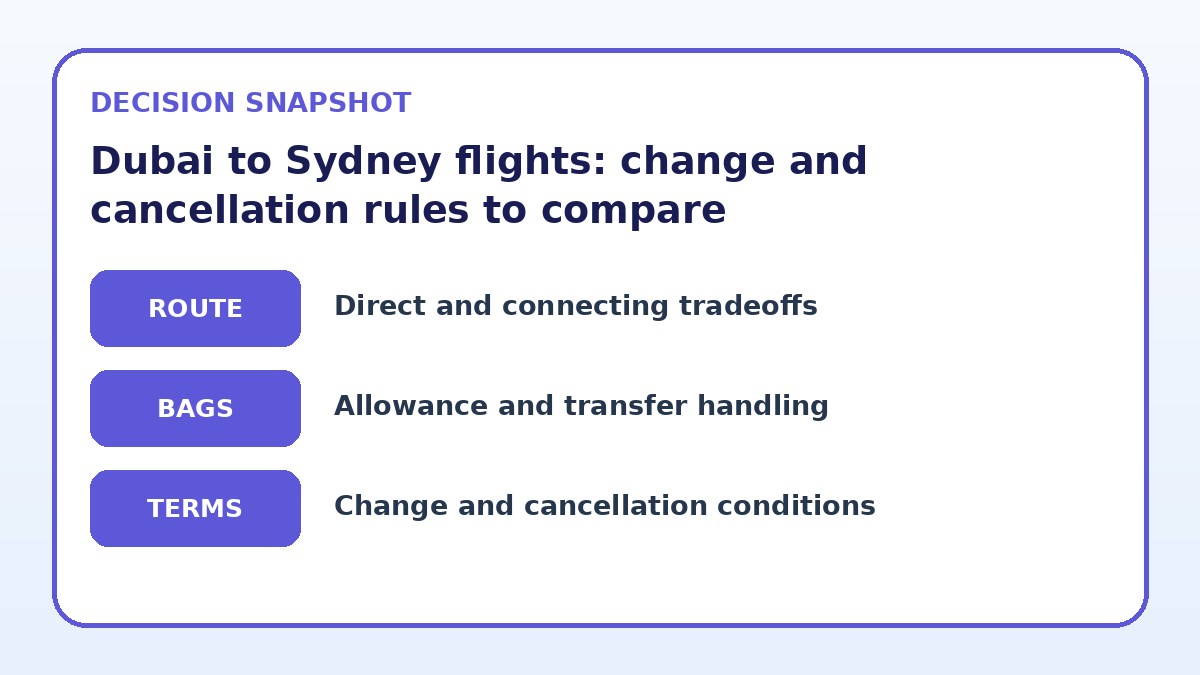
See current options before you compare the details
Availability and final conditions change. Open Trip.com now or keep reading for the practical comparison.
How to read a fare rule for changes and cancellations
Fare rules are the legal fine print that dictate what you can do with a ticket after purchase. Look for three specific lines: the change fee (or statement of no change fee), whether a fare difference is charged when you change to a new date or class, and the cancellation outcome (full refund, refund minus cancellation fee, or airline credit). Some tickets display these options as short labels during booking, but the detailed rule text on the final booking page is what governs your rights. As a solo traveler, small penalties can add up if you reorder flights multiple times—factor repeat-change costs into your decision.
Also check how refunds are processed and timing expectations. Many carriers and third-party sellers issue refunds back to the original payment method, but some only offer airline credit or vouchers redeemable for future travel. Refund timing can vary widely; if you need cash quickly, a voucher may be unacceptable. If you’re booking through a third-party platform, confirm whether they pass through the airline’s refund processing times or add their own handling steps. Always save screenshots or PDF copies of the fare rules and confirmation emails in case you need them later.
Direct vs connecting options: change and cancellation implications
Direct flights simplify change logistics: when one flight is affected, you typically deal with a single carrier for changes or refunds. Direct services between Dubai and Sydney may carry different fare classes, where certain cheap seats are sharply restricted and higher classes allow free changes or more generous cancellation terms. For solo travelers who value simplicity—especially when travelling late or with tight onward plans—a slightly higher fare with more flexible terms can reduce stress and protect you from the cascading costs of rebooking missed connections.
Connecting itineraries often come with mixed protections. If your entire trip is on one ticket, the carrier usually takes responsibility for missed connections and will rebook you; however, if you book separate legs with different carriers or through low-cost connectors, you may be treated as two independent tickets. That means a missed connection can leave you paying out-of-pocket for the next leg. When comparing options, check whether the booking records the full itinerary under one ticket and read the change policy for each flight segment; sometimes the middle carrier’s restrictions determine your options.
| Approach | Best for | Tradeoff to check |
|---|---|---|
| Buy a flexible refundable fare | Travelers who may need to cancel and want a cash refund. | Higher upfront cost versus peace of mind and simpler refunds. |
| Buy a nonrefundable low-cost fare and add insurance | Budget-focused travelers who want partial protection for specific risks. | Insurance may not cover voluntary changes and adds complexity to claims. |
| Choose a single-ticket connecting itinerary | Those wanting airline protection for missed connections. | Potentially higher fare than separate low-cost legs, but less rebooking risk. |
| Book separate legs to mix carriers | Travelers prioritising price or specific schedules across carriers. | No guaranteed protection for missed connections; you assume rebooking costs. |
Ready to check the option that fits your plan?
Use your exact dates and traveler details so the provider page can show the current total and conditions.
Practical tradeoffs for solo travelers: flexibility versus cost
As a solo traveler you face a clear set of tradeoffs: cheaper fares often limit your flexibility, while flexible fares cost more but reduce the headache and risk if plans shift. Decide whether you want the ability to change dates without fees, the option of a refundable ticket, or a middle ground such as a low-cost fare plus a separately purchased ‘change protection’ or travel insurance. If your schedule is likely to shift, a refundable or change-friendly fare can save money and anxiety in the long run; if dates are fixed, a basic fare with strong cancellation insurance might be best.
Consider also the non-monetary factors: flight duration, layover length, night-time connections, and your tolerance for long wait-overs. A connecting itinerary with generous transfer time may be acceptable if the fare rules let you change dates cheaply. If you are travelling alone and prefer fewer variables, choosing a ticket that allows online changes without calling customer service will save time and reduce frustration. Whatever you choose, model the worst-case change scenario—how much you would pay to rebook—and compare that to the premium for a more flexible fare.
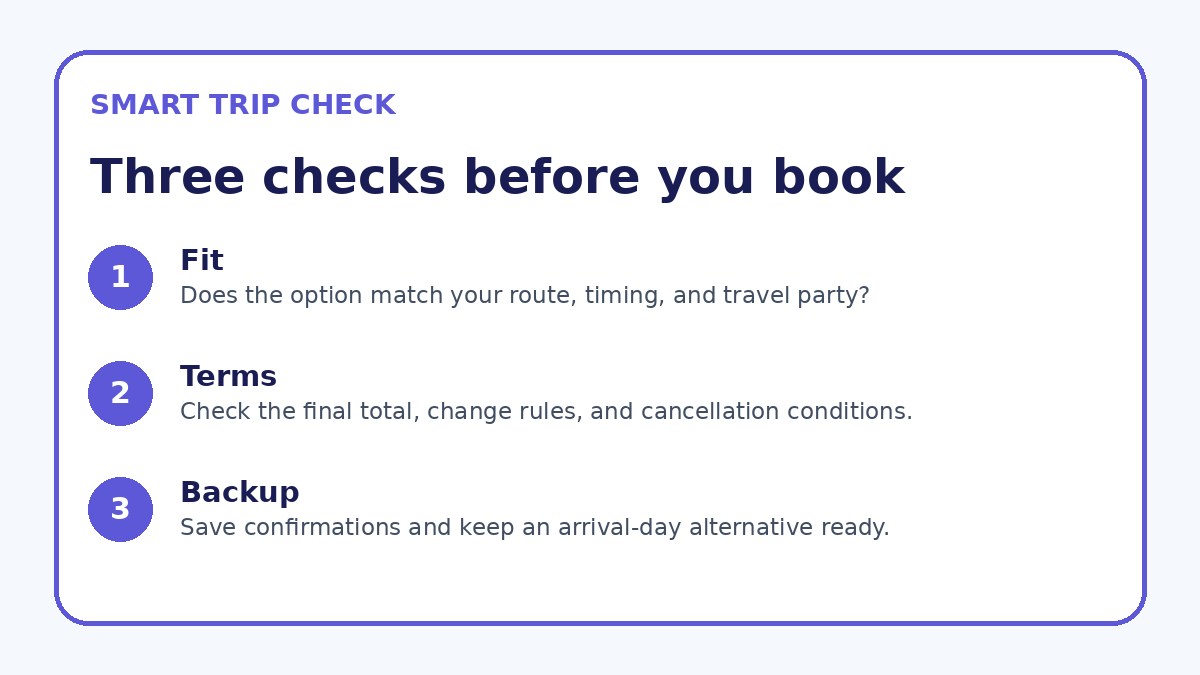
Before you book
- Open the final booking page and copy or screenshot the full fare rules before paying.
- Confirm whether changes incur a fixed fee, a fare difference, or are free within a stated period.
- Verify the cancellation outcome: full refund, refund minus fee, or airline credit voucher.
- Check whether your itinerary is on a single ticket (protected) or multiple tickets (not protected).
- If booking via a third party, confirm who handles changes and refunds and any extra service fees.
- Compare refund timing and method—card refunds may take longer but vouchers have different usability.
What to verify on the final booking page and after purchase
Before you click pay, verify the exact change and cancellation wording on the final booking page: note the explicit fee amounts, whether fare differences apply, the refund method (card refund vs. credit), and any timelines for refund processing. Check whether changes can be done online, require a phone call, or must be made through the original seller. If you’re booking with a third-party agent, confirm whether they will handle changes or if you must contact the airline direct. Keep a copy of the booking confirmation and the fare rule text—screenshots and PDFs are quick safeguards.
After purchase, set reminders for any change windows or free-change periods your fare might have—some fares allow free changes within 24 hours of booking, or waive a fee within a specific promotional window. If travel insurance is part of your plan, register the policy and understand the claims process and deadlines; insurance can cover cancellations for covered reasons but rarely covers voluntary date changes unless you bought a relevant add-on. Finally, if you need help comparing policies before purchase, you can use a platform such as Trip.com to view multiple options and their stated change and cancellation terms, but always confirm the single final booking page as the authoritative source.
Frequently asked questions
Can I change my Dubai to Sydney flight without a fee?
Some fares allow free changes while others charge a fee plus any fare difference. The only reliable way to know is to read the fare rules on the final booking page before purchase. Look for explicit wording such as ‘no change fee’ or a listed change amount. Also check whether the fare difference still applies—some tickets waive change fees but require you to pay any increase in fare for the new date. If booking through a third party, confirm whether they add handling charges for changes.
If my connecting flight is delayed, who rebooks me?
If your entire journey is on one ticket with the same carrier or alliance, that carrier typically rebooks you onto the next available flight at no extra fare charge. If legs are on separate tickets or different carriers, you are usually responsible for rebooking and any costs. For solo travelers, booking a single-ticket itinerary reduces the risk and administrative burden of handling missed connections. Always confirm on the booking documentation whether the itinerary is issued as a single ticket and keep emergency contact details for the carrier.
Should I buy travel insurance or a flexible fare for peace of mind?
Both options offer protection but in different ways. A flexible fare simplifies changes and refunds because you deal directly with the airline under known rules; travel insurance can cover specific cancellation reasons, medical emergencies, and some trip interruptions. Read the insurance policy carefully: pre-existing conditions, voluntary date changes, and some operational disruptions may be excluded. For many solo travelers, a combination—choosing a reasonably flexible fare plus targeted insurance for medical or major cancellation reasons—balances cost and coverage effectively.
Final planning note
When planning a Dubai to Sydney trip as a solo traveler, your best strategy is to decide how much flexibility you truly need and then shop specifically for those change and cancellation features. Read the final booking page’s fare rules carefully: fees, fare-difference policies, refund methods, and whether the itinerary is on a single ticket are decisive factors. Compare the incremental cost of flexible fares to the potential out-of-pocket rebooking expense you would face if plans change. Use screenshots and saved confirmations as proof, consider travel insurance for specific risks, and if you want a neutral comparison view, consult services like Trip.com before finalising—always trusting the booking page as the final authority.
Continue planning
Check current options and final conditions
Use the provider page to confirm live availability, the final total, cancellation terms, and every condition that matters to your trip.
This evergreen planning guide was created with AI-assisted drafting and a structured quality review. It does not display live prices, schedules, availability, visa guidance, or provider rankings. Verify current details before booking. Some links are affiliate links; we may earn a commission at no additional cost to you.